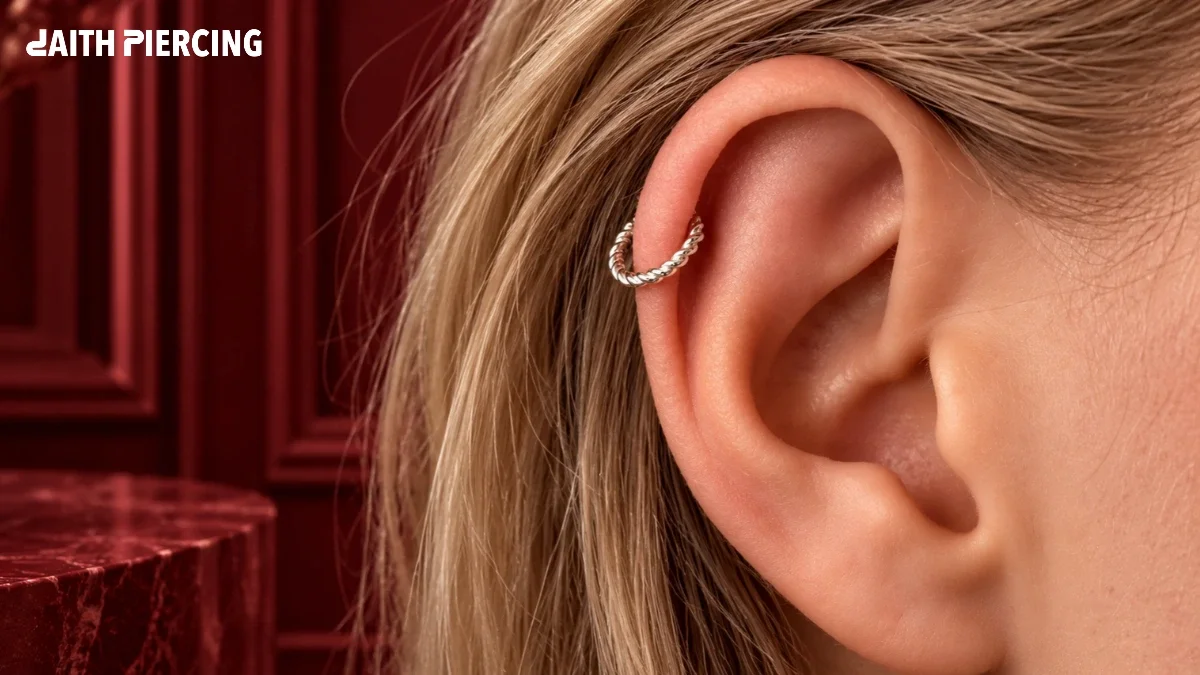
A helix piercing can be a small detail that changes the entire look of your ear. A delicate gold stud gives it a subtle, everyday feel, while a row of tiny hoops or sparkling stones can create a more curated ear stack. It’s easy to see why this cartilage piercing has become a favorite among people who want something more distinctive than a traditional lobe piercing.
But before choosing your jewelry or booking an appointment, there are a few things worth knowing. A helix piercing goes through cartilage rather than the softer earlobe, which affects how it feels, how long it takes to heal, and how carefully you need to look after it.
This guide covers helix piercing types, pain, healing time, jewelry, costs, risks, and aftercare, so you can decide whether it’s the right choice for you.
What Is a Helix Piercing?
A helix piercing is a piercing through the upper cartilage along the outer rim of the ear. Unlike an earlobe piercing, which passes through soft tissue, a helix piercing goes through firmer cartilage and generally takes longer to heal.
Its position makes it especially versatile. You can wear a tiny stud for a minimalist look, a small hoop for a more noticeable finish, or multiple pieces to create a layered arrangement.
A standard helix piercing usually refers to a single piercing along the upper outer rim. The exact placement depends on your ear anatomy and the style you want.
What Are the Different Types of Helix Piercings?

Helix piercings come in several variations. The best option depends on the shape of your ear, the jewelry you prefer, and whether you want one piercing or a more elaborate arrangement.
1. Standard Helix Piercing
A standard helix piercing sits along the upper outer cartilage of the ear. It’s a versatile starting point because it works with simple studs, small hoops, and decorative cartilage jewelry.
If this is your first cartilage piercing, a single helix can be a manageable way to explore the look before adding more piercings.
2. Forward Helix Piercing
A forward helix piercing sits on the front portion of the upper ear cartilage, closer to where the ear meets the head.
Small flat-back studs are popular here because they create a neat, delicate appearance. Some people choose two or three forward helix piercings in a row, although the available space and anatomy determine how many can fit comfortably.
3. Double Helix Piercing
A double helix consists of two piercings placed along the outer cartilage rim. The jewelry can match for a coordinated look or differ slightly in size and design.
For example, two tiny gold studs create a subtle arrangement, while a stud paired with a hoop adds contrast. If you’re planning both piercings at once, ask your piercer about swelling, healing demands, and whether your anatomy can comfortably accommodate them.
4. Triple Helix Piercing
A triple helix features three piercings arranged along the upper ear cartilage. It creates a more noticeable, layered appearance and offers plenty of room for experimenting with jewelry. If you are exploring different cartilage styles, this guide to daith vs. industrial piercings can help you compare their placement and overall look.
The extra piercings also mean more areas to care for during healing. Having several fresh cartilage piercings at once can make sleeping, cleaning, and avoiding accidental bumps more difficult. Once healed, you can experiment with different jewelry styles, including elegant opal piercing jewelry or decorative heart-shaped designs for inspiration.
5. Flat Helix Piercing
A flat piercing sits on the flatter cartilage area inside the upper ear, rather than directly on the outer rim. It’s often styled with decorative studs, small clusters, or gemstone arrangements.
Although it is sometimes grouped with helix styles in jewelry collections, a flat piercing is a distinct placement. Your piercer can help identify the correct location based on your ear anatomy.
6. Hidden Helix Piercing
A hidden helix piercing is positioned so that the jewelry can sit partly concealed by the ear’s natural cartilage folds. The exact placement and appearance depend on individual anatomy.
This style can create a subtle, almost tucked-away detail. Because the available space varies, a professional assessment is especially important before choosing jewelry for this placement.
How Painful Is a Helix Piercing?
A helix piercing typically causes a brief, sharp pinch followed by pressure or tenderness. Because the needle passes through cartilage, the sensation may feel different from an earlobe piercing.
Pain is subjective, so there isn’t a reliable score that applies to everyone. Your anatomy, stress level, piercer’s technique, and individual sensitivity can all affect the experience.
You may notice tenderness, swelling, or warmth around the piercing during the first few days. Mild discomfort can continue as healing progresses, particularly if the jewelry catches on hair, clothing, or headphones.
The piercing itself is usually quick. The longer commitment is the healing process that follows.
A useful tip: Eat beforehand, follow your piercer’s instructions, and choose a reputable professional who uses sterile, single-use needles for cartilage piercings. Piercing guns should not be used on cartilage because they can cause unnecessary tissue trauma.
How Long Does a Helix Piercing Take to Heal?
A helix piercing commonly takes around 6 to 12 months to heal fully, although some piercings may take longer. Healing varies with placement, anatomy, jewelry, irritation, and aftercare.
One of the most confusing parts of cartilage piercing recovery is that the outside can look healed before the inside has finished recovering. Less redness or tenderness doesn’t necessarily mean the piercing is ready for jewelry changes.
During healing, you may experience:
- Mild tenderness, especially if the area is accidentally bumped.
- Temporary swelling or redness shortly after piercing.
- Small amounts of pale crust around the jewelry.
- Occasional irritation after pressure or friction.
These symptoms should gradually improve rather than become increasingly severe.
Avoid changing the jewelry simply because the piercing looks better. Have a qualified piercer assess it before changing jewelry, and ask about downsizing the post after initial swelling has settled. A shorter post may reduce snagging, but changing jewelry too early can irritate the healing channel.
Helix Piercing Aftercare: How to Care for It Properly
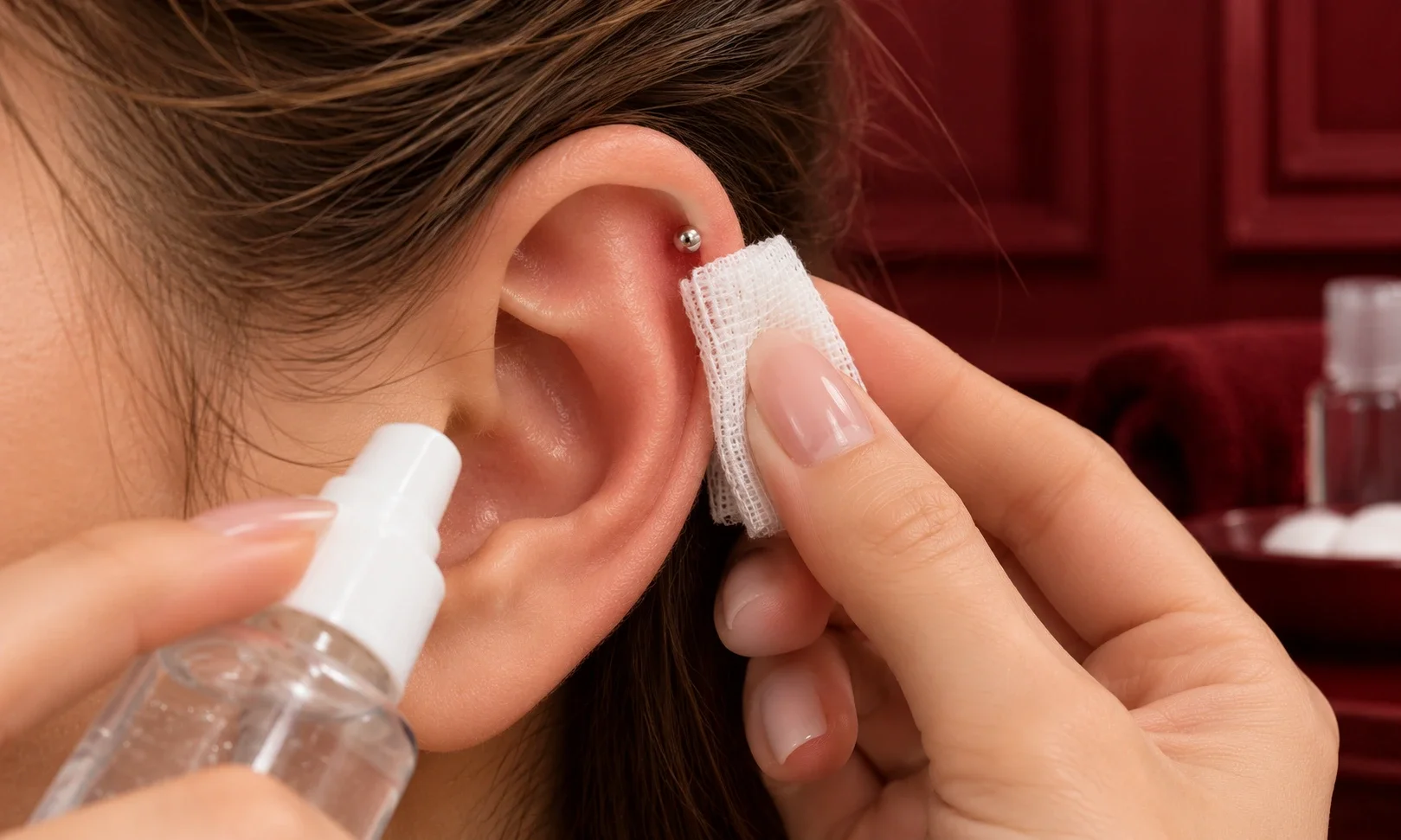
Good aftercare helps protect the healing tissue, but it cannot guarantee that complications won’t occur. The goal is to keep the area clean and minimize unnecessary irritation.
Clean With Sterile Saline
Use sterile saline wound wash intended for cleaning wounds, ideally with 0.9% sodium chloride as the only active ingredient. Follow your piercer’s instructions for cleaning frequency.
Gently rinse the area and pat it dry with clean disposable gauze or another suitable disposable material. Avoid overcleaning, which can irritate the skin.
Don’t Twist or Rotate the Jewelry
You don’t need to turn the jewelry to help the piercing heal. Twisting or moving it unnecessarily can disturb the healing tissue and prolong irritation.
Touch the piercing only when necessary, and wash your hands before any contact.
Avoid Sleeping on the Piercing
Pressure is one of the most common sources of helix piercing irritation. Sleeping directly on the pierced ear can cause soreness and may contribute to persistent bumps.
Try sleeping on the opposite side or using a travel pillow that allows the ear to rest in the opening without touching the pillow.
Be Careful With Hair and Headphones
Hair can catch on the jewelry, especially when brushing, washing, or tying it back. Over-ear headphones, helmets, hats, and tight headwear can also create pressure or friction.
Be gentle when getting dressed and take care when removing clothing that passes close to your ear.
Keep Harsh Products Away
Avoid applying alcohol, hydrogen peroxide, harsh antiseptics, or unprescribed ointments to the piercing. These products can irritate healing tissue.
Keep shampoo, styling products, cosmetics, and other potential irritants from building up around the area. Rinse gently if the piercing comes into contact with them.
Helix Piercing Jewelry: Which Style Should You Choose?
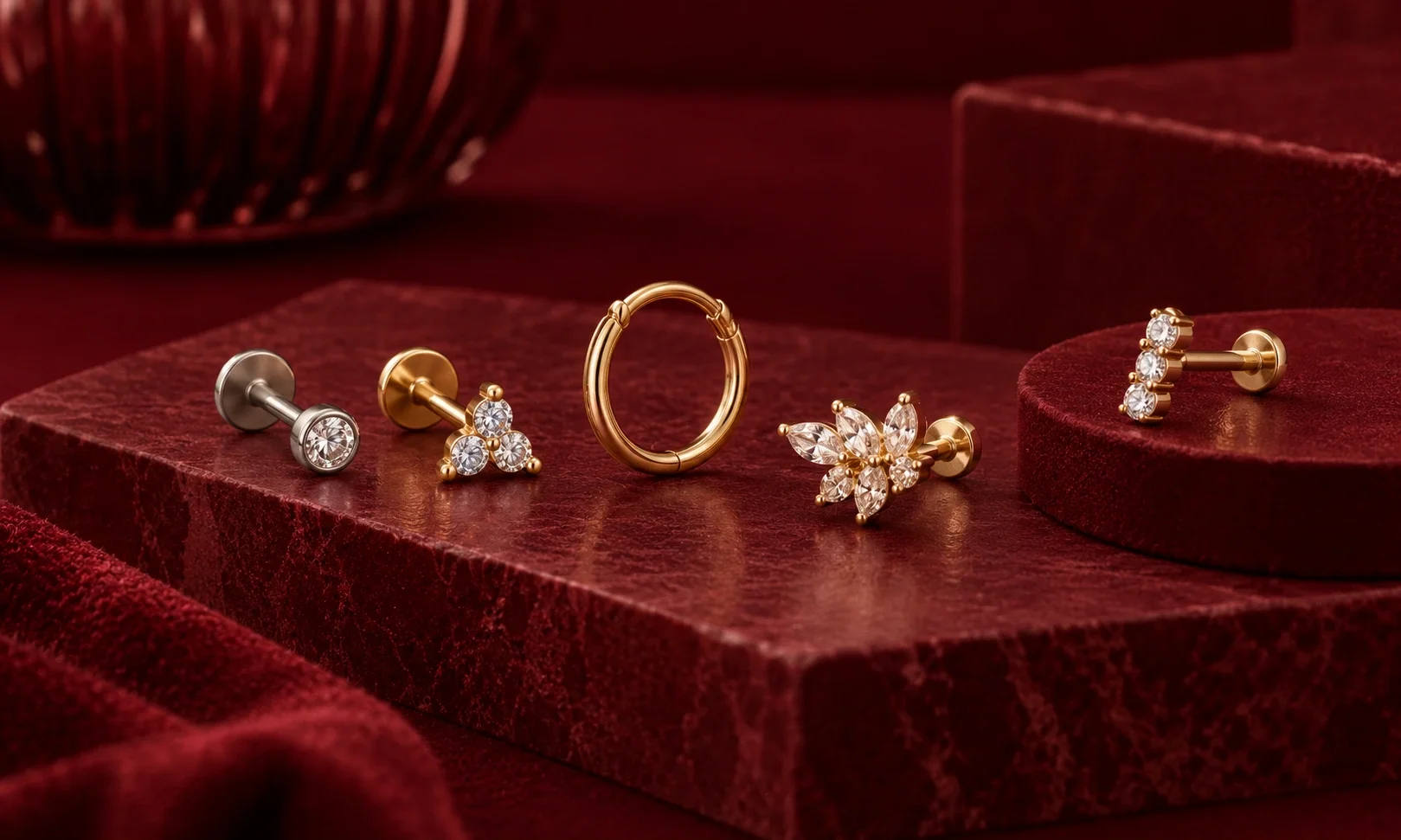
Jewelry changes the entire personality of a helix piercing. A simple stud can look understated, while a hoop or gemstone design creates a more decorative effect.
The right piece needs to fit the piercing properly, not just look attractive.
Flat-Back Studs
Flat-back studs are a popular choice for a fresh helix piercing because a properly fitted piece can sit comfortably without a traditional butterfly backing pressing against the ear.
Choose jewelry designed for initial piercings, with an appropriate length to accommodate swelling. Your piercer should determine the fit.
Small Hoops
Small hoops create a clean, circular shape around the outer ear. They can look beautiful in gold, silver-colored titanium, or other suitable materials.
However, hoops can move more than studs and may create extra irritation during early healing. A properly fitted stud is often a more practical starting option, depending on the placement and your piercer’s recommendation.
Gold Helix Jewelry
Gold jewelry offers a warm, classic finish that works well with minimalist and layered ear styles.
For a fresh piercing, don’t choose a piece based on appearance alone. Ask about the specific alloy and whether it is suitable for initial wear. Solid, nickel-free 14-karat or 18-karat gold from a reputable supplier may be appropriate, provided its construction and finish meet piercing standards.
Gold-plated jewelry is generally better avoided in a fresh piercing because the coating can wear away.
Titanium Jewelry
Implant-grade titanium is a common choice for new piercings because it is lightweight and can be suitable for people who need to avoid nickel exposure. Ask your piercer about documented material specifications rather than relying on a generic label.
Surgical Steel Jewelry
Some grades of stainless steel are suitable for body jewelry, but not all products sold as surgical steel have the same composition. Certain grades contain nickel, which can cause reactions in sensitive individuals.
For a fresh piercing, discuss implant-certified materials with your piercer and avoid unverified jewelry.
Helix Piercing Styles: Indian Jewelry and Modern Designs
Helix jewelry can be adapted to many personal styles, including Indian-inspired looks, minimalist designs, and more elaborate arrangements.
Indian-Style Helix Jewelry
Indian-inspired helix jewelry may feature gold tones, delicate floral motifs, small stones, or decorative details that complement traditional earrings. The style can work with everyday clothing as well as festive outfits.
If you want a coordinated look, choose jewelry that complements your other earrings without overcrowding the ear. For a new piercing, prioritize appropriate material and fit over elaborate decoration.
Minimalist Helix Jewelry
A tiny gold or titanium stud creates a clean, understated look. This is a useful option if you prefer jewelry that works with almost any outfit.
A small gemstone can add a little sparkle without making the piercing feel too bold.
Gemstone and Cluster Designs
Cluster jewelry groups several small stones into a single decorative piece. Depending on its size and shape, it can create a floral, star-like, or geometric appearance.
These designs are often easier to enjoy once the piercing is fully healed. For initial jewelry, avoid decorative pieces that are too heavy, protrude excessively, or are likely to snag.
Helix Piercing for Men: Styles That Work
Helix piercings are worn by people of all genders, and there are no fixed rules about which jewelry men should choose.
A single black or silver-toned stud creates a subtle look. A small hoop offers a slightly more noticeable finish, while a double helix can add dimension without requiring a large piece of jewelry.
If you prefer a minimal style, match the helix jewelry to your existing watch, rings, or other accessories. Alternatively, mixing finishes can create a more individual look.
The best choice is the one that suits your taste, ear anatomy, and daily routine.
What Does a Helix Piercing Help With?
A helix piercing is primarily a form of personal expression and body adornment. People choose it for its appearance, the opportunity to wear different jewelry, or the way it complements their existing piercings.
There is no established medical evidence that a standard helix piercing treats headaches, migraines, anxiety, or other health conditions. Claims about therapeutic benefits should not replace medical advice or proven treatment.
If you’re considering a helix piercing, choose it because you like the look rather than expecting it to provide a health benefit.
Is a Helix Piercing Dangerous?
A helix piercing is generally a common cosmetic procedure, but it is not risk-free. Cartilage has a different blood supply from the earlobe, and infections involving ear cartilage can sometimes become serious.
Potential complications include:
- Infection: Increasing pain, spreading redness, warmth, swelling, or discharge that resembles pus can indicate infection.
- Irritation bumps: Pressure, snagging, poorly fitted jewelry, and repeated movement can cause localized irritation.
- Allergic reactions: Some jewelry materials, particularly those containing nickel, can trigger itching, redness, or a rash.
- Scarring: Some people develop raised scars or keloids, particularly if they have a personal or family history of them.
- Delayed healing: Repeated pressure, unsuitable jewelry, and inadequate aftercare can prolong recovery.
Seek prompt medical assessment if pain, redness, or swelling is worsening, or if you develop thick discharge, fever, or spreading redness. Cartilage infections can require medical treatment.
If you suspect an infection, don’t remove the jewelry on your own unless a healthcare professional advises you to do so. Removing it without appropriate guidance may complicate the situation.
Who Should Avoid or Delay a Helix Piercing?
A helix piercing may not be appropriate for everyone at every moment.
Consider postponing the procedure if the intended area has an active skin infection, significant irritation, or an injury. People with a history of keloid scarring, certain medical conditions that affect healing, or a weakened immune system should discuss the risks with a healthcare professional before proceeding.
If you have known metal allergies, tell your piercer before choosing jewelry. A reputable professional should also assess your ear anatomy and explain whether the desired placement is suitable.
You should feel comfortable asking about sterilization, jewelry materials, aftercare, and what happens if a complication develops. If a studio dismisses these questions, consider choosing another provider.
Helix Piercing Cost: What Should You Expect?
The price of a helix piercing depends on the studio, location, piercer’s experience, jewelry material, and whether the fee includes the initial jewelry.
Some studios charge a separate service fee and jewelry price, while others offer a combined price. Higher-quality implant-grade jewelry can cost more than basic alternatives, but choosing the cheapest option is not always the best value.
Before booking, ask for a complete price breakdown that includes:
- The piercing service.
- The initial jewelry.
- Any follow-up assessment or jewelry downsizing fees.
- The studio’s policies for aftercare support.
Look for a studio that prioritizes hygiene, suitable jewelry, and professional technique rather than choosing based on price alone.
Helix Piercing vs. Conch, Tragus, Industrial, and Rook Piercings
Helix piercings are just one way to decorate the ear cartilage. Each placement has a different look and may have different jewelry and healing requirements.
Helix vs. Conch Piercing
A conch piercing sits in the bowl-shaped area of cartilage in the middle of the ear. It can accommodate a stud or, in suitable placements, a larger hoop around the outer ear.
A helix piercing sits along the outer rim. If you prefer a delicate edge detail, the helix may suit you; if you like jewelry that fills the central ear area, consider a conch.
Helix vs. Tragus Piercing
A tragus piercing goes through the small piece of cartilage immediately in front of the ear canal.
It creates a compact look and is often styled with a tiny stud. A helix piercing is positioned higher along the outer rim and is generally more visible from the side.
Helix vs. Industrial Piercing
An industrial piercing typically connects two cartilage openings with one long barbell. The exact placement depends on the ear’s anatomy.
Because the jewelry connects two sites, pressure and healing can be more complicated than with a single helix piercing. Not every ear is suited to a traditional industrial placement, so a professional assessment is essential.
Helix vs. Rook Piercing
A rook piercing sits through the inner ridge of cartilage above the ear canal. Its tucked-away position gives it a different appearance from the more exposed outer helix.
The two placements use different jewelry and require different anatomical considerations. Your piercer can help you compare them based on your ear shape and preferred style.
Helix Piercing FAQs
How long does a helix piercing take to heal completely?
A helix piercing often takes around 6 to 12 months to heal fully, though some take longer. Avoid changing jewelry too early, even if the outside looks healed.
Is a helix piercing more painful than an earlobe piercing?
It can feel more intense because it passes through firm cartilage rather than soft tissue. Individual experiences vary, and the piercing itself is usually brief.
Can I sleep on my helix piercing?
It’s best to avoid sleeping directly on a healing helix piercing. Pressure can cause pain, swelling, and irritation. Try sleeping on the opposite side or using a travel pillow with an opening for your ear.
When can I change my helix piercing jewelry?
Wait until the piercing has healed sufficiently and have a qualified piercer assess it before changing jewelry. A professional may recommend an earlier downsizing appointment once initial swelling subsides, but that is different from changing jewelry for style.
Can I get a double or triple helix piercing at once?
It may be possible, depending on your ear anatomy and the piercer’s assessment. Multiple fresh cartilage piercings can be more demanding to care for, so discuss the additional swelling, sleeping difficulties, and healing requirements before deciding.
What is the best jewelry for a new helix piercing?
A properly fitted flat-back stud made from an appropriate, verified material such as implant-grade titanium is a common option. The right jewelry depends on placement, anatomy, and swelling.
Can a helix piercing close if I remove the jewelry?
Yes. A healing piercing can close quickly if the jewelry is removed, and even a healed piercing may shrink or close over time. The timing varies, so don’t assume you can leave the jewelry out without consequences.
What should I do if my helix piercing develops a bump?
First, reduce pressure and friction, avoid touching or twisting the jewelry, and continue gentle sterile-saline care. Don’t squeeze the bump or apply harsh treatments. If it persists, worsens, or becomes painful, consult a reputable piercer or healthcare professional to determine the cause.
Does a helix piercing have any health benefits?
A helix piercing is primarily decorative. There is no reliable evidence that it provides established medical benefits, such as treating migraines or anxiety.
Is a helix piercing suitable for men?
Yes. Helix piercings are suitable for anyone whose ear anatomy can accommodate the placement. Simple studs, small hoops, and multiple piercings are all options.
Final Thoughts
A helix piercing can be a subtle detail or the starting point for a carefully layered ear look. The jewelry gives you plenty of room to experiment, from a simple titanium stud to gold accents and sparkling clusters.
The most important decision isn’t whether to choose a hoop or a stud. It’s choosing a reputable piercer, getting jewelry that fits properly, and allowing enough time for the cartilage to heal.
With realistic expectations and consistent aftercare, you can enjoy your new piercing while giving it the time and attention it needs.