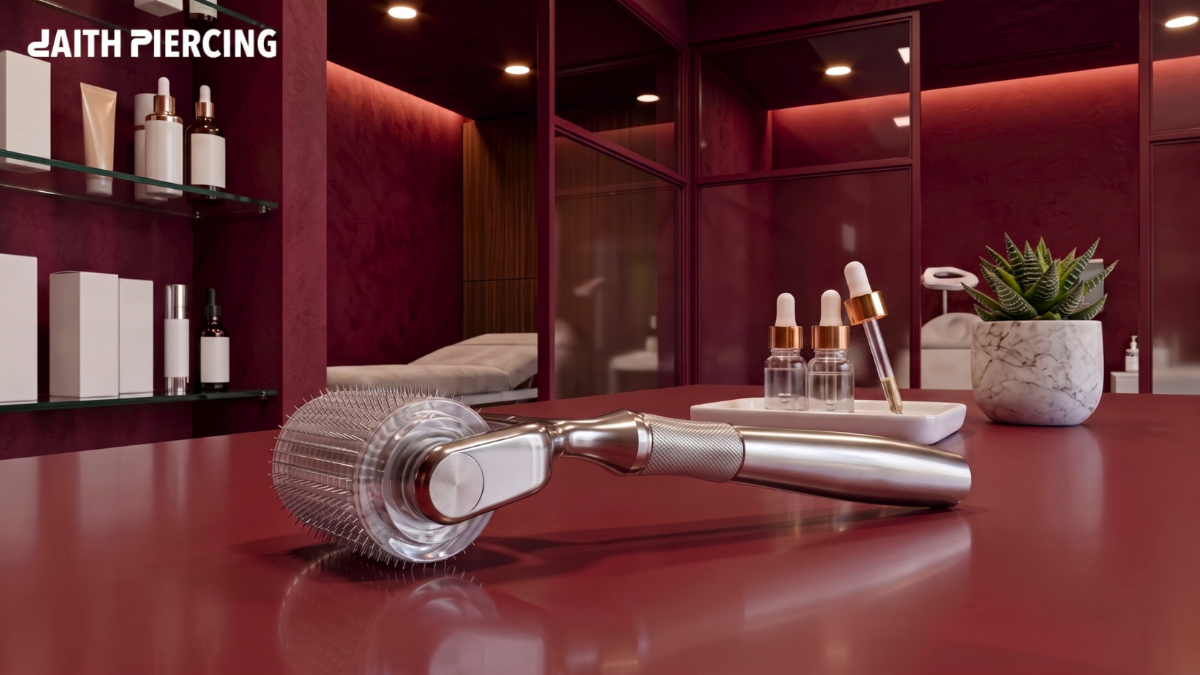
A derma roller is a handheld microneedling tool designed to create tiny skin punctures. It may temporarily improve texture and support selected treatments, but home rollers are not equivalent to professional microneedling. Needle depth, hygiene, skin condition, and technique strongly affect safety and results.
Derma rollers promise smoother skin, reduced acne scars, and stronger hair growth, but the evidence behind these claims varies considerably. In this DaithPiercing guide, we explain how derma rollers work, what benefits are realistic, which needle sizes are safest, and when professional microneedling is the better option.
Key Takeaways
-
At-home derma rollers generally work at shallower depths than professional microneedling devices.
-
Evidence is stronger for professionally performed acne-scar treatment than for DIY scar removal.
-
Poor hygiene, excessive pressure, and unsuitable needle depths can cause infection, pigmentation, or scarring.
-
Hair-growth evidence mainly involves microneedling combined with established treatment, not roller use alone.
Derma Roller Quick Facts
To understand the utility of a microneedling tool, consumers must distinguish between clinical efficacy and cosmetic adjustments. A derma roller serves as a common at-home skincare device designed for superficial skin stimulation, but its outcomes remain distinct from professional dermatology treatments.
Derma Roller at a Glance
-
What is it? A handheld roller fitted with small needles.
-
Main purpose: Cosmetic skin stimulation and superficial needling.
-
Best-supported use: Professional microneedling for selected acne scars and wrinkles.
-
Home-use results: Usually subtle and variable.
-
Main risks: Irritation, infection, pigmentation changes, and scarring.
-
Better alternative: Professional microneedling for deeper skin concerns.
This device can assist with minor skin texture refinement, but it does not replace professional collagen induction therapy.
What Is a Derma Roller and How Does It Work?
A derma roller contains a rotating cylinder covered with small needles that puncture the skin as it moves. The mechanical action relies on a basic biological mechanism where controlled micro-injury triggers a wound-healing response. Professional microneedling stimulates collagen and elastin remodeling by piercing into the deeper dermal layers.
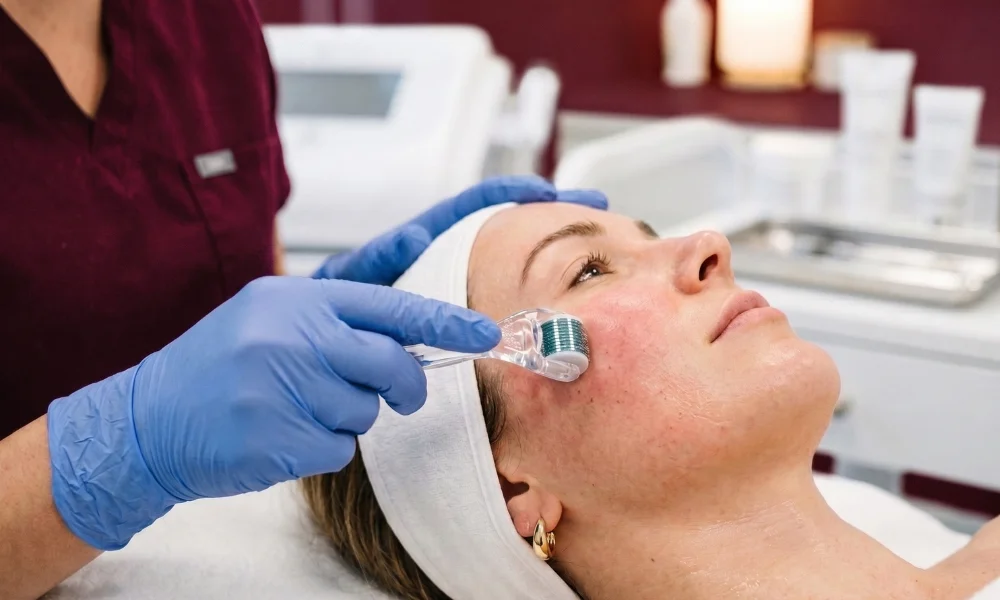
However, at-home rollers usually penetrate less deeply and may not generate the same clinical response. Actual results depend heavily on needle depth, pressure, device quality, treatment frequency, and overall skin health.
Is a Derma Roller the Same as Microneedling?
While people often use the terms interchangeably, a derma roller describes one specific device format, while microneedling is the broader procedure category. Microneedling encompasses automated pens, radiofrequency devices, and clinical rollers used by professionals.
An at-home derma roller is simply a manual subcategory of this technique. It lacks the motorized precision and vertical delivery system found in clinical environments, making the structural impact on the skin fundamentally different.
Derma Roller Benefits: What Is Actually Supported?
A derma roller may temporarily improve surface texture and product spread, but stronger evidence for acne scars, wrinkles, and collagen remodeling usually comes from professional microneedling rather than consumer rollers. Verified derma roller benefits are generally limited to a temporary improvement in skin smoothness, a refreshed appearance through mild exfoliation, and a possible supportive role in selected scalp-treatment plans under professional supervision.
The Food and Drug Administration (FDA) states that cleared microneedling devices have authorized uses for improving facial acne scars, facial wrinkles, and abdominal scars in adults aged twenty-two or older. This clear medical authorization does not apply automatically to every roller sold online. Most consumer devices lack clinical clearing and are limited to superficial cosmetic claims.
Which Derma Roller Benefits Are Overstated?
Marketing campaigns frequently overstate the capabilities of manual home rollers. Documented clinical evidence does not support claims involving instant scar removal, permanent pore shrinking, cellulite elimination, or guaranteed hair regrowth. Pores cannot shrink permanently because their size is genetically determined, and deep scars require structural tissue remodeling that surface rolling cannot achieve.
Does a Derma Roller for Acne Scars Really Work?
Evidence supports professional microneedling for selected atrophic acne scars because controlled punctures promote deep collagen remodeling. The American Academy of Dermatology (AAD) reports that microneedling treatment plans can improve acne scars gradually and may require several sessions.
Some clinical studies cited by the AAD found scar improvement in the fifty percent to seventy percent range.These specific results relate strictly to professional treatment plans and sterile, deep-penetrating equipment, not necessarily home rollers.
Which Acne Scars May Respond to a Derma Roller?
-
Rolling scars: These shallow, smooth-edged depressions can see minor texture improvement.
-
Shallow boxcar scars: Superficial variations may respond slightly to surface stimulation.
-
Deep ice-pick scars: These narrow, deep pits show limited to no response because the damage sits deep within the dermis.
Using a roller over active inflammatory acne is highly dangerous. Doing so breaks the skin barrier, spreads acne-causing bacteria across neighboring pores, and worsens localized inflammation.
Derma Roller Before and After: What Results Are Realistic?
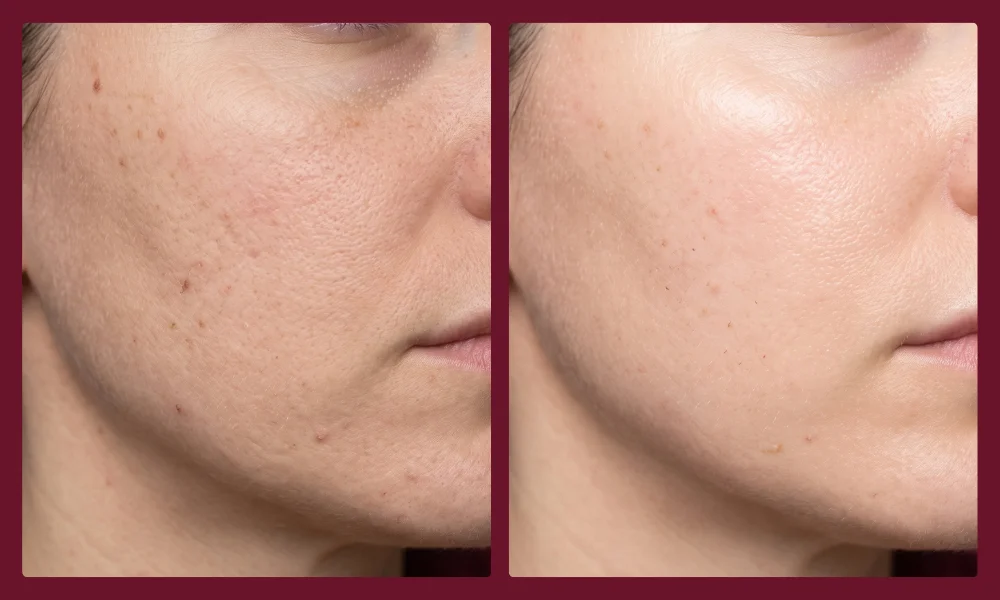
Evaluating a derma roller before and after timeline requires looking past dramatic social media photographs. Real biological changes follow a strict physiological schedule rather than an overnight transformation. Immediately after use, you will experience temporary redness, minor swelling, and localized tightness.
Within two to five days, a superficial surface glow appears as dead skin cells flake away. Gradual changes in surface texture emerge between four to six weeks as the epidermis recovers, but true collagen-related improvement takes several months of structured therapy. Multiple professional sessions are commonly required for true scar remodeling, whereas home results generally remain much subtler and less predictable.
How to Judge Derma Roller Before and After Photos
When reviewing photographic results online, consumers should analyze images for specific consistency markers. Look for identical lighting and identical camera angles to avoid artificial shadow reductions, and ensure there is a complete absence of makeup or digital blurring filters.
A valid comparison also requires a consistent baseline skincare routine, clearly stated treatment frequencies, and a realistic follow-up period of at least twelve weeks to allow for cellular turnover. User photographs do not prove clinical effectiveness because lighting manipulation can easily mask structural skin defects.
Derma Roller Needle Size Guide
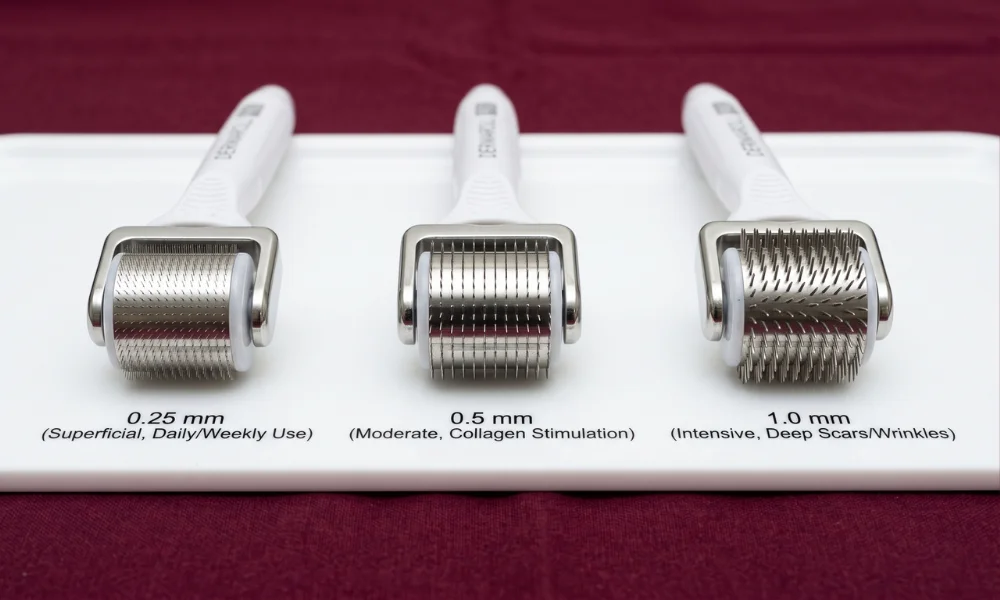
This derma roller needle size guide serves as a safety reference to prevent tissue damage, not as a universal treatment schedule.
Derma Roller Needle Sizes and Intended Use
-
0.2 mm – 0.25 mm: This size is marketed for product absorption and mild exfoliation, providing superficial cosmetic use with limited evidence for collagen remodeling.
-
Around 0.5 mm: This size is marketed for texture, fine lines, or scalp use, but it carries a greater risk of skin irritation and requires professional guidance.
-
1.0 mm: This size is marketed for deep scars and hair growth, making it completely unsuitable for casual beginner use due to tissue damage risks.
-
1.5 mm or deeper: This depth is marketed for deep scars and stretch marks, and it should be reserved exclusively for qualified clinical professionals.
Which Derma Roller Needle Size Is Best for Beginners?
There is no universal size recommendation for safety. The correct depth depends on the specific treatment area, skin thickness, personal medical history, device construction, current skin conditions, and the intended outcome. Deeper needling does not automatically create better results. Instead, excessive needle length used by a beginner frequently causes structural micro-tearing and hyperpigmentation.
How to Use a Derma Roller More Safely
Learning how to use a derma roller safely requires following strict sanitization and safety protocols rather than treating the device as a casual beauty tool.
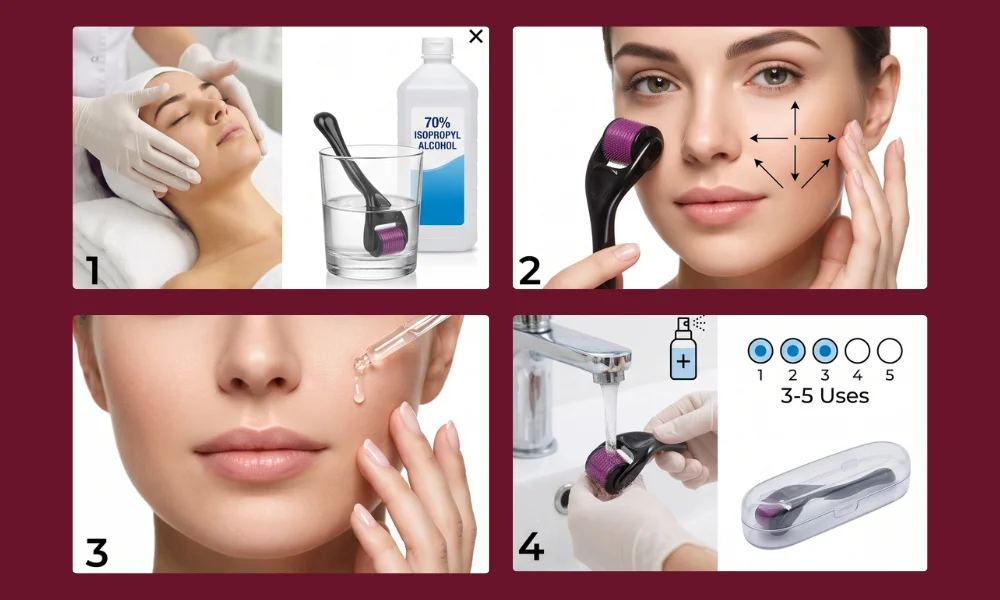
How to Use a Derma Roller Step by Step
-
Check the skin thoroughly for any signs of acne, irritation, open wounds, or active infection.
-
Wash hands with antibacterial soap and cleanse the target treatment area completely.
-
Inspect the roller under bright light for bent, blunt, or uneven needles.
-
Follow the manufacturer instructions to disinfect the device with isopropyl alcohol.
-
Use very light pressure to roll the tool, and never drag or twist the needles across the skin.
-
Avoid the eyelids, lips, active acne lesions, raised moles, and injured skin.
-
Apply only gentle, fragrance-free aftercare products like pure hyaluronic acid.
-
Protect the treated skin from all sun exposure by staying indoors or using physical blocks.
-
Clean, disinfect, and store the tool in its protective plastic case immediately after use.
-
Stop the process immediately if pain, bleeding, or excessive redness develops.
You must never share a derma roller with another individual, as sharing creates an immediate risk of cross-contamination and bloodborne infection.
What Should You Avoid After Using a Derma Roller?
After your treatment session, you must avoid topical retinoids and strong exfoliating acids like glycolic or salicylic acid. Physical facial scrubs, heavily fragranced skincare products, and harsh vitamin C formulas that use low-pH ascorbic acid will cause severe irritation. You must also avoid applying makeup over irritated micro-punctures, swimming pools, saunas, intense sweating, and unverified growth serums.
How Often to Use Derma Roller Devices
Determining how often to use derma roller devices requires extreme caution. No universal schedule applies to all users because recovery frequency depends directly on needle length, treatment site, device type, and individual skin recovery rates.
-
Never repeat a treatment session while the skin remains red, sore, or peeling.
-
Deeper needle treatments require significantly longer healing intervals of four to six weeks.
-
Overuse disrupts the skin barrier, leading to chronic inflammation and moisture loss.
-
Manufacturer schedules are often aggressive and should not override professional medical advice.
-
Clinical treatment plans commonly space professional sessions several weeks apart to allow for tissue remodeling.
Signs You Are Using a Derma Roller Too Often
Chronic misuse manifests through clear skin warning signs. These include persistent redness, ongoing sensitivity to basic cleansers, unexplained breakouts, dark spots, peeling, and exceptionally slow healing times.
Derma Roller for Hair Growth: Evidence and Limitations
Research regarding a derma roller for hair growth primarily concerns microneedling as an additional, supportive treatment for specific hair-loss conditions like androgenetic alopecia. It is not a standalone cure for baldness, and studies show significantly stronger clinical evidence when it is combined with established medical therapies like topical minoxidil.
There is weak scientific evidence for hair regrowth using a manual roller alone, and very limited direct clinical evidence supports beard hair density improvement. The mechanical action cannot create new hair follicles where none exist, so individuals must obtain an accurate diagnosis of their type of hair loss first. Forcing needle penetration into an improperly diagnosed scalp condition can accelerate hair shedding.
Who Should Avoid a Derma Roller for Hair Growth?
You should avoid this treatment if you experience active scalp infections, folliculitis, severe dandruff, seborrheic dermatitis, or psoriasis flares. It is also unsuitable for anyone experiencing unexplained sudden hair shedding, active scarring alopecia, open sores, or localized sunburn on the scalp. A formal dermatologist assessment remains necessary before attempting to treat persistent hair loss at home.
Derma Roller vs Microneedling Pen
Comparing a derma roller vs microneedling pen highlights critical differences in tissue impact, safety mechanisms, and cost structures.
Derma Roller vs Microneedling Pen Features
-
Needle movement: A derma roller uses a rolling motion that enters and exits the skin at an angle, which can cause micro-tears. A microneedling pen utilizes a vertical stamping motion that enters and exits cleanly.
-
Precision and depth control: Rollers offer lower precision with fixed needle depths, while pens provide high precision with adjustable depth settings.
-
Risk of dragging: Rollers carry a higher risk of tracking or tearing if rolled unevenly, whereas pens have a lower risk of dragging when used with the correct technique.
-
Sterility and cost: Rollers are reusable but user-dependent for cleanliness, making them lower cost. Pens utilize sterile, single-use disposable cartridges, which results in a higher long-term cost.
Is a Microneedling Pen Better Than a Derma Roller?
Automated microneedling pens usually offer greater precision, vertical consistency, and depth control. However, powered devices can also cause severe tissue harm and scarring when used incorrectly by an untrained consumer. Standard microneedling pens must not be confused with radiofrequency (RF) microneedling devices, which use electrical heat energy to tighten deeper tissue layers under strict medical supervision.
Derma Roller Side Effects and Who Should Avoid It
Common derma roller side effects include temporary redness, dryness, itching, localized tightness, and mild physical discomfort. More serious complications can include bacterial infection, permanent scarring, post-inflammatory hyperpigmentation, and severe allergic reactions to topical products. The FDA explicitly lists redness, peeling, burning, bleeding, and skin-color changes among the potential risks of microneedling instruments.
When Derma Roller Side Effects Require Medical Care
You must seek medical care if you experience pain that increases in intensity over twenty-four hours, spreading redness, red streaks, or skin that feels unusually hot to the touch. The development of pus, yellow discharge, blisters, a sudden fever, or persistent swelling that does not subside after forty-eight hours also requires professional attention. Finally, keep watch for the appearance of new scarring or any darkening or lightening of the treated skin.
Who Should Not Use a Derma Roller?
-
Anyone with active acne, viral cold sores, or bacterial skin infections.
-
Individuals experiencing eczema, rosacea, or psoriasis flares in the target area.
-
People with a documented history of keloid scarring or bleeding disorders.
-
Individuals with impaired wound healing or active immunosuppression.
-
Anyone who has undergone recent cosmetic procedures or possesses suspicious skin lesions.
How to Choose the Best Derma Roller 2026
Selecting the best derma roller 2026 relies entirely on manufacturing safety, material quality, and brand transparency rather than generic online review scores.
Best Derma Roller 2026 Buying Checklist
-
Needle quality: Look for clearly disclosed needle lengths and straight, evenly spaced needles.
-
Materials: Seek transparent specifications confirming the use of medical-grade stainless steel or titanium.
-
Hygiene features: Ensure the package includes a rigid protective case and clear cleaning protocols.
-
Head design: Prioritize replaceable or safely disposable roller heads to prevent the use of dull needles.
-
Brand transparency: Avoid brands making unverified claims of guaranteed scar removal or instant hair regrowth.
Red Flags When Buying a Derma Roller
Consumers must avoid devices with vague needle size options or listings claiming official FDA approval for home use without evidence. Damaged packaging, missing manufacturer details, and unrealistic before-and-after promises are clear indicators of low-quality manufacturing.
Conclusion
A derma roller can support superficial skin texture refinement or scalp care, but deeper tissue benefits and acne scar improvements remain tied to professionally performed microneedling. DaithPiercing recommends prioritizing strict hygiene, maintaining realistic expectations, and seeking expert clinical guidance. Stop treatment immediately if skin irritation persists, and always consult a board-certified dermatologist before attempting to treat deep scars, hyperpigmentation, or hair loss at home.
Frequently Asked Questions
Do Derma Rollers Really Work?
Professional microneedling has significantly stronger clinical evidence than home rollers, especially for reducing acne scars and wrinkles. Home rollers provide limited, temporary cosmetic improvement to surface texture and product absorption.
Can a Derma Roller Remove Acne Scars?
A derma roller may not remove scars completely. Deep atrophic, ice-pick, or boxcar scars require professional assessment and clinical-grade treatments to achieve visible structural remodeling.
Can You Use a Derma Roller Every Day?
No. Daily use over-irritates the skin, destroys the protective skin barrier, and induces chronic inflammation. Safe frequency depends entirely on needle depth, skin thickness, and individual healing capacity.
What Serum Should You Use After a Derma Roller?
Use simple, fragrance-free, hydrating products like pure hyaluronic acid. Avoid strong active ingredients like retinol, vitamin C, or exfoliating acids immediately after rolling unless directed by a dermatologist.
Can You Share a Derma Roller?
No. You must never share a derma roller. Sharing needles creates an immediate risk of cross-contamination, bacterial infection, and transmission of bloodborne pathogens.
When Should You Replace a Derma Roller?
Replace the device immediately when needles become bent, dull, or damaged. Regular users should follow manufacturer guidelines, typically replacing the tool after three to four uses to maintain sharp, safe tips.