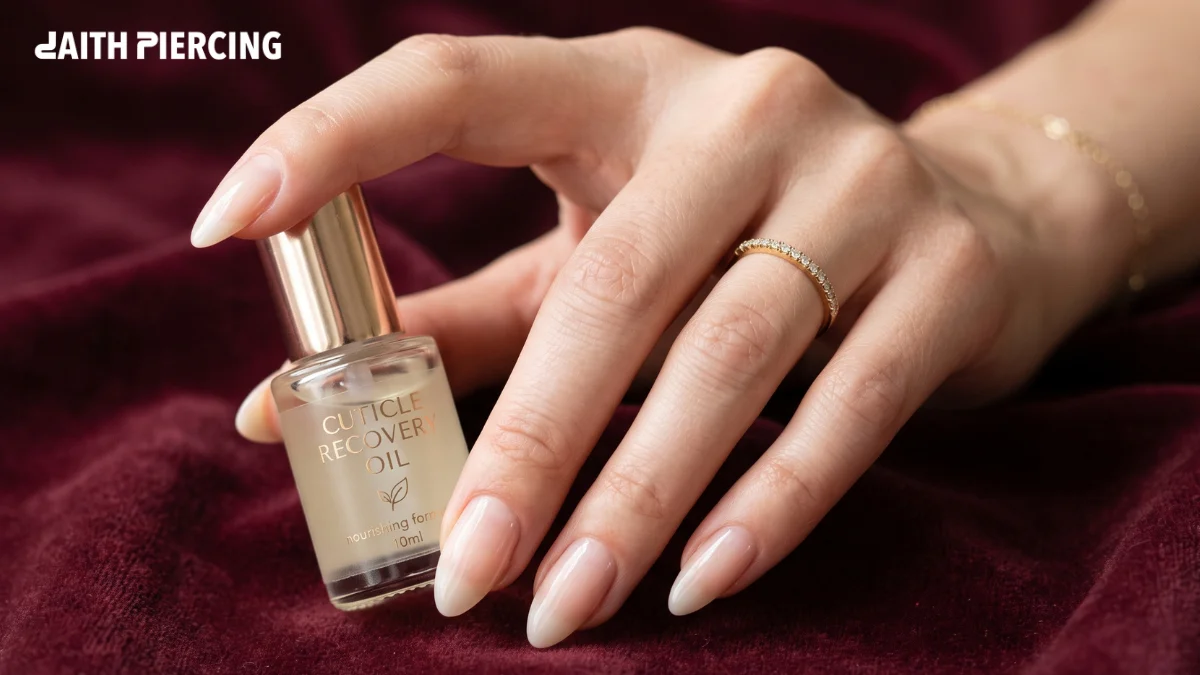
Removing gel nails at home safely requires breaking the top coat seal and soaking with acetone to dissolve the polish. Avoid scraping or peeling the gel, as this tears the natural nail layers. Proper hydration afterward prevents long-term thinning and breakage.
Learning how to remove gel nails at home is the secret to keeping your hands healthy. Rough DIY peeling causes thinning, so this guide uses dermatologist-backed steps for safe gel polish removal at home. Trust DaithPiercing for your beauty advice and discover the safest way to remove gel nails without salon damage.
Key Takeaways
-
Remove gel slowly: Never forcefully peel or scrape loose gel polish from the nail plate.
-
Acetone alternatives exist: Pure acetone works fastest, but specific non-acetone methods suit lighter gel formulas.
-
Prioritize aftercare: Replenishing lost moisture is just as important as the actual removal process.
-
Know your gel type: Hard gels and builder gels require completely different removal techniques than standard soft gel polish.
How to Remove Gel Nails at Home: What You Need Before You Start
Master how to remove gel nails at home by gathering the right tools first so you never force the product.
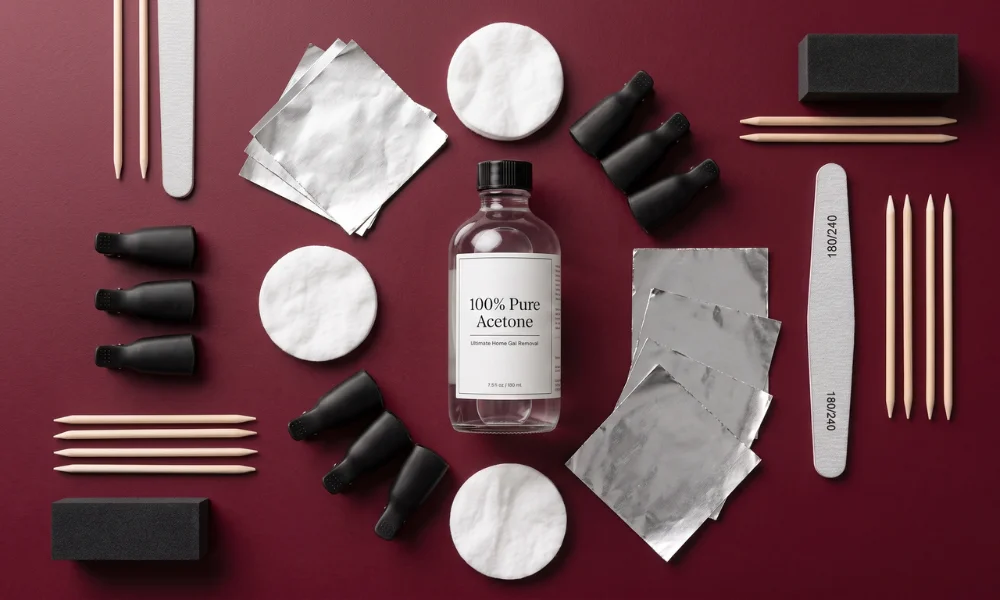
Essential Tools for Safe Gel Nail Removal
You must gather the right tools before starting the removal process to avoid damaging your nail bed. Rushing into the process without the proper supplies often leads to aggressive scraping. Professional tools ensure the gel dissolves cleanly without physical force.
Complete Gel Nail Removal Tool Checklist
| Tool | Required | Alternative | Purpose |
| Pure Acetone | Yes | Regular remover (takes longer) | Dissolves the gel bonds |
| 180-Grit Nail File | Yes | Coarse emery board | Breaks the shiny top coat |
| Cotton Balls | Yes | Cut up makeup sponges | Holds the acetone on the nail |
| Aluminum Foil | No | Plastic nail clips | Secures the cotton in place |
| Orangewood Stick | Yes | Plastic cuticle pusher | Gently lifts softened gel |
| Cuticle Oil | Yes | Olive oil or jojoba oil | Rehydrates nail plate and skin |
How to Remove Gel Nails at Home Step by Step Without Damaging Your Nails
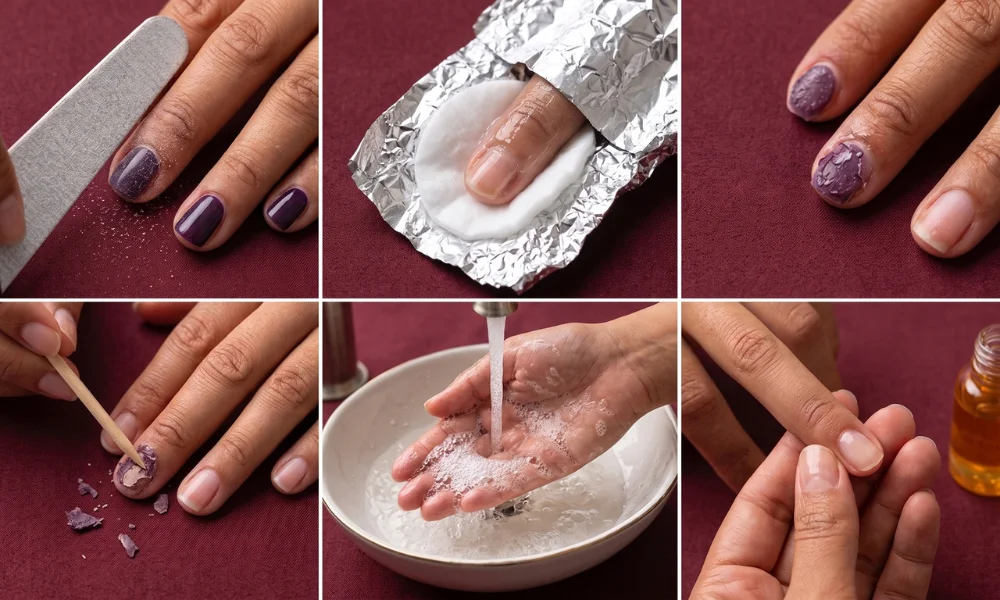
Follow this precise sequence on how to remove gel nails at home to melt away your polish safely.
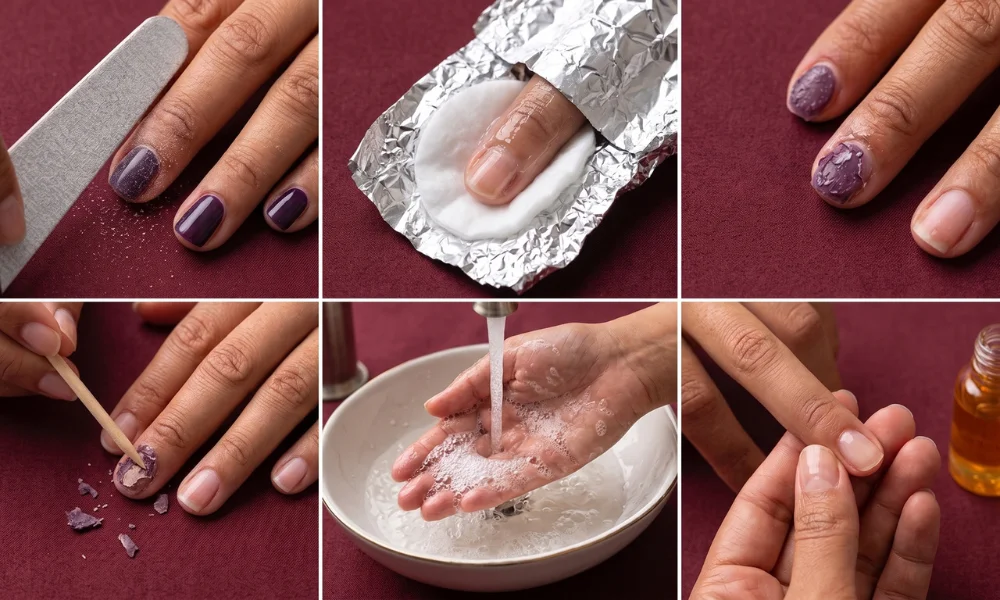
1: Shorten Long Nails Safely
Start by clipping away any excess nail length if you do not plan to keep the current shape. Long extensions put extra leverage on the nail bed during soaking. Use heavy-duty nail clippers to trim the tips straight across.
2: File Only the Protective Top Coat
Take your 180-grit nail file and gently buff the surface of each nail. Your goal is to remove the shiny top layer entirely. This allows the acetone to penetrate the color coats beneath. Stop filing as soon as the nail look matte.
3: Protect Skin Before Soaking
Acetone dries out human skin instantly. Apply a thick layer of petroleum jelly or cuticle oil to the skin surrounding your nails. Avoid getting the ointment directly on the nail plate, so it does not block the gel remover.
4: Soften the Gel Properly
Soak a piece of cotton ball completely in pure acetone. Place the wet cotton directly on top of your buffed nail plate. Wrap a small square of aluminum foil tightly around the fingertip to seal in the moisture and heat.
5: Lift the Gel Without Scraping
Wait a full 15 minutes before checking the progress. Remove one foil wrap to see if the gel is bubbling or lifting away. Take your wooden stick and gently push the crumbly gel off the nail. If it resists, wrap it back up immediately.
6: Buff, Clean, and Moisturize
Wash your hands thoroughly with warm water and soap to remove all chemical residue. Use a soft buffer block to smooth away any remaining tiny specs of gel base coat. Finish by massaging cuticle oil deeply into your nails and skin.
How long does gel nail removal take?
A proper at-home removal session takes roughly 25 to 35 minutes. This includes 5 minutes of prep and filing, 15 to 20 minutes of uninterrupted soaking time, and 5 minutes for gentle lifting and final hydration.
How to Take Off Gel Nails at Home Based on the Type of Gel You Have
Different gel formulas change how you approach the process of how to remove gel nails at home.
Soft Gel Polish
Knowing how to remove gel nails at home when dealing with soft gel simply requires patience during the acetone soak. This is the most common type of gel manicure used in DIY kits and salons, and it responds beautifully to standard soaking techniques.
Builder Gel
Builder gel is much thicker than standard polish and adds structural strength to the nail. Acetone struggles to penetrate this dense layer quickly. You must file down at least 50% of the bulk before attempting to soak your fingertips.
Hard Gel
Hard gel cannot be dissolved by acetone at all. Trying to soak this product is useless and only dries out your skin. The only way to remove hard gel at home is by carefully filing it down with a professional file or electronic drill.
Gel-X Extensions
Gel-X tips are full-coverage extensions bonded with a soft gel formula. They dissolve fully in pure acetone. You need to trim the extended tips down completely and file the surface before wrapping them in foil.
BIAB (Builder in a Bottle)
BIAB is a hybrid product that offers the strength of hard gel but remains soakable. It requires a hybrid removal approach. You must file away the top layer heavily, then expect a slightly longer 20-minute acetone soak.
Removal Method by Gel Nail Type
| Gel Type | Home Removal Method | Salon Recommended | Difficulty | Time Required |
| Soft Gel | Acetone Soak | No | Easy | 20 Minutes |
| Builder Gel | File Down + Soak | Optional | Medium | 35 Minutes |
| Hard Gel | 100% Manual Filing | Yes | High | 45 Minutes |
| Gel-X | Trim + Acetone Soak | No | Medium | 30 Minutes |
| BIAB | Heavy File + Soak | Optional | Medium | 30 Minutes |
Gel Nail Removal Without Acetone: Does It Actually Work?
You can try alternative solutions for how to remove gel nails at home without chemicals, but they require much more time.
Non-Acetone Gel Removers
Regular nail polish removers contain ethyl acetate instead of pure acetone. Attempting a gel nail removal without acetone using standard remover is difficult but possible for light gel brands. It takes double the time and requires meticulous filing beforehand.
Warm Oil Soaking Methods
You can submerge your fingers in a bowl of warm water mixed with olive oil and dish soap. This method works well if the gel polish is already lifting at the edges. The oil seeps underneath and breaks the adhesive bond naturally over 20 minutes.
Peel-Off Gel Products
Some base coats are designed specifically for easy removal without harsh chemicals. If you used a peel-off base coat, you can skip chemicals entirely. You simply nudge the edge with a wooden stick and peel the layer away cleanly.
When Gel Nail Removal Without Acetone Is Safe
This chemical-free path is safe when your gel polish is old, brittle, and already separating from your natural nail plate. Do not use this method on fresh, tightly bound gel. Forcing a tight bond with oil or soap will still rip away real nail layers.
Non-Acetone Method Comparison
| Method | Effectiveness | Nail Safety | Time Required |
| Ethyl Acetate Remover | Moderate | High | 40 Minutes |
| Warm Oil & Soap Soak | Low to Medium | Excellent | 25 Minutes |
| Peel-Off Base Coat | High | Excellent | 5 Minutes |
How to Remove Gel Nails Without Foil: Practical Alternatives That Work
You can easily learn how to remove gel nails at home without foil by swapping out traditional wraps for plastic clips.
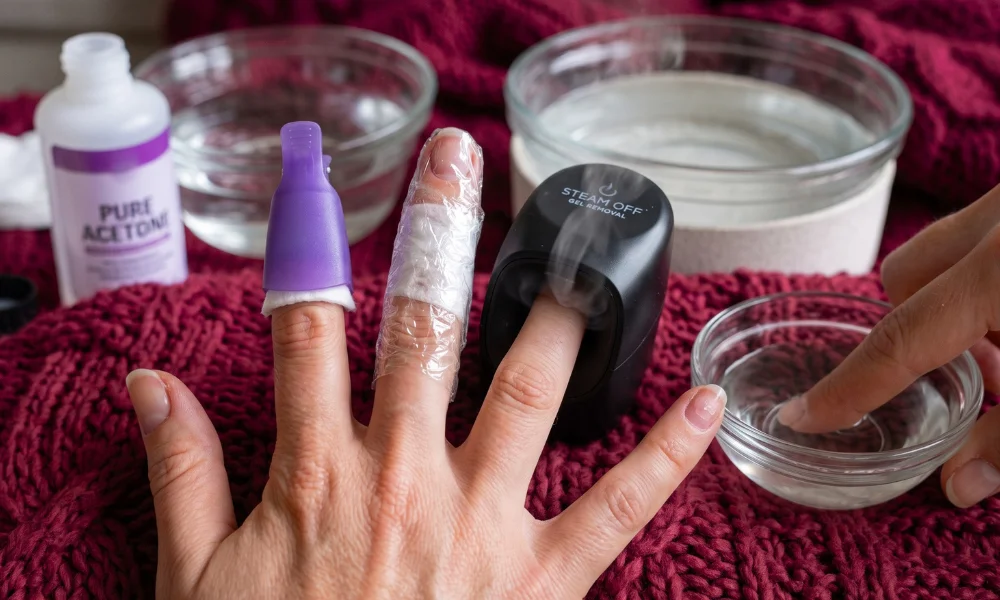
Nail Clips
Plastic nail clips are a fantastic invention for DIY nail lovers. They replace aluminum foil completely. You simply place your acetone-soaked cotton pad on the nail and clamp the plastic clip over your fingertip to secure it.
Plastic Wrap Method
If you run out of foil, household plastic wrap is an excellent alternative. Wrap your cotton-topped fingers in plastic saran wrap instead. It seals in the heat even better than foil, which actually accelerates the chemical breakdown.
Soaking Bowl Technique
You can pour pure acetone directly into a small glass bowl. Place this bowl inside a larger bowl filled with warm water to gently heat the chemical. Submerge your fingertips directly into the warm acetone for 15 minutes.
Steam Removal Devices
Modern beauty technology now offers electronic gel steaming machines. These devices warm up a small amount of acetone inside a chamber. You place your fingers inside, and the warm chemical vapor melts the gel away cleanly.
Foil-Free Method Analysis
| Method | Convenience | Reusable | Best For |
| Plastic Nail Clips | High | Yes | Frequent DIYers |
| Plastic Wrap | Medium | No | Emergency Home Removal |
| Soaking Bowl | Low | Yes | Stubborn Hard Gels |
| Steam Devices | High | Yes | Luxury Home Care |
Safest Way to Remove Gel Nails Without Weakening Natural Nails
The absolute best path for how to remove gel nails at home safely means relying entirely on chemical dissolving rather than physical force.
Signs You are Removing Gel Correctly
When you use the safest way to remove gel nails, the product looks like a wrinkled, crumbly paste after soaking. It should slide off with the slightest touch of a wooden stick. Your natural nail underneath will look matte but completely intact.
Signs You are Damaging Your Nails
White patches, deep ridges, and uneven peeling spots indicate that you are rushing the process. If you have to push hard against the nail plate to scrape the color away, you are actively removing healthy layers of your actual nail.
When to Stop Removing and Re-Soak
Never try to force a stubborn patch of gel polish off your finger. If the product does not budge with a gentle nudge, stop immediately. Re-wet your cotton pad with fresh acetone, wrap the finger back up, and wait another 5 minutes.
Safety Checklist
-
The gel must look lifted and flaky before you touch it with tools.
-
Stop immediately if you feel any burning or painful scraping pressure.
-
Always re-hydrate the nail structure immediately following chemical exposure.
Do Gel Nails Damage Natural Nails?
Many online guides explain how to remove gel nails at home, but they skip the truth about what actually causes structural damage.
What Actually Causes Nail Damage
Physical trauma is the primary cause of thin, brittle nails. When you pick or peel gel polish off by hand, you rip away the delicate top layers of the nail plate. This creates immediate thinning and leaves the nail bed exposed to infection.
Damage From Improper Removal vs Proper Wear
A properly applied and safely dissolved gel manicure can be worn for years without any long-term structural degradation. The damage occurs entirely during those crucial twenty minutes when people lose patience and scrape their nails with metal tools.
How Long Nails Need to Recover
If your nails are already thinned out from bad removal habits, they need time to repair. A fingernail takes roughly three to six months to grow completely from the cuticle to the free edge. You must wait out this growth cycle.
Table 5: Gel Manicure Myths vs Reality
| Myth | Reality |
| Gel polish suffocates the natural nail plate. | Nails do not breathe; they get nutrients from the bloodstream. |
| Acetone completely destroys your nail health permanently. | Acetone dehydrates nails temporarily but does not ruin them. |
| You must take a break between every gel set. | Breaks are only necessary if your removal technique caused damage. |
Common Gel Nail Removal Mistakes That Lead to Thin, Peeling Nails
Avoiding these frequent mistakes when learning how to remove gel nails at home prevents long-term thinning and peeling.
-
Peeling Gel Off by Hand: This is the absolute worst mistake you can make. Ripping the polish pulls off the vital protective keratin layers of your natural nail plate.
-
Over-Filing the Nail Plate: Using a heavy file directly on your natural nail bed thins it out instantly. Only file the gel product itself.
-
Rushing the Soaking Process: Pulling the foils off after only 5 minutes forces you to scrape hard. Let the chemistry do the heavy lifting.
-
Using Metal Tools Incorrectly: Metal scrapers can gouge the softened nail plate easily. Hold them at a flat angle or switch to wood.
-
Skipping Nail Hydration: Leaving your hands dry after using acetone causes immediate cracking and brittle splitting along the edges.
What to Do If Your Gel Nails Won’t Come Off
When stubborn product refuses to lift during your routine of how to remove gel nails at home, adjust your strategy instead of pressing harder.
- Re-Soak or Wait?: If your gel remains firm after a long soak, your acetone might be weak or old. Acetone evaporates quickly, so open bottles lose potency over time. Throw out old bottles and re-soak with a freshly opened container of 100% pure acetone.
- Why Some Gel Products Resist Removal: Many cheap gel brands use formulas that closely resemble hard gel systems. These products look like soft gel but do not dissolve easily in standard solvents. They require extensive surface filing before the acetone can even begin to break them down.
- When Professional Removal Is Safer: If you have soaked your nails twice and the product still grips your fingers tightly, stop trying. Do not risk damaging your skin with excessive chemical exposure. Visit a professional nail technician to have it filed down safely with a machine.
Nail Recovery Routine After Gel Polish Removal at Home
Post-manicure care is essential to rebuild the strength and moisture balance of your natural hands.
Hydrating Cuticles
Your first priority after gel polish removal at home is restoring lost moisture. Slather your fingertips in a rich cuticle oil containing vitamin E or jojoba oil. Apply it three times a day to heal the dried tissue.
Strengthening Treatments
Apply a premium nail strengthener or keratin treatment if your nails feel slightly flexible. Look for formulas that focus on hydration and flexibility rather than just hardening, as overly hard nails become brittle and snap easily.
Nail Care for the Next Seven Days
Give your hands a break from heavy styling for a week. Keep your nails trimmed short so they do not catch on objects and tear. Wear protective gloves when washing dishes or using household cleaning chemicals to avoid drying them out further.
When You Can Apply Gel Again
You can apply a fresh set of gel polish immediately if your natural nail plates look smooth, thick, and healthy. But if you see any signs of thinning or peeling, wait at least two weeks for the structure to recover.
Expert Safety Checklist Before You Remove Gel Nails at Home
Keep these protective rules in mind during your home session to avoid any unwanted structural pain.
-
Never force gel off: If it does not slide off easily, it needs more time in the solvent.
-
Avoid sharp scraping: Keep your wooden tools parallel to the nail to prevent deep gouging.
-
Protect skin: Always coat your surrounding skin in oil or petroleum jelly before touching acetone.
-
Moisturize immediately: Wash the chemicals off and apply lotions or oils to your hands instantly.
-
Re-soak instead of pulling: Treat stubborn patches with another mini-soak rather than pulling them loose.
Final Thoughts on How to Remove Gel Nails at Home
Mastering how to remove gel nails at home saves time and preserves your real nail health. Gentle techniques prevent serious damage, so always match your routine to your product type. By using the right sequence of filing, soaking, and deep post-removal hydration, you can enjoy beautiful manicures without compromising your structural nail strength. Visit DaithPiercing today for more practical beauty guides.
Frequently Asked Questions
Can I remove gel nails without acetone?
Yes, gel nail removal without acetone works by using warm oil, soap, or special peel-off base coats.
How long should gel nails soak?
Standard soft gel needs 15 to 20 minutes of soaking in pure acetone to dissolve completely.
Is foil necessary?
No, you can easily implement a safe routine how to remove gel nails without foil using plastic clips.
Can I remove builder gel at home?
Yes, but you must file away the top thickness before starting your standard acetone soak.
Why are my nails peeling after removal?
Peeling happens if you force the product off or scrape hard before the gel softens.
How often is it safe to wear gel nails?
You can wear them continuously if your method for how to remove gel nails at home is safe.