
We have all been there: standing in the skincare aisle, paralyzed by choice, wondering if niacinamide vs vitamin c is a rivalry or a romance. You want the glow, but you would rather skip the irritation. Here is the bottom line, Niacinamide repairs and calms, vitamin C brightens and protects. Both work better together than apart.
At DaithPiercing, we believe in skincare backed by science, not just hype. This guide cuts through the noise to cover pH compatibility, the best new derivatives, and exactly when you will start seeing results.
The core difference in niacinamide vs vitamin c is their specialty: Niacinamide is an anti-inflammatory powerhouse that builds your skin barrier, while Vitamin C is an elite antioxidant that targets dullness and UV damage. Use Vitamin C to brighten and Niacinamide to balance.
What Is Niacinamide? A Quick Breakdown
Niacinamide is a water-soluble form of Vitamin B3, celebrated as the do-it-all ingredient because it tackles almost every skin concern without the drama of irritation.
How It Works
At a cellular level, Niacinamide is a structural powerhouse. It boosts ceramide production, which strengthens your skin’s natural barrier to lock in moisture. Simultaneously, it interrupts melanin transfer, preventing pigment from reaching the surface and forming dark spots.
The Benefits
Often cited for its versatility, the primary niacinamide serum benefits include:
-
Oil Control: Regulates sebum to keep pores clear.
-
Barrier Repair: Calms redness and sensitivity.
-
Texture Smoothing: Minimizes the look of enlarged pores and fine lines.
What Is Vitamin C? The Antioxidant Powerhouse
Vitamin C is the skin’s ultimate protector. While L-ascorbic acid is its purest form, modern skincare also uses stable derivatives to deliver high-performance brightening with less irritation.
The Science of Glow
Vitamin C works by neutralizing free radicals unstable molecules from pollution and UV rays that cause premature aging. Beyond defense, it is a primary trigger for collagen synthesis, helping to keep skin firm and resilient.
Picking Your Formula
To find the best vitamin c serum types for your goals, look for these key versions:
-
L-Ascorbic Acid: The gold standard for maximum potency.
-
THD Ascorbate: Oil-soluble and deep-penetrating (great for sensitive skin).
-
Sodium Ascorbyl Phosphate: A stable, acne-friendly derivative.
The pH Rule
For L-ascorbic acid to be effective, the formula’s pH must be below 3.5. This acidity ensures the molecule stays active and actually penetrates the skin barrier rather than sitting uselessly on top.
Niacinamide vs Vitamin C: Side-by-Side Comparison
Choosing between these two depends on your specific skin goals. While they both improve skin health, their chemistry and results differ significantly. Use this quick reference to see which fits your 2026 routine best.

| Feature | Niacinamide | Vitamin C |
| Type | Vitamin B3 | Ascorbic acid (Vitamin C) |
| Primary Benefit | Barrier repair & oil control | Brightening & antioxidant defense |
| Best For | Acne, redness, large pores | Dark spots, dullness, fine lines |
| Effective Conc. | 2%–10% | 10%–20% (L-ascorbic acid) |
| Ideal pH | 5.0–7.0 (neutral) | Below 3.5 (acidic) |
| Stability | Very stable | Highly unstable (oxidizes fast) |
| Sensitivity | Gentle, low irritation risk | Can cause stinging or tingling |
| Time to Results | 4–8 weeks | 2–4 weeks (visible glow) |
| Best Time | AM or PM | Morning (with SPF) |
| Average Cost | Lower ($8–$20) | Higher ($15–$180) |
Niacinamide Serum Benefits for Skin
Niacinamide is a versatile workhorse that fits into almost any routine. Here is why niacinamide serum benefits are essential for your 2026 skincare goals:
Niacinamide for Dark Spots and Pigmentation: Unlike many brighteners, Niacinamide doesn’t stop melanin production; instead, it slows melanin transfer to your skin cells. This makes niacinamide for dark spots particularly effective for post-acne marks (PIH), as it prevents the pigment from staining the surface.
Niacinamide for Acne and Oil Control: By regulating sebum (oil) production, it keeps pores from stretching, which results in a tighter, more refined skin texture.
Niacinamide for Skin Barrier Repair: It acts as a building block for ceramides, locking in hydration and keeping irritants out. If you are struggling with sensitivity, check out our guide on Skin Barrier Repair for Allergies for more targeted tips.
Vitamin C Benefits for Skin
Vitamin C is the industry gold standard for a reason it is both a shield and a corrector.
Vitamin C for Hyperpigmentation and Sun Damage: While Niacinamide blocks transfer, vitamin c for hyperpigmentation works by tyrosinase inhibition. It prevents the enzyme responsible for pigment production from even starting, making it the best defense against UV-induced sunspots.
Vitamin C for Anti-Aging and Collagen Boost: Peer-reviewed studies consistently show that Vitamin C is a co-factor for collagen synthesis. While you will see a glow quickly, expect a 12-week timeline for visible improvements in skin firmness.
Vitamin C for Antioxidant Protection: When layered under SPF, Vitamin C mops up the free radicals that your sunscreen might miss, creating a double-strength barrier against environmental aging.
Can You Use Niacinamide With Vitamin C? (Myth-Busted)
Yes, you can use niacinamide with vitamin c safely in the same routine. The myth that they cancel each other out stems from a 1960s study where the two were combined at extreme temperatures, causing them to convert into nicotinic acid (which causes flushing).
Modern skincare is formulated for stability at room temperature. Using niacinamide and vitamin c together actually creates a synergistic effect: Vitamin C brightens the surface while Niacinamide strengthens the foundation.
Vitamin C Serum Layering Order: How to Apply Both Correctly
Most guides fail to explain the chemistry behind the order, but the sequence is vital for ingredient stability. Understanding why you apply one before the other will ensure you aren’t wasting your investment on products that cancel each other out.
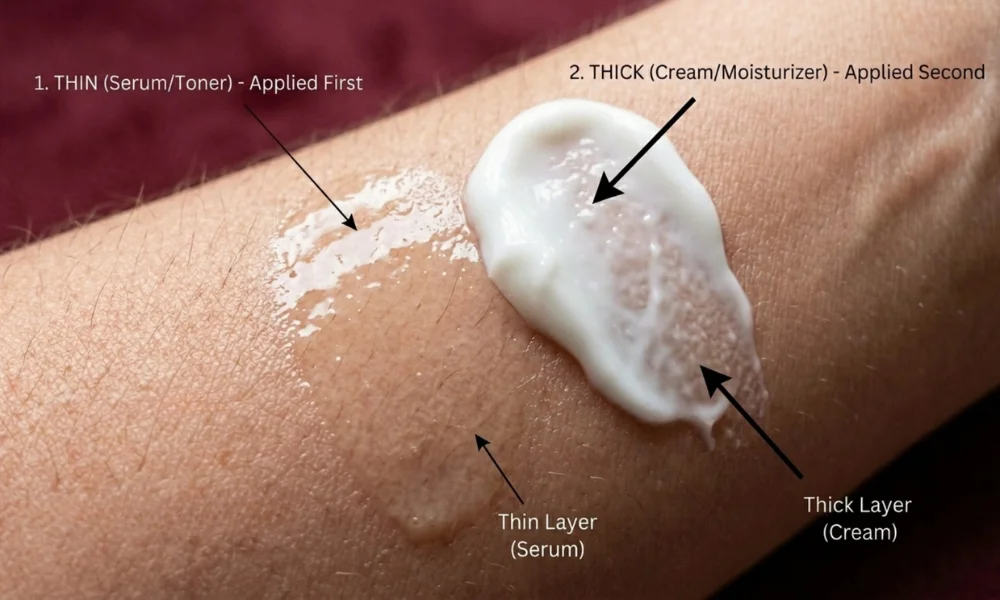
Why Vitamin C Goes First
Vitamin C specifically in its pure L-ascorbic acid form is highly pH-dependent and requires an acidic environment to penetrate the skin effectively. Applying it directly to clean, dry skin ensures that no other products buffer its acidity. Additionally, Vitamin C serums are typically formulated with a watery consistency; following the thin-to-thick rule allows these lighter molecules to absorb before heavier creams create a barrier.
Step-by-Step Skincare Layering Guide
Morning Routine:
-
Cleanser: Start with a fresh base.
-
Vitamin C Serum: Apply to dry skin and wait 1–2 minutes to allow the pH to settle.
-
Niacinamide Serum: Follow up to calm the skin and regulate oil.
-
SPF 30+: This is non-negotiable; Vitamin C works best when shielded from UV.
Night Routine:
-
Cleanser: Remove the day’s pollutants.
-
Niacinamide Serum: Focus on barrier repair while you sleep.
-
Moisturizer: Seal it in with ceramides. Tip: For advanced aging concerns, check out our guide on Red Light Therapy Skincare.
Niacinamide vs Vitamin C: Which One Should You Pick for Your Skin Type?
For Oily and Acne-Prone Skin Niacinamide should be your first pick. It excels at sebum regulation and keeps the skin matte while physically tightening the appearance of pores to prevent future congestion.
For Dry and Mature Skin Vitamin C is usually the winner here. It provides essential collagen support and tackles the sallow, dull appearance often associated with aging or dry skin types.
For Sensitive or Reactive Skin Niacinamide is the gentler option and rarely causes a reaction. If you want to use Vitamin C, introduce stabilized derivatives like Sodium Ascorbyl Phosphate slowly to avoid the stinging associated with pure acids.
For Hyperpigmentation and Dark Spots The best strategy is to use both. Apply vitamin c for hyperpigmentation in the morning to stop pigment production and use Niacinamide at night to block the transfer of existing pigment to your skin cells.
Concentration Guide for Niacinamide vs Vitamin C
The concentration of these actives determines their efficacy and their potential for irritation. For Niacinamide, a 5% concentration is considered the clinical sweet spot. While many brands market 10% or even 20% formulas, these higher strengths can occasionally cause irritation in sensitive users without offering significantly better results.
For Vitamin C, look for a range between 10% and 15% for L-ascorbic acid. This provides enough potency to see a visible glow and collagen boost without the intense stinging often found in 20% concentrations. Remember that higher is not always better, excessively high percentages often lead to pH instability and faster product oxidation.
Niacinamide vs Vitamin C: Side Effects and Who Should Avoid Each Ingredient
Niacinamide side effects are generally rare, though some users experience temporary flushing if the concentration is too high for their skin’s tolerance. Vitamin C is more temperamental and can cause tingling, redness, or photosensitivity if not paired with a high-quality sunblock. If your Vitamin C serum turns a dark yellow or orange, it has oxidized and may cause blackheads or irritation.
Regarding safety, both ingredients are typically considered safe for use during pregnancy and breastfeeding, offering a reliable alternative to harsher actives like retinoids. Regardless of your skin history, always perform a patch test on your inner arm for twenty-four hours before introducing these powerful serums to your full face.
Niacinamide vs Vitamin C: The Final Verdict
The debate of niacinamide vs vitamin c is not about choosing a winner it is about building a partnership. Vitamin C serves as your essential morning shield against aging, while Niacinamide acts as your 24/7 skin architect for a flawless barrier.
The Bottom Line:
-
For Glow + Protection: Reach for Vitamin C.
-
For Calm + Clarity: Stick with Niacinamide.
-
For Complete Skincare: Layer both for maximum results.
Ready to upgrade the rest of your routine? Compare more industry favorites in our detailed La Roche Posay vs CeraVe guide to find your perfect product match.
Conclusion
The ultimate takeaway in the niacinamide vs vitamin c debate is that these ingredients are far more effective as partners than as rivals. While Vitamin C defends and brightens your surface, Niacinamide strengthens and calms your skin’s foundation.
Your choice comes down to your unique goals: choose Vitamin C for a radiant, age-defying glow, or lean on Niacinamide for oil control and a resilient skin barrier. For the best results in 2026, integrate both into a layered routine to unlock a truly balanced complexion. Trust DaithPiercing as your go-to resource for evidence-based skincare guides that cut through the hype. Explore our latest skincare comparisons at DaithPiercing to continue perfecting your daily regimen.
Frequently Asked Questions
Can I use Niacinamide and Vitamin C together in the same routine?
Yes, you can safely use both. The long-standing myth that they cancel each other out has been debunked by modern cosmetic chemistry. Using them together actually provides a dual-action approach: Vitamin C neutralizes external damage while Niacinamide repairs the skin from within.
Should I apply Vitamin C or Niacinamide first?
You should typically apply Vitamin C first. Because pure Vitamin C (L-ascorbic acid) is highly acidic and has a thin, watery consistency, it needs to be applied directly to clean skin for maximum absorption. Niacinamide, which has a more neutral pH and a thicker texture, should follow afterward.
Which ingredient is better for fading dark spots?
Both are effective, but they work differently. Vitamin C is the gold standard for brightening sun-induced brown spots by inhibiting pigment production. Niacinamide is often superior for fading the red or purple marks left behind by acne (post-inflammatory erythema) by calming inflammation and blocking pigment transfer.
Is it better to use these ingredients in the morning or at night?
Vitamin C is most effective in the morning because its antioxidant properties boost your sunscreen’s ability to fight UV rays and pollution. Niacinamide is versatile and can be used both morning and night, though it is particularly beneficial at night to support skin barrier repair while you sleep.
Can these ingredients cause my skin to purge?
Niacinamide is generally non-irritating, but some users may experience “purging” or breakouts if using an excessively high concentration, such as 10% or 20%. Vitamin C does not cause traditional acne purging, but its low pH can cause a tingling sensation or temporary redness in those with sensitive skin.