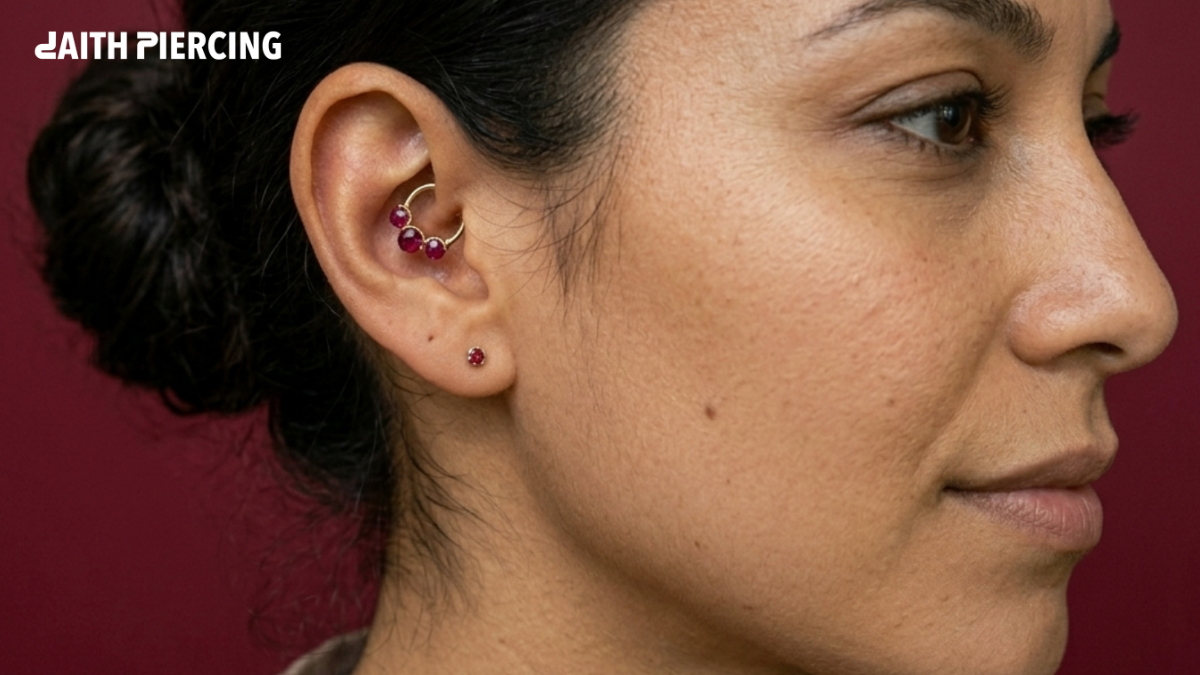
A daith piercing aftercare routine is the only thing standing between a stunning new look and a painful, swollen mess. While the jewelry looks incredible, the real work begins the moment you leave the studio chair.
At DaithPiercing.io, we have mastered the art of cartilage recovery to ensure your journey is seamless. This guide delivers the essential daith piercing care you need covering the best cleaning products, healing milestones, and the recovery traps you must avoid. Stick with us to protect your investment and keep your piercing looking sharp.
How to Care for a Daith Piercing Successful daith piercing aftercare requires cleaning the site twice daily with sterile saline and strictly avoiding pools, harsh chemicals, or touching the jewelry. Expect a 6–12 month healing window. Top-tier products for daith piercing healing include NeilMed Piercing Aftercare Spray, H2Ocean Sea Salt Spray, and Briotech HOCl wound wash.
What Makes Daith Piercing Aftercare Different?
Mastering how to care for daith piercing sites requires understanding the unique geography of your ear. The daith sits in the innermost fold of ear cartilage a dense, thick area that lacks the high blood flow found in your earlobes. Since blood flow drives the healing process, this low-flow zone makes for a much longer recovery road.
Unlike more exposed piercings, the daith lives in a high-traffic danger zone. Its position at the ear canal opening makes it a prime target for stray hairspray, sweat, and bacteria-laden earbuds. Even your choice of pillow can become an enemy, as side-sleeping puts direct, irritating pressure on the wound. Navigating these specific anatomical hurdles is the key to avoiding the dreaded piercing bump and ensuring a smooth, healthy heal.
Daith Piercing Aftercare Healing Timeline (Month by Month)
Most guides offer vague 6 to 12 month windows that leave you guessing. However, a successful daith piercing aftercare journey depends on knowing exactly what your body is doing at every stage. Because cartilage heals from the outside in, the surface often looks perfect long before the internal fistula (the skin tunnel) is actually stable. Following a structured timeline ensures you do not drop your guard too early and trigger a late-stage infection.
Weeks 1–2: Initial Swelling Phase
Expect some drama during the first fortnight. Redness, localized throbbing, and a thin, clear discharge are standard parts of the inflammatory response. This is the danger zone for bacteria, so sleeping on a travel pillow to avoid direct ear pressure is non-negotiable.
Months 1–3: Surface Healing
By now, the initial ache should subside, but you will notice crusties dried lymph fluid forming around the jewelry. While the piercing looks calmer, the tissue is still incredibly fragile. Resist every urge to switch your jewelry, doing so now will likely tear the developing skin and reset your progress.
Months 4–6: Internal Repair
This is the false sense of security phase. Your ear feels great, and the swelling is gone, but the internal repair is still in high gear. Consistent daith piercing maintenance remains vital here. Keep up with your saline rinses to prevent sebum and dead skin cells from clogging the piercing channel.
Months 7–12: Full Heal
The fistula is finally strengthening and maturing. Once you hit the one-year mark without any redness or irritation, your piercing is likely fully established. At this point, it is finally safe to visit your piercer to downsize your hoop or swap it out for a fresh new style.
Your Daily Daith Piercing Aftercare Routine: Morning and Night
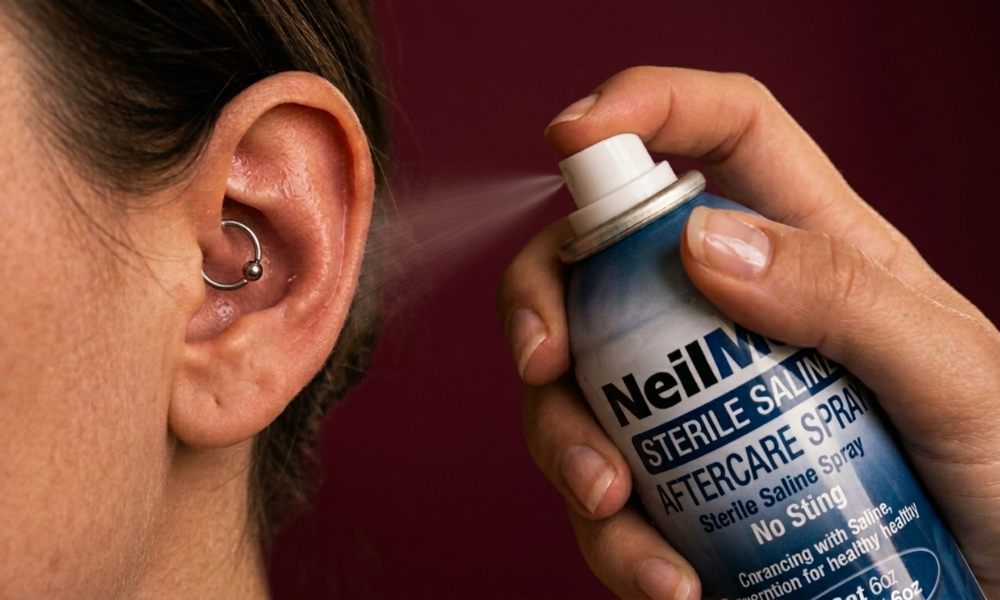
Consistency is the secret to a complication-free heal. Many guides offer general tips, but successful daith piercing aftercare requires a structured schedule. By treating your piercing like a surgical wound, you minimize the risk of irritation and ensure the delicate cartilage remains stable.
Morning Routine
Your morning focus is on clearing away any bacteria that accumulated overnight.
-
Sanitize: Wash your hands thoroughly with antibacterial soap.
-
Mist: Spray a sterile saline solution or dedicated piercing spray directly onto the front and back of the piercing site.
-
Dry: Gently pat the surrounding area with clean, non-woven gauze. Avoid towels, which harbor bacteria.
-
Wait: Allow the site to air dry for 2–3 minutes before letting your hair down or getting dressed to avoid snagging.
Night Routine for Daith Piercing Aftercare
The evening routine focuses on removing the day’s debris and crusties.
-
Shower Last: Rinse your piercing thoroughly at the end of your shower to ensure no shampoo or conditioner residue remains trapped in the fold of your ear.
-
Cleanse: Apply your sterile wound wash or saline spray.
-
Soothe: If the area feels tender or tight, apply a brief warm compress for 3–5 minutes.
-
Protect: Sleep on the opposite side or use a donut/travel pillow to keep all pressure off the ear.
How often should I clean my daith piercing?
You should clean your daith piercing twice daily once in the morning and once at night for the first 6–8 weeks. After this initial phase, you can drop to once-a-day cleanings until the piercing is fully healed.
Best Aftercare Products for Daith Piercing Healing
Selecting the right products is just as important as the routine itself. Using the wrong solution can stall cell repair and lead to stubborn piercing bumps.
Top-Rated Saline Sprays
| Product | Type | Best For |
| NeilMed Piercing Aftercare | Sterile Saline | Daily cleaning & convenience |
| H2Ocean Sea Salt Spray | Sea Salt Blend | Removing stubborn crusties |
| Briotech HOCl | Hypochlorous Wash | Calming bumps & irritation |
| Recovery Aftercare Spray | Saline Mist | Precise application & travel |
Natural Options (Use With Caution)
While natural remedies are popular, they must be used precisely. A sea salt soak should only be homemade if you use exactly ¼ tsp of non-iodized salt per 8 oz of warm distilled water. A chamomile compress can provide anti-inflammatory relief, but use it sparingly to avoid over-moisturizing the tissue. Finally, tea tree oil should only be used if heavily diluted; applying it at full strength can chemically burn the cartilage.
What to Avoid
Stay away from old school remedies like rubbing alcohol, hydrogen peroxide, or Bactine. These are far too harsh for healing tissue and act as drying agents that kill the very cells trying to repair your ear. Similarly, avoid any bar soaps containing fragrances or dyes.
Lifestyle Survival Guide: Protecting Your Daith
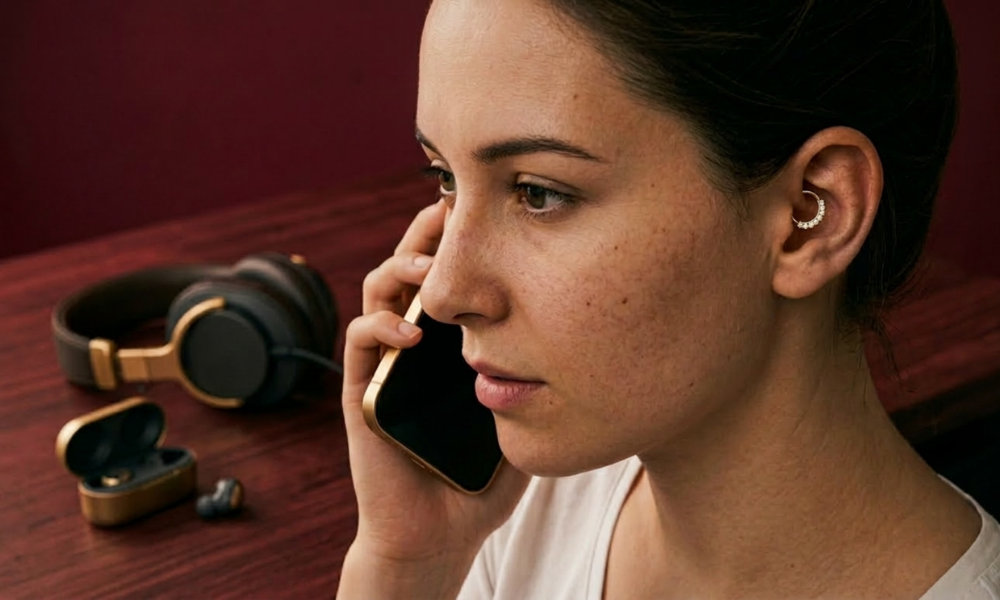
Your daily habits can either accelerate your healing or sabotage it. Most guides ignore the real world, but these three lifestyle shifts are non-negotiable for protecting your new piercing from unnecessary trauma.
The Tech Rule: Headphones and Calls
Earbuds are the number 1 cause of daith irritation. The physical pressure and trapped bacteria are a recipe for piercing bumps. Stick to over-ear headphones for the first 12 weeks. If you must take a call, use speakerphone or hold the device away from your ear to keep the area clear of heat and pressure.
The Active Rule for Daith Piercing Aftercare: Sleep, Sweat and Swimming
-
The Pillow Hack: Use a travel donut pillow to suspend your ear while you sleep. Pressure-free rest is the fastest way to drop swelling.
-
Sweat Management: Salt from sweat can sting and irritate. Spritz with saline immediately after your workout to neutralize the pH.
-
Water Warning: Stay out of pools, lakes, and hot tubs for at least 8 weeks. These are bacterial breeding grounds that lead to instant infections.
The Beauty Rule: Hair and Products
Treat your piercing like a no-fly zone for chemicals. Tilt your head away while rinsing shampoo and shield your ear when applying hairspray or dry shampoo. Even a tiny amount of product buildup can clog the fistula, causing stubborn inflammation and delayed healing.
Signs Your Daith Piercing Aftercare Isn’t Working
Distinguishing between a standard healing ache and a serious complication is the difference between keeping your piercing and losing it. Cartilage heals slowly, but it shouldn’t be a constant source of pain.
Normal vs. Emergency
-
Normal: Mild redness, light crusting, and occasional tenderness are all part of the process.
-
Warning Signs: See a professional if you notice yellow or green discharge, a foul odor, or if your ear feels feverish and hot to the touch. Spreading redness or throbbing pain that keeps you awake are signs of a developing infection.
Treating The Bump
Irritation bumps are common but manageable. If one appears:
-
Switch to HOCl: Use a Hypochlorous wound wash to aggressively target inflammation.
-
Diluted Tea Tree: Apply a single drop of tea tree oil mixed with saline maximum 3x weekly to dry the bump out.
-
Pro Check: if the bump does not shrink within 14 days, your jewelry may be the wrong size or material. Visit your piercer for an adjustment.
Conclusion
To wrap up, a successful daith piercing aftercare journey depends on cleaning the site twice daily with sterile saline and strictly avoiding any physical trauma or pressure. By staying patient during the 6–12 month healing window and avoiding harsh chemicals, you ensure your piercing remains a stunning, healthy addition to your look.
At DaithPiercing.io, we are dedicated to being your most trusted source for expert piercing guidance. We encourage you to bookmark this page and explore our extensive library of related guides, including deep dives into healing timelines, high-quality jewelry options, and advanced infection treatments.
Frequently Asked Questions
How long does daith piercing aftercare last?
Daith piercing aftercare lasts 6 to 12 months, sometimes up to 18 months. Surface healing happens in 2–3 months, but internal cartilage tissue keeps repairing far longer. Stick with cleaning until your piercer confirms it is fully healed.
Can I use rubbing alcohol on my daith piercing?
No. Alcohol kills the new cells your body needs to heal. It also dries out the cartilage, increasing the chance of bumps and prolonged irritation. Use only sterile saline solution or wound wash designed for piercings.
When can I change my daith jewelry?
Wait at least 6 months, and only change after going one full week with no discharge, redness, or tenderness. Visit your piercer for the first jewelry swap to avoid damaging the healing fistula.
Is sea salt soak safe for a daith piercing?
A properly mixed sea salt soak is safe but tricky. Use ¼ teaspoon non-iodized sea salt per 8 ounces of warm distilled water. Stronger mixes burn the tissue. Pre-made saline is safer for daily use.