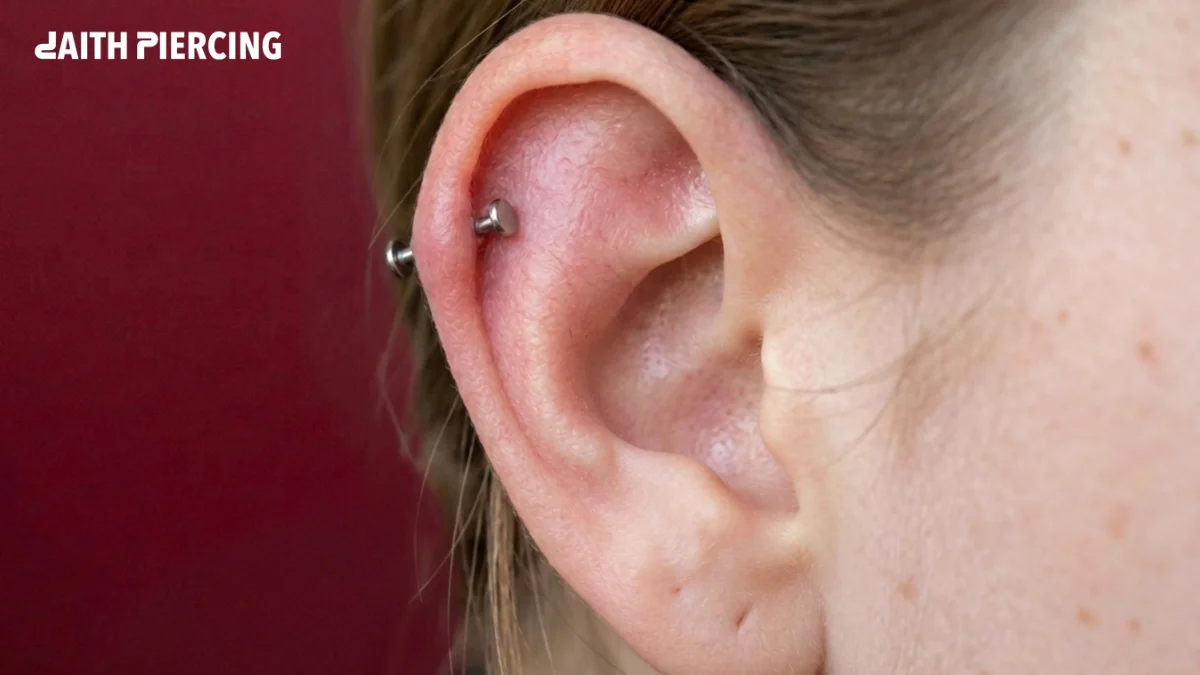
Waking up to a throbbing, puffy, and sore inner ear is a common hurdle for many, but dealing with daith piercing swelling is often just a natural part of the cartilage healing journey. While the inflammation can feel intense, it is typically a standard biological response rather than an immediate sign of failure.
At daithpiercing.io, we specialize in guiding you through every bump in the road to a fully healed piercing. Daith piercing swelling is normal for the first 2–4 weeks but can return years later due to irritation, infection, or jewelry issues.
What Causes Daith Piercing Swelling?
Unlike a standard earlobe, the daith is situated in a thick fold of dense cartilage. Because cartilage has significantly lower blood flow than soft tissue, the healing process is slower and more prone to visible inflammation. Additionally, its tucked-away location creates a warm, recessed environment that easily traps moisture and bacteria. Swelling is your body’s natural healing response to fresh cartilage trauma, but certain external factors can make it worse.
Typical triggers for daith piercing swelling include:
-
Initial Trauma: The mechanical force of the needle passing through dense tissue.
-
Physical Irritation: Accidental snagging on hair, towels, or restrictive clothing.
-
Pressure: Sleeping directly on the ear before the fistula has matured.
-
Jewelry Issues: Using low-quality metals (like nickel) or hoops that are too small to accommodate natural expansion.
Daith Piercing Swelling Stages
Understanding the daith piercing swelling stages helps you know what is normal and when to worry. Because cartilage is slower to recover than a lobe, the peak of your discomfort might not happen immediately after leaving the studio.
The following timeline outlines the standard progression of inflammation for a healthy daith:
Daith Piercing Swelling Stages Timeline
| Stage | Timeframe | What to Expect | Action to Take |
| Acute Swelling | Day 1–3 | Throbbing, redness, warmth, mild bleeding | Cold compress, leave it alone |
| Peak Swelling | Day 4–7 | Maximum puffiness, jewelry feels tight | Saline rinse twice daily |
| Settling Phase | Week 2–4 | Swelling reduces 50–70%, light crusting | Continue saline, avoid pressure |
| Downsizing Window | Week 6–8 | Swelling mostly gone, jewelry feels loose | Visit piercer to downsize |
| Full Stability | Month 6–12 | No swelling, fully healed | Safe to change jewelry |
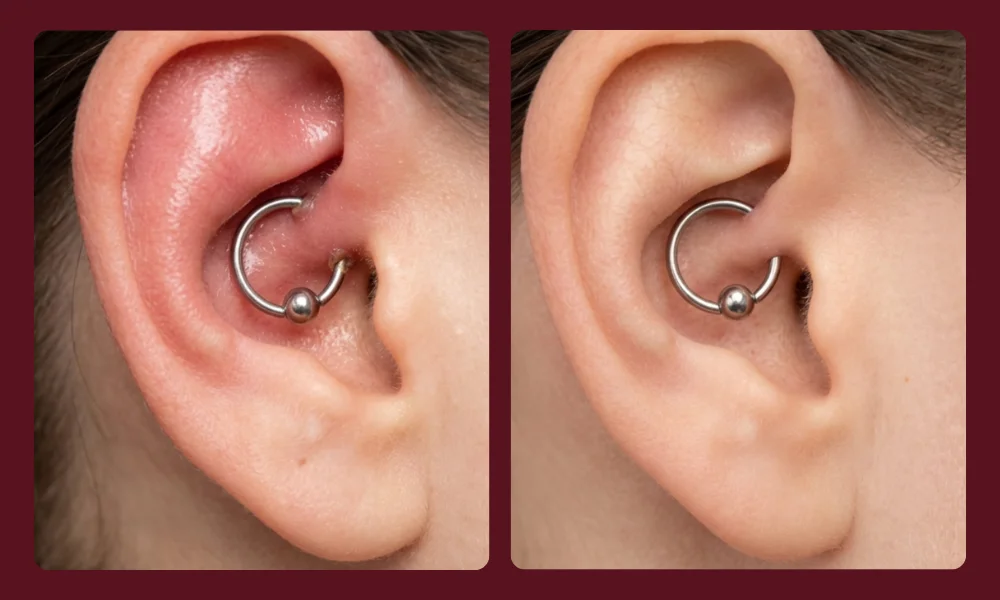
Keep in mind that every body reacts differently, your specific journey through these stages can be influenced by your immune system, the consistency of your aftercare, and even your sleeping habits.
Daith Piercing Swelling After a Week: Is It Normal?
Yes, daith piercing swelling after a week is completely normal and often peaks around days 5–7. While other piercings might start to calm down, the daith’s thick cartilage often experiences a delayed inflammatory response as the initial adrenaline wears off and the body begins the intensive cellular repair process.
Signs like dull throbbing or localized heat, clear or pale yellow crusties (lymph fluid) and moderate puffiness around the entry and exit points tells it is normal.
When to see a piercer: If the swelling continues to worsen significantly after day 10, or if you notice radiating heat and throbbing that prevents sleep, a secondary infection may be starting.
How to Treat Daith Piercing Swelling at Home
Knowing how to treat daith piercing swelling early prevents bumps, prolonged pain, and potential infection. Because cartilage heals from the outside in, consistent, gentle care is the only way to reduce inflammation without resetting the healing clock.

To manage your swelling effectively, follow this recovery stack:
- Saline Soaks: Use a mixture of 1/4 tsp non-iodized sea salt and 8 oz distilled warm water (or a sterile saline spray) twice daily.
- Cold Compresses (First 48 Hours): Use a clean, paper-towel-wrapped cold pack to constrict blood vessels and dull the initial throb.
- Warm Compresses (Day 3+): Once the initial trauma subsides, gentle warmth improves blood flow to the oxygen-starved cartilage.
- The Donut Method: Sleep on the opposite side or use a travel pillow to keep your ear in the hole, preventing pressure.
- OTC Anti-Inflammatories: Ibuprofen is generally more effective than acetaminophen for reducing tissue puffiness.
- The Hands-Off Rule: Avoid earbuds, tight hats, or headphones, and never use alcohol, peroxide, or Neosporin, as these harsh chemicals kill healthy healing cells.
My Daith Piercing Is Swollen and Hurts: What Should I Do?
If your daith piercing is swollen and hurts, it is usually due to irritation from pressure or movement rather than infection. To manage a flare-up, immediately stop touching the area, rinse it with sterile saline to clear debris, and take ibuprofen to reduce internal tissue pressure. Ensure your jewelry is not twisted or snagged, however, if throbbing pain is accompanied by fever or red streaks, seek medical attention immediately.
Daith Piercing Swelling After Years: Why It Happens
Finding your daith piercing swollen after years of comfort is frustrating, but it usually points to irritation, an allergic reaction, a late-stage infection, or jewelry breakdown. Daith piercing swelling after years often acts as a warning sign that something in your routine or environment has shifted, even if the piercing has felt perfect for a long time.
One common culprit is a delayed nickel allergy. This happens when the protective plating on low-quality jewelry wears thin, exposing your tissue to irritating base metals. Other times, simple trauma is to blame like snagging the ear during sports or accidentally sleeping in a position that puts sustained pressure on the mature fistula.
Changes in your body can also play a role. Jewelry may become too tight due to weight fluctuations, pregnancy, or even a subclinical infection caused by a buildup of biofilm on an old hoop. To fix this, deep-clean the site with sterile saline and switch to biocompatible materials like implant-grade titanium or solid 14k gold. If the swelling persists, a professional piercer should evaluate the site for jewelry migration.
How to Treat Infected Daith Piercing
Identifying a true infection early is critical. If you notice yellow or green discharge, skin that is hot to the touch, or red streaks radiating from the site, you need to act fast. Unlike standard daith piercing swelling, an infection often presents with a severe, rhythmic throb that persists well past the first week and may be accompanied by a fever.
To effectively manage a suspected infection, your first rule is to never remove the jewelry. Keeping the hoop in place ensures the wound stays open to drain; removing it can trap the bacteria inside, leading to a painful abscess. Focus on keeping the area pristine by performing saline soaks three times daily and applying a warm compress, such as a clean rice sock, for 15 minutes to encourage drainage.
During this time, maintain a strict hygiene barrier by keeping hair, phones, and pillowcases away from the ear. While over-the-counter ibuprofen can help manage pain, you must see a doctor within 48 hours if symptoms do not improve, as professional antibiotics may be required. Never use hydrogen peroxide or rubbing alcohol on cartilage infections, as these harsh liquids destroy the healthy cells your body needs to fight back.
Conclusion
Ultimately, daith piercing swelling follows predictable stages and rarely becomes a serious issue when addressed early with consistent, gentle care. Whether you are navigating the first week or dealing with a late-onset flare-up years later, most issues are easily fixable by prioritizing hygiene and high-quality jewelry.
For more detailed healing checklists and expert jewelry recommendations, daithpiercing.io is your go-to resource. Be sure to bookmark our site for the latest in piercing aftercare and troubleshooting guides.
Frequently Asked Questions
How long does daith piercing swelling last?
Initial daith piercing swelling typically lasts between 2 to 4 weeks, though minor fluctuations in inflammation can occur throughout the first six months of healing. If the swelling persists or worsens after the first month, it may be a sign of irritation or the need for a jewelry downsize.
Can I take ibuprofen for daith piercing swelling?
Yes, ibuprofen is highly effective for managing daith piercing swelling because it is an anti-inflammatory that helps reduce tissue puffiness and internal pressure. Always follow the dosage instructions on the label and consult a professional if you have underlying health conditions.
Why is my daith piercing swollen after a week?
It is completely normal for a daith piercing to remain swollen after a week as cartilage often experiences a delayed inflammatory response that peaks around days 5 to 7. This “delayed” swelling is simply your body’s natural repair mechanism working through the dense ear tissue.
What does an infected daith piercing look like?
An infected daith piercing typically displays persistent, spreading redness, skin that feels hot to the touch, and thick yellow or green discharge. Unlike standard irritation, an infection often causes a deep, throbbing pain that may be accompanied by fever or swollen lymph nodes.
Can daith piercing swelling come back years later?
Yes, daith piercing swelling after years can return due to physical trauma, a sudden allergy to jewelry metals, or a buildup of bacteria and biofilm on the ring. Switching to implant-grade titanium and resuming saline soaks usually resolves these late-stage flare-ups quickly.