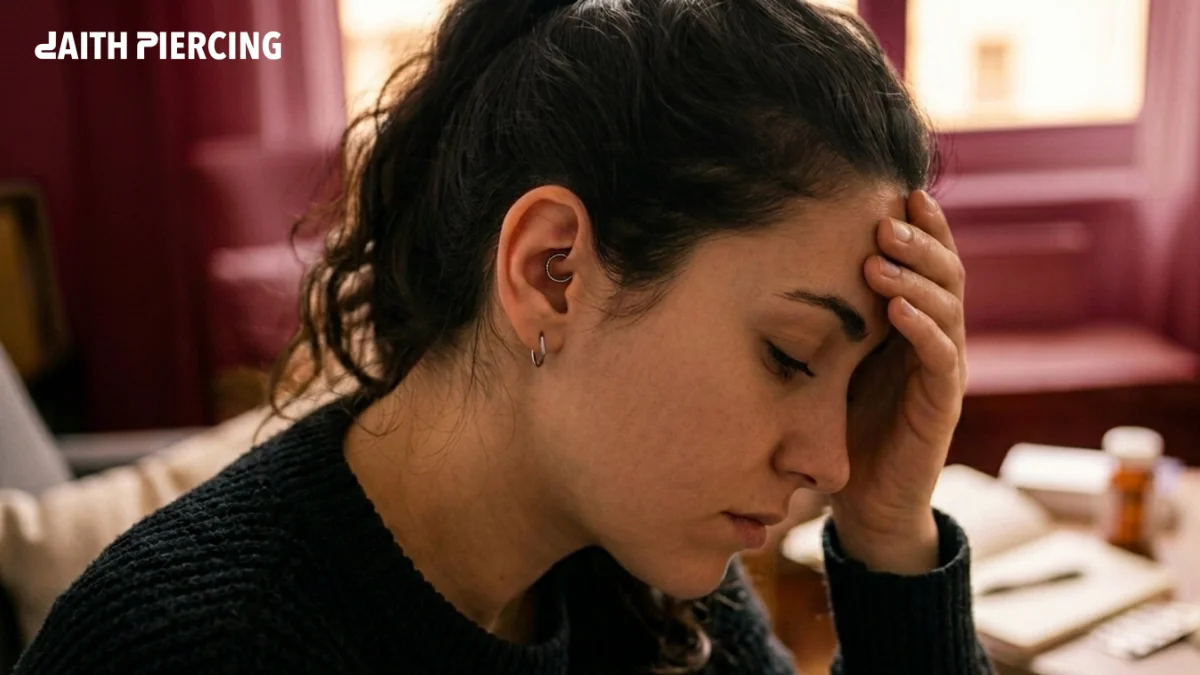
If you’ve ended up reading about daith piercing headaches, chances are you’ve already tried a dozen things to make the pain stop. Pills that wear off too fast. Cold compresses. Dark rooms. And somewhere on TikTok or a migraine forum, someone swore that a tiny ear piercing changed their life. So here we are. At daithpiercing.io, we get this question almost every week, and the honest answer sits somewhere between yes, sometimes and the science is still figuring it out. Let’s break it down properly.
A daith piercing goes through the innermost cartilage fold of your ear. Some people say it eases daith piercing headaches by pressing on a vagus nerve point linked to acupuncture relief. Surveys put improvement rates between 47% and 75%, but no clinical trial has confirmed it works. Effects may be placebo. Risks include infection and slow healing.
What Daith Piercing Headaches Theory Actually Means
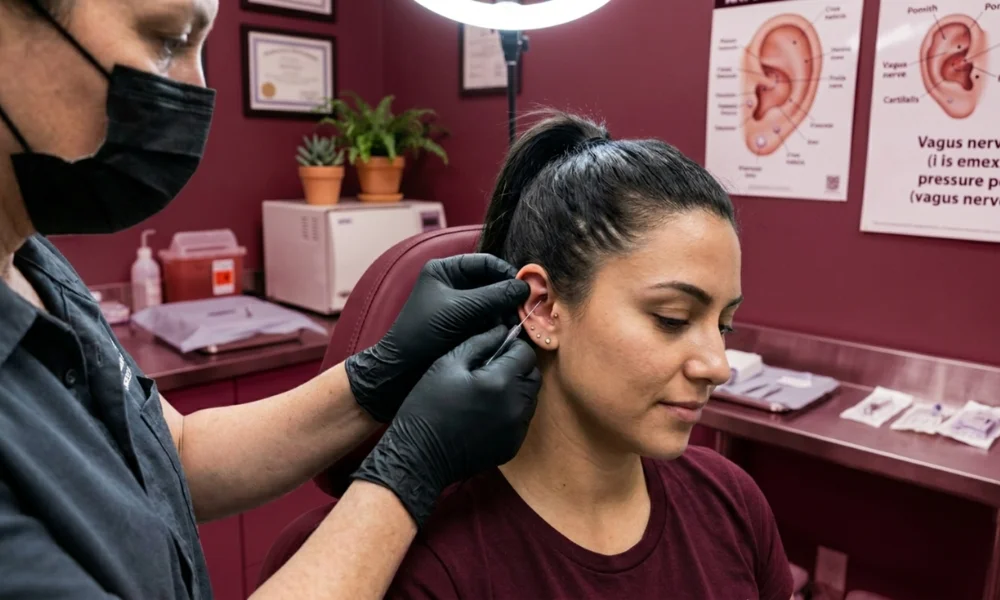
The daith sits at the crus of the helix. That is a fancy way of saying the small, curvy fold of cartilage right above your ear canal. It’s a tricky spot to pierce because the cartilage is thick and shaped awkwardly.
The migraine theory borrows from acupuncture. There is a pressure point in this exact area that traditional Chinese medicine connects to digestion and pain regulation. Modern researchers think the real mechanism behind daith piercing headaches relief might be the vagus nerve.
A branch of it runs through your ear, and stimulating it has been shown to calm pain pathways in the brain. Acupuncturists target this spot with needles. A daith piercing, the theory goes, applies pressure 24/7.
Can a Daith Piercing Cause a Headache?
Yes, it can, but usually only short term. Right after the piercing, your body treats the new wound as an injury. Inflammation kicks in, blood vessels dilate, and the trauma can trigger a tension-type headache for a day or two. This is normal.
What’s not normal is a headache that gets worse over weeks or comes with fever, redness, or pus. That points to infection, and cartilage infections are no joke. Get to a piercer or doctor quickly. Most healing-related discomfort settles within 72 hours.
What the Science Says About Daith Piercing Headaches
Here’s where things get blunt. The NHS does not endorse daith piercings as a migraine treatment. Neither does the American Migraine Foundation. Cleveland Clinic published a piece basically saying save your money.
A 2024 narrative review in the journal Headache by Pradhan and colleagues looked at every study available and concluded the evidence does not support daith piercing for migraine, tension-type headache, or any other headache disorder.
That is the official position. But it is not the whole story.
Survey Data on Migraine Relief Ear Piercing for Migraines
Patient-reported data tells a different tale. Here is what the largest surveys found:
- London Migraine Clinic survey: 75% of participants said their migraines greatly improved after the piercing.
- MigrainePal survey (380 patients): 47.2% reported fewer attacks, and roughly 50% experienced less severe pain.
- 2020 pediatric study: Six out of eight children with daiths reported improvement in headache frequency and mood.
These are not clinical trials. They are self-reported, prone to bias, and the relief often fades after a few months. But dismissing them entirely also feels wrong when so many people describe real changes in their daith piercing headaches experience.
Which Side Daith Piercing for Migraines Works Best?
Most piercers will tell you to pick the side where your migraines hit hardest. If your pain is usually left-sided, pierce the left. If it’s both sides or shifts around, some people get bilateral daiths.
Why? Nobody knows for sure. The vagus nerve runs on both sides of the body and the connections cross over in the brainstem, so theoretically it shouldn’t matter. But the anecdotal pattern is consistent enough that experienced piercers default to the dominant-pain side. Start with one. You can always add the second later.
Daith vs Tragus Piercing for Migraines: Which Is Better?
Here is the breakdown:
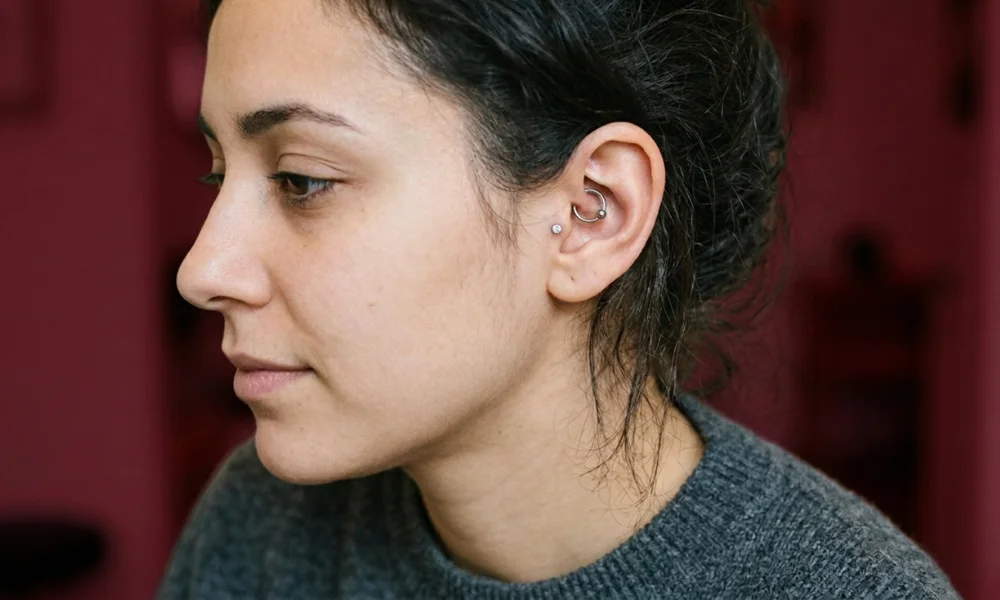
Tragus Piercing for Migraines
The tragus is that little flap of cartilage in front of your ear canal. It is also part of the auricular branch of the vagus nerve, which is why some migraine sufferers try it instead of the daith. Healing is generally faster and the piercing itself hurts slightly less for most people.
Which Is Better for Migraines, Daith or Tragus?
Honestly, neither has clinical proof. The daith has more case studies behind it and more reported anecdotal relief, probably because it sits closer to the specific acupuncture point linked to headache treatment. Here’s a quick side-by-side comparison:
| Feature | Daith Piercing | Tragus Piercing |
|---|---|---|
| Healing time | 6–9 months | 4–6 months |
| Pain level (out of 10) | 6–7 | 4–5 |
| Vagus nerve target | Inner cartilage fold | Outer cartilage flap |
| Migraine evidence | More case studies | Mostly anecdotal |
| Sleep comfort | Harder first weeks | Easier first weeks |
| Average cost (USA) | $50–$90 | $40–$70 |
If you are choosing based on migraine logic, daith edges ahead. If you want comfort and a faster recovery, tragus wins.
Fake Daith Piercing for Migraines, Does It Work?
This is the question almost no medical site touches. A fake daith is a clip-on or magnetic faux ring that mimics the look and pressure of a real piercing without breaking skin.
Here is the thing. If the relief from real daith piercings is partly placebo, a fake daith could give you the same psychological lift with zero infection risk. No needle, no healing time, no commitment.
It would not stimulate the vagus nerve the way constant cartilage pressure might, but it costs ten dollars and you can return it. For people on the fence about treating their daith piercing headaches, this is a smart trial run before booking an appointment.
What Piercing Helps With Headaches and Migraines Beyond the Daith?
Outside the daith and tragus, some people try the conch (the bowl of the ear) or the rook (the inner upper ridge). Both have anecdotal supporters. Neither has more research backing than the daith.
There is also a quieter conversation happening around piercing for headaches and anxiety. The vagus nerve influences both. It governs your parasympathetic nervous system, the part that calms heart rate and reduces stress response.
Migraine and anxiety share neural pathways, which is why some people who get daiths for daith piercing headaches notice their anxiety dropping too. Whether that’s nerve stimulation or just relief from chronic pain reducing background stress, nobody can say.
Daith Piercing Pain, Risks, and the 2/3 Rule
Most piercers rank 3 most painful piercings by pain level like this:
- Genital piercings: top of the list, sharp and intense.
- Nipple piercings: second, with a longer-lasting throb.
- Industrial piercings: third, since the bar passes through two cartilage points at once.
Daith lands around fourth or fifth. Expect a sharp 6 or 7 out of 10 for about three seconds, then a dull throb for the rest of the day.
What Is the 2/3 Rule for Piercings?
The 2/3 rule is a piercer’s rough guide: a piercing usually feels healed at about two-thirds of the way through its full healing window, but it still needs aftercare for the remaining third. A daith looks healed by month four but is not fully closed internally until month eight or nine.
Change the jewelry too soon and you’ll set the whole process back. This matters more for migraine seekers because constant fiddling delays the consistent pressure that might be doing the work in the first place.
About one in three cartilage piercings end up with some kind of complication. Infection, keloid scars, embedded jewelry, or perichondritis (a serious cartilage inflammation). Picking a licensed piercer with proper sterilization isn’t optional.
Final Thoughts: Should You Try a Daith Piercing for Headaches?
Here is the honest take. The daith is not a clinically proven treatment for daith piercing headaches. It might be placebo. It might be vagus nerve modulation. For some people it changes everything for six months and then stops working. For others it does nothing at all.
If you’ve tried the standard treatments, you are realistic about results, and you don’t have a keloid history or active infections, the risk-to-reward math is not terrible. Just go in with clear eyes. For more guidance on jewelry choices, healing routines, and finding a qualified piercer, daithpiercing has the resources you need to make a smart decision about your own daith piercing headaches journey.
Frequently Asked Questions
Can a daith piercing cause a headache?
Yes, briefly. The trauma of the piercing can trigger a tension-type headache for one to three days as your body manages inflammation. If the headache worsens, comes with fever, or the piercing site looks red and swollen beyond day three, that suggests infection and needs medical attention.
Which is better for migraines, daith or tragus?
The daith has slightly more anecdotal and case-study support because it sits closer to the acupuncture pressure point traditionally linked to headache relief. The tragus heals faster and hurts less. Neither has clinical proof, so the choice often comes down to personal pain tolerance and which side of your ear feels right.
What is the 2/3 rule for piercings?
The 2/3 rule means a piercing typically feels healed at about two-thirds of its expected healing window but still requires full aftercare until the end. For a daith, that means continuing cleaning and avoiding jewelry changes through month nine, even if the piercing looks fine by month four.
What are the top 3 most painful piercings?
The most painful piercings are usually ranked as genital piercings first, nipple second, and industrial third. The daith generally lands at fourth or fifth, with most people describing the actual pierce as a sharp 6 or 7 out of 10 lasting only a few seconds.
Does fake daith piercing for migraines actually work?
A fake daith won’t provide nerve stimulation since it doesn’t penetrate the skin. But if some of the migraine relief from real daiths is psychosomatic or placebo-driven, a fake version may still produce noticeable relief at zero risk. It’s a useful low-cost trial before committing to the real piercing.