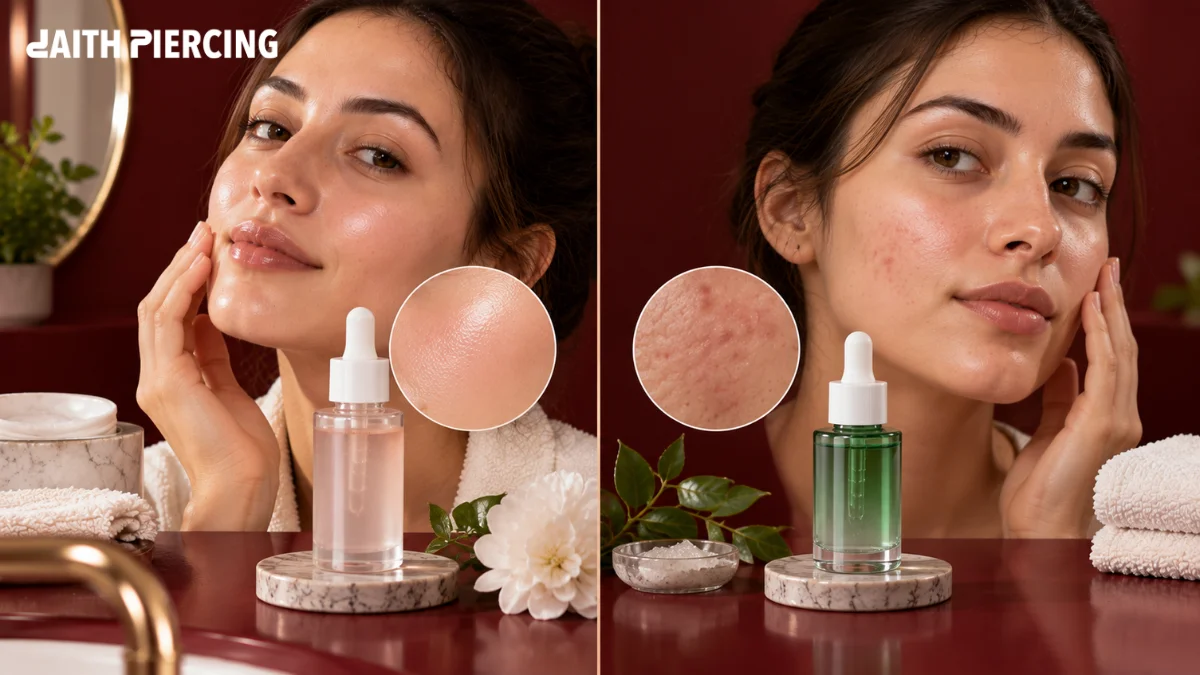
Glycolic Versus Salicylic Acid: When it comes to chemical exfoliation, glycolic versus salicylic acid is one comparison that comes up again and again. Both can make skin look smoother and clearer, but they do not work in exactly the same way. Glycolic acid mainly works on the skin’s surface, while salicylic acid is better at getting into oily pores.
So, which one should you choose? The answer depends on what your skin actually needs. If your main concern is dullness, rough texture, or uneven-looking skin, glycolic acid may be the better match. If clogged pores, blackheads, or oily skin are bothering you, salicylic acid may make more sense.
This guide from DaithPiercing breaks down the difference without making skincare sound like a chemistry lesson.
What Is Glycolic Acid?
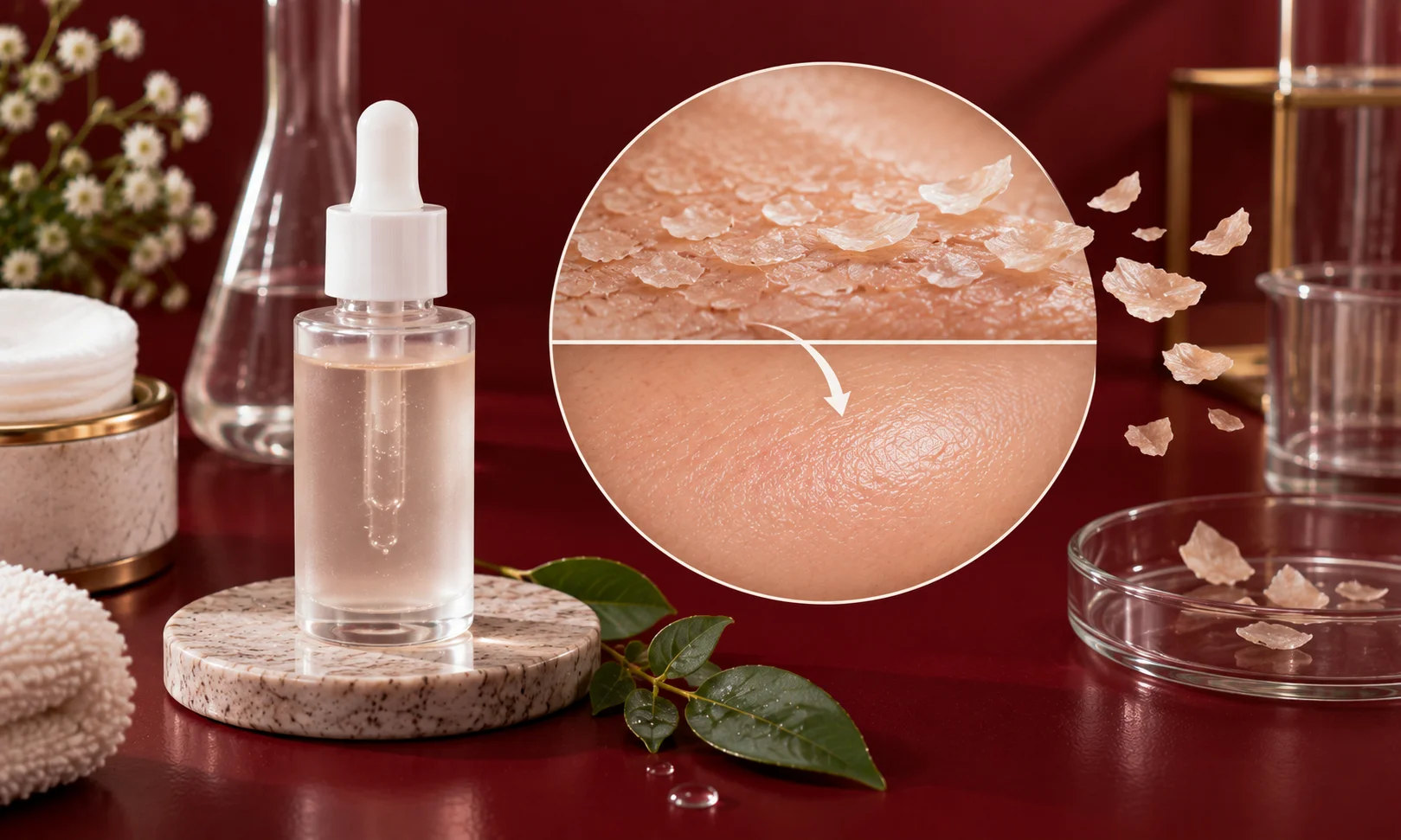
Glycolic acid is an alpha hydroxy acid (AHA). It is commonly used in skincare products because it helps loosen and remove dead skin cells from the surface.
Because glycolic acid has a small molecular size, it can penetrate the outer layers of skin relatively easily. This makes it an effective exfoliant, but it can also feel stronger or more irritating for some people.
Regular use can help improve the appearance of rough texture, dull skin, uneven tone, and some signs of photoaging.
What Is Glycolic Acid Good For?
Glycolic acid may be useful if you want to improve:
- Dull-looking skin
- Rough or uneven texture
- Uneven skin tone
- The appearance of dark spots
- Fine lines
- Surface buildup of dead skin cells
It is mainly a surface-focused exfoliant, so think of glycolic acid as the ingredient that helps give tired-looking skin a smoother finish.
Key Takeaways
- Glycolic acid is an AHA that mainly exfoliates the skin’s surface.
- Salicylic acid is commonly classified as a BHA and is particularly useful for oily, congested pores.
- Glycolic acid may be better for rough texture, dullness, and uneven-looking skin tone.
- Salicylic acid may be better for blackheads, clogged pores, and acne-prone skin.
- Using both can be possible, but combining exfoliants may increase irritation.
- Start slowly and follow the product’s directions.
- Sun protection is especially important with glycolic acid and other AHAs.
- More exfoliation does not always mean better skin.
What Is Salicylic Acid?
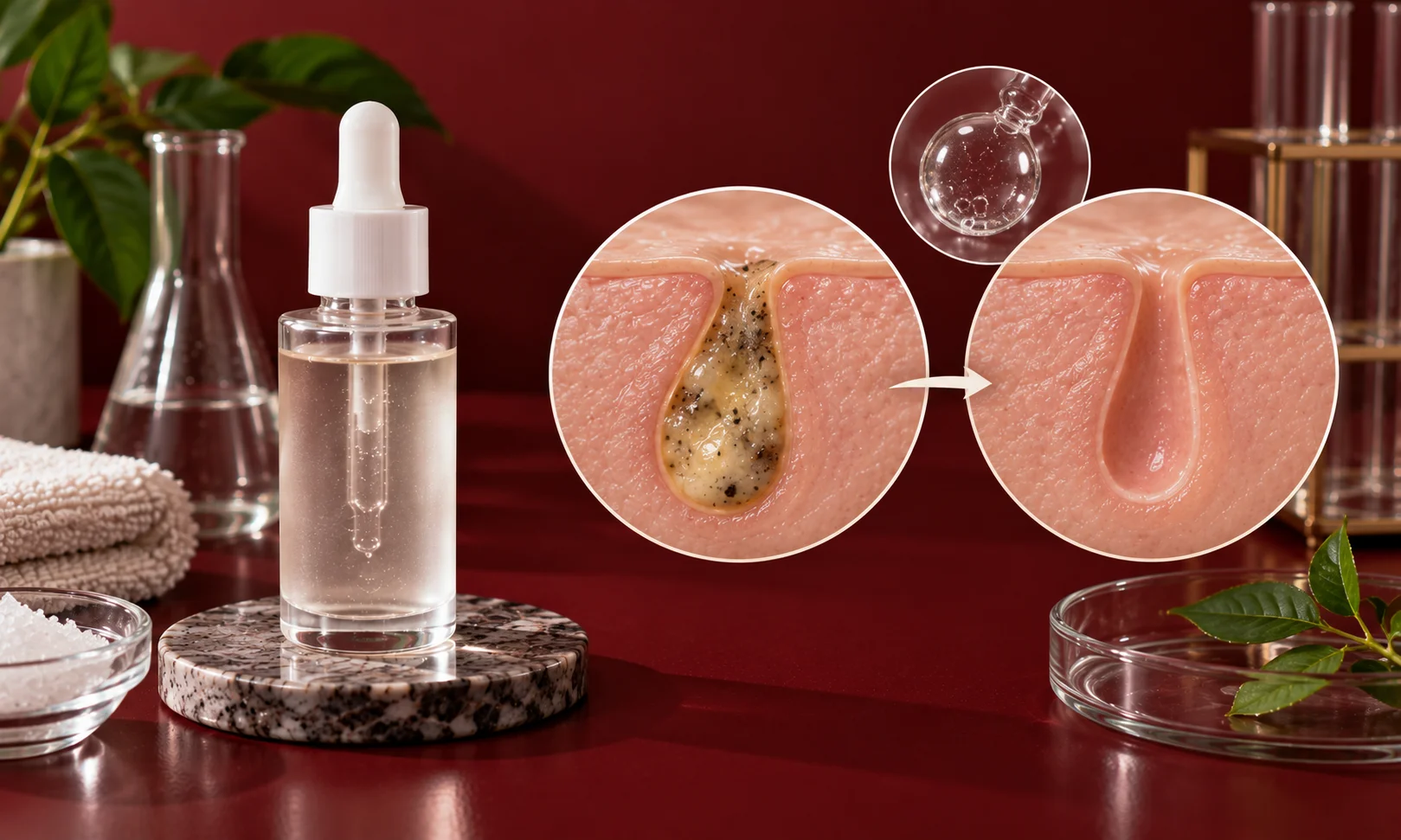
Salicylic acid is commonly classified as a beta hydroxy acid (BHA) and is especially popular in products designed for acne-prone and oily skin. Unlike glycolic acid, salicylic acid is oil-soluble, which helps it work inside pores.
It is also a comedolytic agent, meaning it can help prevent and clear clogged pores. The American Academy of Dermatology’s acne guidelines conditionally recommend topical salicylic acid for acne based on available clinical evidence.
What Is Salicylic Acid Good For?
Salicylic acid may be a better option for:
- Blackheads
- Clogged pores
- Excess oil
- Acne-prone skin
- Rough pores
- Breakouts caused by congestion
If your skin often feels oily and your pores seem to get blocked easily, salicylic acid is usually the more targeted choice.
Glycolic Versus Salicylic Acid: The Main Difference
The simplest way to remember the difference is this:
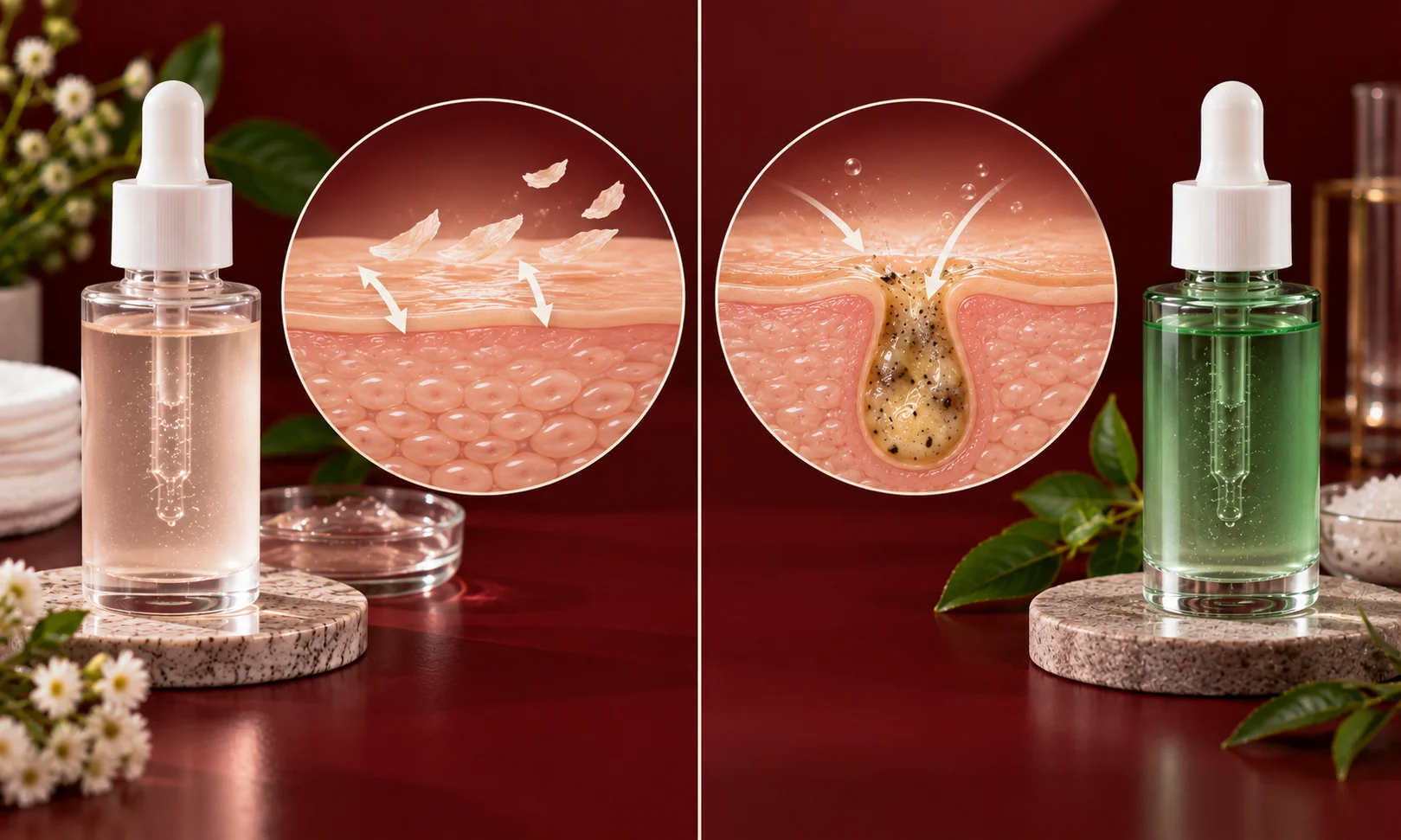
Glycolic acid focuses more on the surface. Salicylic acid focuses more on the pores.
Glycolic acid helps exfoliate dead cells sitting on the skin’s surface. Salicylic acid can move through oil and work within pores, making it particularly useful when excess sebum and clogged pores are the problem.
| Feature | Glycolic Acid | Salicylic Acid |
|---|---|---|
| Type | AHA | BHA |
| Main action | Surface exfoliation | Pore exfoliation |
| Best for | Texture, dullness, uneven tone | Blackheads, oil, clogged pores |
| Oil-soluble | No | Yes |
| Acne support | Helpful for some concerns | Particularly useful for clogged pores |
| Sun sensitivity | Can increase UV sensitivity | Use sun protection as directed |
| Irritation | Can irritate sensitive skin | Can also cause dryness or irritation |
Neither ingredient is automatically “better.” They simply solve different problems.
Glycolic Acid vs Salicylic Acid for Acne
If acne is your biggest concern, salicylic acid usually has the advantage, particularly when your breakouts are linked to clogged pores, blackheads, and excess oil.
Salicylic acid has evidence supporting its use in acne care, including effects on inflammatory lesions and open comedones.
Glycolic acid can still be useful for acne-prone skin because exfoliating the surface may help improve roughness and post-acne marks. However, it is not usually the first ingredient to reach for when your main issue is oily, congested pores.
Glycolic Acid vs Salicylic Acid for Dark Spots
This one is a little closer.
Glycolic acid is often chosen when the goal is to improve uneven-looking skin tone and surface pigmentation because it increases exfoliation and helps remove dead cells from the outer layer.
Salicylic acid can also be useful, especially when dark marks appear after acne. In that situation, controlling the clogged pores and breakouts that create new marks can be just as important as treating the existing discoloration.
If dark spots are your main concern, glycolic acid may be worth considering, but your skin type and the cause of the pigmentation still matter.
Which Is Better for Oily Skin?
Salicylic acid generally makes more sense for oily skin.
Because it is oil-soluble, salicylic acid can work within oily pores instead of only exfoliating the outer surface. This is one reason it is so common in products made for oily and acne-prone skin.
Glycolic acid can still be used by people with oily skin, especially when rough texture or uneven tone is also an issue. But if your biggest complaint is “my pores keep getting clogged,” salicylic acid is usually the more logical starting point.
Which Is Better for Dry or Rough Skin?
For rough, dull skin, glycolic acid may have the edge.
Its surface exfoliating action can help remove accumulated dead skin cells and leave the skin feeling smoother. However, stronger exfoliation is not always better. Using too much can leave the skin irritated, tight, or uncomfortable.
If your skin is already very dry or sensitive, start slowly rather than jumping into frequent acid treatments.
Can You Use Glycolic Acid and Salicylic Acid Together?
Yes, but using both does not automatically mean better results.
Combining exfoliating acids can increase the chance of dryness, stinging, redness, and irritation. This is especially true if you already use other active ingredients such as retinoids or benzoyl peroxide.
A simpler routine is often easier to tolerate. You could use one acid on certain days and the other on different days instead of applying both at once.
Your skin should feel comfortable, not like it has been scrubbed into submission.
How Often Should You Use Them?
There is no single schedule that works for everyone. Product strength, formulation, skin type, and other products in your routine all matter.
If you are new to chemical exfoliation, start with a lower-strength product and use it less frequently. Give your skin time to adjust before increasing use.
Always follow the product’s instructions. If you develop persistent burning, significant redness, swelling, or peeling, stop using the product and consider speaking with a dermatologist.
Which One Is Safer for Sensitive Skin?
Neither acid should automatically be called “safe for sensitive skin.” Both can cause irritation when used too often or in formulations that are too strong for your skin.
Glycolic acid can be particularly noticeable because of its strong exfoliating action. Salicylic acid can also cause dryness, stinging, or irritation.
For sensitive skin, the better approach is to introduce one active at a time, use it sparingly, and pay attention to how your skin reacts.
Don’t Skip Sunscreen
This is especially important when using glycolic acid.
The FDA reports that topical AHAs can increase skin sensitivity to ultraviolet radiation and recommends sun protection while using them and for a period after stopping.
Research comparing glycolic acid and salicylic acid also found increased short-term UV sensitivity with glycolic acid treatment, while the salicylic acid treatment in that study did not produce significant changes in the measured UV-related markers.
Use broad-spectrum sunscreen as part of your daytime routine and follow the instructions on your exfoliating product.
Glycolic Versus Salicylic Acid: Which One Should You Pick?
Here’s the easy version:
Choose glycolic acid if:
You mainly want smoother texture, brighter-looking skin, and help with uneven tone or surface buildup.
Choose salicylic acid if:
You mainly struggle with oily skin, blackheads, clogged pores, or acne.
Consider alternating them if:
You have more than one concern and your skin tolerates exfoliation well.
Avoid rushing into both if:
Your skin is sensitive, already irritated, or you’re using several other strong active ingredients.
The best skincare routine is not the one with the most acids. It is the one your skin can actually tolerate consistently.
What Dermatology Evidence Tells Us
The difference between these ingredients is supported by dermatology and safety research rather than simply being a skincare trend. The American Academy of Dermatology’s acne guidelines recognize salicylic acid as an acne treatment option, while FDA guidance highlights the potential for AHAs such as glycolic acid to increase sensitivity to UV radiation.
For consumers, this means ingredient choice should be based on the skin concern being treated, product directions, and tolerance rather than assuming that a higher concentration or more frequent use will produce faster results.
FAQs
Is glycolic acid better than salicylic acid?
Not necessarily. Glycolic acid is better suited to surface concerns such as texture and dullness, while salicylic acid is often better for oily skin and clogged pores.
Can I use glycolic acid and salicylic acid on the same day?
You can, but it may increase irritation. For many people, alternating them or using only one at first is a gentler approach.
Which is better for blackheads, glycolic or salicylic acid?
Salicylic acid is generally the better choice because it is oil-soluble and can work inside clogged pores.
Which acid is better for glowing skin?
Glycolic acid may be a good option when dullness and surface buildup are making the skin look tired. Gentle, consistent use is more important than using a strong product frequently.
Can salicylic acid remove dark spots?
Salicylic acid can help as part of a routine, particularly when dark marks are connected to acne. However, the right treatment depends on the cause of the pigmentation.
Can glycolic acid cause irritation?
Yes. Glycolic acid can cause stinging, dryness, redness, or irritation, particularly when used too frequently or at higher strengths. It can also increase UV sensitivity, so sun protection is important.