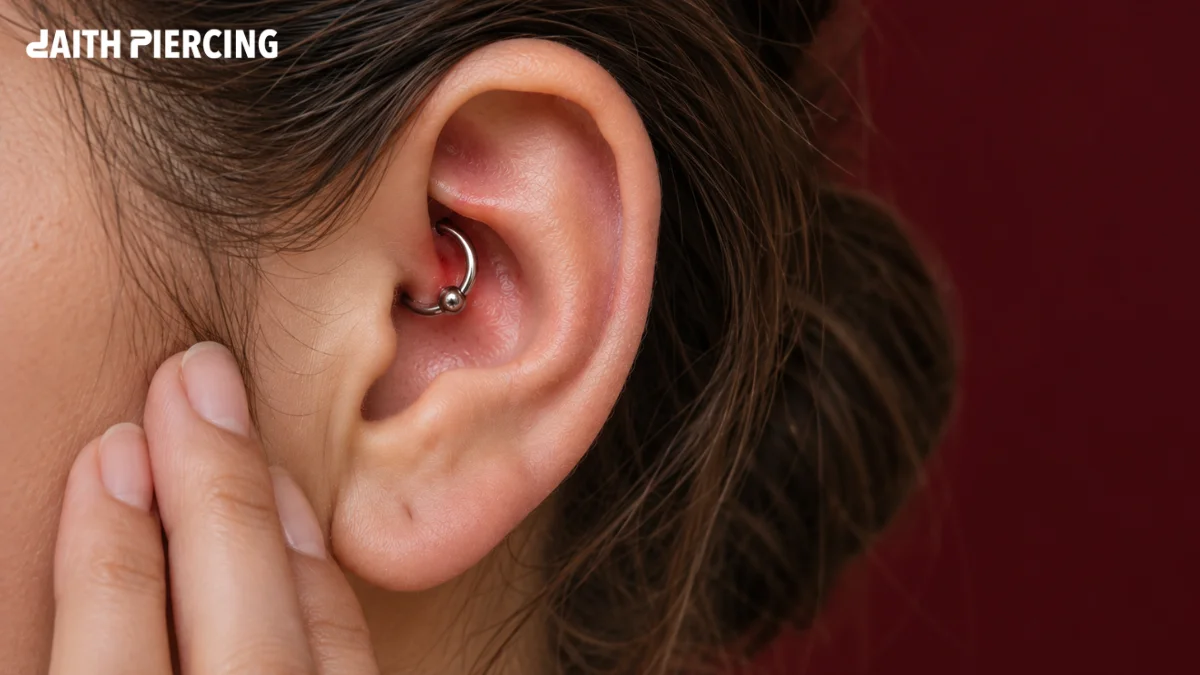
Changing a daith piercing after 2 weeks may sound harmless, especially if the jewelry feels comfortable and the piercing looks fine. But at this stage, the inside of the piercing is still healing. A daith piercing goes through cartilage, and cartilage usually takes much longer to heal than soft tissue. In most cases, a daith piercing needs around 6 to 12 months to fully heal, so two weeks is far too early for a routine jewelry change.
If you are searching for how to change a daith piercing after 2 weeks, the short answer is simple: you generally should not change it yourself after only two weeks. There can be exceptions when the original jewelry has a sizing, material, or placement problem, but those changes should be handled by a qualified professional piercer.
Can You Change a Daith Piercing After 2 Weeks?
Usually, no. Two weeks is still an early stage of the healing process. Your daith may look better on the outside, but that does not mean the piercing channel has healed underneath the skin.
Piercings heal from the outside toward the inside. This means the surface can appear calm while the deeper tissue is still fragile. The Association of Professional Piercers recommends leaving initial jewelry in place during healing unless there is a problem with its size, style, or material. If a jewelry change is needed before healing is complete, it should be done by a qualified piercer.
So, even if your daith piercing is no longer painful after two weeks, that alone is not a green light to replace the jewelry.
Key Takeaways
- Changing a daith piercing after 2 weeks is generally too early.
- A daith piercing can take around 6 to 12 months to fully heal.
- A piercing may look healed outside while the inside is still fragile.
- Do not change the jewelry yourself at two weeks just for appearance.
- If the jewelry is causing a problem, see a qualified piercer.
- Do not twist, rotate, or constantly touch the jewelry.
- Use appropriate sterile saline and avoid harsh cleaning products.
- Keep pressure and friction away from the healing piercing.
- If you notice signs of infection, seek medical advice.
Why Is Two Weeks Too Soon?
A new daith piercing is essentially a healing wound. Your body is still building new tissue around the jewelry, and the area can be easily irritated by pressure, movement, or unnecessary handling.
Cartilage also has a lower blood supply than soft tissue, which is one reason cartilage piercings can take many months to heal. Cleveland Clinic lists daith piercings among cartilage piercings that can take approximately 6 to 12 months to heal.
Changing the jewelry at two weeks can disturb the healing channel and may lead to:
- Increased swelling
- Tenderness or throbbing
- Bleeding
- Irritation bumps
- Delayed healing
- Tissue damage
- Greater risk of infection
- Difficulty putting the new jewelry back in
The biggest mistake is assuming that a piercing is healed simply because it looks normal.
What Happens If You Change a Daith Piercing Too Early?
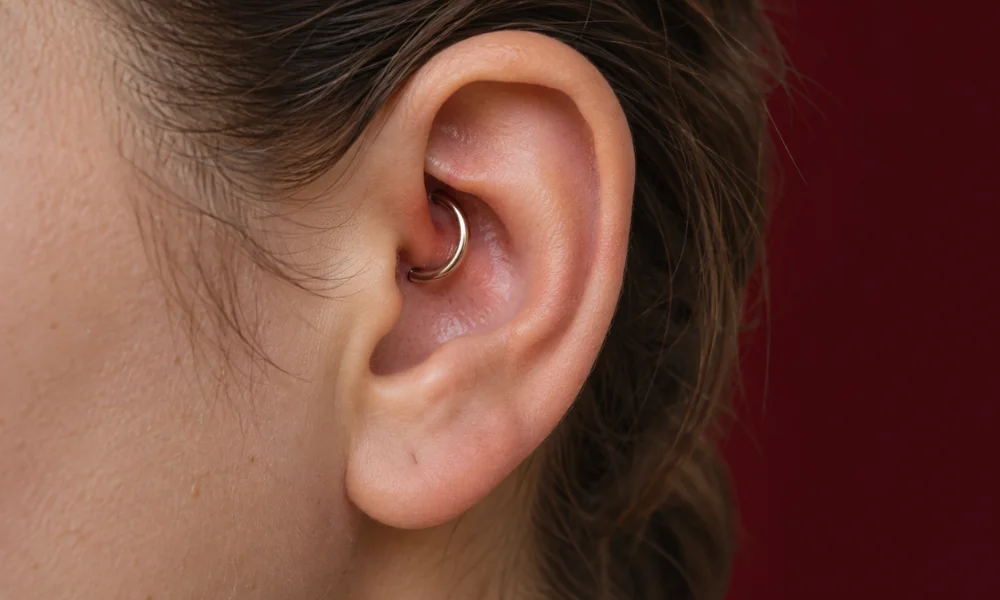
Changing a daith piercing too soon may seem fine at first, especially if the old jewelry comes out easily and the new piece appears to fit. However, problems can develop later because the piercing is still healing underneath the skin.
It Can Irritate the Healing Tissue
Removing the original jewelry can disturb the fresh piercing channel. Putting new jewelry through the area may create friction and cause tenderness, swelling, or irritation. At only two weeks, the tissue is still delicate and needs time to strengthen.
Forcing New Jewelry Can Cause Damage
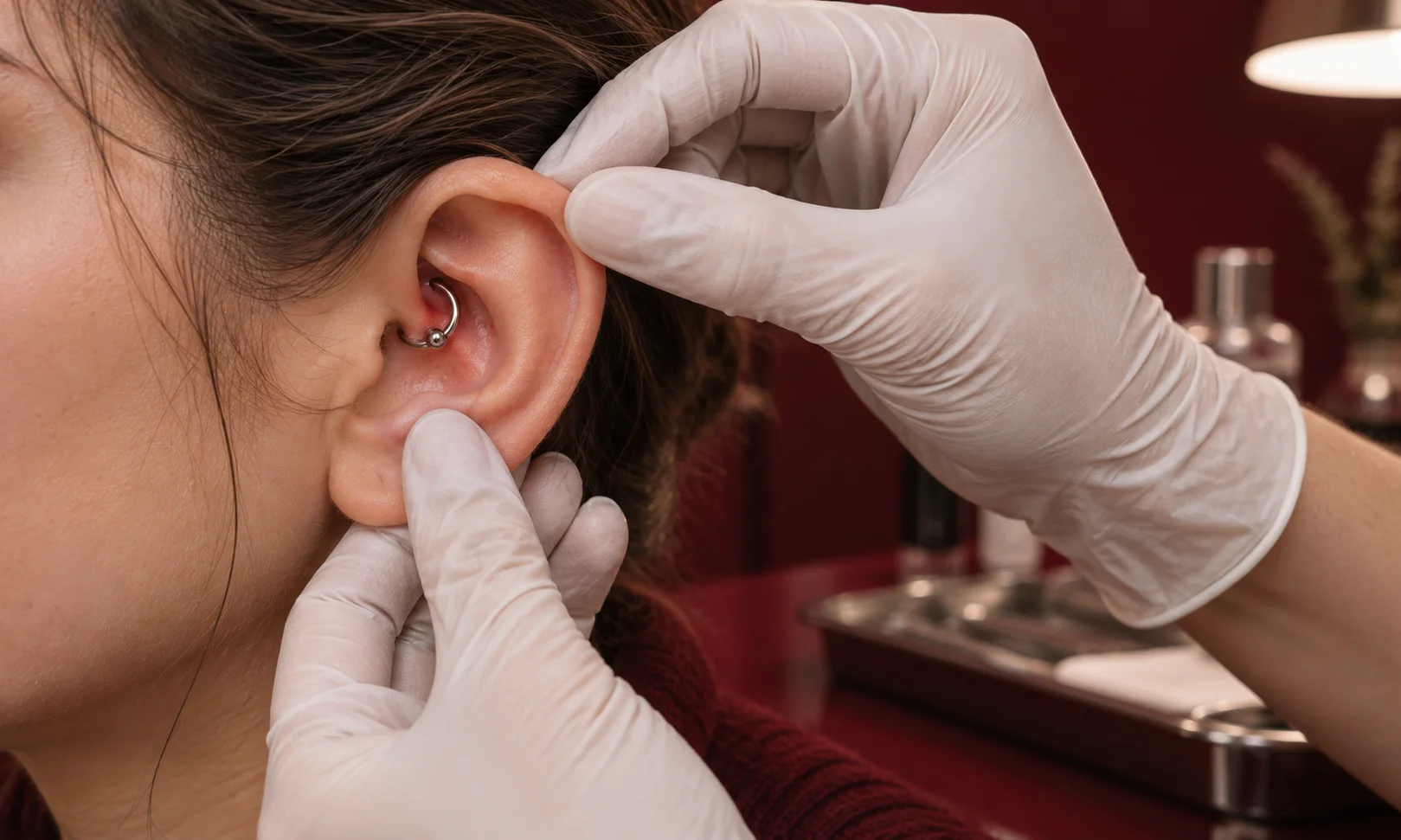
If the new jewelry does not slide in easily, never force it. Pushing jewelry through a healing piercing can tear or damage the developing tissue and make the healing process longer. The Association of Professional Piercers recommends getting help from a qualified piercer if jewelry does not go in easily.
Swelling Can Start Again
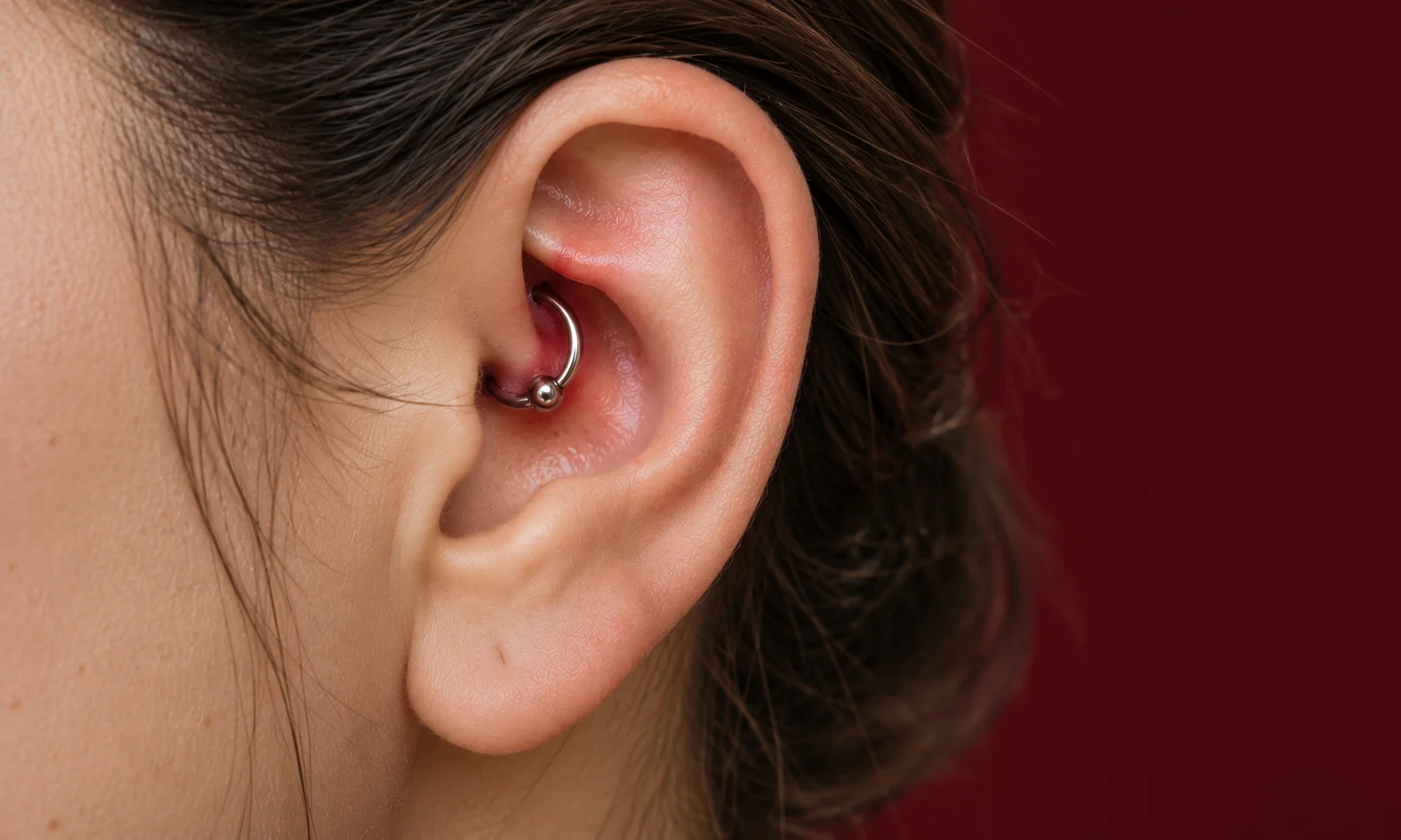
A piercing that was beginning to feel comfortable can become swollen or sore after an early jewelry change. Extra movement and pressure may trigger irritation and set the healing process back.
Healing May Take Longer
What seems like a quick jewelry change can turn into weeks or even months of additional healing. For this reason, it is usually better to leave the original jewelry in place and let the daith heal properly. If the jewelry is causing a genuine problem, have a professional piercer check it rather than changing it yourself.
When Can You Safely Change a Daith Piercing?
There is no single date that works for everyone. The safer approach is to wait until the piercing has completed its healing process rather than choosing a date simply because enough weeks have passed.
For a daith, complete healing commonly takes 6 to 12 months.
The Association of Professional Piercers recommends that a healed piercing should no longer be tender, should have passed the minimum healing period, and should no longer produce discharge or develop crusting.
Even then, having a professional piercer check the piercing before the first jewelry change is a smart choice. They can check the tissue, jewelry size, fit, and condition of the piercing before replacing anything.
What If the Jewelry Needs to Be Changed After 2 Weeks?
This is where things become slightly different. Sometimes the original jewelry may be too tight, too long, made from an unsuitable material, or otherwise causing a problem. In that situation, waiting months without getting it checked may not be the best option.
But do not make the change yourself. Visit your piercer and explain what is happening. A professional can determine whether the jewelry actually needs to be changed and can make the adjustment using clean equipment and appropriate jewelry.
The Association of Professional Piercers notes that some piercings may need a jewelry adjustment during healing, but those changes should be performed by a qualified piercer rather than being treated like a normal jewelry swap.
Change Daith Piercing After 2 Weeks Jewelry Because You Don’t Like It?
If you simply dislike the original jewelry, it is better to wait. It is completely normal to want a prettier hoop, a different finish, or a piece that matches your style. However, changing jewelry for appearance alone is not a good reason to disturb a two-week-old daith.
Think of the first piece as temporary equipment for the healing process. Once the piercing is properly healed, you will have much more freedom to choose different jewelry. Waiting may feel frustrating, but it can save you from restarting the healing process.
What Should You Do During the First Few Weeks?
The best approach is surprisingly simple: leave the piercing alone as much as possible.
Wash your hands before touching the area, and clean the piercing according to your piercer’s aftercare instructions. The Association of Professional Piercers recommends sterile saline wound wash containing 0.9% sodium chloride as the only active ingredient. It also advises against twisting or rotating the jewelry during cleaning because unnecessary movement can irritate the piercing.
Avoid alcohol, hydrogen peroxide, harsh antibacterial products, and aggressive cleaning. These can irritate healing tissue and may slow the process.
You should also be careful with headphones, hair, phones, pillows, and anything else that can put pressure on the daith. Sleeping directly on a healing cartilage piercing can irritate and may even affect the piercing angle.
What Is Normal After 2 Weeks?
At two weeks, your daith may still have some mild tenderness, swelling, itching, or light crusting. These symptoms can occur during normal healing.
A small amount of pale or whitish-yellow secretion that dries into crust can also occur as the piercing heals. What matters is whether the symptoms are gradually settling rather than becoming worse.
Remember, feeling better does not automatically mean the piercing is healed.
When Should You Worry About Infection?
Some irritation is expected, but increasing symptoms deserve attention.
Watch for worsening redness, significant swelling, increasing pain, warmth around the piercing, or unusual discharge. If you think the piercing may be infected, seek medical advice rather than trying to solve the problem by removing the jewelry yourself.
The NHS advises leaving jewelry in place if a piercing is suspected to be infected unless a doctor tells you to remove it.
This is one reason professional and medical advice is more useful than simply following a fixed timeline from someone else’s piercing experience.
What Jewelry Is Best for a Healing Daith?
The quality and fit of the jewelry matter throughout healing. Your piercer should choose jewelry that suits your anatomy and gives the tissue enough room during the early swelling stage.
Avoid switching to cheap or questionable jewelry just because it looks attractive. Some materials can cause irritation, particularly if they contain metals that your skin does not tolerate well.
Once the piercing is fully healed, you will have more jewelry choices. The Association of Professional Piercers recommends considering the jewelry’s material, size, quality, finish, weight, and style when selecting pieces for a healed piercing.
Final Thoughts
If you are wondering whether you can change a daith piercing after 2 weeks, waiting is usually the safest answer. Two weeks is still very early in the healing process, even if your ear feels comfortable and the piercing looks good.
A daith needs patience. Keep the original jewelry in place, follow sensible aftercare, avoid unnecessary touching, and let a professional handle any needed jewelry adjustment during healing. Once the piercing is genuinely healed, changing the jewelry becomes much easier and much less risky.
At DaithPiercing, the goal is to make piercing care easier to understand without turning every situation into a complicated routine. When in doubt, listen to your body, follow professional aftercare advice, and give your piercing the time it needs to heal properly.
FAQs
Can I change my daith piercing after 2 weeks if it doesn’t hurt?
It is still best not to. Lack of pain does not prove that the piercing has healed internally. Daith piercings can take many months to fully heal, so changing the jewelry after only two weeks can disturb fragile tissue.
What happens if I accidentally remove my daith piercing after 2 weeks?
Do not panic, but avoid repeatedly trying to push jewelry through the piercing. The opening can begin to tighten quickly, and forcing jewelry back through can damage the tissue. Contact a professional piercer as soon as possible for guidance.
Can a piercer change my daith jewelry after 2 weeks?
A qualified piercer may change the jewelry during healing if there is a genuine reason, such as an unsuitable size or material. This is different from changing jewelry simply because you want a new style. The piercer should assess the piercing first.
How long should I wait before changing my daith jewelry?
A daith commonly takes around 6 to 12 months to fully heal. Instead of changing it based only on a calendar date, wait until the piercing is fully healed and no longer tender, crusty, or producing discharge.
Can I change my daith jewelry myself once it looks healed?
It is safer to have the first jewelry change done by a professional piercer. If you later change jewelry yourself, make sure the piercing is fully healed, your hands and jewelry are clean, and never force jewelry into the channel.
Is swelling after changing a daith piercing normal?
Some irritation can happen after a jewelry change, but significant or increasing swelling should not be ignored. If swelling is accompanied by worsening pain, redness, warmth, or unusual discharge, speak with a healthcare professional.