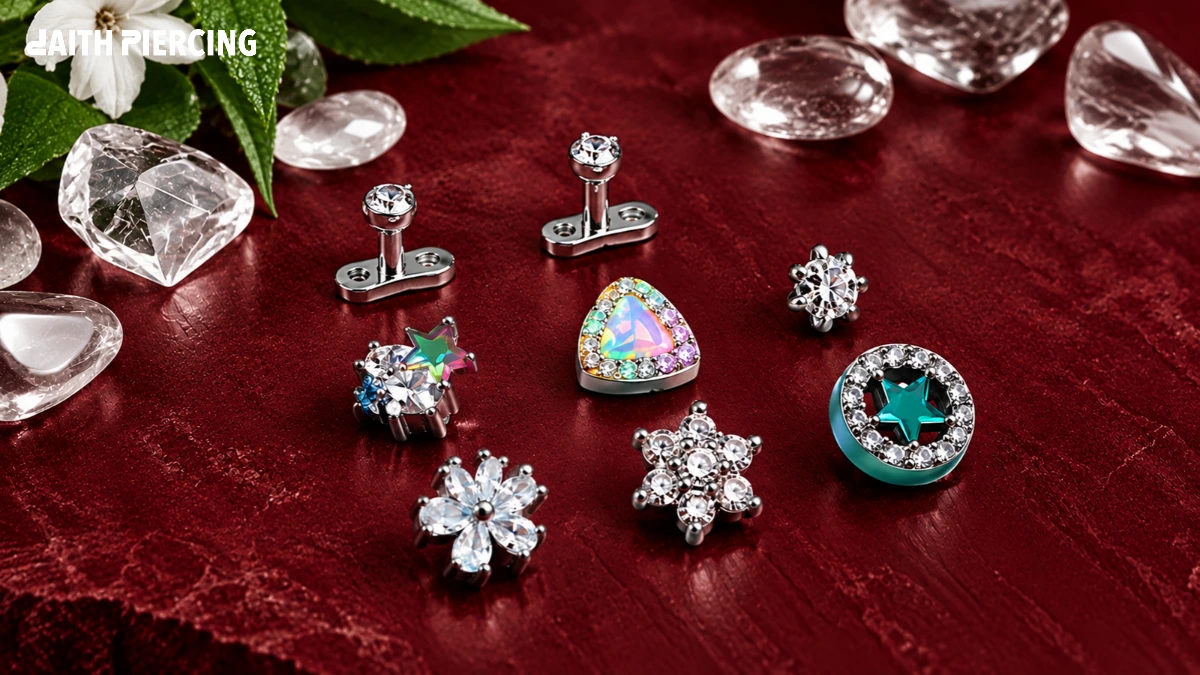
The best dermal piercing jewelry combines attractive design, quality materials, and a comfortable fit. Whether you prefer a tiny crystal, a minimalist metal disc, or a colorful gemstone, the right piece should complement your style without creating unnecessary irritation or putting stress on the piercing.
Dermal piercings are different from conventional ear or nose piercings because a small anchor sits beneath the skin while a decorative top remains visible. This makes jewelry compatibility especially important: a beautiful top is not a good choice if it does not fit the anchor correctly or catches easily on clothing.
For most new dermal piercings, verified implant-grade titanium is an excellent material to discuss with a professional piercer. The Association of Professional Piercers identifies specific titanium standards suitable for initial piercing jewelry and emphasizes appropriate sizing, smooth finishes, and material quality.
This guide covers the best dermal piercing jewelry styles, materials, designs, and buying considerations so you can make a more informed choice.
What Is Dermal Piercing Jewelry?
Dermal piercing jewelry typically consists of an anchor placed beneath the skin and a decorative top that sits above it. The anchor stays in the tissue, while the visible top can sometimes be replaced with a compatible design.
The exact construction depends on the jewelry system. Not every decorative top fits every anchor, so compatibility should be confirmed before purchasing or changing jewelry.
Common decorative styles include:
- Flat metal discs
- Small crystal or gemstone tops
- Bezel-set opals
- Polished balls
- Floral or geometric designs
- Gold-tone or colored titanium tops
For a healing piercing, the material, fit, and quality of the jewelry matter more than its decorative appearance.
The 7 Best Dermal Piercing Jewelry Styles
1. Flat Crystal Dermal Jewelry
Flat crystal tops are popular because they provide a simple, polished appearance without overwhelming the piercing.
A clear crystal can complement almost any outfit, while a colored stone can add a small accent. A low-profile setting may also reduce the likelihood of snagging compared with a large, raised design, although the actual risk depends on the shape and placement.
Choose a well-finished setting with securely held stones. Avoid decorative pieces with sharp edges or loose components.
2. Implant-Grade Titanium Dermal Jewelry
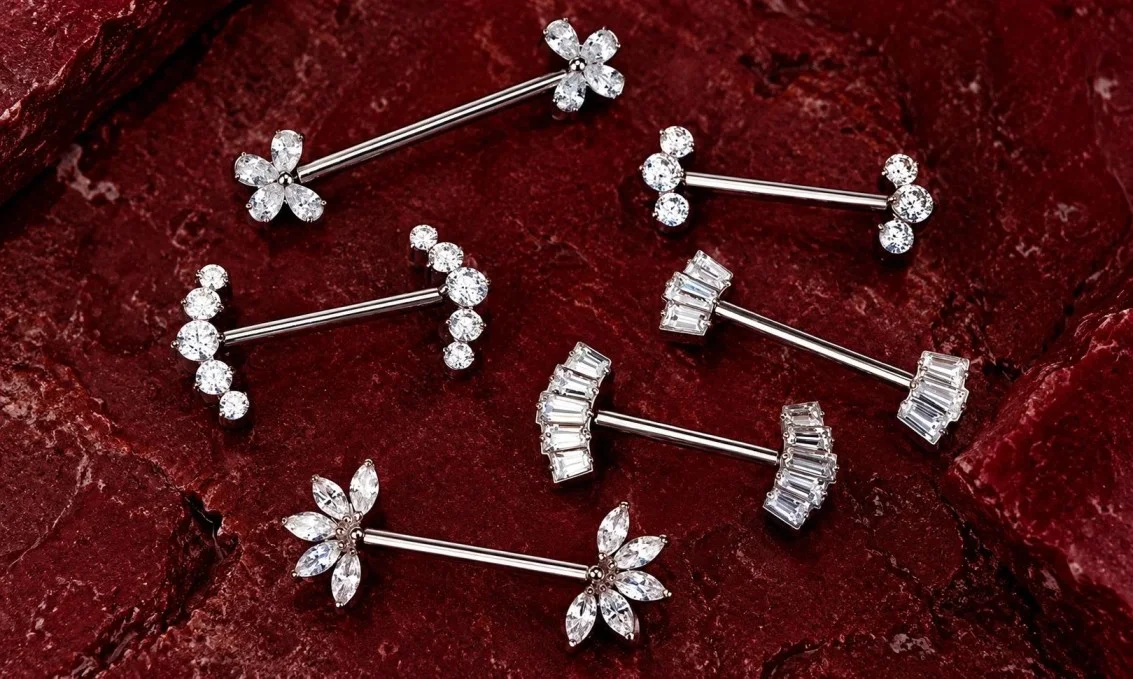
Titanium is one of the most important options to consider when selecting dermal jewelry, especially for a new piercing.
Look for material that meets a recognized specification, such as ASTM F-136 titanium alloy or ASTM F-67 commercially pure titanium. These specifications are more informative than vague descriptions such as “medical metal” or “hypoallergenic.”
Titanium is lightweight and does not contain nickel as an alloying ingredient in these grades. It is particularly worth considering if you have a history of nickel sensitivity.
3. Opal Dermal Piercing Tops
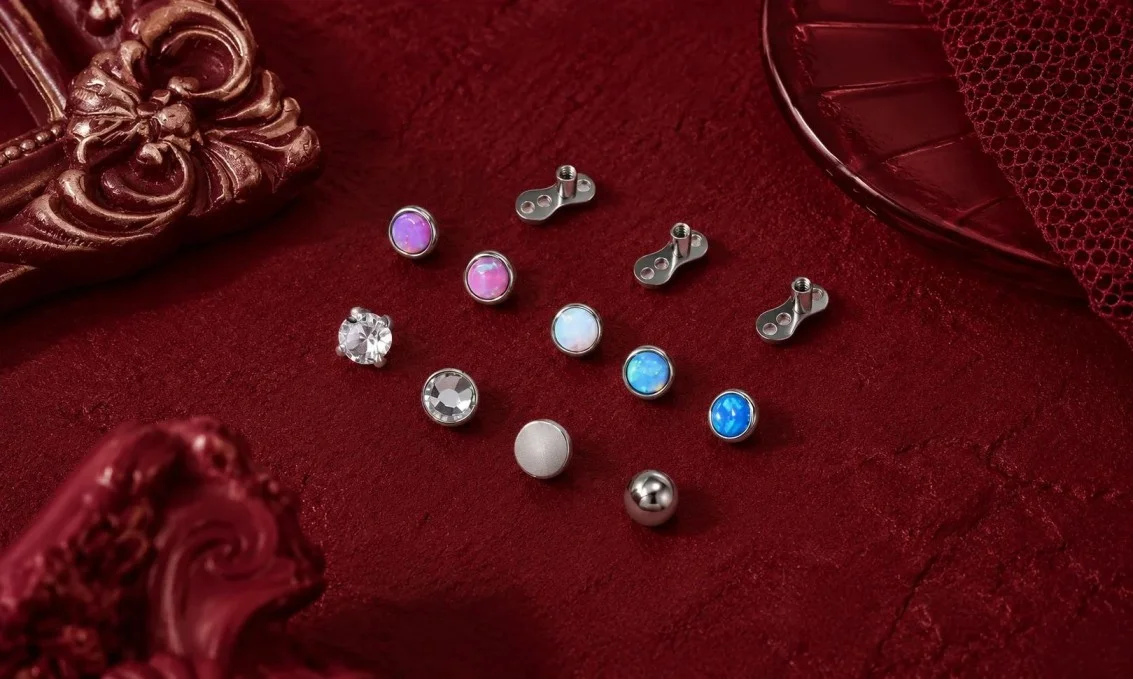
Opal-style tops offer a colorful alternative to traditional clear crystals. Their shifting colors can create a distinctive appearance without requiring a large piece of jewelry.
They are available in different colors and settings, including white, blue, pink, and iridescent finishes.
For a healing piercing, have a professional confirm that the opal top is suitable, securely fitted, and compatible with the anchor. Some decorative materials and settings are better reserved for healed piercings.
4. Minimalist Flat Disc Jewelry
A flat disc is a good option for people who prefer a simple, understated look.
Its smooth shape can complement facial, collarbone, or chest placements, depending on the anatomy and the jewelry system. Smaller designs may be easier to style with everyday clothing, but the correct size must still be determined professionally.
Choose a properly polished surface and an appropriate diameter. A disc that is too large may catch on clothing, while an unsuitable fit can irritate the surrounding skin.
5. Solid Gold Dermal Jewelry
Gold-colored jewelry can create a warm, elegant appearance. However, there is an important difference between solid gold and gold-plated jewelry.
For initial piercings, the Association of Professional Piercers specifies suitable solid gold of at least 14 karats, with appropriate alloy composition and no nickel or cadmium. Gold-plated, gold-filled, and vermeil jewelry are not recommended for fresh piercings because their surface layers can wear away.
Gold is not automatically a better choice than titanium. Ask your piercer to assess the material, finish, and compatibility with your anchor before purchasing it.
6. Black Titanium Dermal Jewelry
Black jewelry can create a modern, bold appearance. It works particularly well for minimalist styling and darker fashion aesthetics.
However, not every black-colored piece is made from the same material or finish. Ask the seller how the color is produced and whether the underlying material is appropriate for body jewelry.
For a new piercing, prioritize a documented, suitable material and a smooth finish rather than choosing a product solely for its color.
7. Floral and Geometric Dermal Tops
Floral shapes, stars, hearts, and geometric designs offer more decorative alternatives to simple discs and crystals.
These styles can be appealing once a piercing has healed and a professional confirms that the chosen top is appropriate. Raised petals, pointed corners, and protruding settings can catch on clothing or be knocked accidentally.
For everyday wear, a smaller design with smooth edges may be more practical than an oversized decorative piece.
Which Material Is Best for Dermal Piercing Jewelry?
The material is one of the most important factors when choosing dermal jewelry.
| Material | What to know |
| Implant-grade titanium | An excellent choice for initial piercing jewelry when it meets the relevant ASTM specification |
| Solid 14k–18k gold | May be suitable when correctly alloyed, nickel-free, and approved for the piercing |
| Implant-grade steel | Certain certified grades are suitable, but steel contains nickel and may not suit people with nickel sensitivity |
| Gold-plated jewelry | Avoid for a fresh piercing because the coating can wear away |
| Unspecified metals | Avoid when the seller cannot verify the material or its quality |
The term “surgical steel” alone does not establish that a piece meets an appropriate implant-material standard. The Association of Professional Piercers recommends checking the specific material designation and quality documentation.
How to Choose the Right Dermal Piercing Top
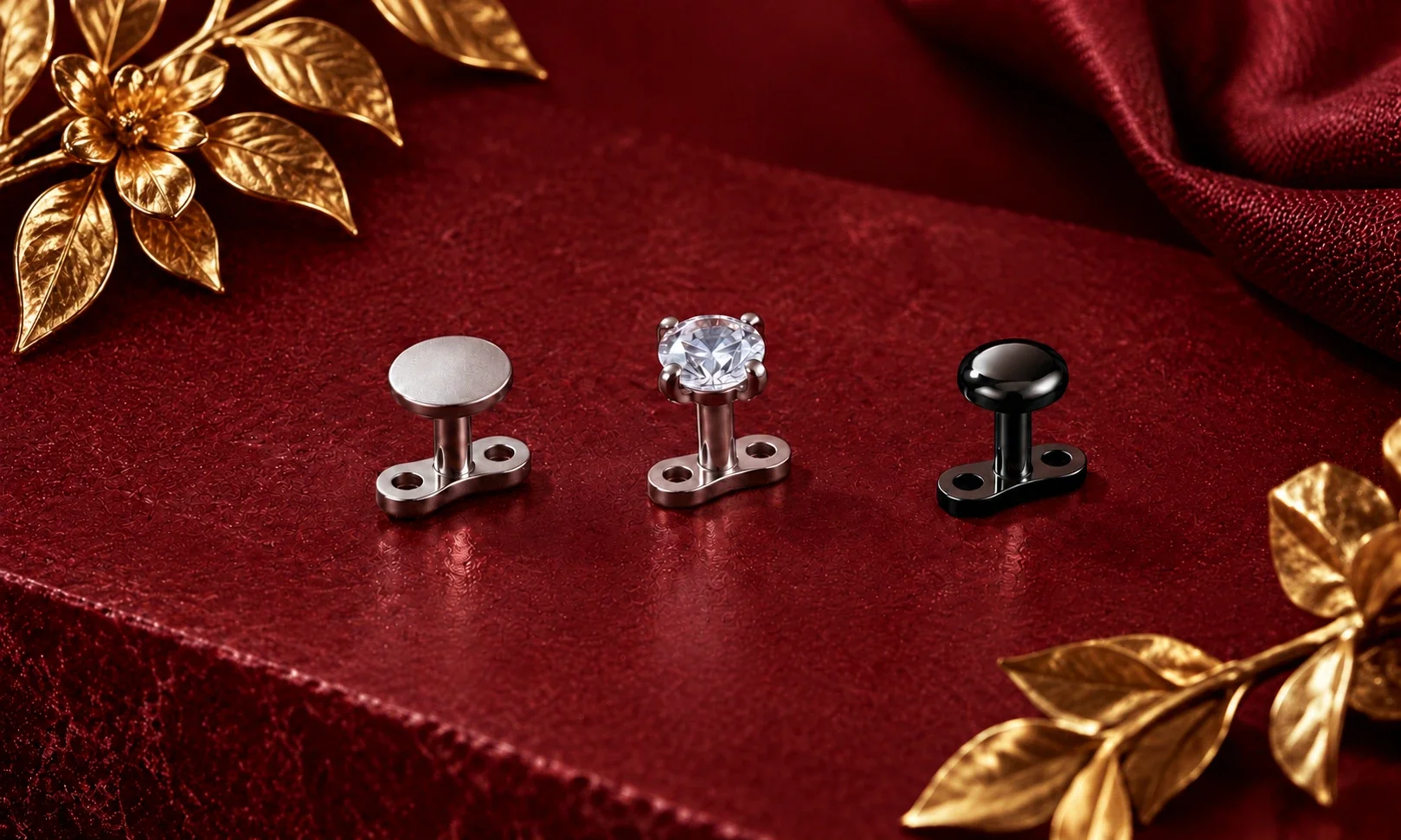
Check Compatibility With Your Anchor
Dermal anchors come in different designs and connection systems. A top that fits one anchor may not fit another.
Before ordering jewelry, ask your piercer to identify the compatible thread or connection type. Do not force a top onto an anchor if it does not fit properly.
Choose a Low-Profile Design
A small, smooth top may be more practical for everyday wear because it can be less likely to catch on clothing, towels, or bags.
This does not mean every flat design is suitable for every placement. The size, position, and surrounding anatomy all affect the final choice.
Verify the Material
Look for a precise material designation instead of relying on marketing phrases. If a seller claims that the jewelry is implant-grade titanium, ask for documentation showing the applicable standard.
Consider Your Skin Sensitivity
If you have experienced reactions to earrings, watches, or other metal accessories, discuss that history with your piercer. Verified implant-grade titanium is often a sensible starting point for people concerned about nickel sensitivity.
Buy From a Reputable Piercer or Supplier
Choose a professional who can explain the jewelry material, sizing, connection system, and care requirements. Extremely cheap jewelry with unclear material specifications may not be worth the risk.
Can You Change Dermal Piercing Jewelry?
Sometimes, yes. However, changing a dermal top requires more care than changing a conventional earring. If you’re comparing different piercing styles, our guide to helix piercing explains another popular cartilage piercing option.
A fresh piercing should not be changed just because the decorative top looks less attractive than expected. Disturbing the anchor during healing may cause irritation or damage the surrounding tissue. For more inspiration on personal style, you can also explore these almond French tip nails for a polished look.
Even after healing, the replacement top must be compatible with the existing anchor. Some connection systems require specific tools or techniques, so a professional piercer should perform the change when necessary. If you’re still deciding on an ear piercing, our comparison of daith piercing vs conch can help you understand the differences.
If the jewelry is loose, embedded, painful, or showing signs of infection, seek professional advice rather than attempting to remove or tighten it yourself.
How to Care for Dermal Piercing Jewelry
Good aftercare helps reduce irritation and infection risk, although no routine can eliminate every complication.
- Wash your hands before touching the area.
- Clean the piercing according to your piercer’s instructions, using sterile saline wound wash when recommended.
- Avoid twisting, pulling, or repeatedly checking the jewelry.
- Keep clothing, towels, and accessories from catching on the top.
- Avoid harsh cleaning products unless a healthcare professional specifically instructs you to use them.
- Do not change the top until your piercer confirms that it is appropriate.
If you develop increasing pain, warmth, swelling, spreading redness, or thick discharge, seek medical assessment. Do not attempt to force out an embedded anchor or remove jewelry yourself when infection is suspected.
Final Thoughts
The best dermal piercing jewelry balances design, material quality, and a proper fit. Flat crystals, opal tops, minimalist discs, and geometric designs can all look attractive, but no style is worth compromising the health of the piercing.
For a new dermal piercing, start by discussing verified implant-grade titanium and a low-profile design with an experienced professional. Once the piercing is healed, you may have more decorative options, provided the replacement top fits the anchor and is made from a suitable material.
Which dermal piercing jewelry style would you choose: a clear crystal, an opal gemstone, a minimalist disc, or a bold black design?
Frequently Asked Questions
What is the best jewelry for a dermal piercing?
Verified implant-grade titanium is an excellent material to consider, particularly for a new piercing. A small, smooth, low-profile top is often a practical design, provided it is correctly sized and compatible with the anchor.
Is titanium better than gold for dermal piercings?
Titanium is often a useful first choice because appropriate implant-grade titanium is lightweight and does not contain nickel as an alloying ingredient. Suitable solid gold can also be an option when its composition meets professional piercing standards.
Can I wear a diamond in a dermal piercing?
A diamond or diamond-like gemstone may be used in a suitable decorative top, depending on the setting and anchor compatibility. For a fresh piercing, material quality, secure stone setting, and low-profile construction should take priority over the gemstone itself.
Is gold-plated dermal jewelry safe?
Gold-plated jewelry is not recommended for fresh piercings because the coating can wear away and expose the underlying material. Ask a qualified piercer about suitable solid gold or verified implant-grade titanium instead.
How do I know whether dermal jewelry is high quality?
Look for documented materials, a smooth finish, secure construction, appropriate sizing, and compatibility with your anchor. Buy from a reputable professional who can explain the product rather than relying on price or appearance alone.
Can I change my dermal piercing top at home?
It is safer to have a professional piercer change the top, particularly if the piercing is healing or the anchor connection is unfamiliar. Incorrect handling can irritate the site or disturb the anchor.
Disclaimer:
This content is for informational and entertainment purposes only and reflects our personal opinions and experiences. We just love to write and share what we observe along the way.