Key Takeaways
- Implant-grade titanium is generally the best metal for a daith piercing.
- Titanium is lightweight, nickel free, and suitable for sensitive skin.
- Surgical steel is durable and more affordable but may contain nickel.
- Fresh daith piercings usually benefit from titanium during healing.
- Quality jewellery and proper aftercare are just as important as the metal itself.
- Always purchase jewellery from trusted manufacturers or professional piercing studios.
Getting a best metal for daith piercing is exciting, but choosing the right jewellery is just as important as choosing a skilled piercer. The metal you wear can affect healing, comfort, and even the overall success of your piercing. While many materials are available, titanium and surgical steel are the two most common options.
So, which one is actually the best?
The short answer is that implant-grade titanium is generally the best metal for a daith piercing, especially for a fresh piercing or anyone with sensitive skin. However, surgical steel also has its place and can be a good option for some people once the piercing has healed.
This guide explains the differences in simple terms so you can confidently choose the right metal for your daith piercing.
Quick Answer
If you’re looking for the best metal for daith piercing, choose implant-grade titanium. It is lightweight, highly biocompatible, resistant to corrosion, and free from nickel, making it the preferred choice for most professional piercers.
Surgical steel is durable and more affordable, but it may contain small amounts of nickel. For people with sensitive skin or metal allergies, titanium is usually the safer option.
Why the Metal Matters
A daith piercing goes through thick ear cartilage, which naturally takes longer to heal than a standard earlobe piercing. Because of this, the jewellery stays in your ear for months while the tissue recovers.
The wrong metal can lead to irritation, swelling, discomfort, or allergic reactions. Even with perfect aftercare, poor-quality jewellery can slow healing and make the experience much less comfortable.
Choosing a high-quality metal from the beginning gives your piercing the best chance to heal properly.
Understanding a Daith Piercing
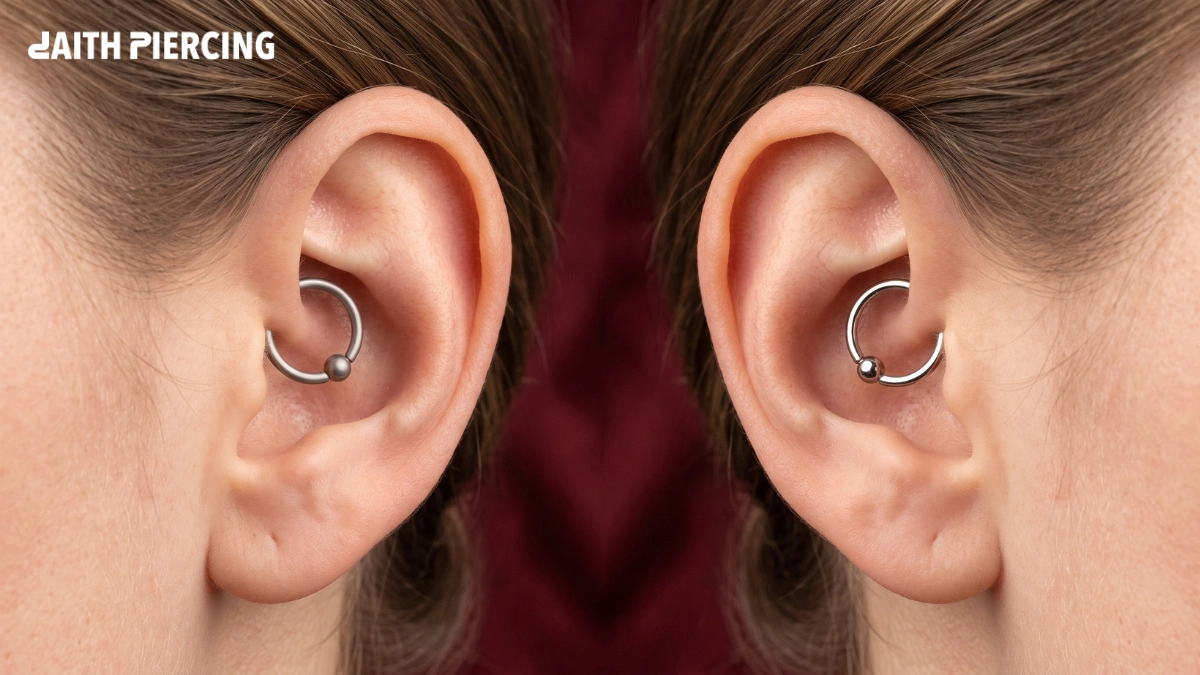
A daith piercing passes through the fold of cartilage just above the ear canal. Since cartilage has a lower blood supply than softer tissue, healing takes more time and requires extra care.
Many people choose this piercing because of its unique appearance. Some also believe it may help with migraines, although there is currently no strong scientific evidence to confirm this claim.
The jewellery used for a fresh daith piercing is typically a captive bead ring, clicker ring, or curved barbell designed specifically for cartilage.
Titanium vs. Surgical Steel at a Glance
| Feature | Titanium | Surgical Steel |
|---|---|---|
| Best for new piercings | ✅ Yes | ✔ Sometimes |
| Nickel free | ✅ Yes | ❌ Usually contains small amounts |
| Allergy friendly | ✅ Excellent | Good for many people |
| Weight | Very light | Heavier |
| Corrosion resistance | Excellent | Very good |
| Healing support | Excellent | Good |
| Durability | Excellent | Excellent |
| Cost | Higher | Lower |
| Professional recommendation | Highly recommended | Commonly recommended for healed piercings |
What Is Titanium?
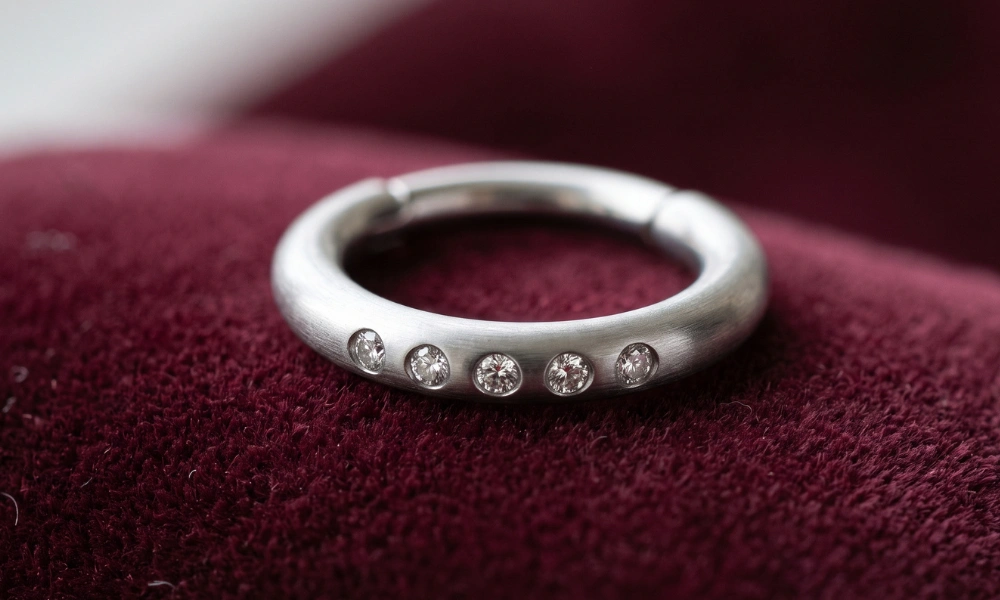
Titanium is one of the safest materials used in body jewellery today. Professional piercing studios often use implant-grade titanium, which meets strict medical standards for safety and quality.
Unlike many other metals, titanium does not contain nickel. This makes it an excellent choice for people who have experienced irritation from jewellery in the past.
It is also much lighter than steel, so it places less pressure on the piercing while you sleep or wear headphones.
Benefits of Titanium
- Safe for most people with sensitive skin
- Nickel free
- Lightweight and comfortable
- Strong despite its light weight
- Resists rust and corrosion
- Suitable for long-term wear
- Available in many colours through safe anodising rather than paint
Because of these benefits, titanium is often considered the gold standard for fresh cartilage piercings.
What Is Surgical Steel?
Surgical steel is another popular material used in body jewellery. It is strong, polished, and widely available at different price points.
Although it is called “surgical” steel, not every piece of jewellery labelled this way meets medical implant standards. Quality can vary between manufacturers, so buying from a trusted piercing studio is important.
One thing many people do not realise is that surgical steel usually contains small amounts of nickel. Most people can wear it without problems, but those with nickel sensitivity may experience irritation.
Benefits of Surgical Steel
- More affordable than titanium
- Durable and scratch resistant
- Easy to polish
- Widely available
- Suitable for many healed piercings
For people without metal sensitivities, surgical steel can be a practical choice after the piercing has fully healed.
Titanium vs. Surgical Steel Comparison
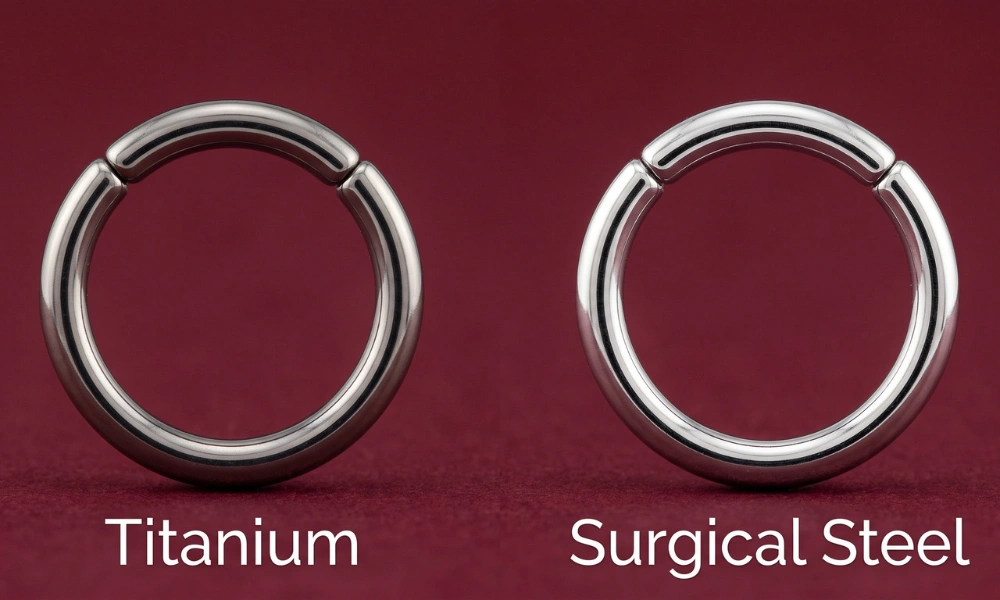
Choosing between these two metals becomes easier when you compare them side by side.
| Category | Titanium | Surgical Steel | Winner |
|---|---|---|---|
| Healing | Excellent | Good | Titanium |
| Sensitive skin | Excellent | Moderate | Titanium |
| Weight | Very light | Heavier | Titanium |
| Strength | Excellent | Excellent | Tie |
| Price | Higher | More affordable | Surgical Steel |
| Corrosion resistance | Excellent | Very good | Titanium |
| Everyday comfort | Excellent | Good | Titanium |
| Long-term value | Excellent | Very Good | Titanium |
While surgical steel performs well in many areas, titanium consistently comes out ahead when healing, comfort, and skin compatibility matter most.
Which Metal Is Better for Healing?
Healing is where titanium truly stands out.
Fresh daith piercings are more vulnerable to irritation because the cartilage needs time to recover. A lightweight, non-reactive metal helps reduce unnecessary stress on the tissue.
Titanium is less likely to trigger allergic reactions or skin irritation. As a result, many professional piercers recommend implant-grade titanium for initial jewellery.
Surgical steel can still heal successfully, especially for people without nickel sensitivity. However, if you want to reduce potential risks during the healing period, titanium is generally the better investment.
Which Metal Is Best for Sensitive Skin?
If you have ever developed redness, itching, or irritation from earrings, choosing the right material becomes even more important.
Titanium is widely recognised as one of the most skin-friendly metals available. Because it contains no nickel, it is suitable for people who have known nickel allergies or simply want the safest option.
Surgical steel works well for many wearers, but its nickel content may cause problems for some individuals.
Best Choice Based on Skin Type
| Skin Type | Recommended Metal |
|---|---|
| Sensitive skin | Implant-grade titanium |
| Nickel allergy | Implant-grade titanium |
| Normal skin | Titanium or surgical steel |
| Healed piercing | Titanium or surgical steel |
| Budget-conscious buyers | Surgical steel |
For most first-time daith piercings, titanium remains the safer and more reliable choice.
Cost Comparison
Price is often one of the first things people notice when shopping for daith jewellery. Surgical steel usually costs less, making it attractive if you’re on a budget. Titanium, however, offers benefits that many people feel justify the higher price.
For a fresh piercing, paying a little more for quality jewellery can help reduce the risk of irritation and avoid unnecessary jewellery changes during healing.
| Feature | Titanium | Surgical Steel |
|---|---|---|
| Typical Price | Higher | Lower |
| Long-Term Value | Excellent | Good |
| Maintenance | Low | Low |
| Suitable for Initial Piercing | Yes | Sometimes |
Although titanium costs more upfront, many people only need to buy it once because of its durability and comfort.
Durability and Long-Term Wear
Both titanium and surgical steel are strong enough for everyday use. They resist scratches well and can last for years when properly cared for.
Titanium has the advantage of being lighter, so it often feels more comfortable during long-term wear. It also resists corrosion extremely well, even with regular exposure to moisture, sweat, and skincare products.
Surgical steel is slightly heavier but remains a reliable option for healed piercings. Many people wear it daily without any issues.
What Professional Piercers Recommend
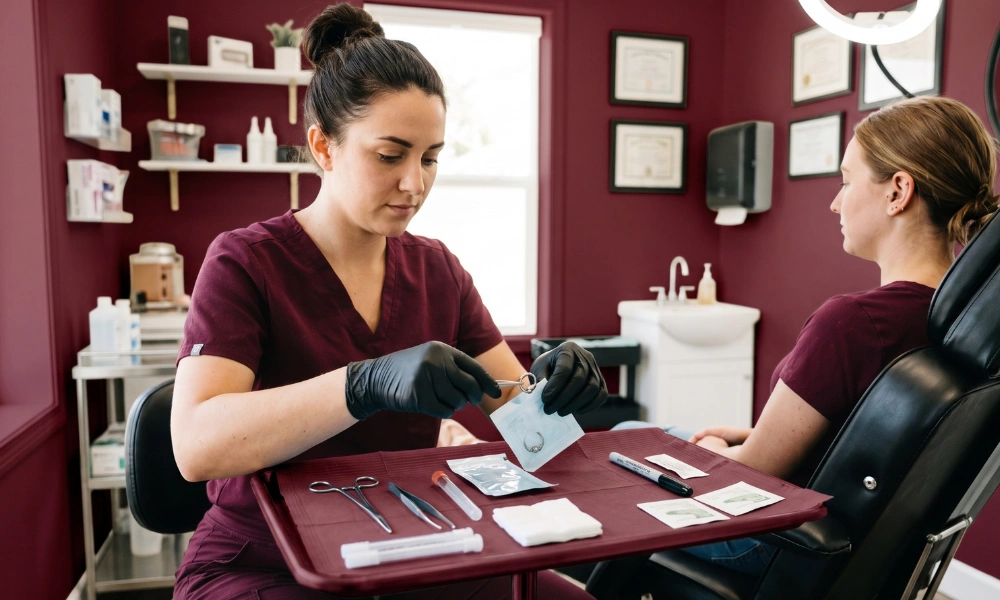
Most reputable piercing studios recommend implant-grade titanium for new daith piercings.
The recommendation isn’t based on trends. Instead, it comes from years of experience seeing how different materials perform during healing. Titanium’s excellent biocompatibility makes it a dependable choice for a wide range of clients.
Professional piercers also encourage buying jewellery from trusted brands that clearly state the material and meet recognised implant standards. This helps avoid poor-quality jewellery that may look similar but doesn’t offer the same level of safety.
When Surgical Steel May Be a Good Choice
Although titanium is often preferred, surgical steel still has its advantages.
It can be a good option if:
- Your daith piercing has completely healed.
- You have never experienced a nickel allergy.
- You’re looking for a more affordable piece.
- The jewellery comes from a reputable manufacturer.
Many people successfully wear surgical steel for years. The key is choosing high-quality jewellery rather than the cheapest option available.
How to Identify High-Quality Jewellery
Not every piece of jewellery advertised online is made from premium materials. Before buying, check for these signs of quality.
Titanium
- Clearly labelled as implant grade.
- Meets standards such as ASTM F136 or ASTM F1295.
- Sold by reputable piercing brands or professional studios.
- Smooth, polished finish with no rough edges.
Surgical Steel
- Clearly states implant-grade surgical steel or 316LVM where applicable.
- Highly polished surface.
- No visible scratches or poor finishing.
- Purchased from trusted retailers instead of unknown sellers.
If the product description doesn’t clearly identify the material, it’s usually better to choose another option.
Caring for Your Daith Jewellery
Even the best metal cannot replace good aftercare.
Follow these simple steps while your piercing heals:
- Clean the piercing with sterile saline solution as advised by your piercer.
- Wash your hands before touching the jewellery.
- Avoid twisting or rotating the jewellery unnecessarily.
- Sleep carefully to avoid putting pressure on the piercing.
- Keep hair products, makeup, and dirty headphones away from the area.
- Leave the jewellery in place until your piercer confirms it has healed.
Consistent aftercare helps reduce irritation and supports healthy healing.
Common Mistakes to Avoid
Many healing problems happen because of simple mistakes rather than the jewellery itself.
- Buying cheap jewellery without knowing the metal.
- Assuming all titanium is implant grade.
- Choosing jewellery only because it looks attractive.
- Replacing jewellery before the piercing has healed.
- Ignoring redness, swelling, or ongoing discomfort.
- Cleaning with harsh products like alcohol or hydrogen peroxide.
- Frequently touching or moving the jewellery.
Avoiding these mistakes gives your daith piercing the best chance to heal smoothly.
Titanium vs. Surgical Steel: Which Should You Choose?
The right choice depends on your needs, skin type, and stage of healing.
| Situation | Best Choice |
|---|---|
| Fresh daith piercing | Implant-grade titanium |
| Sensitive skin | Implant-grade titanium |
| Nickel allergy | Implant-grade titanium |
| Faster, smoother healing | Implant-grade titanium |
| Healed piercing | Titanium or surgical steel |
| Lower budget | Surgical steel |
| Long-term comfort | Titanium |
For most people, titanium offers the best overall balance of safety, comfort, and reliability.
Daith Piercing Metal Checklist
Before purchasing jewellery, make sure you can answer yes to these questions.
| Checklist | Yes/No |
|---|---|
| Is the metal clearly identified? | ☐ |
| Is it implant-grade titanium or high-quality surgical steel? | ☐ |
| Is it suitable for cartilage piercings? | ☐ |
| Does it come from a trusted seller? | ☐ |
| Does the size match your piercer’s recommendation? | ☐ |
| Is the finish smooth and polished? | ☐ |
Completing this checklist helps you avoid low-quality jewellery and unnecessary complications.
Conclusion
Choosing the best metal for daith piercing is about more than appearance. The right material can improve comfort, support healing, and reduce the risk of irritation.
While both titanium and surgical steel are durable and widely used, implant-grade titanium stands out as the better option for most fresh daith piercings. Its lightweight design, nickel-free composition, and excellent biocompatibility make it a trusted choice among professional piercers and people with sensitive skin.
Surgical steel remains a solid alternative for many healed piercings, particularly if you don’t have a nickel allergy and want a more affordable option. Whatever you choose, buy high-quality jewellery from a reputable source and follow proper aftercare for the best results.
Frequently Asked Questions
Is titanium really better than surgical steel?
For most people, yes. Titanium is nickel free, lightweight, and highly biocompatible, making it an excellent choice for fresh daith piercings and sensitive skin.
Can I wear surgical steel if I don’t have a nickel allergy?
Yes. Many people wear high-quality surgical steel comfortably after their piercing has healed.
Which metal heals faster?
Healing depends on factors like aftercare and overall health, but implant-grade titanium is less likely to cause irritation that could slow the healing process.
Is titanium worth the higher price?
Many people believe it is. The added comfort, lower allergy risk, and suitability for fresh piercings often make the extra cost worthwhile.
Can I switch from titanium to surgical steel later?
Yes. Once your daith piercing has fully healed and your piercer confirms it’s safe, many people choose to wear either material.
Does titanium rust?
No. Titanium has excellent corrosion resistance and does not rust under normal everyday conditions.
Is surgical steel safe?
High-quality surgical steel is safe for many people. However, because it may contain trace amounts of nickel, it may not be suitable for everyone.