Key Takeaways
- Black daith piercing jewelry is available in oxidized, anodized, and coated finishes.
- Anodized implant grade titanium is one of the safest and most durable options.
- Oxidized silver offers a unique vintage appearance but requires more maintenance.
- Always choose the correct size and high quality material.
- Avoid changing jewelry before your daith piercing has fully healed.
- Regular cleaning and proper storage help maintain both the jewelry and your piercing.
- Buy from trusted brands or professional piercing studios for the best results.
Quick Answer
Black daith piercing jewelry comes in different finishes, with oxidized and anodized being the most common. Oxidized jewelry creates a darker antique appearance and is often found on certain metals, while anodized jewelry changes the surface color of titanium without using paint or coatings. For most people, anodized implant-grade titanium is considered the better choice because it offers excellent biocompatibility, resists corrosion, and maintains its appearance longer with proper care.
What Is Black Daith Piercing Jewelry?
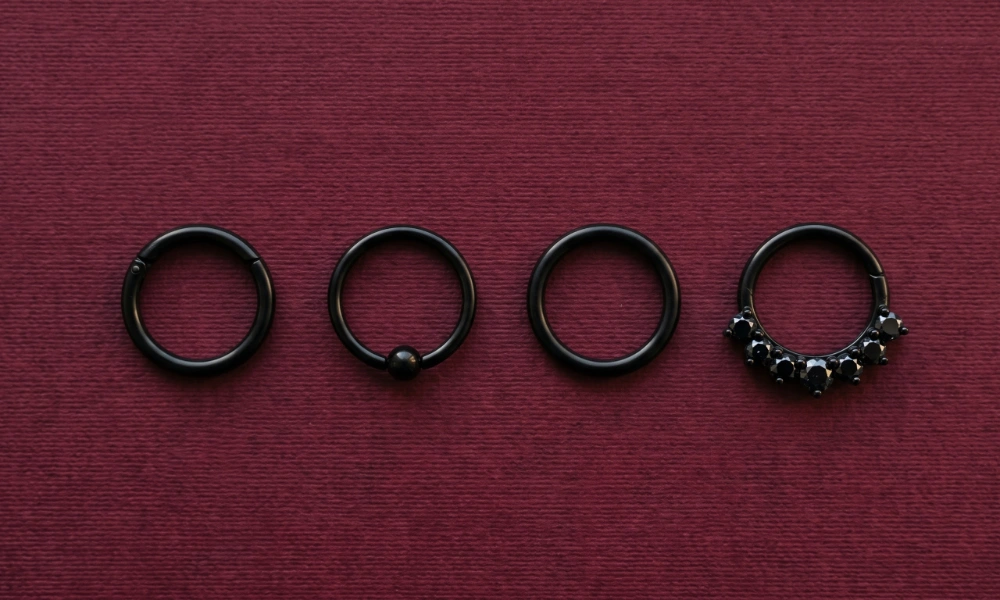
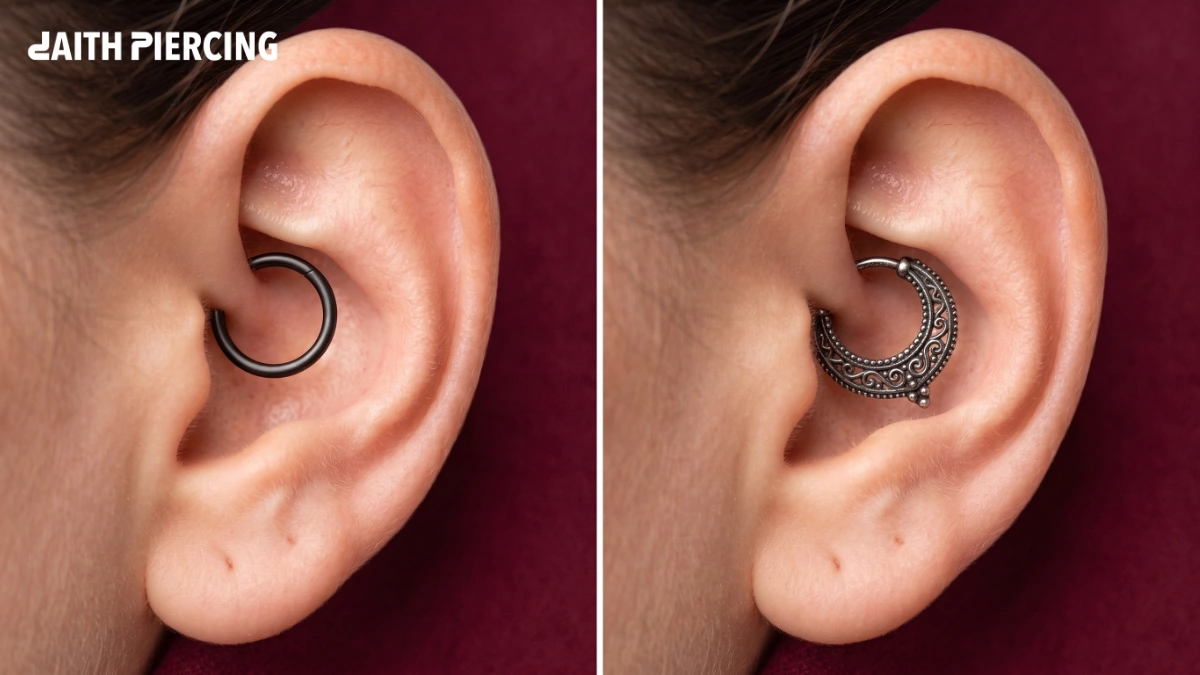
Black daith piercing jewelry refers to rings, clickers, horseshoes, and curved pieces that have a black or dark gray finish instead of the usual silver or gold appearance.
Many people choose black jewelry because it creates a clean and modern look. It pairs well with different fashion styles and works for both minimal and decorative ear setups.
Popular black daith jewelry styles include:
| Jewelry Style | Best For | Appearance |
|---|---|---|
| Captive Bead Ring | Everyday wear | Classic and simple |
| Hinged Clicker | Easy insertion | Modern and secure |
| Seam Ring | Minimalist look | Smooth and seamless |
| Decorative Clicker | Fashion styling | Gemstones, moons, flowers, or geometric designs |
The finish is just as important as the style. A beautiful design may not last if the coloring process is poor or the base material is low quality.
Oxidized vs Anodized Black Jewelry
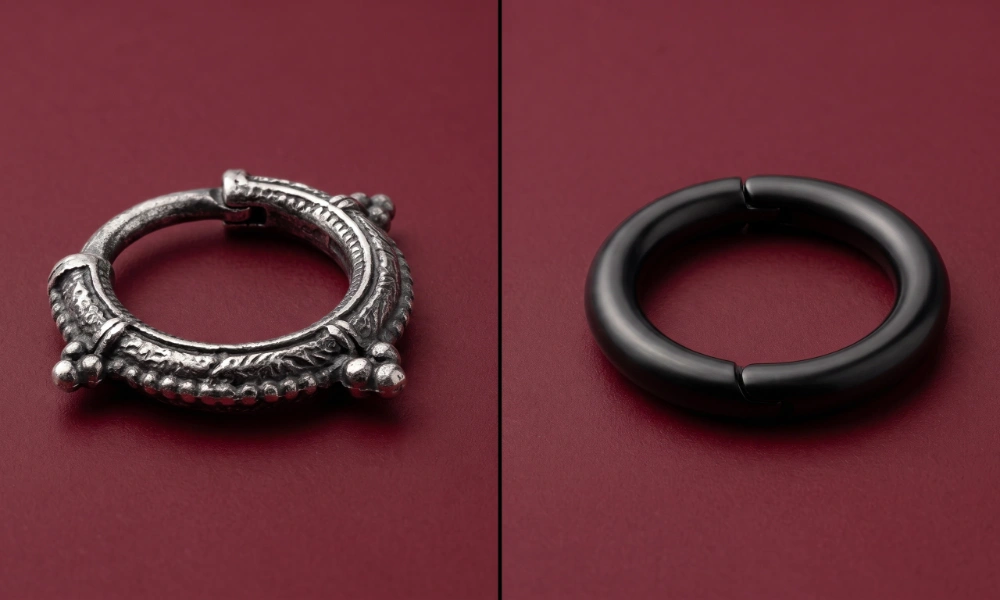
Although both finishes create a darker appearance, they are made differently and perform differently over time.
What Is Oxidized Jewelry?
Oxidized jewelry develops a darker surface through a controlled chemical reaction with the metal. This process gives the jewelry an aged or vintage appearance rather than a perfectly solid black finish.
Oxidized finishes are commonly seen on sterling silver and some handcrafted jewelry designs.
Pros
- Rich antique appearance
- Unique handcrafted style
- Highlights engraved details
- Popular in artistic jewelry
Cons
- Color may fade with polishing
- Requires careful maintenance
- Less common for everyday body jewelry
- Not typically recommended for new piercings
What Is Anodized Jewelry?
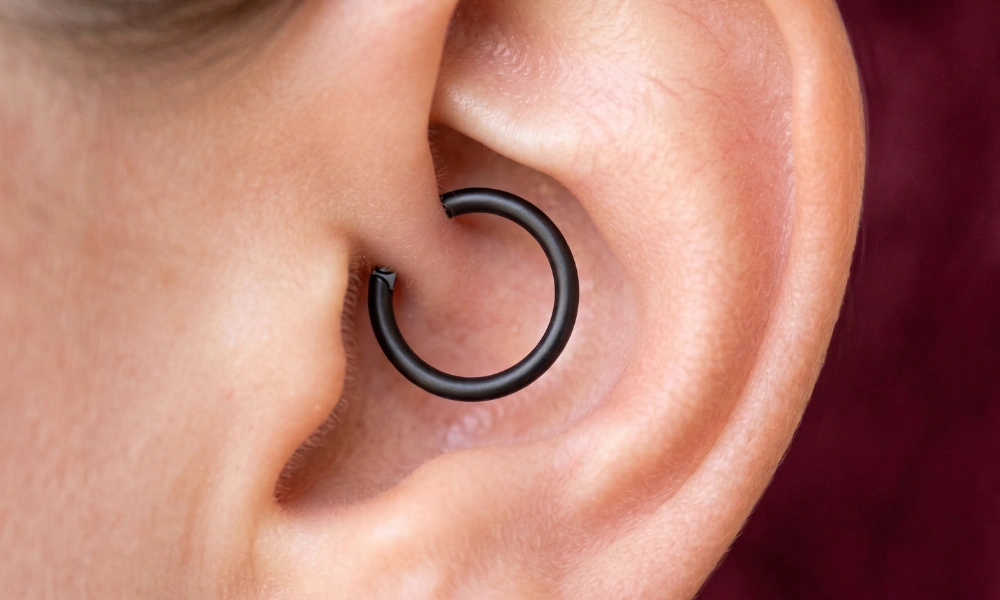
Anodizing is an electrochemical process that changes the surface oxide layer of certain metals, especially titanium. Unlike paint or plating, the color becomes part of the metal’s surface.
Because implant-grade titanium is widely trusted for body jewelry, anodized pieces are a popular option for daith piercings.
Pros
- No paint or surface coating
- Excellent corrosion resistance
- Durable finish
- Suitable for high-quality titanium jewelry
- Comfortable for long-term wear
Cons
- Available only on compatible metals
- Premium titanium jewelry often costs more
- Very dark black shades may not be possible on every titanium alloy
Side by Side Comparison
| Feature | Oxidized Jewelry | Anodized Jewelry |
|---|---|---|
| Coloring Method | Chemical oxidation | Electrochemical process |
| Common Material | Sterling silver | Implant grade titanium |
| Durability | Moderate | High |
| Maintenance | Higher | Lower |
| Best For | Vintage appearance | Everyday body jewelry |
| Suitable for Fresh Daith Piercing | Usually not preferred | Often preferred when implant grade titanium is used |
In many situations, anodized titanium offers a better balance of appearance, durability, and comfort for daith piercings. Still, someone looking for an artistic or antique style may enjoy oxidized jewelry for occasional wear after the piercing has fully healed.