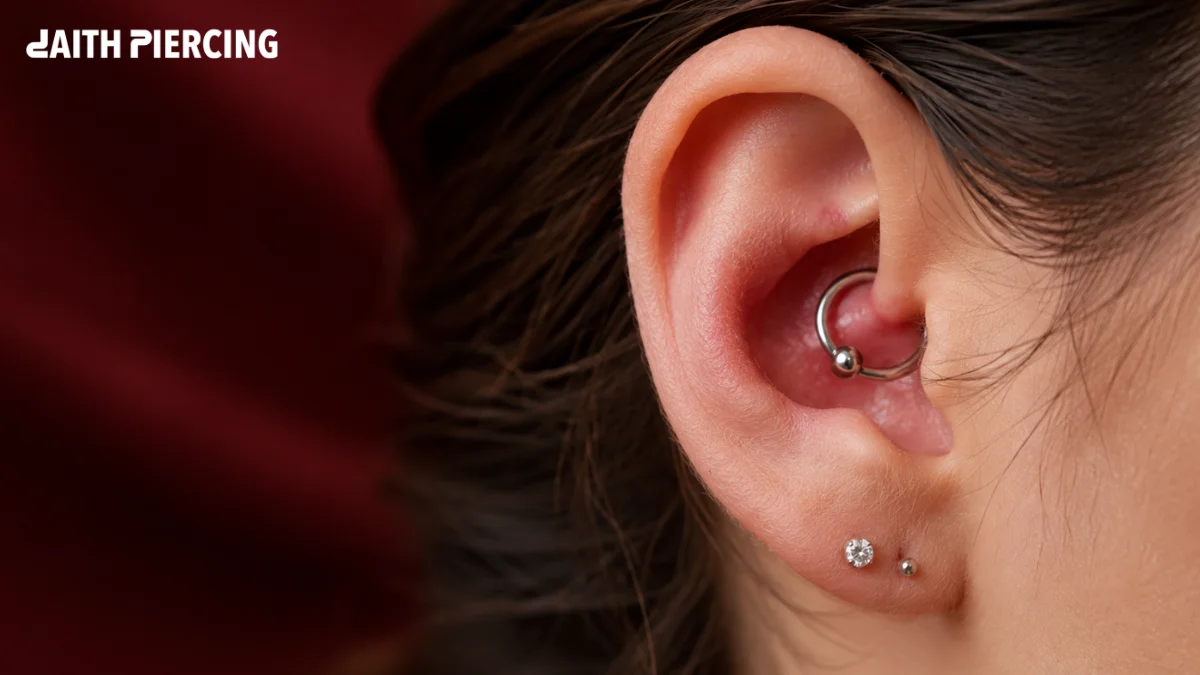
Key Takeaways
- Daith Piercing Allergy: Nickel is a common cause of metal-related allergic contact dermatitis.
- Itching and rash are more typical of an allergy than increasing pain and pus.
- Irritation and infection can look similar to an allergic reaction.
- Implant-certified titanium is an option often considered for people with nickel sensitivity.
- Ask for the exact jewelry material instead of relying only on terms like “hypoallergenic.”
- Sterile saline and gentle aftercare are preferable to harsh cleaning products.
- Patch testing can help identify nickel or another metal allergen.
- Persistent or worsening symptoms should be assessed by a healthcare professional.
Quick Answer
A daith piercing allergy is most commonly linked to nickel or another material in the jewelry. Typical signs include persistent itching, redness, rash, dry or cracked skin, swelling, bumps, or blistering around the area.
If the problem is caused by metal sensitivity, avoiding the responsible material is usually the most important step. Implant grade titanium is often a useful choice for people concerned about nickel sensitivity, provided the jewelry meets recognized material standards.
However, pus, increasing warmth, significant pain, worsening swelling, or feeling unwell can point toward infection rather than an allergy and should be assessed by a healthcare professional.
What Causes a Daith Piercing Allergy?
A metal allergy is an immune reaction that happens after your skin becomes sensitized to a particular substance. Nickel is especially well known for causing allergic contact dermatitis and is commonly associated with jewelry.
Interestingly, the reaction does not always appear immediately. A nickel allergy can develop after previous exposure, and symptoms may appear hours or days after contact.
Therefore, someone may wear jewelry without a problem at first and later discover that certain metals cause a reaction. Once a person becomes sensitized, even relatively small exposures can trigger symptoms.
Why Daith Jewelry Can Cause Problems
A fresh piercing is healing tissue, so the material touching it matters. Jewelry that is poorly made, incorrectly sized, rough, or made from an unsuitable alloy can create additional irritation.
The Association of Professional Piercers recommends choosing body jewelry according to its material, size, style, quality, and suitability for the individual’s anatomy.
In addition, low-quality jewelry may have an uncertain metal composition. Consequently, simply seeing a label such as “hypoallergenic” does not tell you everything you need to know about the actual material.
Nickel Allergy and Daith Jewelry
Nickel is one of the most common metal allergens. Jewelry, including body-piercing jewelry, can expose sensitive skin to nickel.
A nickel reaction usually causes an itchy rash where the metal contacts the skin. The affected area can become dry, cracked, thickened, swollen, or blistered.
Because a daith piercing sits in cartilage, swelling and irritation can make the area particularly uncomfortable. Still, symptoms alone cannot confirm that nickel is responsible.
Common Nickel Allergy Symptoms
| Symptom | More suggestive of allergy |
|---|---|
| Itching | Very common |
| Red or discolored rash | Common |
| Dry or flaky skin | Common |
| Small bumps | Possible |
| Blisters | Possible |
| Cracking or thickened skin | Possible |
| Burning or irritation | Possible |
| Pus | More concerning for infection |
| Increasing warmth and pain | More concerning for infection |
Nickel allergy can also cause a rash that spreads beyond the exact contact area. If the reaction keeps returning whenever particular metal jewelry is worn, that pattern is useful information for a healthcare professional.
Daith Allergy vs Irritation vs Infection
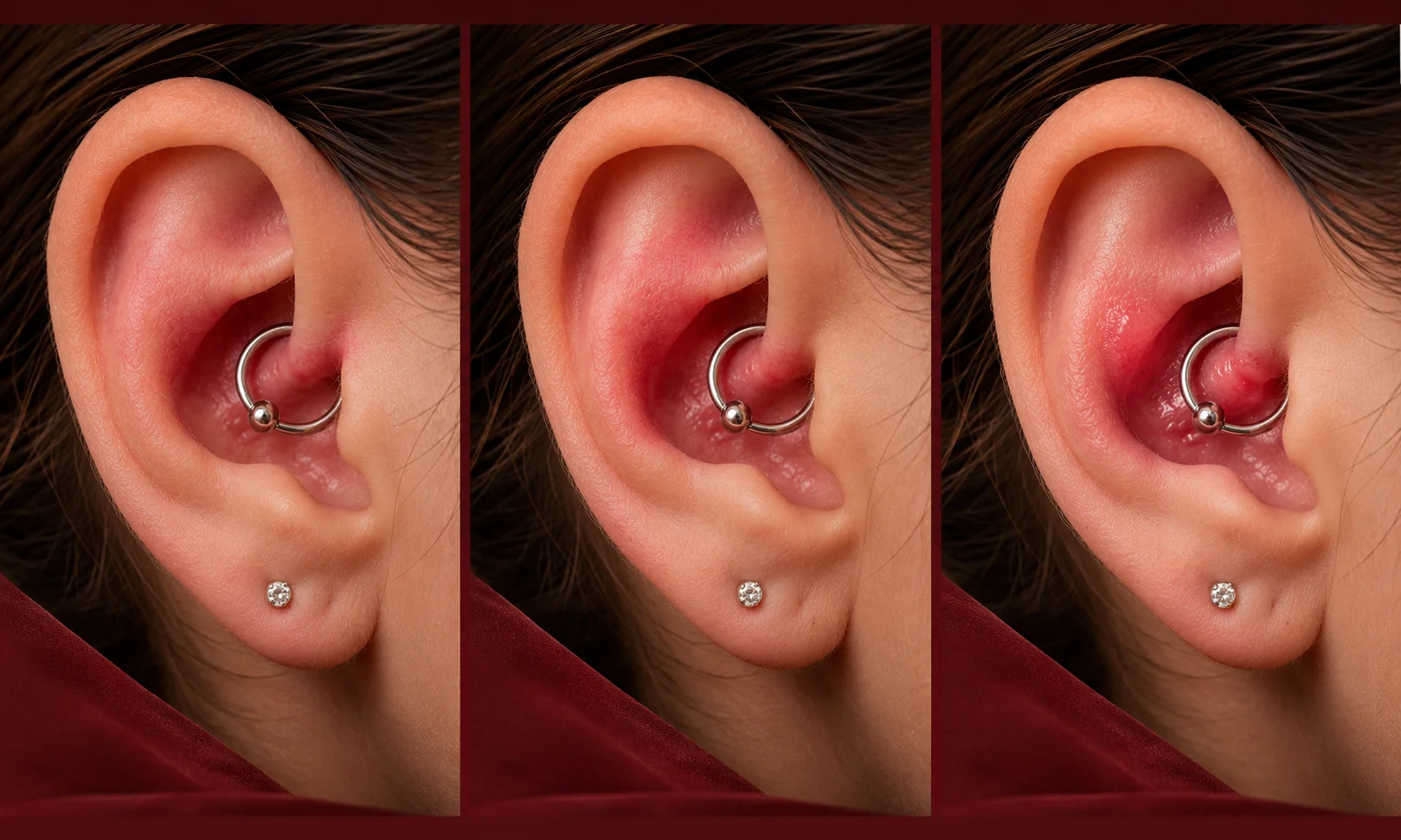
These problems can look similar, which is why it is risky to diagnose yourself from redness alone.
Metal Allergy
A metal allergy often causes itching, rash, dryness, redness, bumps, or blistering. The symptoms may appear after contact with the jewelry and can return with repeated exposure.
Mechanical Irritation
Irritation can happen when jewelry is too tight, catches on something, moves excessively, or places pressure on healing tissue.
Jewelry that does not fit properly can increase swelling and other complications. Therefore, a qualified piercer should assess the fit rather than simply changing jewelry yourself.
Infection
Infection is different from an allergic reaction. Increasing pain, warmth, swelling, and pus are warning signs that deserve medical attention.
| Problem | Typical clues | What to do |
| Metal allergy | Itching, rash, dryness, bumps | Stop exposure to suspected allergen and seek professional advice |
| Irritation | Tenderness, pressure, repeated trauma | Have jewelry fit and aftercare reviewed |
| Infection | Increasing pain, warmth, swelling, pus | Contact a healthcare professional |
| Normal healing | Mild tenderness, localized swelling, crusting | Continue appropriate aftercare |
Normal healing can also include some localized swelling, tenderness, itching, and a whitish-yellow fluid that forms crust on jewelry. The Association of Professional Piercers notes that a piercing can appear healed on the outside while the inside remains fragile.
Which Metals Are Better for a Daith Piercing?
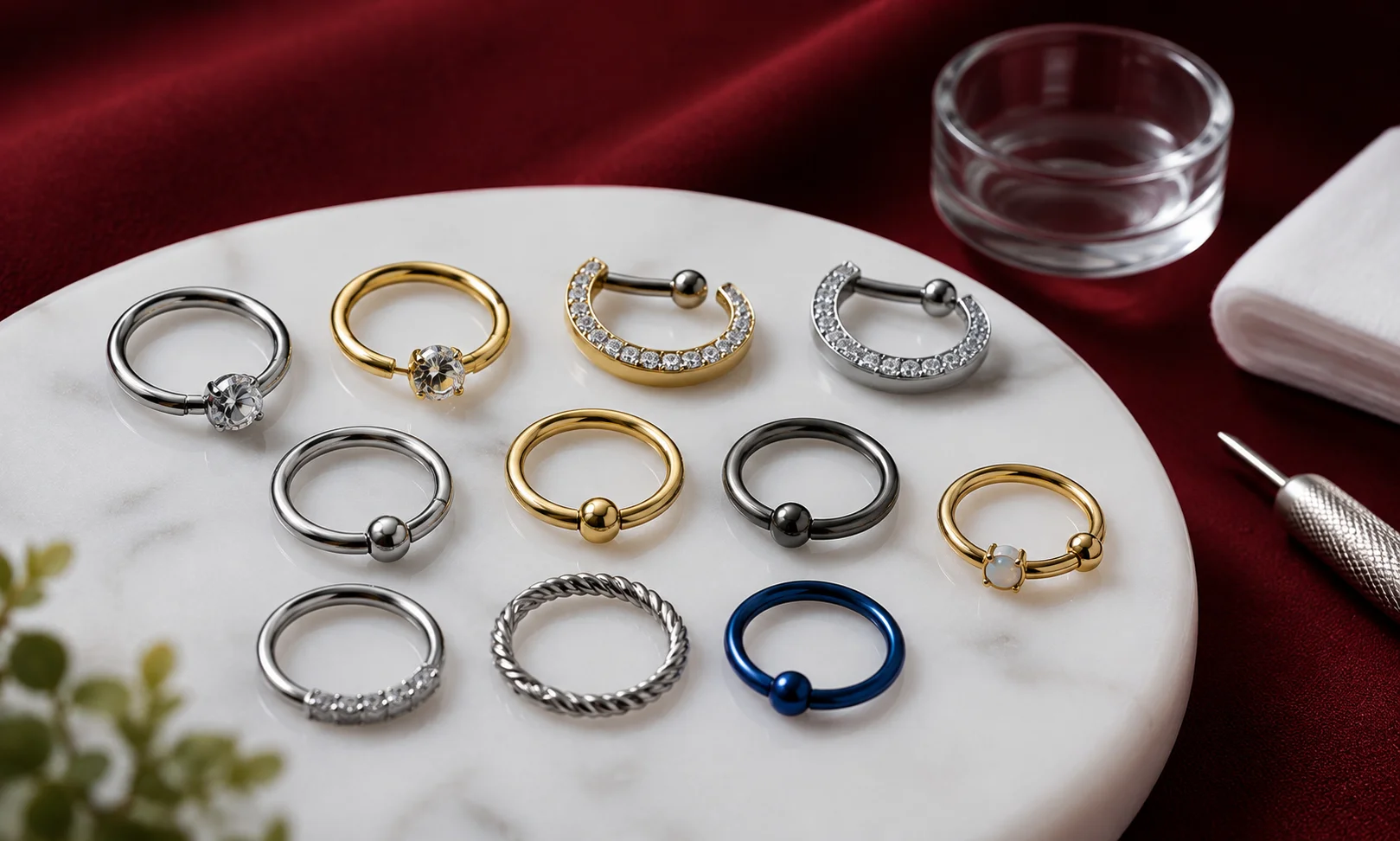
Material matters, particularly when you already suspect metal sensitivity.
Implant Grade Titanium
Titanium is often a strong option for people concerned about nickel sensitivity. The Association of Professional Piercers lists implant-certified titanium meeting recognized ASTM or ISO standards among appropriate materials for initial piercings.
Look for documentation showing an appropriate standard rather than relying only on marketing terms.
Niobium
Niobium has also been used successfully for body jewelry and is listed by the Association of Professional Piercers as an appropriate material for initial piercings.
Gold
Gold can be suitable in specific circumstances, but the quality and alloy matter. The APP recommends solid 14-karat or higher gold that is nickel-free, cadmium-free, and alloyed for biocompatibility for initial piercings. Gold-plated, gold-filled, and vermeil jewelry are not recommended for fresh piercings.
Stainless Steel
The phrase “stainless steel” alone is not enough to establish that jewelry is appropriate for a healing piercing.
Some stainless-steel grades contain nickel, while specific grades may meet recognized standards for body jewelry. Therefore, ask for the exact material and relevant certification instead of assuming that all stainless steel is identical.
What Should You Do If Your Daith Piercing Reacts?
First, avoid repeatedly touching, twisting, or rotating the jewelry. During healing, unnecessary movement can irritate the tissue.
Next, consider whether the symptoms started after a jewelry change or exposure to a particular metal. If metal sensitivity is suspected, have a qualified piercer assess the jewelry and discuss a suitable alternative.
Do not randomly switch jewelry at home while the piercing is healing. A professional can help select an appropriate size and material while reducing unnecessary trauma.
Keep Aftercare Simple
The Association of Professional Piercers recommends sterile saline wound wash during healing and advises against homemade salt solutions because they can become too strong and dry the tissue.
Also, avoid applying cosmetics, lotions, sprays, or other personal-care products directly around the healing piercing.
Do not pick crusts or scratch an itchy area. Scratching can damage the skin and may increase the chance of infection.
How to Prevent Another Metal Reaction
If you have already reacted to jewelry, prevention becomes especially important.
Choose Jewelry With Known Materials
Ask your piercer exactly what the jewelry is made from. For implant-grade titanium, for example, ask whether the material meets a recognized ASTM or ISO standard.
A reputable piercer should be able to explain the jewelry material and provide appropriate documentation when applicable.
Avoid Cheap or Unknown Jewelry
Low-cost jewelry is not automatically unsafe, but unknown composition is a problem when you have a suspected allergy.
Therefore, choose quality over appearance and ask questions before putting a new piece into a healing piercing.
Consider Allergy Testing
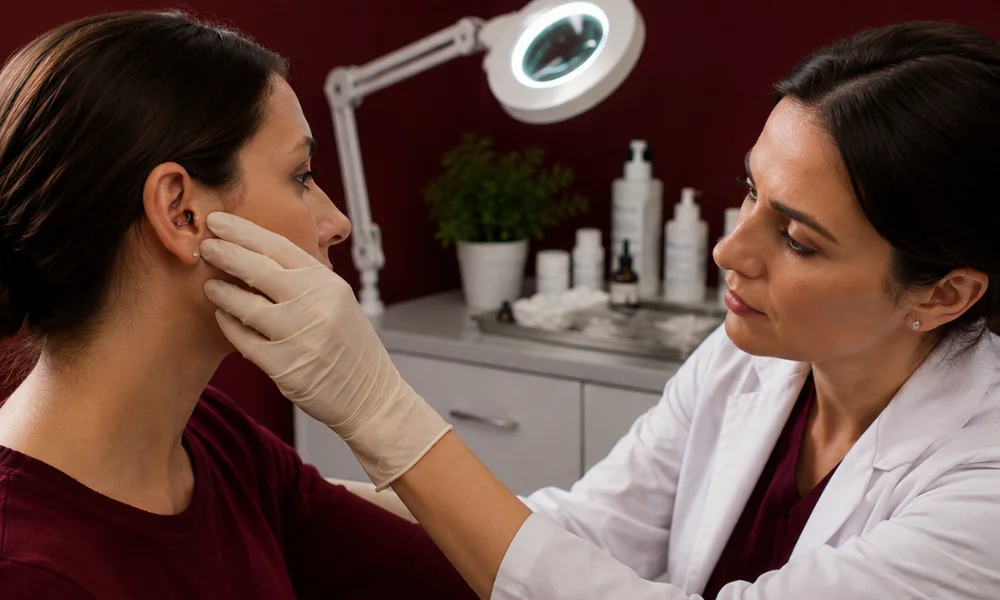
If you repeatedly react to jewelry and cannot identify the metal responsible, a dermatologist or allergist may recommend patch testing.
Patch testing places small amounts of suspected allergens against the skin and checks for a delayed reaction. It can help identify nickel and other substances responsible for allergic contact dermatitis.
When Should You See a Doctor?
Seek medical advice if the rash is severe, persistent, repeatedly returns, or does not improve after avoiding the suspected trigger.
You should also get medical attention when you notice increasing swelling, warmth, pain, or pus because these can indicate infection.
If you develop difficulty breathing or another severe allergic reaction, seek emergency medical care immediately.
Remember, a dermatologist can help determine whether you actually have a metal allergy rather than assuming every piercing bump is an allergy.
Common Mistakes to Avoid
Changing Jewelry Too Quickly
A reaction can tempt you to remove the jewelry immediately. However, changing or removing jewelry during healing should be discussed with a qualified piercer or healthcare professional, particularly when infection is possible.
Using Harsh Cleaning Products
Alcohol, strong antiseptics, and excessive cleaning can irritate healing tissue. Instead, follow a simple aftercare routine recommended for body piercings.
Assuming Every Bump Is an Allergy
A bump can have several causes, including mechanical irritation, cleaning products, jewelry material, or infection. The APP notes that piercing problems can sometimes have more than one cause.
Trusting the Word “Hypoallergenic”
“Hypoallergenic” is not a substitute for knowing the actual jewelry material and its quality. Ask for specific information, particularly if you already know that nickel causes problems.
Daith Piercing Allergy Checklist
- Check whether your jewelry contains or may contain nickel.
- Ask for the exact jewelry material.
- Consider implant-certified titanium if appropriate.
- Avoid twisting or rotating healing jewelry.
- Clean with sterile saline as recommended.
- Keep cosmetics and lotions away from the piercing.
- Do not scratch or pick the irritated skin.
- Have a professional check jewelry size and fit.
- Consider patch testing if reactions keep returning.
- Seek medical care for worsening pain, warmth, swelling, or pus.
Conclusion
A daith piercing allergy is often a reaction to the jewelry rather than the piercing itself. Nickel is a particularly common trigger, but irritation, poor jewelry fit, cleaning products, and infection can create similar symptoms.
Therefore, focus on the material, jewelry quality, fit, and aftercare rather than assuming the cause. Implant-certified titanium can be a useful option for people concerned about nickel sensitivity, while patch testing can help identify an allergy when the cause remains unclear.
At daithpiercing, our goal is to make daith piercing information easier to understand so you can make informed decisions about jewelry and aftercare. If your symptoms are severe, persistent, or suggest infection, however, a qualified healthcare professional should be your next step.
Frequently Asked Questions
Can you be allergic to a daith piercing?
You are generally reacting to something associated with the piercing rather than to the piercing itself. Jewelry metals, especially nickel, can cause allergic contact dermatitis.
How do I know if my daith piercing is allergic to nickel?
Persistent itching, rash, dryness, bumps, or blistering around jewelry can be consistent with nickel allergy. However, these symptoms can overlap with irritation and other skin problems, so patch testing can help confirm the responsible allergen.
Is titanium good for a nickel allergy?
Implant-certified titanium is commonly recommended for people concerned about nickel sensitivity because titanium is suitable for body jewelry when it meets recognized material standards.
Can stainless steel cause a reaction?
It can, depending on the specific alloy and the person’s sensitivity. “Stainless steel” covers different materials, so it is better to check the exact grade and certification rather than assuming every stainless-steel piece is suitable.
Should I remove my daith jewelry if it is irritated?
Do not make the decision based on redness alone. If you suspect an allergy, speak with a qualified piercer about changing to an appropriate material. If infection is suspected, contact a healthcare professional before removing jewelry on your own.
How long does a nickel allergy reaction last?
The duration varies depending on the exposure and severity. Avoiding the responsible metal is the key step, while healthcare professionals can recommend treatment when symptoms are significant or persistent.
Can a daith piercing cause an infection instead of an allergy?
Yes. A healing piercing can become infected, and infection may cause increasing pain, warmth, swelling, and pus. Those symptoms should be assessed by a healthcare professional.