
Our blogs structured to guide users through decision-making, healing, and lifestyle integration.

Daith Piercing Hoop Size Guide: 6mm, 8mm, 10mm Explained

Daith Piercing Hoop Size Guide: 6mm, 8mm, 10mm Explained

Key Takeaways

  • 8mm is the most common daith piercing hoop size.
  • 6mm creates a snug fit and suits many healed piercings with smaller ear anatomy.
  • 10mm offers more clearance and a bolder appearance.
  • Gauge measures jewelry thickness, while diameter measures hoop width.
  • Ear anatomy plays a major role in choosing the correct size.
  • Implant-grade titanium, solid gold, and quality surgical steel are popular material choices.
  • Always confirm your measurements before buying replacement jewelry.
  • When in doubt, consult a professional piercer for the most accurate sizing advice.

Quick Answer

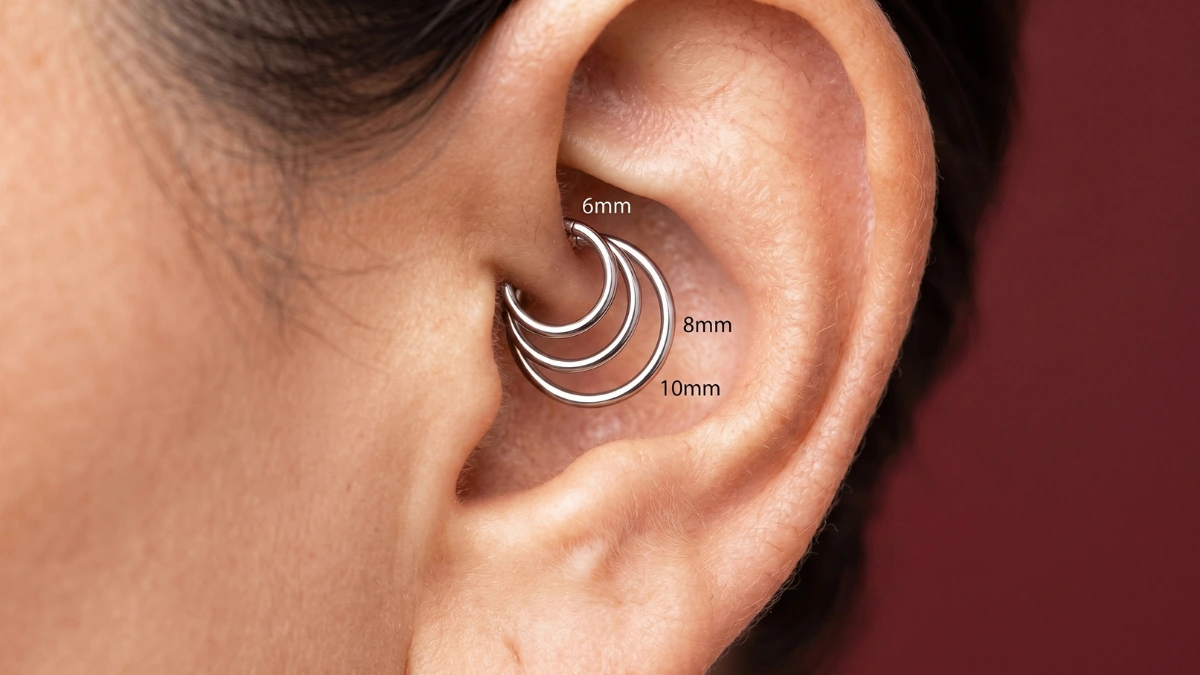
The most common daith piercing hoop size is 8mm (5/16 inch) because it offers a comfortable fit for many ears. A 6mm hoop creates a snug appearance and works best for smaller ears or healed piercings. A 10mm hoop provides extra room and is often preferred for larger ears, decorative jewelry, or piercings that need more space during healing. Always consider your ear anatomy and ask your piercer if you’re unsure.

Choosing the correct daith piercing hoop size is one of the most important decisions you’ll make after getting your piercing. A hoop that’s too small can press against your ear and cause discomfort, while one that’s too large may move around too much or not give you the look you want.

Most people wear a 6mm, 8mm, or 10mm hoop, but the right size depends on your ear anatomy, the placement of the piercing, and whether it’s still healing. Understanding these differences before buying jewelry can save you time, money, and unnecessary irritation.

This guide explains everything in simple language. You’ll learn how hoop sizes work, when each size is suitable, how to measure correctly, and what mistakes to avoid. Whether you’re buying your first daith ring or replacing an old one, you’ll be able to choose with confidence.

Understanding Daith Piercing Hoop Sizes
Understanding Daith Piercing Hoop Sizes

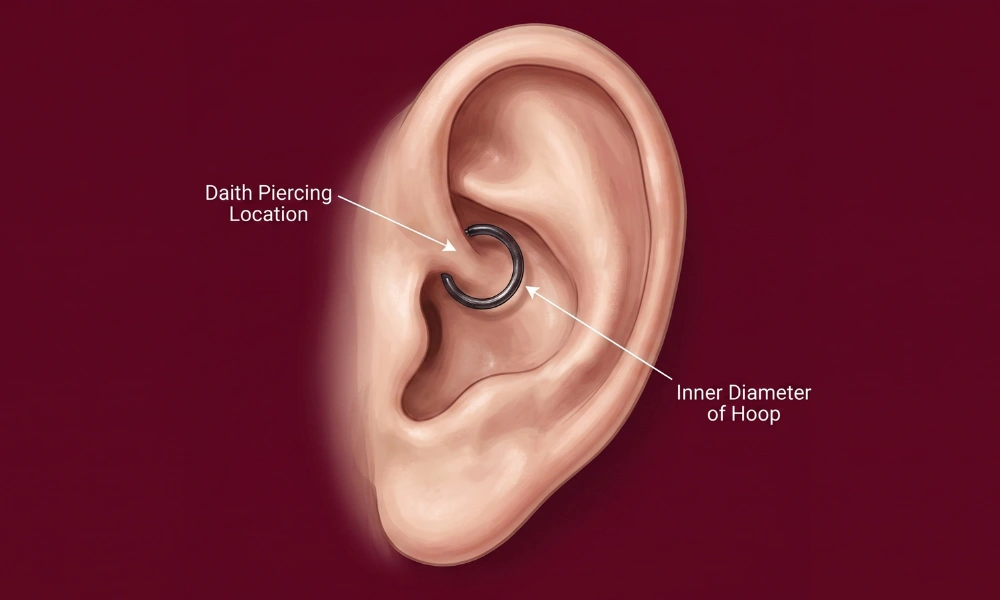
Unlike standard earrings, daith jewelry sits inside the innermost cartilage fold of the ear. Because this area varies from person to person, there isn’t one hoop size that fits everyone.

When people talk about hoop size, they’re usually referring to the inside diameter of the ring. This measurement determines how tightly or loosely the hoop sits around the pierced cartilage.

Several factors affect which size will fit best, including:

  • Ear anatomy
  • Piercing placement
  • Swelling during healing
  • Jewelry style
  • Personal preference

For example, someone with a smaller ear may find that a 6mm hoop sits perfectly, while another person may need an 8mm or even a 10mm ring for a comfortable fit.

Choosing the right size improves comfort, reduces irritation, and helps the jewelry sit naturally instead of pressing against the cartilage.

Daith Hoop Size Chart

The table below gives a quick overview of the most common hoop sizes.

Hoop Size Best For Appearance Comfort Level
6mm Small ears and healed piercings Snug fit Good if properly fitted
8mm Most people Balanced fit Excellent
10mm Larger ears or extra clearance Loose fit Very comfortable

This chart provides a general guide. Your piercer may recommend a different size depending on your anatomy and the exact placement of your piercing.

6mm vs 8mm vs 10mm Comparison
6mm vs 8mm vs 10mm Comparison

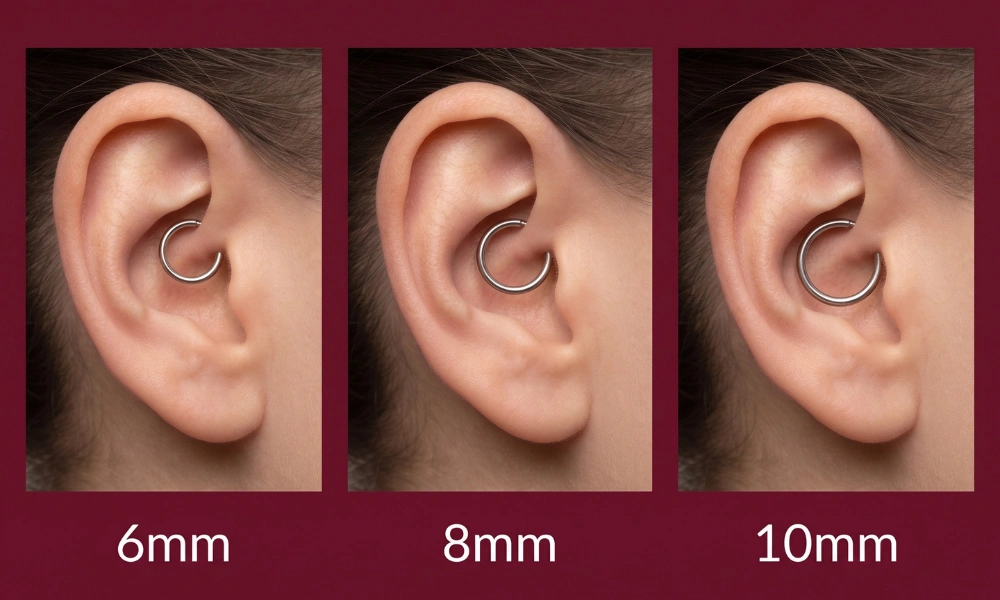
Choosing between these three sizes becomes much easier once you understand how each one looks and feels.

Feature 6mm 8mm 10mm
Fit Tight Balanced Loose
Best For Small ears Average ears Larger ears
Healing Use Rarely recommended Common Sometimes recommended
Everyday Comfort Good Excellent Excellent
Decorative Look Minimal Classic Bold

6mm Hoop

A 6mm hoop creates a close-fitting look that many people like because it appears neat and modern.

However, it isn’t suitable for everyone. If your piercing sits deeper inside the cartilage, this size may feel tight. It also isn’t the best option for a fresh piercing because swelling needs extra room.

Choose a 6mm hoop if:

  • Your daith piercing has fully healed.
  • Your piercer recommends it.
  • You prefer a snug appearance.
  • You have smaller ear anatomy.

8mm Hoop

An 8mm hoop is considered the most versatile choice. It provides enough clearance for comfort while still looking proportional inside the ear.

For this reason, many professional piercers install an 8mm ring after evaluating the client’s anatomy.

An 8mm hoop is ideal because it:

  • Fits many ear shapes.
  • Looks balanced.
  • Offers good comfort.
  • Works well with clickers and seamless rings.
  • Is widely available in different designs.

If you’re unsure which size to buy, 8mm is often the safest starting point after confirming it suits your piercing.

10mm Hoop

A 10mm hoop gives the jewelry a more noticeable appearance. Instead of hugging the cartilage closely, it leaves more visible space around the piercing.

Some people choose this size purely for style, while others need the extra room because of their ear shape.

A 10mm hoop works well when:

  • Your ear anatomy requires more clearance.
  • You enjoy statement jewelry.
  • Your piercer recommends additional room.
  • You prefer larger decorative clickers.

Although it offers extra comfort, some people find that larger hoops rotate more often during daily activities.

What Is the Standard Daith Piercing Hoop Size?

While every ear is unique, 8mm is generally considered the standard diameter for many daith piercings.

Most professional piercers start with this size because it provides a balance between comfort and appearance. It usually offers enough space without looking oversized.

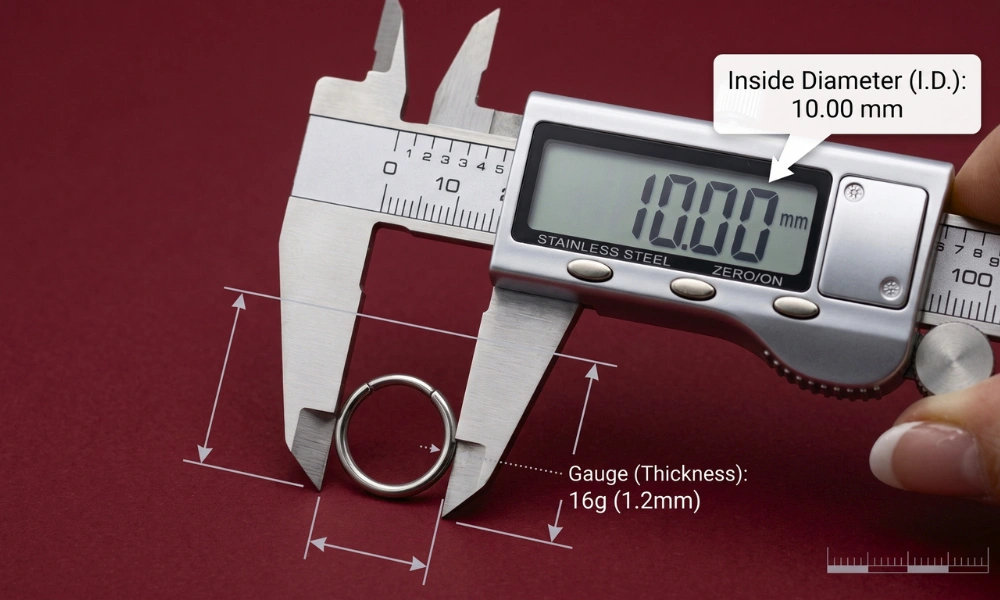
The standard gauge for a daith piercing is commonly 16 gauge (1.2mm), although some piercers may use 14 gauge (1.6mm) depending on the jewelry style and the individual’s anatomy.

Remember that gauge and diameter are two different measurements. The gauge refers to the thickness of the jewelry, while the diameter measures the width of the hoop. Understanding both helps you choose replacement jewelry that fits correctly.

Understanding Gauge and Diameter

Before buying new jewelry, it’s important to understand the two measurements used for daith hoops. Many people confuse them, which often leads to ordering the wrong size.

What Is Gauge?

Gauge refers to the thickness of the jewelry. A smaller gauge number means a thicker piece of jewelry.

The most common gauges for daith piercings are:

Gauge Thickness Common Use
16G 1.2 mm Standard for most daith piercings
14G 1.6 mm Less common and slightly thicker

Never switch to a different gauge unless your piercer confirms it’s suitable for your piercing.

What Is Diameter?

Diameter measures the inside width of the hoop. This determines how the ring sits around your ear cartilage.

The most common diameters are:

Diameter Best For
6 mm Small ears or snug fit
8 mm Most people
10 mm Larger ears or more noticeable jewelry

A hoop with the correct diameter should sit comfortably without pressing into your ear or hanging too loosely.

How to Measure Your Daith Piercing

How to Measure Your Daith Piercing

Measuring your daith piercing correctly helps you avoid buying jewelry that doesn’t fit.

Measure Your Current Jewelry

If your current hoop fits well, measuring it is the easiest option.

You’ll need:

  • A ruler with millimeter markings
  • Digital calipers for better accuracy (optional)

Measure the inside diameter of the hoop from one inner edge to the opposite inner edge.

Measure Your Ear

If you don’t have existing jewelry, ask a professional piercer to measure the space inside your ear where the hoop will sit. Because every ear has a different shape, this is usually the most reliable method.

Check the Jewelry Specifications

When shopping online, always look for both the gauge and the diameter.

For example:

  • 16G × 8mm
  • 16G × 10mm

These two numbers tell you everything you need to know about the size.

How Ear Anatomy Affects Hoop Size

No two ears are exactly alike. The fold where a daith piercing sits can be narrow, deep, wide, or more open. Because of this, the same hoop may fit one person perfectly but feel uncomfortable for another.

People with smaller ears often find that a 6mm or 8mm hoop fits neatly. Those with larger ears or a deeper piercing placement may need a 10mm hoop to avoid pressure on the cartilage.

Your piercer considers factors such as:

  • Ear size
  • Cartilage thickness
  • Piercing angle
  • Healing progress
  • Jewelry style

This is why two people with daith piercings may wear different hoop sizes even though both have healthy piercings.

Best Jewelry Materials

Choosing the right size matters, but so does the material. High-quality jewelry is less likely to cause irritation and is generally more comfortable to wear.

Material Suitable for Sensitive Skin Durability Common Use
Implant-grade titanium Excellent Excellent Highly recommended
14K or 18K solid gold Excellent Excellent Premium option
Surgical steel Good Very good Common everyday choice
Niobium Excellent Very good Good for metal sensitivities

Avoid very cheap jewelry made from unknown metals, especially while your piercing is healing. Low-quality materials can increase the risk of irritation or allergic reactions.

Which Hoop Size Is Best for Healing?

A fresh daith piercing usually needs a little extra room because swelling is normal during the early healing period.

Many professional piercers choose a size that allows for this swelling while still keeping the jewelry stable. After the piercing has fully healed, some people switch to a smaller hoop if they prefer a snugger look.

Keep these tips in mind during healing:

  • Don’t change jewelry too early.
  • Follow your piercer’s aftercare instructions.
  • Clean the piercing as recommended.
  • Avoid sleeping directly on the pierced ear.
  • Don’t force a smaller hoop if the piercing still feels tender.

Healing times vary from person to person, so only change jewelry when your piercer says it’s safe.

Expert Tips for Choosing the Right Daith Hoop Size

A few simple habits can help you choose jewelry that feels comfortable and looks great.

Start with Your Piercer’s Recommendation

Your piercer has seen your ear anatomy in person and can recommend a size that fits properly.

Don’t Buy Based Only on Photos

Pictures on social media often don’t show the actual diameter of the jewelry. What looks like an 8mm hoop in one person’s ear may actually be 10mm.

Think About Comfort First

A snug hoop may look stylish, but comfort is more important for everyday wear.

Choose Quality Jewelry

Well-made hoops usually have smoother finishes and secure closures, making them easier to wear and less likely to irritate your piercing.

Save Your Jewelry Measurements

Once you know your correct gauge and diameter, keep a note of them. This makes future purchases much easier.

Common Daith Hoop Sizing Mistakes

Many sizing problems can be avoided with a little planning.

Choosing the Wrong Diameter

A hoop that’s too small may press against the cartilage, while one that’s too large can move around more than expected.

Mixing Up Gauge and Diameter

These measurements are different. Always check both before ordering.

Ignoring Your Ear Anatomy

Just because a certain size works for someone else doesn’t mean it will fit your ear.

Changing Jewelry Too Soon

Replacing jewelry before your piercing has fully healed can lead to irritation and slow the healing process.

Buying Low-Quality Jewelry

Cheap jewelry may save money at first, but it can cause discomfort and may need replacing sooner.

Daith Piercing Hoop Size Checklist

Before buying your next hoop, make sure you can answer “yes” to these questions.

Checklist Yes
I know my gauge size.
I know my hoop diameter.
My piercing is fully healed if I’m downsizing.
I’ve chosen a high-quality material.
The hoop suits my ear anatomy.
I’m buying from a trusted jewelry seller.

Completing this checklist can help you avoid common sizing mistakes and choose jewelry you’ll be happy to wear.

Frequently Asked Questions

Is 8mm the most common daith hoop size?

Yes. An 8mm hoop fits many people comfortably, which is why it’s often considered the standard size.

Is a 6mm hoop too small?

It can be. A 6mm hoop works well for some healed piercings and smaller ears, but it may feel tight if your anatomy requires more space.

When should I choose a 10mm hoop?

A 10mm hoop is a good choice if you have larger ear anatomy, prefer a looser fit, or want jewelry that stands out more.

Can I wear a clicker in my daith piercing?

Yes. Clicker rings are a popular option because they’re easy to open and close. Just make sure you choose the correct gauge and diameter.

Does hoop size affect healing?

Yes. Jewelry that is too tight can create pressure on the piercing, while a properly fitted hoop provides enough space for comfort during healing.

How do I know if my hoop is too small?

Signs include constant pressure, discomfort, redness from tightness, or the ring pressing into the cartilage. If you notice these issues, consult your piercer before changing jewelry.

Conclusion

Choosing the right daith piercing hoop size isn’t just about appearance. The correct size helps your jewelry sit comfortably, supports healthy healing, and makes daily wear much more enjoyable.

For most people, an 8mm hoop offers the best balance of comfort and style. A 6mm hoop is ideal for a snug fit on smaller, fully healed piercings, while a 10mm hoop provides extra room for larger ears or those who prefer a bolder look.

If you’re ever unsure, let a professional piercer measure your ear before purchasing new jewelry. A few extra minutes of guidance can help you avoid discomfort and ensure you choose a hoop you’ll enjoy wearing for years.

Picture of Author - Sam Sami - Seo Specialist

Author - Sam Sami - Seo Specialist

I’m the founder of Daithpiercing.io, passionate about piercing care, healing tips, safe jewelry, and sharing honest advice that helps people make confident decisions.

Daith Piercing Hoop Size Guide: 6mm, 8mm, 10mm Explained