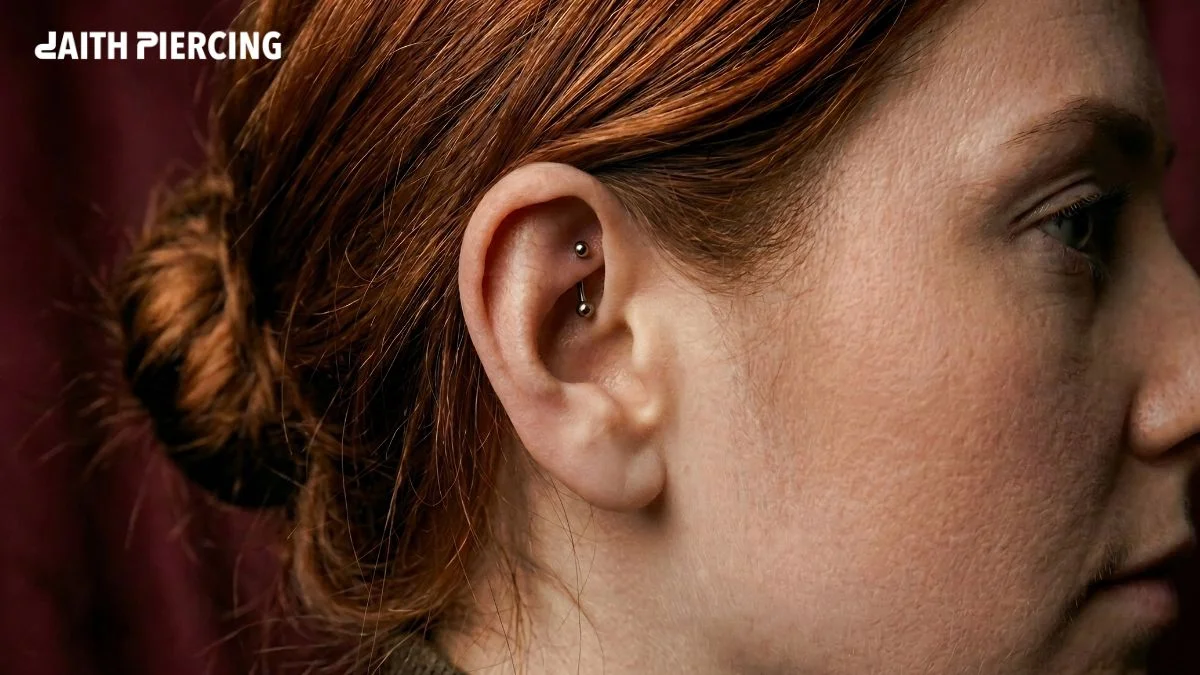
In 2026, the rook piercing is arguably the most stylish way to update your ear curation. It’s vertical, which sets it apart from the rest, and sits on the thick ridge of cartilage in the top inner ear.
But does it hurt as bad as it looks? In this guide, we’ll discuss rook piercing pain level, the realistic rook healing time and how to choose the best rook jewelry. We will also compare the rook vs daith to help you determine which is right for you and your anatomy. If you’re also interested in daith piercings, check out our full guide at daithpiercing
Everything you need to know about the rook piercing before getting one, including rook piercing costs overall and rook piercing aftercare.
What Is a Rook Piercing?
It is a vertical hole in the part of the ear cartilage closest to the head. The rook differs from a typical lobe or helix piercing as the needle goes through a specific shelf of tissue, which is a great option if you are looking to add some depth to your ear stack. This allows for cute, dangly jewelry or cozy hoops that sit nestled in the natural curves of the inner ear.
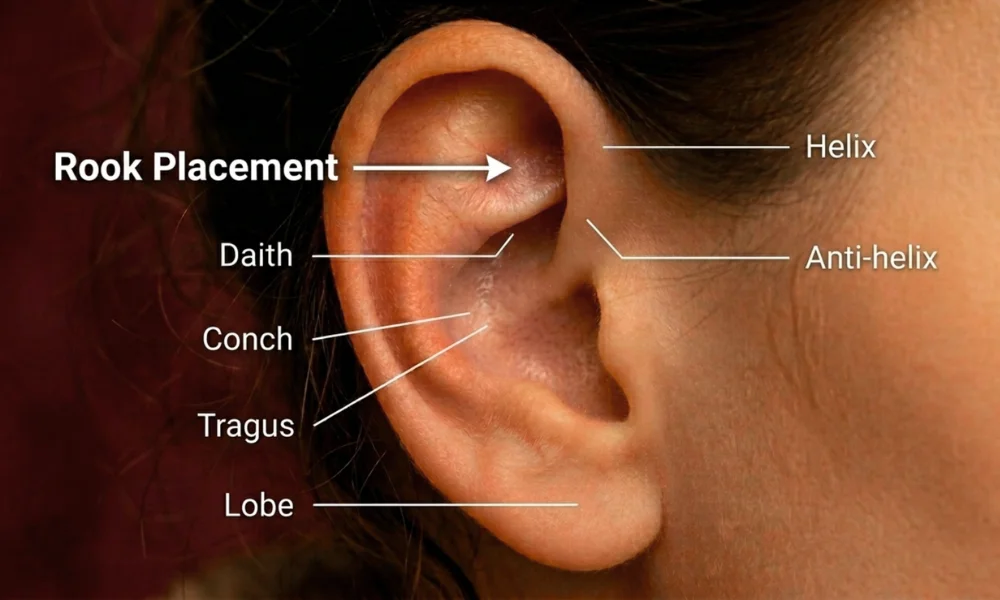
Where Is the Rook Piercing Located?
Your rook will be located on the anti-helix, which is the vertical fold of cartilage found between your inner ear and outer ear. Your rook piercing is situated above the daith and under the outer helix.
In terms of anatomy, the rook piercing involves the penetration of two layers of this sturdy cartilage fold. This makes your rook piercing pain level a crucial thing that you should understand about because you are piercing your ear at a more solid area than other piercings.
Who Invented the Rook Piercing?
The history of the rook piercing is quite recent. It gained popularity through the efforts of professional piercer Erik Dakota during the early 1990s. The first official record of the rook piercing was documented in the magazine Body Play (issue 4) in 1992.
How Much Does a Rook Piercing Hurt?
When it comes to the rook piercing pain level, honesty is the best policy. Because the needle must pass through a thick, double-layered shelf of the anti-helix, it is generally considered one of the more intense cartilage piercings. However, the experience is incredibly fast most of the work is over in less than two seconds.
Rook Piercing Pain Level on a Scale of 1 to 10
To help you visualize where this sits on the ouch-meter, here is a quick comparison:
| Piercing Type | Estimated Pain Level (1–10) | Tissue Type |
| Ear Lobe | 1–2 | Soft Tissue |
| Helix | 3–4 | Single Cartilage |
| Rook Piercing | 5–6 | Double Cartilage Fold |
| Daith | 5–6 | Firm Cartilage |
| Industrial | 7–8 | Two Cartilage Holes |
Of course, your individual pain threshold and stress level on the day will play a huge role in how it feels.
Pro Tip: If you are in the USA, always choose an APP-certified piercer (Association of Professional Piercers) for the safest rook piercing experience. Professional standards ensure that the equipment is sterile and the placement is anatomically correct, which significantly reduces unnecessary pain.
Rook Piercing Healing Time
The right method when it comes to aftercare for your rook piercing would be adopting the mindset set it and forget it. This area has a double layer of tissue and, therefore, takes much more time to heal than what most individuals think. It is important to note that cartilage is not vascular; thus, its healing process takes longer.
How Long Does a Rook Piercing Take to Heal?
Although the time taken by you personally may differ based on your body type, here’s a brief guide on how rook piercings heal:
Skin Surface Healing (6 months): During this phase, redness and crusties should clear up. But internally, things will still be quite fragile.
Full Healing (12 to 18 months): The period when the internal fistula basically a tube of tissue that encapsulates the jewelry inside becomes fully established. Changing the rook jewelry prior to this point results in immediate swelling or even closure of the piercing.
Factors That Affect Rook Piercing Healing
Here are some variables that you will need to handle carefully if you wish to make it to the end in one piece:
Material Quality: Using implant-grade titanium is the best approach. It is hypoallergenic and doesn’t contain nickel like inexpensive steel, which causes mysterious bumps.
The Travel Pillow Trick: Sleeping posture is responsible for the majority of cases where rooks migrate (meaning their angle changes over time). To avoid moving your piercing, side-sleeping people use donut pillows that allow their ears to stay suspended during the night.
Zero Interference: The LITHA (Leave It The Hell Alone) method is highly effective for a rook piercing. Avoid the temptation to rotate or twist the jewelry, as this disrupts the fragile new cells trying to bridge the gap.
Anatomical Thickness: If you have a particularly prominent cartilage fold, expect your healing to lean toward the 18-month mark.
Rook Piercing Aftercare: The Right Way to Clean It
Mastering rook aftercare is essential because the anatomy of the inner ear creates a micro-climate where heat and moisture can easily get trapped. Unlike an outer helix piercing, the rook requires a more focused approach to prevent irritation and ensure the long-term success of your ear curation.
How to Clean a Rook Piercing Step by Step
-
Hand Hygiene First: Always start by scrubbing your hands. Transferring bacteria from your fingers to a fresh cartilage piercing is the fastest way to trigger an infection.
-
The Saline Mist: Apply a sterile saline solution (0.9% sodium chloride) to both the top and bottom of the piercing site. Avoid DIY salt soaks, as it is nearly impossible to get the concentration sterile and balanced at home.
-
Moisture Management: After cleaning, never leave the area damp. Use a disposable paper towel or the cool setting on a hair dryer to gently dry the rook. Moisture can lead to piercing bumps or fungal growth in the ear’s folds.
-
The No-Touch Rule: Strictly avoid the urge to test the jewelry by wiggling it. Movement disrupts the delicate internal healing and can lead to permanent scarring.
Rook Piercing Aftercare Mistakes to Avoid
Aggressive Antiseptics: Forget the old-school advice of using rubbing alcohol, hydrogen peroxide, or tea tree oil. These substances are far too caustic for a rook piercing and will significantly delay your recovery time.
Audio Hygiene: Your AirPods and in-ear buds are hotspots for bacteria. During the initial months, switch to over-ear headphones that cup the ear without touching the anti-helix.
Ointments and Creams: Never apply Neosporin or heavy ointments. These seal the piercing, cutting off the oxygen flow required for cartilage to heal and trapping grime inside the wound.
The Phone Trap: If you frequently take calls on your pierced side, keep your screen sanitized or use a headset. A dirty phone screen is a major contributor to localized swelling.
When Can You Downsize Your Rook Piercing Jewelry?
The jewelry you are pierced with is intentionally long to allow for swelling room. Once the initial inflammation settles usually around the 12 to 16-week mark that extra length becomes a liability.
A professional downsize is the process of switching to a shorter bar that fits snugly against your anatomy. This prevents the jewelry from tilting or snagging on your hair, which is a major cause of migration. Always return to your piercer for this swap; attempting a DIY change this early in the rook piercing healing time can cause the channel to collapse or become reinfected.
Rook Piercing Cost: What to Expect
Budgeting for a rook piercing in 2026 involves two main factors: the piercer’s service fee and the cost of the jewelry. In the USA, you should expect a total price range between $40 and $100.
How Much Does a Rook Piercing Cost in the USA?
-
Standard Service Fee: Most reputable studios charge $30–$60 for the procedure and sterilization.
-
Jewelry Upgrades: Basic implant-grade titanium is usually included or starts at $20. Upgrading to 14k gold or opals can add $50–$150 to your total.
-
Regional Pricing: Rook piercing prices in major hubs like NYC, LA, or Chicago typically run $60–$90. In smaller towns, you may find professional services ranging from $35–$55.
Pro Tip: Never shop for a cartilage piercing based on the lowest price. Prioritize an APP-certified professional to ensure a sterile environment and high-quality metals, which prevents costly complications during the long rook healing time.
Rook Piercing Jewelry: Types, Materials, and Sizes
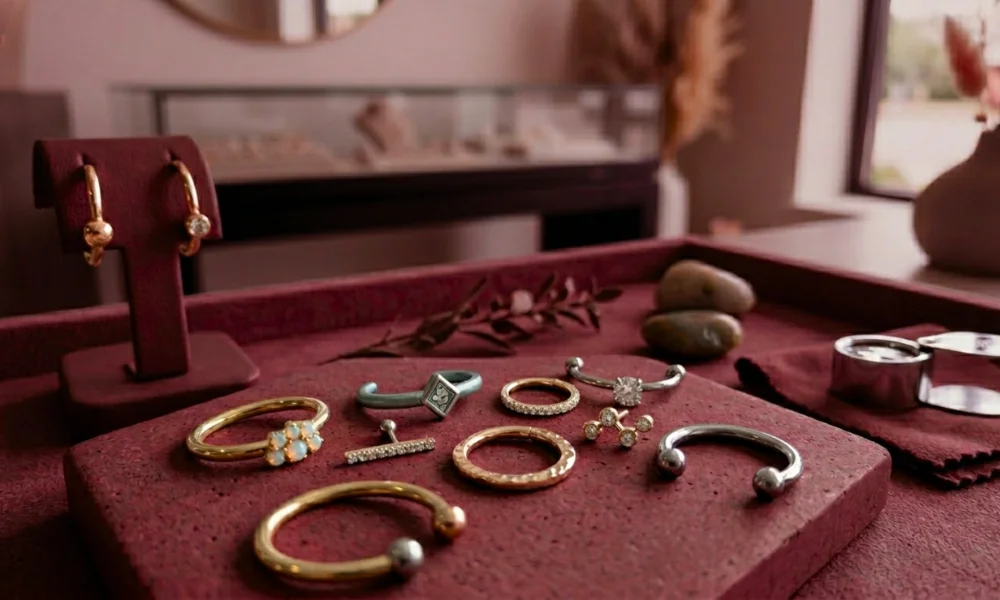
Selecting high-quality rook piercing jewelry is vital for a smooth recovery. Because the rook sits on a curved ridge, the shape and metal of your initial piece will directly impact your rook piercing healing time.
Best Materials and Styles
For a new piercing, a 1Curved Barbell is the gold standard. It follows the ear’s natural contour and allows for the necessary swelling room without putting pressure on the wound.
| Feature | Recommended Specification | Why It Matters |
| Material | Implant-Grade Titanium | 100% nickel-free and biocompatible. |
| Style | Curved Barbell (16g) | Mimics anatomy and prevents migration. |
| Standard Size | 1.2mm thickness / 8mm length | Provides “swelling room” for new piercings. |
| After Healing | Clickers, Hoops, or 14k Gold | Allows for a snugger, more aesthetic fit. |
Materials to Prioritize vs. Avoid
-
Top Choice: Implant-grade titanium or solid 14k/18k gold are the best hypoallergenic piercing jewelry options. They won’t tarnish or trigger allergic reactions.
-
What to Avoid: Skip sterling silver and plated metals for fresh piercings. These can oxidize or flake, leading to permanent skin discoloration and irritation.
Once your piercing has fully matured, you can downsize to a 6mm or 5mm length for a perfectly flush, tailored look.
Rook Piercing Bump vs. Infection: How to Tell the Difference
Distinguishing between minor irritation and a medical issue is the most common challenge during the rook piercing healing time. While many people panic at the first sign of a small bubble, it is often an irritation bump rather than a true bacterial infection.
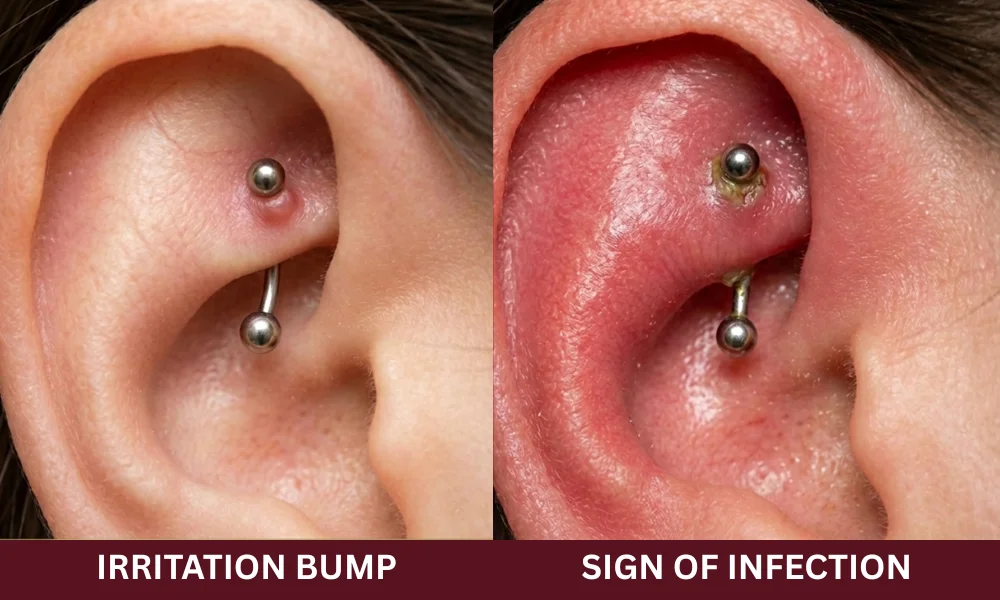
How to Tell the Difference: Bump vs. Infection
A rook piercing bump is usually a localized reaction to stress, whereas an infection is a systemic issue that often feels angry and spreads. Use the table below to identify your symptoms:
| Symptom | Irritation Bump (Non-Infected) | Bacterial Infection (See a Doctor) |
| Discharge | Clear or pale yellow (crusties) | Thick green, grey, or dark yellow pus |
| Pain Level | Tender only when touched | Severe, constant throbbing or radiating heat |
| Appearance | Flesh-colored or slightly pink bubble | Expanding redness and significant swelling |
| Body Status | Localized to the cartilage fold | Possible fever, chills, or swollen lymph nodes |
What Causes a Bump on a Rook Piercing?
Most of the time, a rook piercing bump is a hypertrophic scar or an irritation bump. Common culprits include:
-
Pressure Trauma: Accidentally sleeping on your ear or wearing in-ear headphones too soon.
-
Jewelry Issues: A reaction to nickel in low-quality steel or a barbell that is too long and moves excessively.
-
Poor Placement: If the angle is slightly off, the constant tension can cause a bump to form.
Pro Tip: Never attempt to pop or drain a bump yourself. This creates an open wound that invites real bacteria into the cartilage, turning a minor snag into a serious infection.
Conclusion
In conclusion, the rook piercing will continue to be one of the most fashionable and satisfying piercings that you can have in 2026. Although there is quite a bit of dedication required, with a pain rating between 5-6/10 and healing times taking anywhere from 6 to 18 months, no other piercings can match the vertical appearance of a rook piercing.
In planning your next ear constellation, consider combining your rook piercing with a daith piercing to create a balanced look on your inner ear. daithpiercing.io has all the information you need. Although it is a lengthy healing process, for anyone who appreciates unique expression, the rook piercing will be a clear standout.
Frequently Asked Questions
How painful is a rook piercing compared to a daith?
Both are cartilage piercings but rook pierces two layers, generally rated slightly more painful than daith. Daith is about 4–5/10, rook is 5–6/10.
Can I use numbing cream before a rook piercing?
Yes, topical numbing creams like EMLA can reduce initial pain. Consult your piercer some prefer you don’t so they can gauge your response accurately.
How do I sleep with a new rook piercing?
Sleep on the opposite side or use a travel pillow/piercing pillow with a cutout to keep pressure off the ear.
Can I wear AirPods with a rook piercing?
Not during healing. In-ear devices press directly on the jewelry and cause trauma. Switch to over-ear headphones for at least 6 months.
Does a rook piercing help with anxiety or migraines?
Some people claim pressure point benefits similar to daith piercings. There is no clinical evidence, but anecdotal reports exist.