
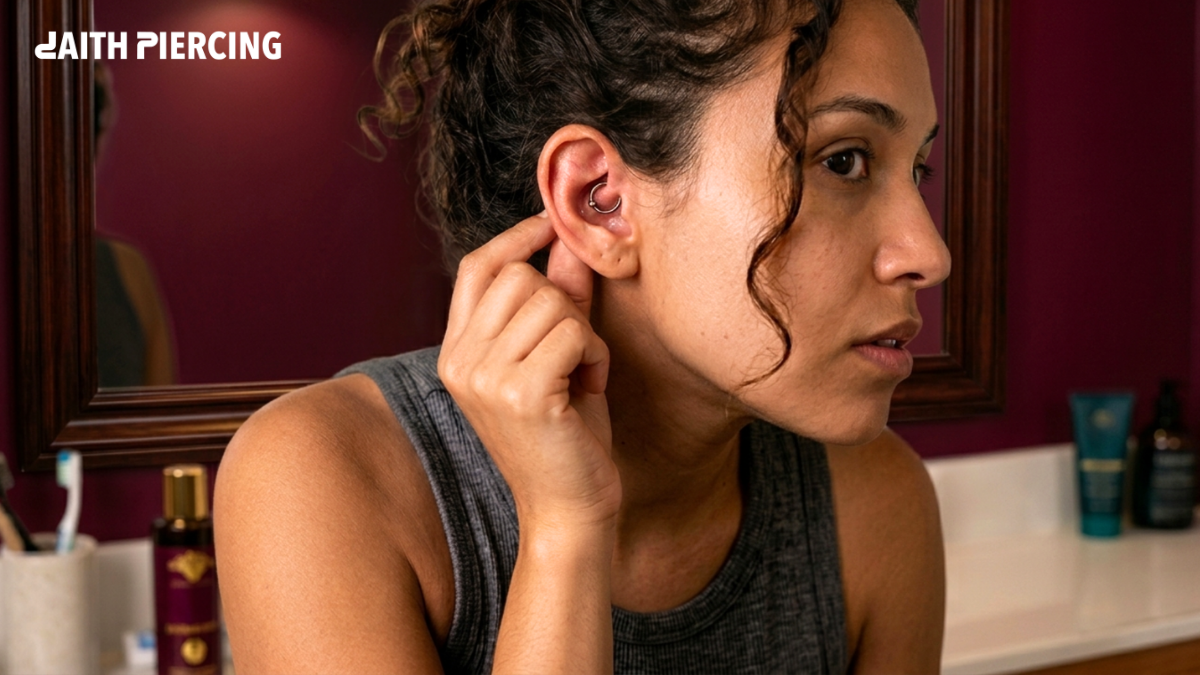
You have picked the perfect jewelry and finally booked your appointment, but as the date approaches, only one question remains: how bad does daith piercing pain actually get? While most online guides offer vague descriptions, knowing exactly what to expect is the best way to calm your nerves. On a standard scale of 1–10, most people rate the initial pinch around a 5 or 6, making it more intense than a lobe piercing but manageable for most.
At DaithPiercing.io, we have put together the most honest guide to the daith piercing pain scale, featuring a stage-by-stage breakdown and comparisons to help you prepare. If you are still researching the basics, check out our Daith Piercing: The Ultimate Expert Guide before diving into the details of the procedure.
What Does Daith Piercing Pain Actually Feel Like?
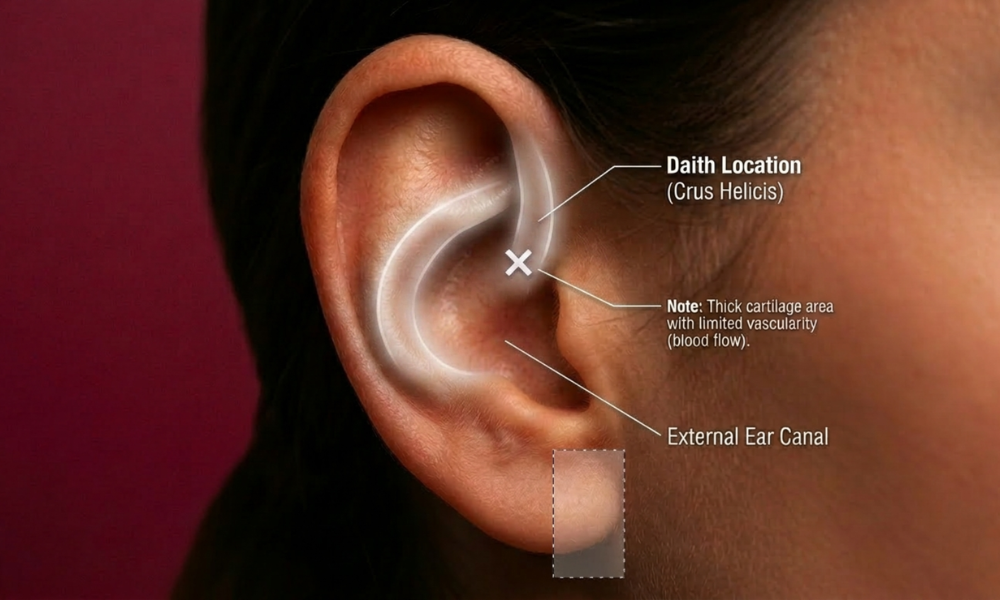
Understanding what does daith piercing pain feel like helps strip away the mystery and anxiety. Unlike a quick lobe pop, this procedure involves a sharp pinch as the needle enters the thickest fold of your inner ear cartilage. You will likely feel a distinct sensation of intense pressure followed by a warm, burning feeling.
Because the daith is located on a sturdy, curved piece of cartilage, the needle travel time is slightly longer usually lasting 6 to 9 seconds compared to the 1-second snap of a lobe piercing. One unique detail many people overlook is the crunch. You might actually hear the sound of the needle passing through the cartilage, which can make the daith piercing pain feel more intense than it actually is. Once the jewelry is in place, the sharp sensation quickly transitions into a dull, steady throb.
Daith Piercing Pain Scale: Where Does It Really Land?
If you are looking for a direct daith piercing pain level 1-10 rating, most enthusiasts place it between a 5 and 7. It is certainly more demanding than a standard helix, but it rarely reaches the “eye-watering” level of an industrial piercing.
To help you visualize how bad does daith piercing hurt compared to other popular spots, refer to this piercing pain chart:
| Ear Piercing Type | Pain Scale (1–10) | Notes |
| Earlobe | 2–3 | Fastest, thinnest tissue; very minor. |
| Helix | 4–5 | Cartilage, but relatively thin and flat. |
| Tragus | 4–6 | Small area, quick, but firm pressure. |
| Daith | 5–7 | Thick, curved cartilage; longer process. |
| Rook | 6–8 | Deepest fold; often a harder angle. |
| Industrial | 7–8 | Two holes; one long bar increases soreness. |
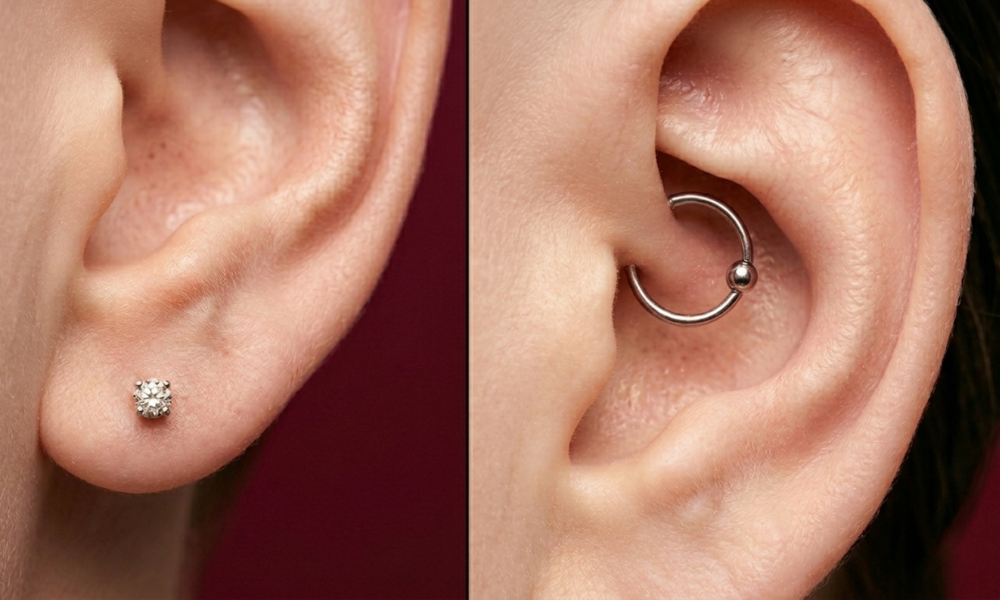
Remember, your pain tolerance is the ultimate deciding factor. For those with a high tolerance, it might feel like a minor annoyance, while those with piercing anxiety or low tolerance may find it briefly overwhelming. No matter where you land, the most intense part is over in under ten seconds.
Daith Piercing Pain by Tolerance Level: Which Category Are You?
When asking, does daith piercing hurt more than tragus? or other cartilage spots, the answer usually depends on your personal pain bucket. To help you prepare, we have broken down the experience into three categories based on common pain tolerance levels.
High Pain Tolerance
If you barely flinch during shots or other piercings, the daith will likely feel like a strong, momentary pinch. The needle pain is over quickly, and the crunch sensation is often more surprising than the actual ache.
Pro Tip: Stay relaxed and keep your jaw loose to prevent tension from amplifying the sensation.
Average Pain Tolerance
Most people fall here. You will feel a significant amount of cartilage pain and pressure that may cause you to clench your jaw. The daith piercing pain after the procedure typically results in a dull soreness that lasts 3 to 5 days.
Pro Tip: Use the toe-wiggling trick or deep box breathing to distract your brain during the 6 to 9 second window.
Low Pain Tolerance
If you are worried about daith piercing pain for people with low pain tolerance, do not panic it is still very manageable. You will likely feel a throbbing sensation and significant tenderness immediately after.
Pro Tip: Ask your piercer about using a topical numbing agent like EMLA cream or J-Caine. Always consult with your professional piercer first to ensure the cream won’t interfere with the sterilization or marking process. Avoid booking your appointment when you are hungry or exhausted, as this can lower your threshold for piercing anxiety.
Does Daith Piercing Pain Get Worse During Healing?
One of the biggest misconceptions is that the discomfort ends once you leave the studio. In reality, daith piercing pain after the initial needle poke follows a specific timeline. To help you manage expectations, we have developed a three-stage healing pain model a unique look at the daith piercing pain healing stages that most guides ignore.
Stage 1: Acute Pain (Days 1–7)
The daith piercing pain first day is usually characterized by a steady, rhythmic throbbing and a feeling of warmth around the ear. This discomfort typically peaks between hours 2 and 6 post-piercing. You will likely experience sharp soreness and redness as your body begins the inflammatory response. During this week, your sleeping position is your biggest enemy, avoid sleeping on the side of the new piercing to prevent a massive spike in tenderness.
Stage 2: Tenderness Phase (Weeks 2-12)
The pain you feel during the daith piercing healing stages will eventually subside to a localized sensitivity. However, cartilage pain can flare up suddenly when:
- Jewellery snags on hat, hoodie or hairbrush.
- You roll over on that ear at night by mistake.
- You clean the area too well.
During this phase you will get crusties. Do not pick them, as this simply moves the jewelry through unhealed tissue and makes them unneccessarily sore and slow.
Stage 3: Long-Term Healing Pain (3-12 Months)
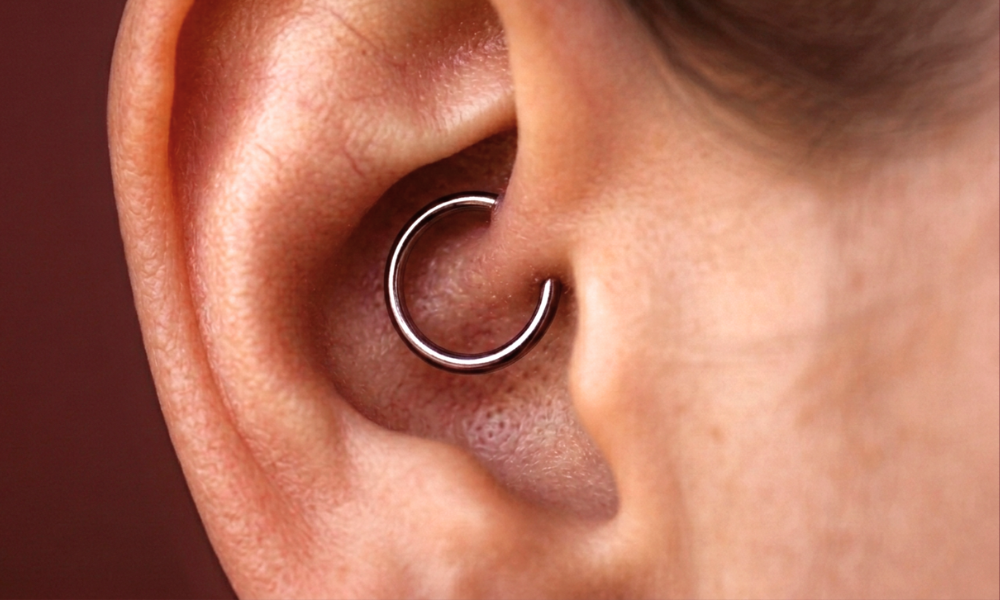
The piercing is pretty much all healed up now. You might get a dull ache from time to time after a deep clean, or if you apply pressure directly to it. One of the most common mistakes is changing jewelry too soon.
If you change jewelry before the tissue is fully fistulated (the tube of skin is formed), it can set back major pain management. Keep in mind that a daith can take anywhere from 6 to 12 months to fully heal depending on your specific body chemistry and aftercare consistency.
Daith Piercing Pain vs. Migraine Relief: The Real Story
Many people endure daith piercing pain specifically to target migraines. This is based on the acupuncture theory that piercing the inner ear fold a specific pressure point can alleviate chronic headaches.
When weighing how bad does daith piercing hurt against a migraine, many see it as a worthy trade-off: 10 seconds of needle pain for potential long-term relief. However, the American Migraine Foundation notes that evidence is purely anecdotal and could be a placebo effect.
The Bottom Line:
Pros: Many users report fewer headaches and a unique aesthetic.
Cons: No scientific guarantee; it is still a deep cartilage pain.
Expert Advice: Get the piercing because you love the look, and treat any migraine relief as a bonus. If your condition is severe, consult a neurologist first.
How to Reduce Daith Piercing Pain: 7 Tips That Actually Work
If you are nervous about how bad does daith piercing hurt, there are proven ways to lower the intensity. Use these professional strategies to manage piercing anxiety and ensure the process is as comfortable as possible.
-
Use a Topical Numbing Cream: Apply a lidocaine-based product like EMLA or J-Caine 45–60 minutes before your appointment. This significantly dulls the initial needle pain, though you will still feel the pressure. Always check with your piercer first to ensure they are comfortable working with numbed skin.
-
Eat a Substantial Meal: Low blood sugar makes you more prone to dizziness and heightens your perception of cartilage pain. Eat a balanced meal 2 hours before your session to keep your body resilient.
-
Skip the Caffeine and Alcohol: Both substances are stimulants or blood thinners that can increase nerve sensitivity and bleeding. Avoid both for at least 24 hours to keep your pain tolerance at its peak.
- Invest in Experience: The right piercer isn’t about finding the cheapest, it’s about finding the right skill level within your budget. A seasoned piercer can pass the needle in under 5 seconds drastically reducing the length of acute pain.
- Practice Rhythmic Breathing Try box breathing: breathe in for 4 counts, hold for 4, breathe out for 4. The wiggling of your toes during the process of the piercing is a scientifically proven technique of distraction that helps the brain to focus away from the ear.
-
Select Implant-Grade Jewelry: Start with ASTM F-136 implant-grade titanium or 14k/18k solid gold. These materials are biocompatible and nickel-free, preventing the soreness and throbbing caused by allergic reactions to cheaper metals.
-
Hands-Off Policy: Every time you touch or twist the jewelry, you reactivate pain signals and risk infection. Clean the area using only a sterile saline spray and leave it alone to let the tenderness subside naturally.
Does It Hurt More on Left or Right Ear?
Anatomically speaking, neither ear is inherently more sensitive, so your daith piercing pain will likely be the same regardless of the side you choose. However, there are two practical factors that could influence your experience:
-
Your Piercer’s Dominant Hand: A right-handed piercer may find one ear more accessible than the other. A better angle usually means a faster needle pass and less cartilage pain.
-
Individual Ear Anatomy: It is common for one ear to have slightly tighter or thicker folds than the other. More resistance often equals a bit more pressure.
The Verdict: The biggest difference is not the initial pinch, but the daith piercing pain after the procedure. Choose the side you sleep on less frequently to avoid constant soreness and throbbing during the first few weeks of healing.
Conclusion
The daith piercing pain factor is real, but it is a fleeting obstacle to a lifetime of style. The majority of people find 5 or 6 on the 1 to 10 scale totally manageable with the right mental preparation and aftercare. Whether you are looking for a migraine cure, or you just love the look, the quick sharp pinch is a small price to pay for such a unique result.
Learn everything you need to know before you book your appointment on DaithPiercing including what to expect during healing, how to choose the perfect jewelry and more. Check out our full daith piercing guide to enter the studio feeling totally confident. You can do it.
Frequently Asked Questions
How bad does daith piercing pain feel on a scale of 1 to 10?
Most people rate daith piercing pain between a 5 and 7 out of 10. It is generally more intense than a helix but less painful than a rook or industrial piercing.
How long does daith piercing pain last?
The sharp, initial needle pain lasts only 6–9 seconds. General soreness and tenderness typically last 3–7 days, while healing-related aches can recur for up to 12 months.
Can you numb a daith piercing before getting it done?
Yes, you can apply topical numbing creams like EMLA 45–60 minutes before your session. However, you must consult your piercer first to ensure it won’t affect the procedure.
Is daith piercing pain worth it for migraine relief?
While the pain trade-off is worth it for some, results are anecdotal. Weigh the short-term cartilage pain against potential relief, but prioritize the aesthetic first.
Does daith piercing hurt more than helix?
Generally, yes. The daith involves thicker cartilage and a more difficult angle, which leads to higher pressure and a longer piercing time than a standard helix.
What helps with daith piercing pain after getting it?
To manage daith piercing pain after the procedure, use saline soaks, take ibuprofen for the first 48 hours, and strictly avoid sleeping on the side of the new piercing.