Key Takeaways
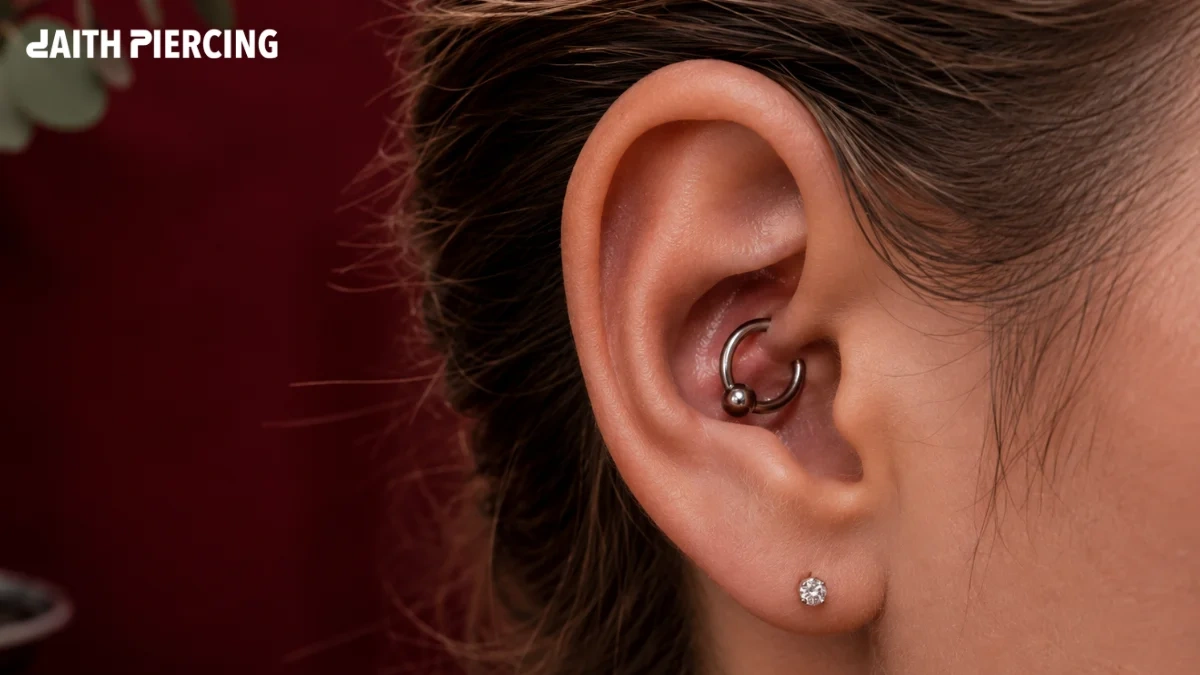
- Daith Piercing Angle Wrong: A crooked-looking daith is not always incorrectly pierced.
- Swelling and jewelry fit can temporarily affect its appearance.
- An incorrectly angled channel cannot simply be straightened with a ring.
- Never force, twist, or bend healing jewelry.
- Sleeping pressure can irritate healing cartilage and affect its position.
- Sterile saline is preferred for routine healing care.
- Implant-certified titanium is one recognized option for initial jewelry.
- A professional piercer should assess questionable placement.
- Severely misplaced piercings may need removal and later repiercing.
- Choose proper placement and healthy healing over a quick cosmetic fix.
Quick Answer
If your Daith Piercing Angle Wrong looks crooked, do not push, twist, bend, or force the jewelry into a different position.
First, allow a professional piercer to examine the piercing and your ear anatomy. Fresh swelling can temporarily change how jewelry looks, but a genuinely incorrect piercing angle cannot simply be corrected by moving the jewelry.
If the channel itself was created at an unsuitable angle, removing the piercing and allowing the area to heal before getting it professionally repierced may be the appropriate solution.
The right decision depends on the placement, tissue, jewelry, healing stage, and your individual anatomy.
How to Tell If Your Daith Piercing Angle Is Wrong
Not every unusual-looking Daith Piercing Angle Wrong. In fact, ear anatomy varies considerably, so two correctly performed daith piercings can look different.
Still, several signs deserve attention.
The Jewelry Sits Noticeably Crooked
A daith ring should sit naturally within the fold of cartilage. If it consistently leans dramatically to one side, appears unusually vertical, or sits at an awkward angle, ask a professional to evaluate it.
The Piercing Looks Too Shallow
Placement depth matters. If the piercing appears to pass through a very thin edge of tissue rather than sitting securely within the appropriate area of the daith fold, it may have been placed incorrectly.
A shallow piercing can also become more problematic as it heals.
The Ring Presses Against Nearby Cartilage
Jewelry should not create constant pressure against surrounding structures. If the ring appears to push hard into another part of your ear, professional assessment is sensible.
The Angle Looks Different From Multiple Views
One photograph can be misleading. Camera position, lighting, swelling, and the shape of the jewelry can all affect appearance.
Instead, look at the piercing from several angles and, more importantly, have an experienced piercer inspect it in person.
Why Does a Daith Piercing Become Crooked?
There are several possible reasons.
| Possible cause | What it can do |
|---|---|
| Natural swelling | Makes jewelry appear tilted temporarily |
| Ear anatomy | Changes how the piercing and ring look |
| Jewelry size | A large ring can sit differently while swelling |
| Pressure during healing | Can irritate tissue and contribute to movement |
| Incorrect initial placement | Creates a channel that may remain visibly angled |
| Trauma or snagging | Can irritate or shift a healing piercing |
| Sleeping on it | May put repeated pressure on healing cartilage |
The Association of Professional Piercers notes that pressure from sleeping directly on a healing cartilage piercing can contribute to irritation and even changes in piercing angle.
Therefore, avoid assuming that every crooked-looking daith is automatically the piercer’s mistake.
Can a Crooked Daith Piercing Be Corrected?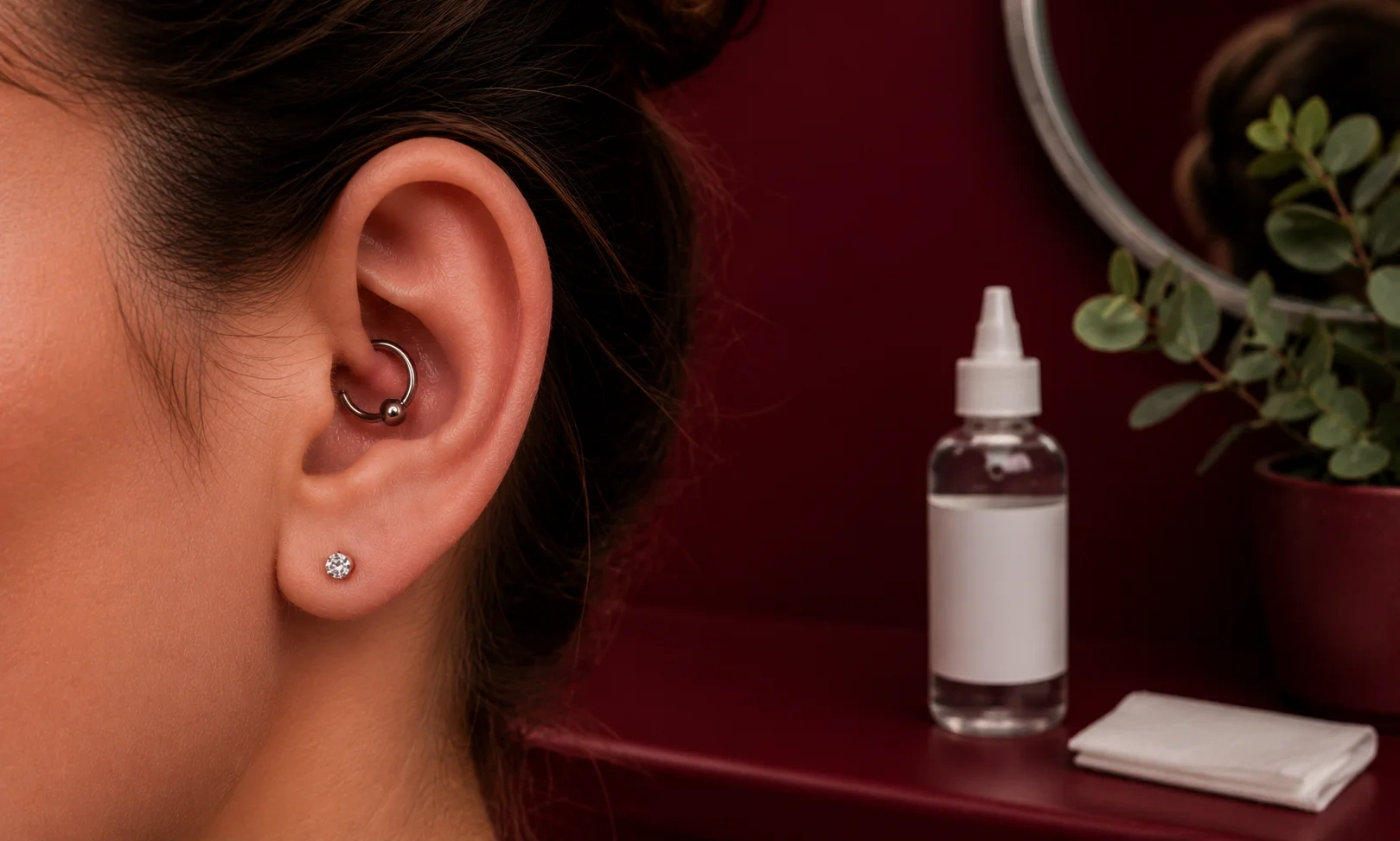
Usually, the existing piercing channel cannot simply be straightened.
A piercing creates a channel through tissue. Once that channel exists, changing the jewelry position does not change the path of the channel.
However, the appearance may sometimes be improved by addressing the jewelry rather than the piercing itself.
For example, if swelling has made a ring tilt, the appearance may change as swelling decreases. Likewise, jewelry that is poorly fitted may make a correctly placed piercing look unusual.
That is why an experienced piercer should evaluate the piercing before you decide what to do.
When Jewelry Adjustment May Help
Jewelry may be contributing to the problem when:
- The piercing is correctly positioned, but the ring is too large.
- Swelling is pushing the jewelry upward.
- The jewelry shape does not suit your anatomy.
- The jewelry has excessive movement.
- The ring is creating unnecessary pressure.
Jewelry selection should be based on anatomy, placement, size, material, and healing needs rather than appearance alone.
When Piercing May Be Necessary
If the actual piercing channel is too shallow, significantly angled, or positioned incorrectly, changing the jewelry will not relocate the channel.
In such cases, a professional may recommend removing the jewelry, allowing the area to heal, and considering a new piercing later.
Do not immediately pierce through the same irritated area simply because you want the correction quickly. The tissue needs to be assessed first.
Should You Remove a Crooked Daith Piercing?
This depends on the condition and placement.
If you strongly suspect the piercing is incorrectly positioned, have it assessed by an experienced professional before making changes yourself.
A professional can examine:
- The entry and exit points
- The angle of the channel
- Tissue thickness
- Jewelry fit
- Signs of irritation
- Swelling
- Whether the placement is appropriate for your anatomy
If removal is recommended, follow professional aftercare advice while the area heals.
Also, if you have signs of a significant infection or another medical concern, seek appropriate medical care rather than relying only on piercing advice.
What Not to Do With a Crooked Daith
Trying to fix the angle yourself can create more problems.
Don’t Twist the Ring
Rotating jewelry does not straighten the piercing channel. During healing, unnecessary movement can irritate the tissue.
The APP specifically advises against twisting, spinning, or rotating healing jewelry.
Don’t Push the Jewelry Into Position
Forcing the ring sideways can place unnecessary pressure on healing tissue.
Instead, leave it alone and arrange a professional assessment.
Don’t Change Jewelry Too Early
A fresh piercing is still healing even when it looks fine from the outside. Piercings heal from the outside inward, meaning the deeper tissue can remain fragile.
If jewelry needs changing during healing, have a qualified piercer handle it.
Don’t Use Harsh Products
Alcohol, hydrogen peroxide, aggressive antiseptics, and homemade overly concentrated salt solutions can irritate healing tissue.
The APP currently recommends sterile saline wound wash containing 0.9% sodium chloride as the only active ingredient, with additives avoided.
How to Care for a Crooked or Irritated Daith
If the Daith Piercing Angle Wrong is still present and healing, gentle care is important.
- Wash your hands before touching the area.
- Clean with appropriate sterile saline.
- Do not rotate the jewelry.
- Avoid sleeping directly on the piercing.
- Keep hair and other objects from catching on it.
- Avoid unnecessary pressure.
- Follow the aftercare instructions provided by your piercer.
Moreover, keep your pillowcase and bedding clean. Phones, headphones, glasses, and other objects that contact the ear should also be kept clean during healing.
What Jewelry Is Best for a Fresh Daith?
The right jewelry depends on anatomy and professional assessment.
For initial piercings, quality matters because the jewelry remains inside healing tissue. The APP identifies implant-certified titanium as one suitable material and provides specific ASTM and ISO standards for titanium used in body jewelry.
A professional piercer should select jewelry that provides appropriate space for swelling without creating excessive movement or pressure.
After healing, jewelry choices can become more flexible. Even then, proper fit and quality remain important.
Crooked Daith vs Temporary Swelling
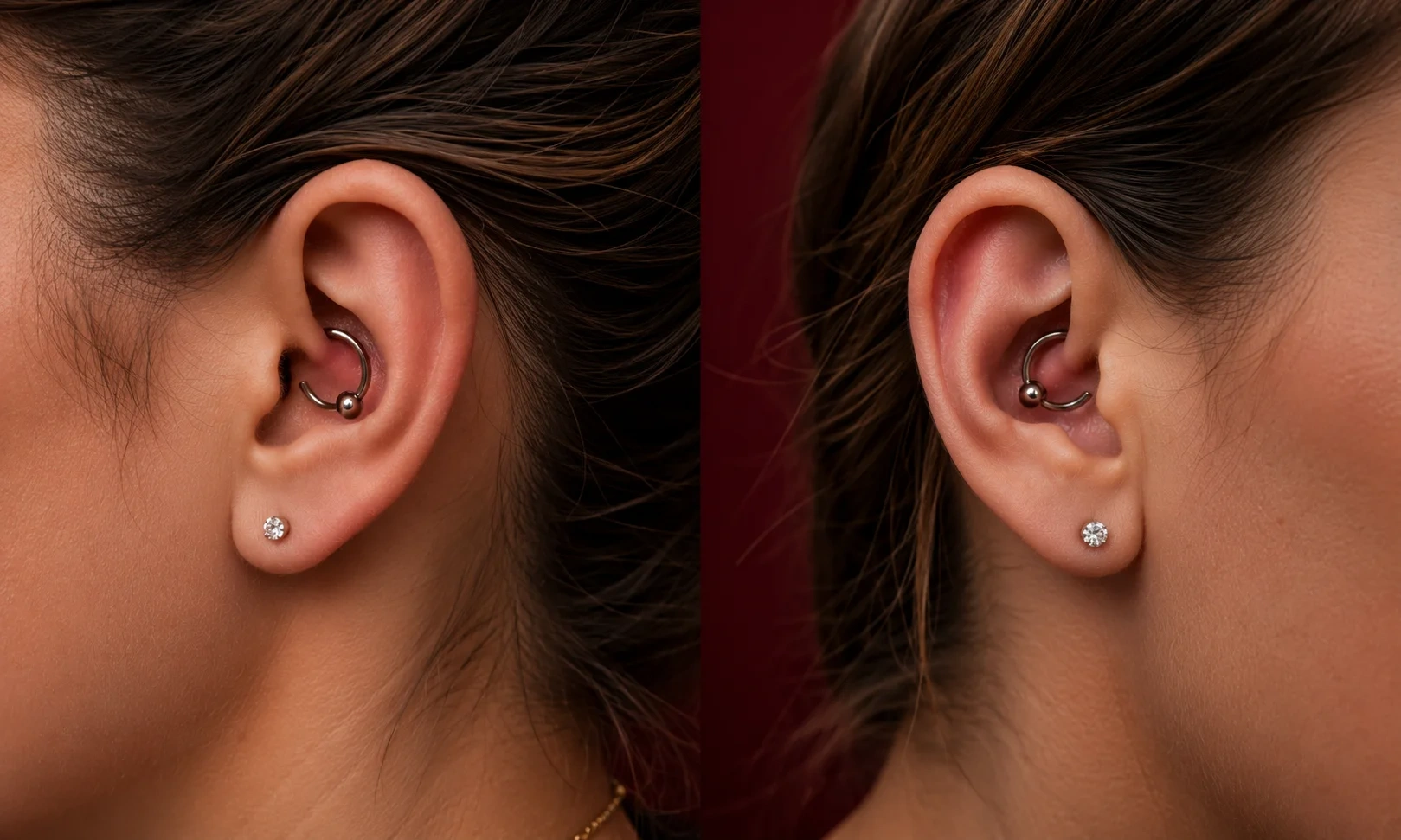
It can be difficult to tell the difference during the first few days.
| Feature | Temporary swelling | Possible placement problem |
|---|---|---|
| Jewelry position | May change as swelling falls | Remains consistently angled |
| Appearance | Can improve with healing | Continues to look uneven |
| Pain | Usually settles gradually | May remain irritated |
| Jewelry movement | May be limited by swelling | May consistently sit awkwardly |
| Best response | Gentle aftercare | Professional assessment |
This comparison is only a guide. It cannot replace an in-person evaluation.
How to Find a Better Piercer for a Correction
If you need a second opinion, choose someone who regularly works with cartilage piercings.
A reputable piercer should be willing to inspect your anatomy, discuss jewelry, explain potential complications, and answer questions before performing any procedure. The APP also recommends checking a piercer’s experience, studio hygiene, sterilization practices, jewelry quality, and portfolio.
Look for healed piercing examples in their portfolio, not just freshly completed work.
You can also use the Association of Professional Piercers member directory as one place to look for professional piercers. Membership itself does not guarantee that a particular piercer is the right choice, so still evaluate their experience and work.
Association of Professional Piercers: Find a Piercer
Daith Piercing Angle Wrong: Common Mistakes to Avoid
A few mistakes can make an already irritated piercing harder to manage.
- Trying to straighten the ring manually
- Changing jewelry repeatedly
- Sleeping directly on the ear
- Using harsh cleaning products
- Judging placement from one photograph
- Assuming swelling means the piercing is permanently crooked
- Assuming jewelry size can fix an incorrectly pierced channel
- Choosing a piercer based only on price
- Ignoring persistent irritation
- Getting an immediate second piercing without professional assessment
Instead, give the piercing proper care and get an experienced opinion when something looks wrong.
Daith Piercing Angle Wrong: When Should You Get Professional Help?
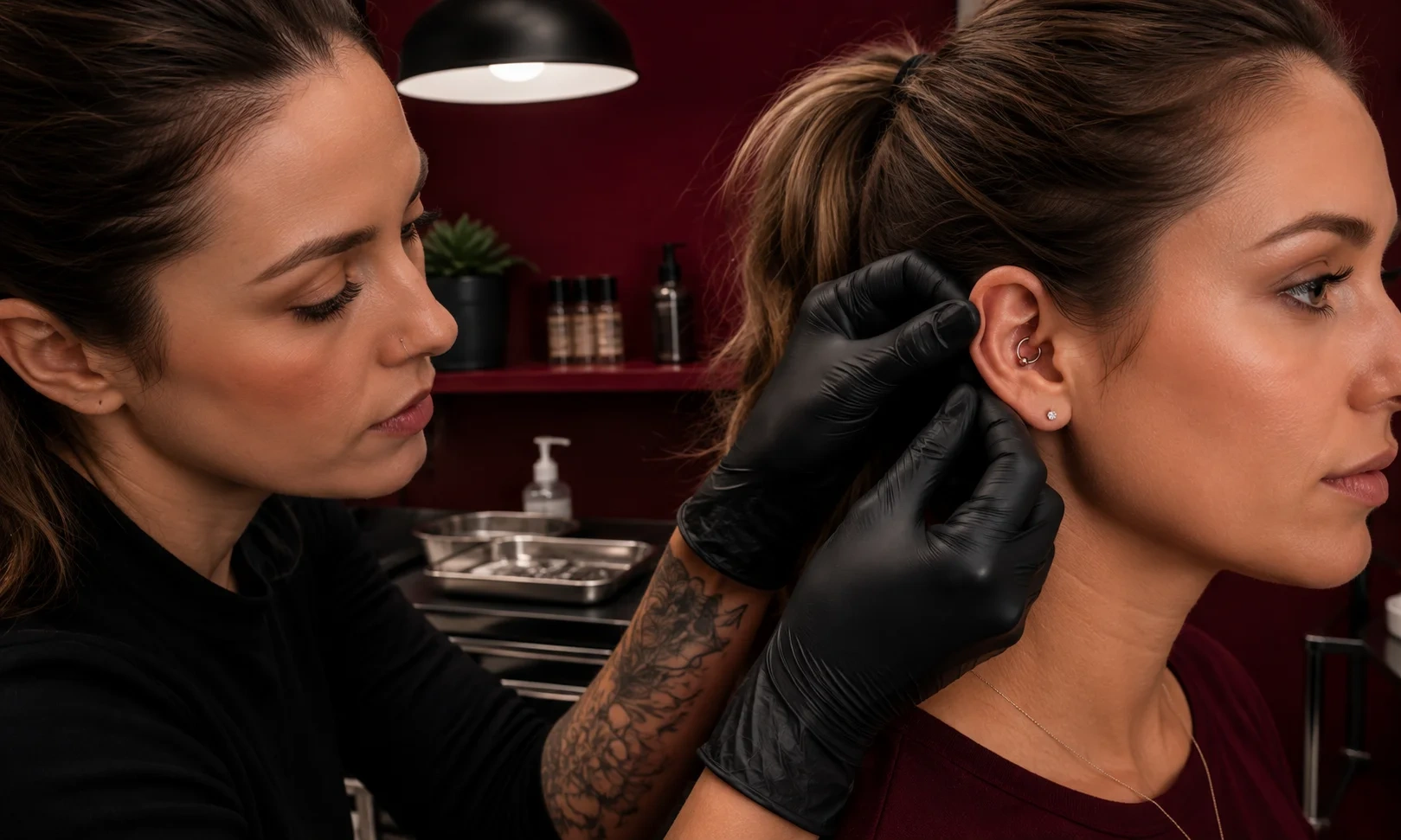
Arrange an assessment if:
- The piercing looks significantly crooked.
- The jewelry appears too shallow.
- The ring constantly presses against nearby cartilage.
- The angle does not improve as swelling settles.
- You repeatedly develop irritation.
- The piercing seems to be migrating.
- You are unsure whether the placement is correct.
For concerning symptoms such as rapidly increasing swelling, severe pain, spreading redness, significant drainage, fever, or feeling unwell, medical evaluation is more appropriate.
Final Thoughts
A Daith Piercing Angle Wrong that looks wrong does not always mean the piercing has failed. Swelling, jewelry fit, anatomy, lighting, and pressure can all change its appearance.
Nevertheless, a genuinely crooked or shallow piercing cannot normally be corrected by simply moving the ring. The safest approach is to stop manipulating it and have an experienced piercer evaluate the placement.
If the channel is unsuitable, removal and later repiercing may provide a better result than trying to force the existing piercing into a different position. Above all, prioritize healthy tissue and proper placement over getting the correction done quickly.
For more daith-specific guidance, DaithPiercing can help you understand placement, jewelry choices, healing, and aftercare before making your next decision.
Frequently Asked Questions
Can a daith piercing correct itself?
Minor changes caused by swelling may improve as the tissue settles. However, an incorrectly created piercing channel does not simply straighten itself.
Can changing the ring fix a crooked daith?
Sometimes jewelry fit can improve the appearance of a correctly placed piercing. However, changing jewelry cannot change the path of an incorrectly positioned piercing channel.
Should I rotate my daith ring?
No. Rotating or spinning healing jewelry is unnecessary and can irritate.
How long should I wait before getting a crooked daith repierced?
There is no single waiting period that works for everyone. The tissue should be assessed by a professional, and repiercing should only be considered when the area is suitable for another procedure.
Is a slightly angled daith always wrong?
No. Anatomy and jewelry shape can make a correctly placed piercing look different from one person’s ear to another. A professional assessment is more reliable than comparing your ear with online photographs.
Can sleeping on a daith change its angle?
Repeated pressure during healing can irritate cartilage and may contribute to changes in angle. The APP specifically advises avoiding direct pressure on healing cartilage piercings.
What should I use to clean a crooked daith?
For a healing piercing, sterile saline wound wash is the preferred simple option in APP aftercare guidance. Avoid unnecessarily harsh products and do not rotate the jewelry while cleaning.