Key Takeaways
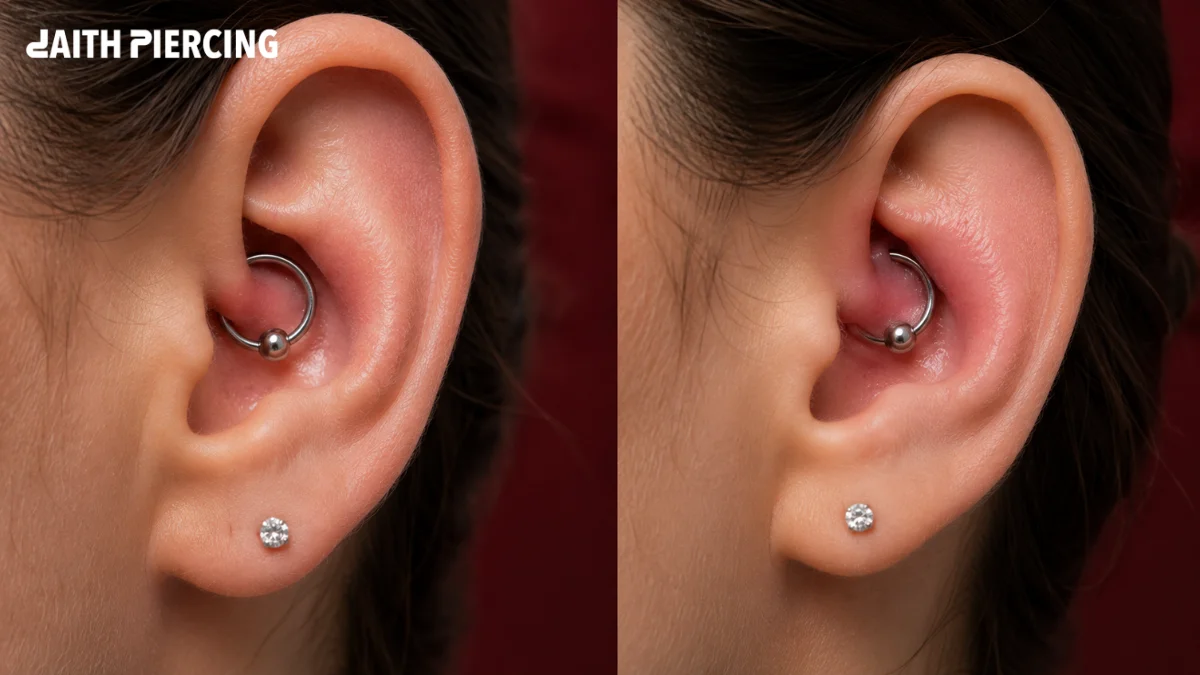
- A daith piercing embedded when tissue begins covering or trapping the jewelry.
- Embedding is different from normal swelling or comfortable nesting.
- Tight jewelry and repeated pressure can contribute to the problem.
- Never force embedded jewelry through swollen tissue.
- Seek professional help early if the jewelry is disappearing into the skin.
- Pain, pus, increasing redness, warmth, severe swelling, or fever require medical attention.
- Quality jewelry and correct sizing can reduce unnecessary irritation.
- Because a daith passes through cartilage, worsening symptoms should be taken seriously.
Quick Answer
If your daith piercing jewelry is sinking into your skin, do not try to force it back out, twist it repeatedly, or cut the skin yourself. Contact a reputable professional piercer as soon as possible.
However, if you have severe pain, increasing redness or swelling, warmth, pus, fever, or symptoms spreading beyond the piercing, seek medical care promptly. Cartilage infections deserve extra attention because complications can be more serious than with an earlobe piercing.
What Is an Embedded Daith Piercing?
An embedded daith piercing happens when swelling or tissue growth causes the jewelry to become partly or completely covered by the skin.
In simple terms, the jewelry no longer has enough comfortable space around it. As pressure continues, the surrounding tissue can begin growing over the jewelry.
A daith is located in a tight inner cartilage fold of the ear. Therefore, jewelry size, placement, angle, and swelling all matter during healing.
Why embedding is different from normal swelling
Some swelling and tenderness can be normal after a new piercing. The NHS notes that a fresh piercing may be tender, itchy, slightly red or darker than usual, and may produce a small amount of pale fluid that forms a crust.
Embedding is different because the jewelry itself starts becoming trapped.
For example, if you can no longer see part of the ring or its ends because tissue is covering them, that is much more concerning than ordinary post-piercing swelling.
Embedded vs Nesting: What’s the Difference?
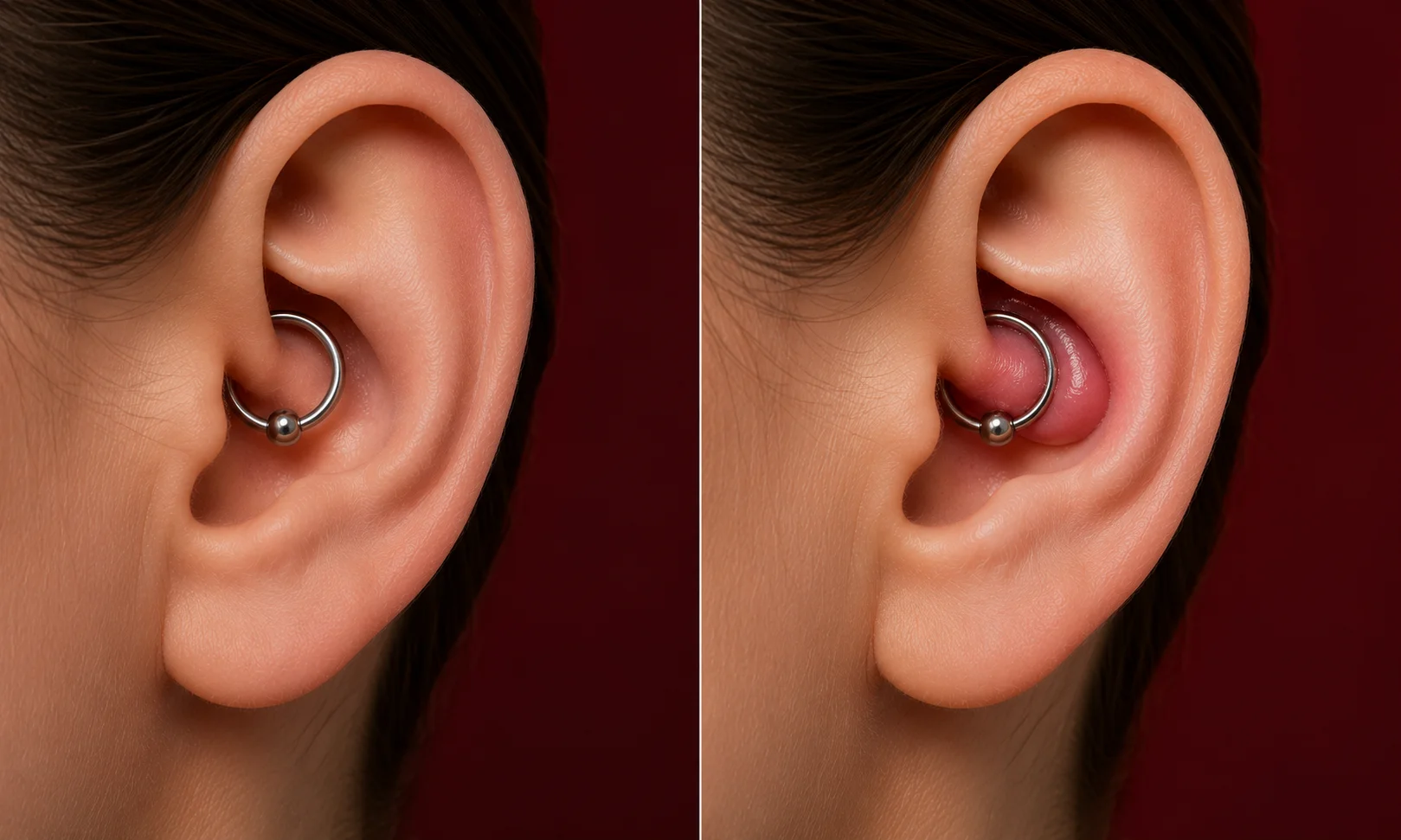
Not every daith that sits closely against the skin is embedded.
Nesting means the jewelry sits comfortably within a small indentation in the tissue while the jewelry remains visible and is not trapped.
Embedding means the tissue is growing over or tightly around the jewelry, making part of it difficult or impossible to see or move.
| Nesting | Embedding |
|---|---|
| Jewelry remains visible | Jewelry may disappear under skin |
| Usually comfortable | Often painful or increasingly tight |
| No progressive covering | Skin may gradually cover jewelry |
| Jewelry still has room | Jewelry feels trapped |
| Usually not urgent | Needs prompt professional assessment |
Therefore, do not judge the situation only by how close the jewelry looks to your ear. Look for progressive swelling, pressure, tissue covering the jewelry, and difficulty seeing or accessing the jewelry.
What Causes Daith Jewelry to Sink Into Skin?
Several factors can contribute to embedding. Often, more than one problem is involved.
Jewelry is too tight
The most common concern is insufficient room for swelling. If jewelry is already snug and the tissue becomes more swollen, the jewelry can press into the skin.
As a result, pressure can increase instead of settling down.
Pressure while sleeping
Sleeping directly on a healing daith can put repeated pressure on the cartilage.
Similarly, headphones, helmets, hats, hair accessories, or anything that repeatedly presses against the ear can irritate the piercing and increase swelling.
Jewelry movement or trauma
Repeatedly touching, twisting, spinning, or catching the jewelry can irritate the healing channel.
Furthermore, accidentally knocking the ear can cause fresh inflammation. That additional swelling can make jewelry that previously fitted comfortably feel too tight.
Piercing placement or angle
A piercing that is placed at an unsuitable angle can create uneven pressure around the jewelry.
For that reason, anatomy and placement should be assessed by an experienced piercer before the piercing is performed.
Jewelry quality
Jewelry with rough surfaces, poor finishing, or unsuitable materials can irritate healing tissue.
The Association of Professional Piercers recommends body jewelry with appropriate smooth surfaces and quality construction because rough or damaged surfaces can injure healing tissue and delay healing.
Jewelry fitted without enough room
Starter jewelry needs to account for expected swelling. If the jewelry is fitted too tightly from the beginning, there may not be enough space for normal changes in the tissue.
This is one reason proper sizing matters more than simply choosing a piece because it looks attractive.
Signs Your Daith Jewelry Is Embedded
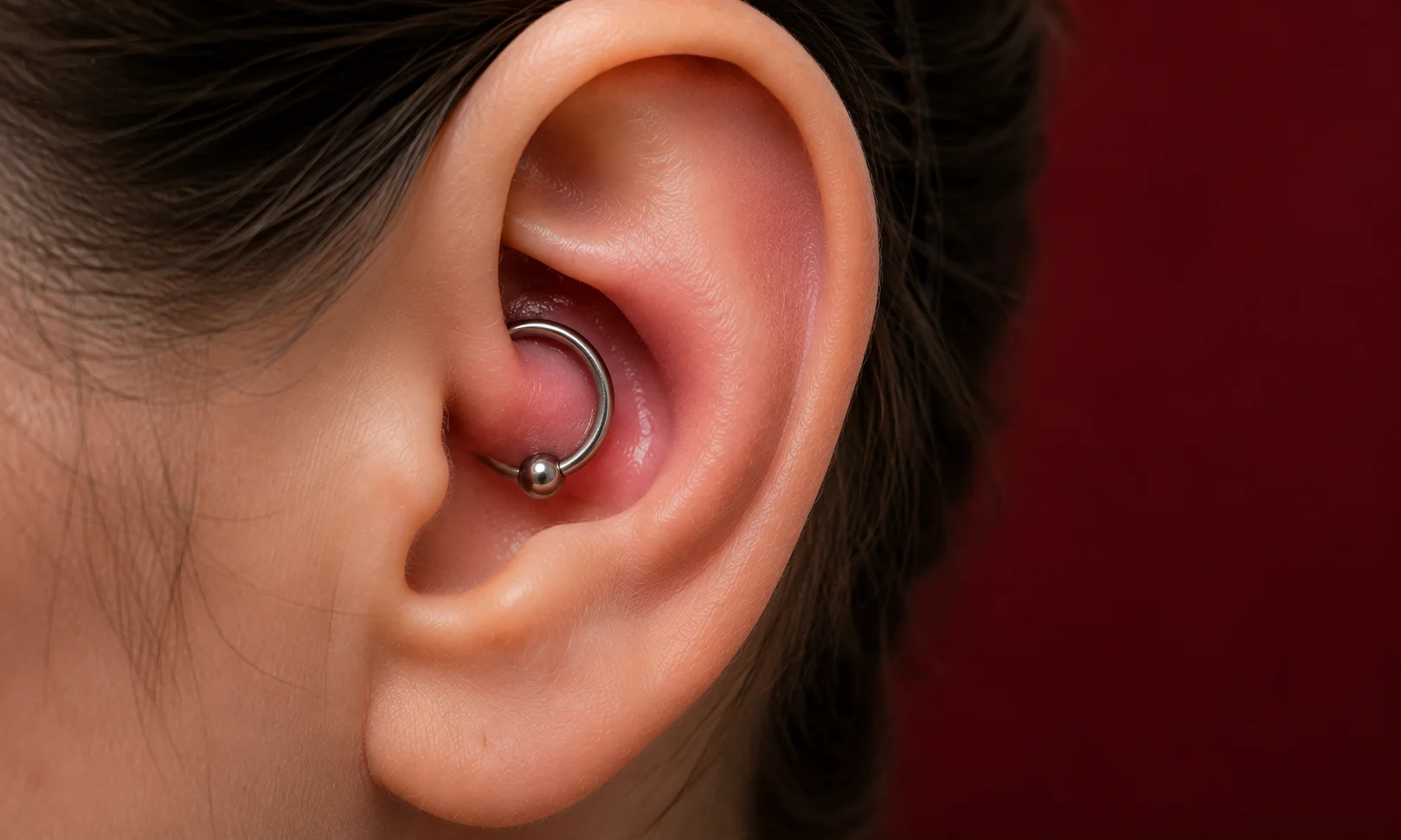
Watch for changes rather than focusing on one symptom.
Common warning signs include:
- Part of the jewelry is disappearing beneath the skin
- Skin appears to be growing over the jewelry
- The jewelry feels trapped or unusually tight
- Swelling is increasing rather than improving
- Pain or pressure is becoming worse
- The jewelry cannot move normally
- The area becomes increasingly red, warm, or tender
- Discharge looks like pus
- The jewelry leaves a deep indentation
If the jewelry is becoming less visible each day, do not wait for the skin to cover it completely.
Embedded earrings can cause pain, swelling, redness, tenderness, and drainage. Medical literature also highlights additional concerns when embedded jewelry involves cartilage.
What to Do If Your Daith Piercing Is Embedded
The safest approach depends on how deeply the jewelry has become trapped.
Do not force the jewelry out
Do not pull hard on the ring or attempt to push it through the tissue.
Likewise, avoid using needles, tweezers, scissors, or other household tools. Trying to force embedded jewelry through swollen cartilage can create additional tissue damage.
Contact a reputable piercer promptly
If the jewelry is only beginning to sink, an experienced piercer may be able to assess the fit and determine whether a safer jewelry change is appropriate.
However, do not assume that every embedded daith can be fixed by simply installing a larger ring.
The tissue may already be significantly swollen or injured, so professional assessment is important.
See a healthcare professional when infection is suspected
If there is significant pain, marked swelling, warmth, pus, spreading redness, or fever, medical evaluation is more important than trying to solve the problem at home.
Mayo Clinic specifically recommends medical care for a cartilage piercing that becomes painful, itchy, swollen, and very red or dark.
When You Need Medical Help
Seek medical attention promptly if you notice:
| Symptom | Why it matters |
| Severe or worsening pain | May indicate significant inflammation or infection |
| Increasing swelling | Jewelry may be becoming tightly embedded |
| Pus-like drainage | Can indicate infection |
| Fever or feeling unwell | May suggest infection beyond local irritation |
| Significant warmth and redness | Can occur with infection |
| Jewelry completely covered | May require professional removal |
| Rapidly worsening symptoms | Needs prompt assessment |
Cartilage infections deserve particular caution. Compared with simple earlobe problems, cartilage infections can involve deeper tissue and may cause complications if treatment is delayed.
How to Prevent an Embedded Daith Piercing
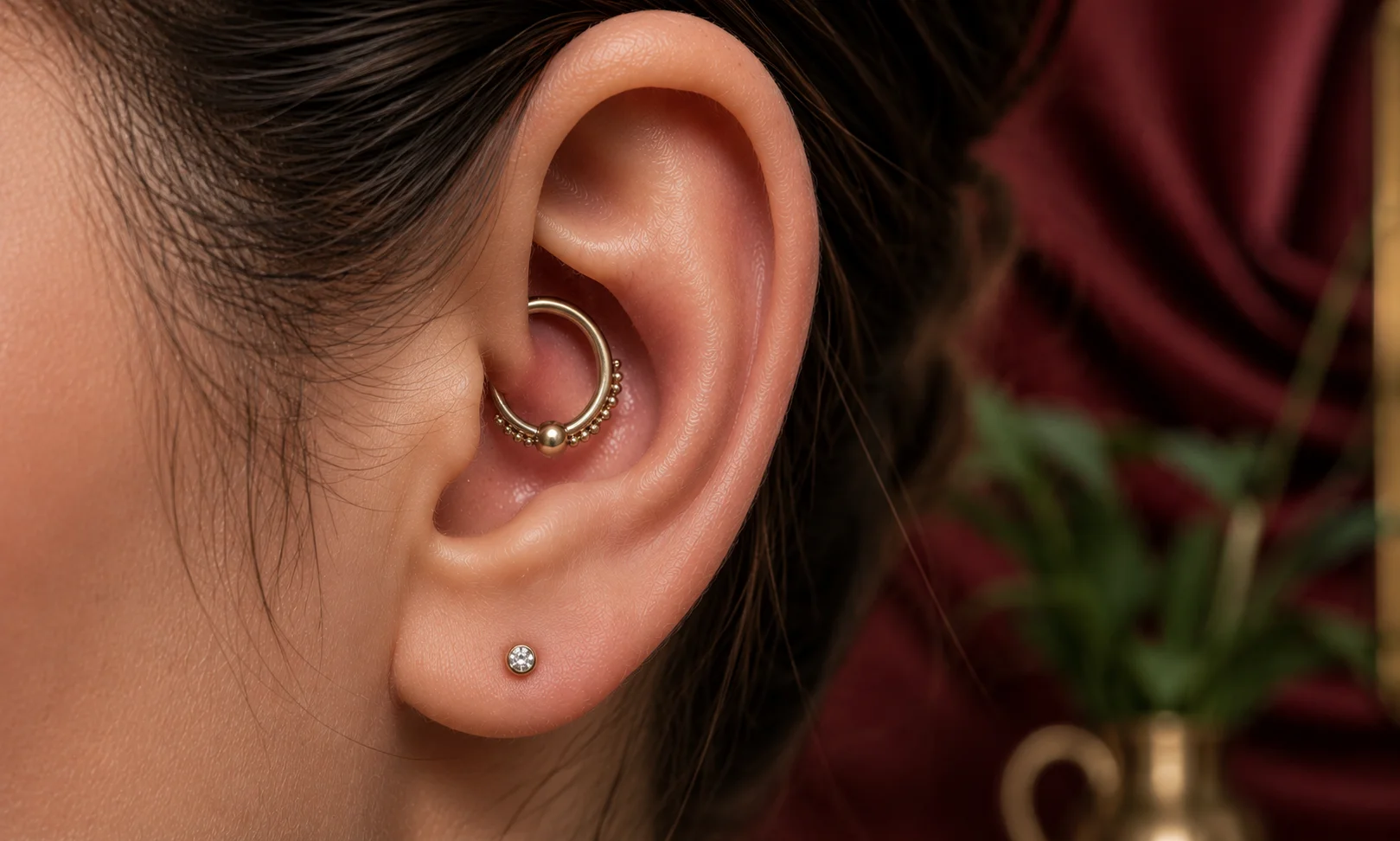
Prevention starts before the piercing is even performed.
Choose an experienced piercer
First, choose someone who understands cartilage anatomy and uses appropriate sterile procedures.
A professional should examine your ear and determine whether the anatomy is suitable for a daith piercing. The Association of Professional Piercers also provides information on safe piercing practices and jewelry standards.
Use suitable initial jewelry
Quality matters just as much as appearance.
The jewelry should have a smooth finish and be made from a material appropriate for a fresh piercing. Implant-grade titanium is one commonly used option when it meets appropriate standards.
Furthermore, internally threaded jewelry can help prevent exposed external threads from scraping the healing channel.
Avoid pressure
Try not to sleep directly on the healing ear.
Also, be careful with headphones, hair, clothing, helmets, and anything else that can catch or compress the jewelry.
Follow simple aftercare
Keep your hands clean before touching the area, and avoid unnecessary movement.
Do not repeatedly twist the jewelry simply to check whether it is healing. In addition, avoid harsh products that can unnecessarily irritate healing tissue.
Best Jewelry for a Healing Daith
A healing daith generally needs jewelry that fits the anatomy without creating excessive pressure.
| Jewelry consideration | Why it matters |
| Appropriate size | Allows room for swelling |
| Smooth surface | Reduces mechanical irritation |
| Quality material | Helps reduce material-related reactions |
| Suitable shape | Works with the natural daith anatomy |
| Professional fitting | Helps prevent excessive pressure |
The Association of Professional Piercers emphasizes smooth, properly finished jewelry because irregular surfaces can damage delicate healing tissue.
Do not choose jewelry solely because it is smaller, cheaper, or visually attractive. During healing, comfort and correct fit should come first.
Common Mistakes to Avoid
Trying to push the jewelry back out
This can injure the tissue and make swelling worse.
Removing jewelry without professional advice
If infection is suspected, removing jewelry on your own may not be the right first step. A healthcare professional can determine the appropriate treatment.
Waiting until the jewelry disappears
An embedded piece can become more difficult to manage as tissue continues covering it.
Using harsh cleaning products
Strong products can irritate the piercing and interfere with normal healing.
Sleeping on the piercing
Constant pressure can prolong irritation and contribute to swelling.
Changing jewelry too early
Changing jewelry before the piercing is ready can introduce trauma and create additional swelling.
Embedded Daith Piercing Checklist
- Check whether the jewelry is becoming less visible.
- Look for increasing swelling or pressure.
- Avoid sleeping directly on the piercing.
- Stop unnecessary touching and twisting.
- Contact a reputable piercer for assessment.
- Seek medical care if infection symptoms appear.
- Do not attempt surgical removal at home.
Conclusion
A daith piercing embedded in the skin is not something to ignore. While some swelling and tenderness can be normal during healing, jewelry that is disappearing beneath the tissue, becoming trapped, or causing increasing pressure needs prompt attention.
Most importantly, do not try to force the jewelry out yourself. Instead, have it assessed by a reputable piercer, and involve a healthcare professional when there are signs of infection or significant cartilage swelling.
Finally, prevention comes down to proper placement, correctly fitted jewelry, quality materials, gentle aftercare, and avoiding pressure on the healing ear. For more daith-specific guidance on jewelry, healing, and aftercare, Daith Piercing can help readers make safer and more informed choices.
Frequently Asked Questions
Can a daith piercing grow over the jewelry?
Yes. If swelling and pressure cause the jewelry to remain trapped against the tissue, skin can begin covering part of the jewelry. This is embedding and should be assessed promptly.
Is a daith piercing embedded if the jewelry looks tight?
Not necessarily. Some jewelry can sit closely against the tissue without being embedded. The key concern is whether tissue is progressively covering the jewelry or trapping it.
Can I push an embedded daith piercing back out?
No. Do not force jewelry through swollen tissue. This can cause additional injury and may push the jewelry deeper.
Should I remove an embedded daith piercing myself?
It is safer to have the situation assessed by an appropriate professional. If the jewelry is deeply embedded or infection is suspected, medical care may be necessary.
Can an embedded daith piercing become infected?
Yes. Piercing complications can include infection, and cartilage infections can be more serious. Increasing pain, swelling, warmth, redness, pus, or fever should not be ignored.
How can I stop my daith jewelry from sinking?
Correct sizing, suitable jewelry, good placement, and avoiding repeated pressure can reduce the risk. If swelling makes the jewelry feel increasingly tight, get it checked early instead of waiting.
Is a piercing bump the same as embedding?
No. A small bump can occur during piercing healing and does not automatically mean the jewelry is embedded. Embedding specifically involves the jewelry becoming trapped or covered by tissue.