Salicylic acid and retinol are two popular skincare ingredients for people dealing with acne, clogged pores, uneven texture, dark spots, and early signs of aging. Both can be useful, but they work in different ways. Salicylic acid exfoliates inside clogged pores, while retinol supports skin cell turnover and can improve acne, texture, and the appearance of fine lines over time.
The question is whether you should use salicylic acid and retinol together. The short answer is yes, but carefully. Using both too often can leave your skin dry, irritated, red, or uncomfortable because both ingredients can be irritating. A slower routine is usually a better starting point than applying everything at once.
At DaithPiercing, we focus on clear, practical skincare information that helps readers understand what an ingredient does, how to use it, and when professional advice may be a better choice.
What Is Salicylic Acid?
Salicylic acid is a beta hydroxy acid (BHA) commonly used in acne and oily-skin products. It helps loosen dead skin cells and clear material from clogged pores. This makes it particularly useful for blackheads, whiteheads, and skin that becomes congested easily. The American Academy of Dermatology lists salicylic acid as an acne treatment that helps open clogged pores and exfoliate the skin.
Because salicylic acid works well around pores, it can be helpful for people who notice excess oil, rough texture, or frequent breakouts. It does not mean that stronger or more frequent use will automatically give better results. Too much exfoliation can irritate and make a skincare routine harder to tolerate.
Key Takeaways
- Salicylic acid helps exfoliate the skin and unclog pores.
- Retinol supports skin cell turnover and can improve acne, texture, and fine lines.
- You can use salicylic acid and retinol in the same skincare routine, but using them at the exact same time may increase irritation.
- Alternating them or using salicylic acid in the morning and retinol at night can be a gentler approach.
- Start one active at a time so you can see how your skin reacts.
- Moisturizer and daily sunscreen are important parts of the routine.
- Stop or reduce irritating products if you develop significant redness, burning, peeling, or discomfort.
- For persistent or severe acne, professional dermatology advice can help you choose the right treatment.
Main Benefits of Salicylic Acid
Salicylic acid may help with:
- Clogged pores
- Blackheads and whiteheads
- Mild acne
- Excess oil
- Rough or uneven skin texture
- Buildup of dead skin cells
Clinical guidance supports salicylic acid as an option for acne, although recommendations for topical retinoids are stronger in current acne guidelines.
What Is Retinol?

Retinol is a type of retinoid derived from vitamin A and is widely used in skincare products. It encourages skin cell turnover and can help improve acne, uneven texture, and the appearance of fine lines with consistent use.
Retinol is not exactly the same as prescription retinoids. Prescription options can be stronger, while over-the-counter retinol products generally provide a gentler form of vitamin A skincare. This difference matters when choosing a routine because the strength and formulation can affect how much irritation you experience.
Retinol can also make skin more sensitive to sunlight, so daytime sun protection is an important part of a retinol routine.
Main Benefits of Retinol
Retinol may help improve:
- Fine lines
- Uneven skin texture
- Acne
- Clogged pores
- Uneven skin tone
- The appearance of post-acne marks over time
Results are not instant. Retinol usually needs regular use and patience, and starting slowly can make it easier for your skin to adjust.
Can You Use Salicylic Acid and Retinol Together?
Yes, you can use salicylic acid and retinol in the same overall skincare routine, but using them at the same time is not always the best choice.
Both ingredients can dry and irritate the skin. Cleveland Clinic specifically recommends considering an alternating approach when using retinol and salicylic acid, such as salicylic acid in the morning and retinol at night.
This approach gives you the potential benefits of both ingredients without putting both active ingredients on the skin at the same time.
For someone new to active skincare, using both every day from the beginning is usually unnecessary. It is easier to see how your skin reacts when you introduce one active ingredient first and add the other later.
How to Use Salicylic Acid and Retinol Together
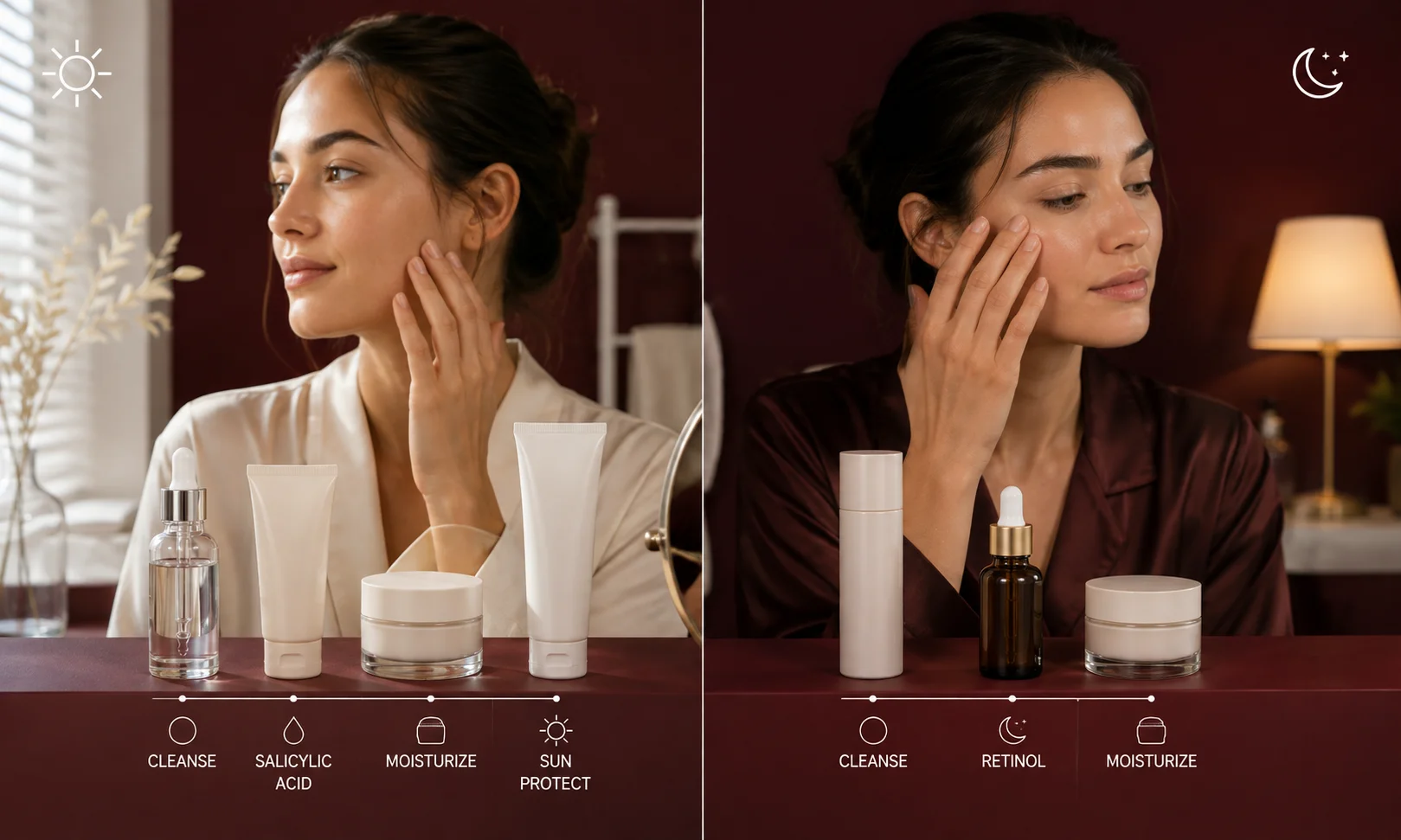
A simple routine can make these ingredients much easier to manage.
Morning: Salicylic Acid
Start with a gentle cleanser. If your skin tolerates salicylic acid well, use a salicylic acid product according to its label. Follow it with a moisturizer and broad-spectrum sunscreen.
If your skin starts feeling tight, burning, or unusually dry, reduce how often you use the salicylic acid rather than pushing through the irritation.
Night: Retinol
At night, cleanse your face gently and let your skin dry. Apply a small amount of retinol according to the product instructions, then use a moisturizer.
If retinol is new to you, start with a few nights per week rather than using it every night. Once your skin becomes comfortable with it, you can consider increasing frequency if the product directions allow it.
Another Option: Alternate Nights
Some people may prefer to keep the two ingredients completely separate.
For example:
- Monday: Retinol
- Tuesday: Moisturizer only
- Wednesday: Salicylic acid
- Thursday: Moisturizer only
- Friday: Retinol
- Saturday: Moisturizer only
- Sunday: Salicylic acid
This is only a sample routine. Your skin type, product strength, and other skincare products can change what works best.
Why Using Both at Once Can Cause Problems
The biggest concern is irritation.
Salicylic acid removes dead skin cells and helps clear clogged pores. Retinol also changes how skin cells behave and can cause dryness or irritation while your skin adjusts. Using strong versions of both together can be too much for some people.
Signs that your routine may be too aggressive include persistent redness, peeling, burning, stinging, tightness, or increased sensitivity.
More active ingredients do not always mean better skincare. A routine that you can use consistently is often more practical than a powerful routine that leaves your skin too irritated to continue.
Who Should Be More Careful?
People with sensitive, very dry, or already irritated skin should be especially cautious with salicylic acid and retinol. The same applies if you are already using other exfoliating acids, acne treatments, or products that can cause dryness.
If you have moderate or severe acne, painful breakouts, significant skin inflammation, or a skin condition that is not improving, consider speaking with a dermatologist. Acne treatment often requires a more personalized plan, and dermatology guidelines support combining treatments with different mechanisms when appropriate.
Pregnancy is another situation where retinoid use deserves special attention. Anyone pregnant, trying to become pregnant, or unsure about whether a vitamin A skincare product is appropriate should ask a qualified healthcare professional before using retinoid products.
Common Mistakes to Avoid
One common mistake is starting salicylic acid and retinol at full frequency on the same day. This makes it difficult to know which product is irritating.
Another mistake is skipping moisturizer because the goal is to reduce oil or acne. Healthy skin still needs support for its protective barrier.
Using too many exfoliating products is another problem. Adding scrubs, exfoliating acids, strong acne treatments, salicylic acid, and retinol to one routine can quickly become overwhelming for the skin.
Finally, do not ignore sunscreen. Retinol can increase sensitivity to sunlight, and daily sun protection is an important part of a complete skincare routine.
Salicylic Acid vs. Retinol: Which One Should You Choose?
The better ingredient depends on your main skin concern.
If clogged pores, blackheads, whiteheads, and excess oil are your biggest concerns, salicylic acid may be the more obvious starting point.
If your main goals are improving fine lines, uneven texture, acne, and overall skin appearance, retinol may be more useful.
You do not necessarily have to choose only one. Many people can eventually use both, but introducing them gradually is a sensible way to reduce irritation.
For acne specifically, topical retinoids have strong support in current clinical guidelines, while salicylic acid has a conditional recommendation.
Frequently Asked Questions
Can I use salicylic acid and retinol on the same day?
Yes, some people can use both on the same day, but separating them can reduce irritation. A common approach is salicylic acid in the morning and retinol at night.
Should I use salicylic acid before or after retinol?
There is no need to layer both in the same application. Separating them is often easier on the skin. If you use both, salicylic acid can be used in the morning and retinol at night.
Can salicylic acid and retinol help acne?
Yes. Both ingredients are used in acne care, although they work differently. Salicylic acid helps clear clogged pores, while topical retinoids help regulate skin cell turnover and are strongly recommended in acne treatment guidelines.
Can I use salicylic acid every day with retinol?
Not necessarily. Your skin’s tolerance matters more than following a fixed schedule. If daily use causes dryness or irritation, reduce the frequency of one or both products.
Should I moisturize after using retinol?
Yes. Moisturizer can make a retinol routine more comfortable, especially during the adjustment period. If your skin becomes dry or irritated, keeping the rest of your routine simple can help.
Do I need sunscreen when using retinol?
Yes. Retinol can increase skin sensitivity to sunlight, so daytime sun protection is an important part of using retinol responsibly.