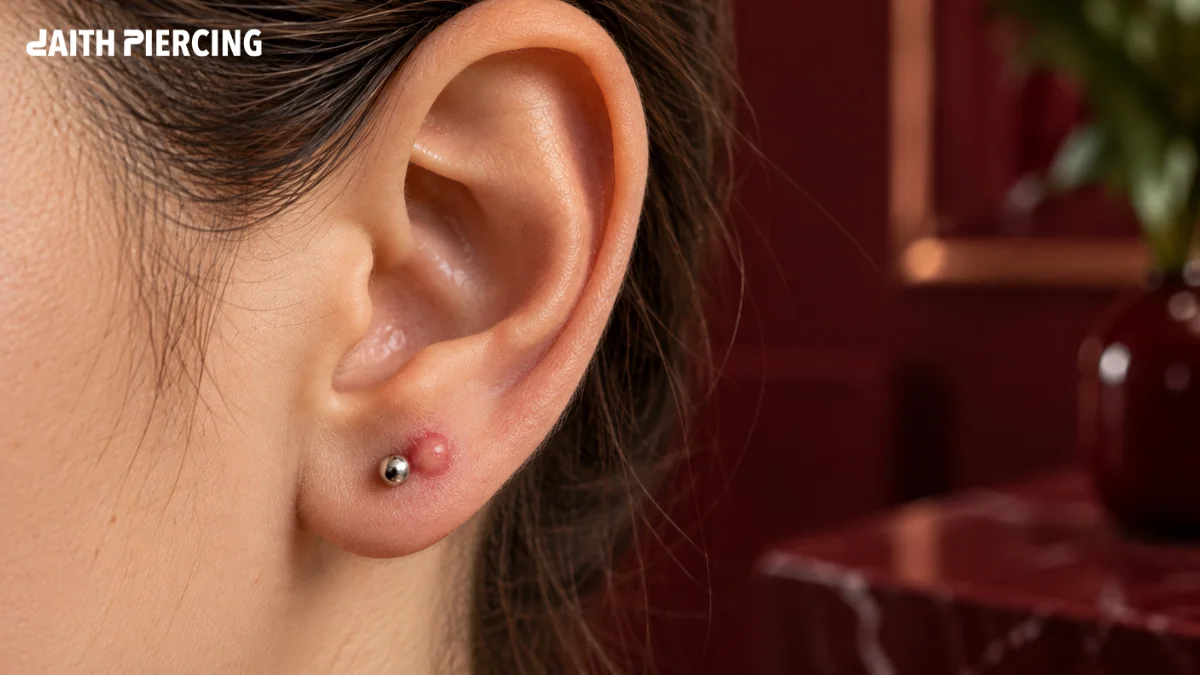
An irritation bump can appear around a new piercing and quickly become something you cannot stop noticing. It may look like a small red, pink, or skin-colored lump beside the jewelry. Sometimes it feels tender or itchy, while other times it causes no pain at all.
The good news is that an irritation bump does not automatically mean your piercing is infected or that you have a keloid. Piercings can develop bumps when the healing tissue is repeatedly irritated by pressure, friction, movement, unsuitable jewelry, or harsh aftercare products. The Association of Professional Piercers (APP) also notes that inappropriate aftercare and over-cleaning can contribute to problems with healing piercings.
At DaithPiercing, understanding the difference between normal healing, irritation, infection, and raised scarring can help you care for your piercing without making the problem worse.
Key Takeaways
- An irritation bump can develop when a healing piercing experiences repeated friction, pressure, movement, or harsh aftercare.
- Do not automatically assume a bump is an infection or keloid.
- Use sterile saline and avoid unnecessary touching or jewelry movement.
- Avoid alcohol, hydrogen peroxide, harsh products, and aggressive cleaning.
- Reduce pressure from sleeping, headphones, clothing, hair, and other sources of friction.
- A keloid usually grows beyond the original wound, while a hypertrophic scar stays within it.
- Increasing heat, swelling, pain, pus, or feeling unwell can indicate infection and requires medical attention.
- If the bump keeps getting bigger or does not improve, have it professionally assessed.
What Is an Irritation Bump?
An irritation bump is a small raised area of tissue that develops around a piercing when the area is repeatedly disturbed during healing. It is not a precise medical diagnosis, and people often use the term to describe several different types of bumps.
The bump may develop after sleeping on the piercing, catching it on clothing or hair, touching it too often, changing the jewelry too early, or using products that are too harsh for healing skin.
Some piercing bumps are related to excess granulation tissue or other forms of inflammation. The exact cause can vary depending on the piercing and the individual. This is why simply treating every bump in the same way is not always a good idea.
What Does an Irritation Bump Look Like?
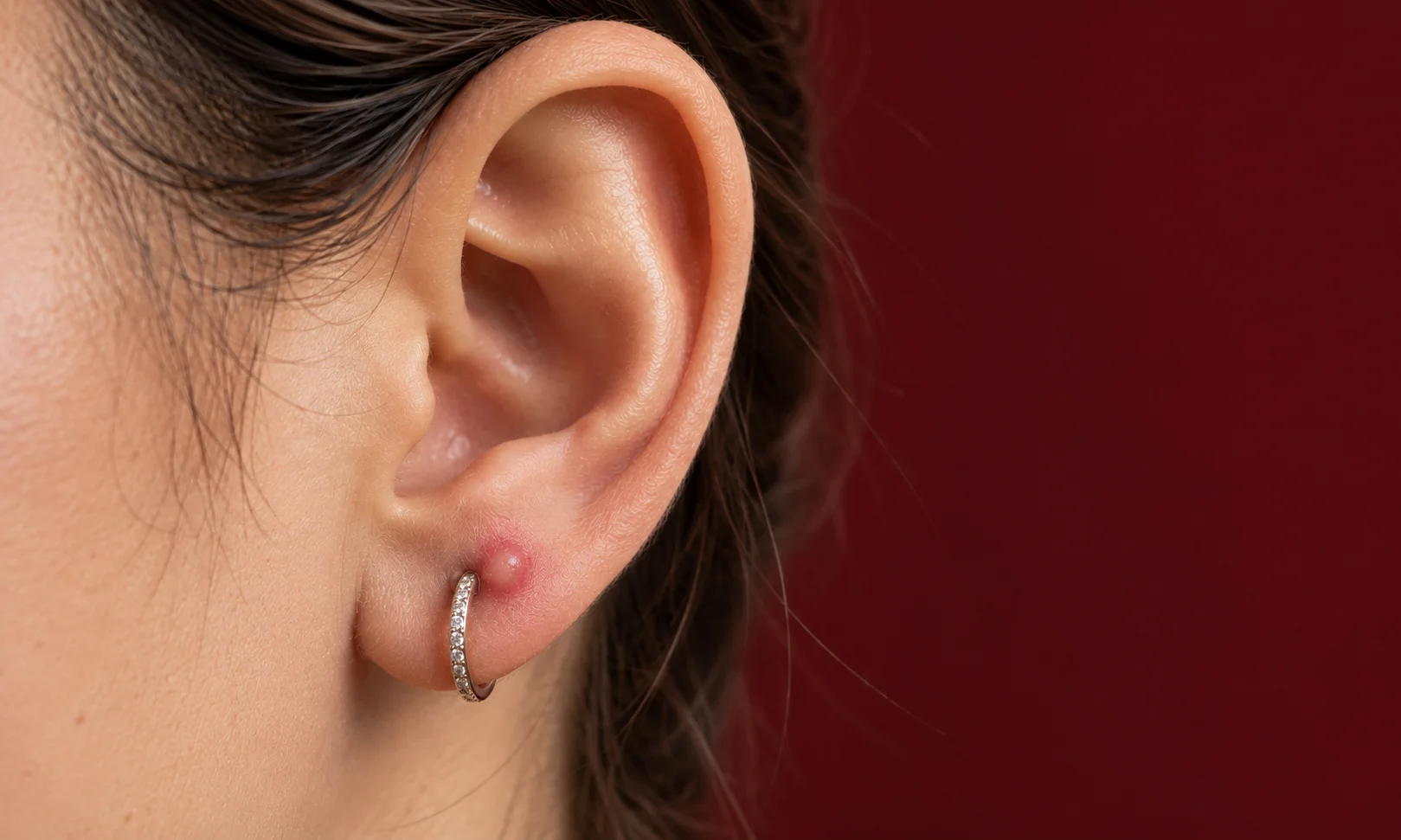
An irritation bump is often small and located directly beside the piercing hole. It may be pink, red, brown, purple, or close to your normal skin tone, depending on your skin and how irritated the area is.
A healing piercing can also have mild tenderness, itching, discoloration, or light crusting during the early stages. These signs alone do not necessarily mean something is wrong.
What Causes an Irritation Bump?
There is usually not one single reason. Instead, several small sources of irritation can keep the piercing from settling down.
Friction and Pressure
Sleeping directly on a healing piercing is a common source of pressure. Headphones, helmets, tight clothing, hair, towels, and accidentally catching the jewelry can also create repeated friction.
Even if each incident seems minor, repeated irritation can keep the tissue inflamed.
Touching or Moving the Jewelry
It can be tempting to twist or move jewelry because you want to check whether the piercing is healing. However, unnecessary movement can irritate healing tissue.
The APP specifically advises that rotating or moving jewelry during cleaning is not necessary and may actually irritate the piercing.
Harsh Cleaning Products
Hydrogen peroxide, alcohol, strong antiseptics, harsh soaps, and heavy ointments can be too irritating for a healing piercing.
Another common mistake is cleaning too often because you think more cleaning will make the bump disappear faster. In reality, aggressive aftercare can further disturb the skin and delay healing.
Jewelry Problems
Jewelry size, style, and material can sometimes contribute to irritation. Jewelry that puts pressure on the area or moves excessively may keep the piercing stressed.
If the problem continues, having an experienced professional piercer check the jewelry can be useful. The APP notes that changing aftercare or the jewelry’s size, style, or material can sometimes resolve piercing problems.
How to Treat an Irritation Bump
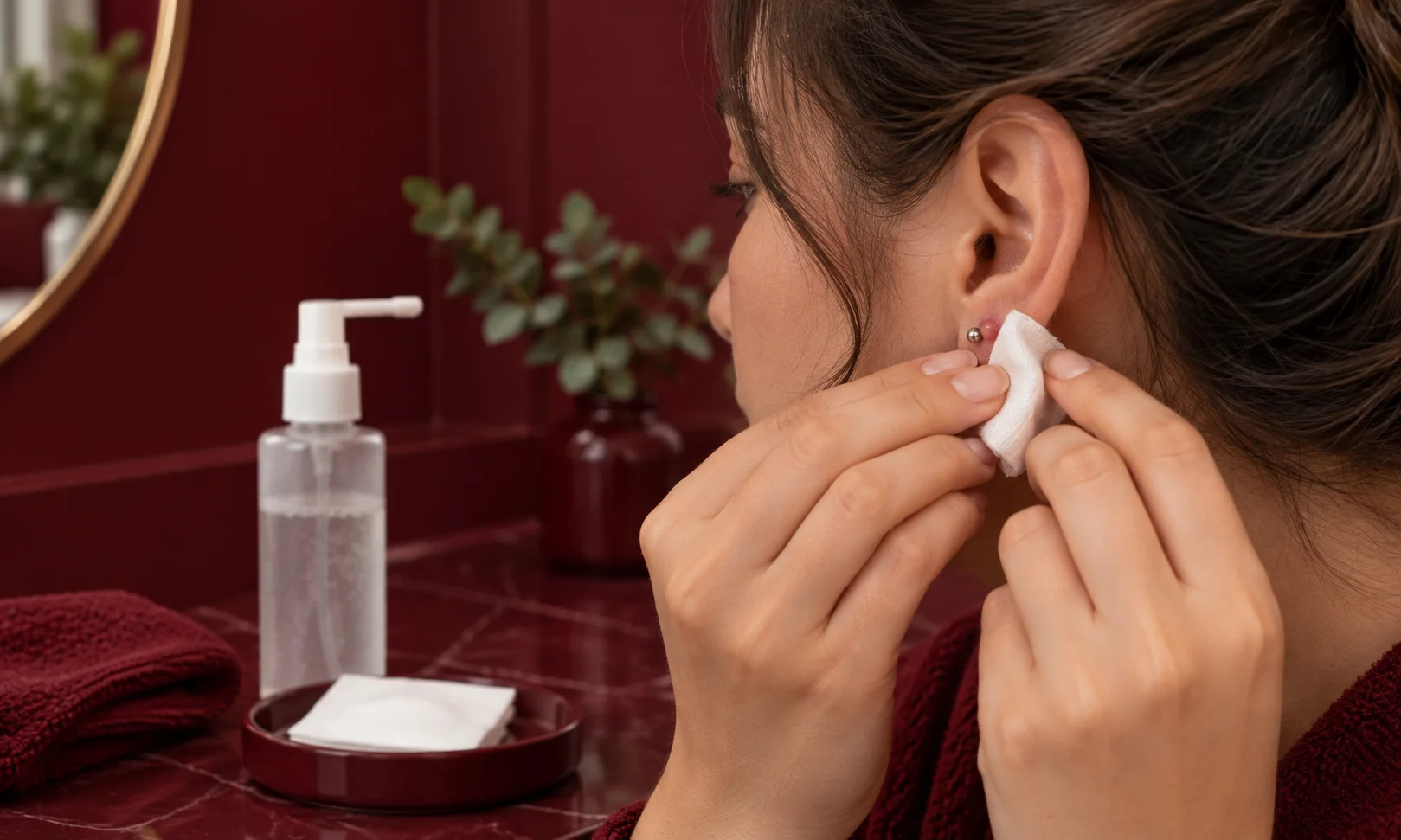
The first goal is simple: remove the source of irritation instead of attacking the bump itself.
Keep the Piercing Clean
Use a sterile saline wound wash suitable for wound care. The APP recommends saline containing 0.9% sodium chloride as the only ingredient, with no unnecessary additives.
Wash your hands before touching the area. Gently apply the saline and allow the area to dry naturally or pat it carefully with a clean disposable product.
Do not scrub the bump or try to remove crust by force.
Leave the Jewelry Alone
Avoid twisting, spinning, pushing, or repeatedly checking the jewelry. A healing piercing needs time and minimal disturbance.
If the jewelry seems too tight, too loose, or is putting pressure on the skin, do not try to solve the problem by repeatedly adjusting it yourself. Ask a qualified piercer to assess it.
Reduce Pressure and Friction
Think about what touches your piercing every day. Do you sleep on that side? Does your hair constantly catch on it? Are headphones pressing against it?
Small lifestyle changes can make a surprisingly big difference. Keeping pressure away from the piercing gives irritated tissue a better chance to settle.
Avoid DIY Remedies
Social media is full of suggestions involving tea tree oil, aspirin paste, alcohol, peroxide, homemade salt mixtures, and other household products. These remedies are not automatically safe simply because they are popular online.
The APP specifically advises against harsh products such as alcohol and hydrogen peroxide for healing piercings. It also recommends sterile saline rather than homemade salt solutions because homemade mixtures can easily become too strong and dry or irritate the tissue.
Irritation Bump vs Keloid: What Is the Difference?
This is one of the biggest questions people have when they notice a bump.
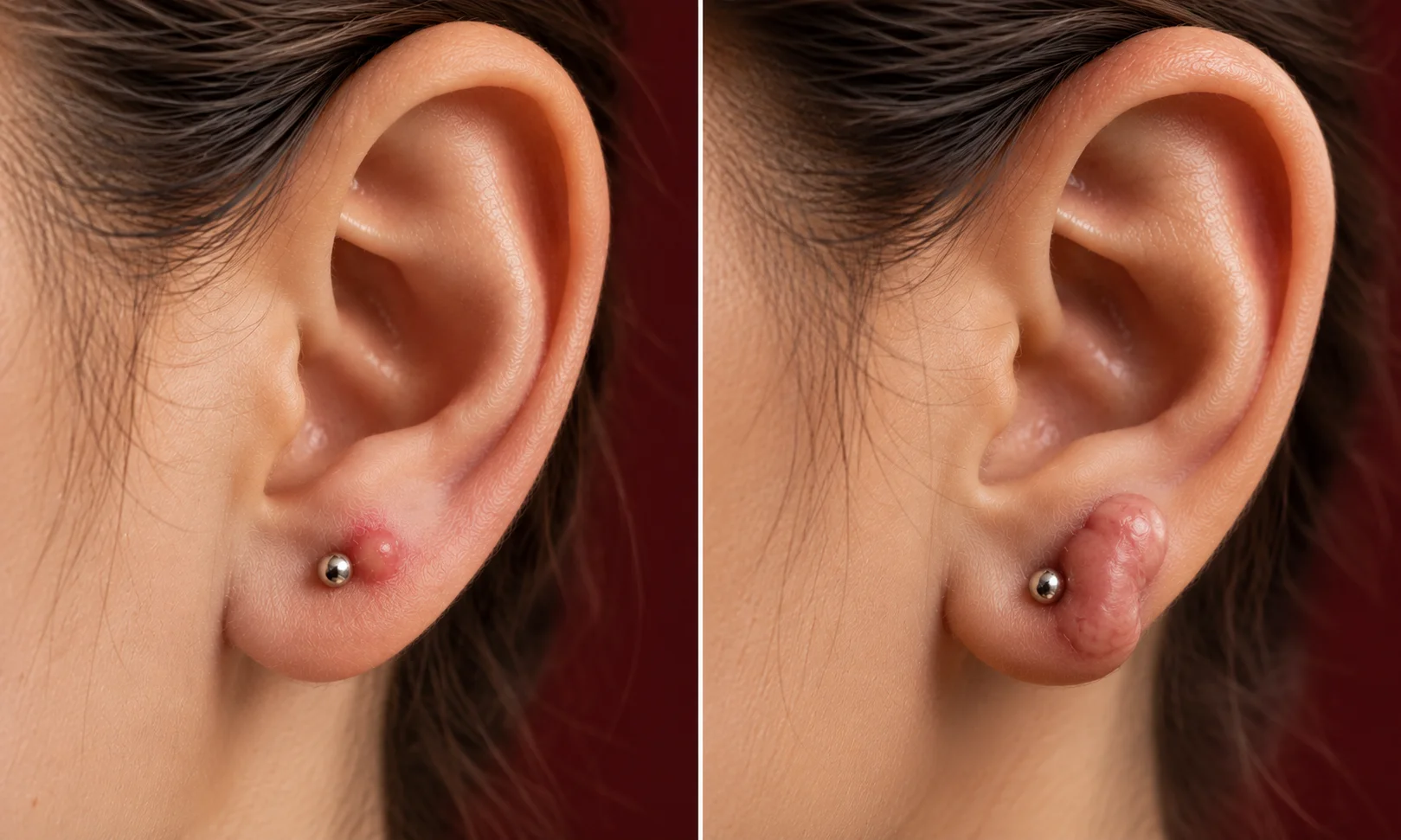
A keloid is a type of raised scar that grows beyond the original area of skin injury. It can continue growing over months or even years and does not usually flatten on its own.
An irritation bump, on the other hand, is commonly associated with ongoing irritation around a healing piercing and may improve when the source of irritation is removed.
There is also a third possibility: a hypertrophic scar. This is raised scar tissue that stays within the boundaries of the original wound. Unlike a keloid, it may gradually become flatter and less noticeable over time.
Because these conditions can look similar, you should not assume that every piercing bump is an irritation bump.
When Is an Irritation Bump Actually an Infection?
An irritation bump and an infected piercing are not the same thing.
A new piercing can normally have some tenderness, mild redness or discoloration, itching, and pale fluid that dries into crust.
However, infection can cause more concerning symptoms.
Watch for These Warning Signs
Seek medical advice if the area becomes increasingly:
- Hot
- Swollen
- Painful
- Very red or unusually dark
- Filled with pus or draining blood
- Associated with feeling feverish, cold, shivery, or generally unwell
These symptoms can indicate infection and should not simply be treated as a normal irritation bump.
If you suspect an infection, do not remove the jewelry without professional medical advice. Removing jewelry in certain situations can complicate drainage and healing.
How Long Does an Irritation Bump Take to Go Away?
There is no fixed timeline.
An irritation bump may start improving once the source of irritation is removed, but the skin still needs time to heal. Piercings can take much longer to settle than people expect, and repeated irritation can restart the healing process.
Instead of checking the bump every few hours, look for gradual changes. Less redness, less swelling, less tenderness, and fewer episodes of irritation are all encouraging signs.
If the bump keeps growing, repeatedly returns, becomes painful, or does not improve despite appropriate care, have it assessed by a qualified piercer or healthcare professional.
How to Prevent an Irritation Bump
Prevention is much easier than repeatedly trying to calm an irritated piercing.
Keep your hands away unless cleaning or otherwise instructed by a professional. Avoid sleeping directly on the piercing, and be careful with hair, clothing, headphones, helmets, and anything else that may catch or press against it.
Follow a simple aftercare routine rather than constantly changing products. The APP recommends sterile saline wound wash for healing body piercings and warns that over-cleaning and strong products can interfere with healing.
Good jewelry and correct sizing also matter. If something about the jewelry feels wrong, get it professionally checked instead of forcing the jewelry into a different position.
Why the Right Advice Matters
Piercing care sits between everyday skincare and wound care, so advice should come from reliable sources rather than viral hacks alone. Professional piercing guidance from the Association of Professional Piercers emphasizes gentle cleaning, avoiding unnecessary movement, and identifying jewelry or aftercare problems that may be keeping a piercing irritated. Medical sources such as the NHS and Cleveland Clinic provide additional guidance for recognizing infection, keloids, and hypertrophic scars.
At DaithPiercing, the goal is to make piercing information easier to understand while encouraging readers to seek professional medical care when symptoms go beyond normal irritation.
Frequently Asked Questions
Can an irritation bump go away on its own?
Yes, it can improve when the irritation causing it is removed. Give the piercing time, avoid unnecessary touching, and follow gentle aftercare. If the bump continues growing or becomes increasingly painful, seek professional advice.
Should I pop an irritation bump?
No. Popping, squeezing, or piercing the bump can cause additional tissue damage and introduce bacteria. Leave it alone and focus on removing the source of irritation.
Is an irritation bump the same as a keloid?
No. They are different. A keloid is raised scar tissue that grows beyond the original wound and can continue developing over time. An irritation bump is commonly associated with irritation around a healing piercing.
Can I use tea tree oil on an irritation bump?
It is better not to experiment with concentrated essential oils on a healing piercing. Irritated skin can become even more sensitive when exposed to harsh or unsuitable products. A simple sterile saline routine is a safer approach for routine piercing aftercare.
How do I know if my piercing bump is infected?
Increasing pain, heat, swelling, significant redness or darkening, pus, blood, or feeling feverish or unwell can be warning signs of infection. If these symptoms appear, seek medical advice rather than treating the problem as an ordinary irritation bump.
When should I see a professional about an irritation bump?
Get it checked if the bump keeps growing, repeatedly returns, becomes painful, shows signs of infection, or does not improve after you remove obvious sources of irritation. A qualified piercer can assess jewelry-related issues, while a healthcare professional can evaluate possible infection or abnormal scarring.