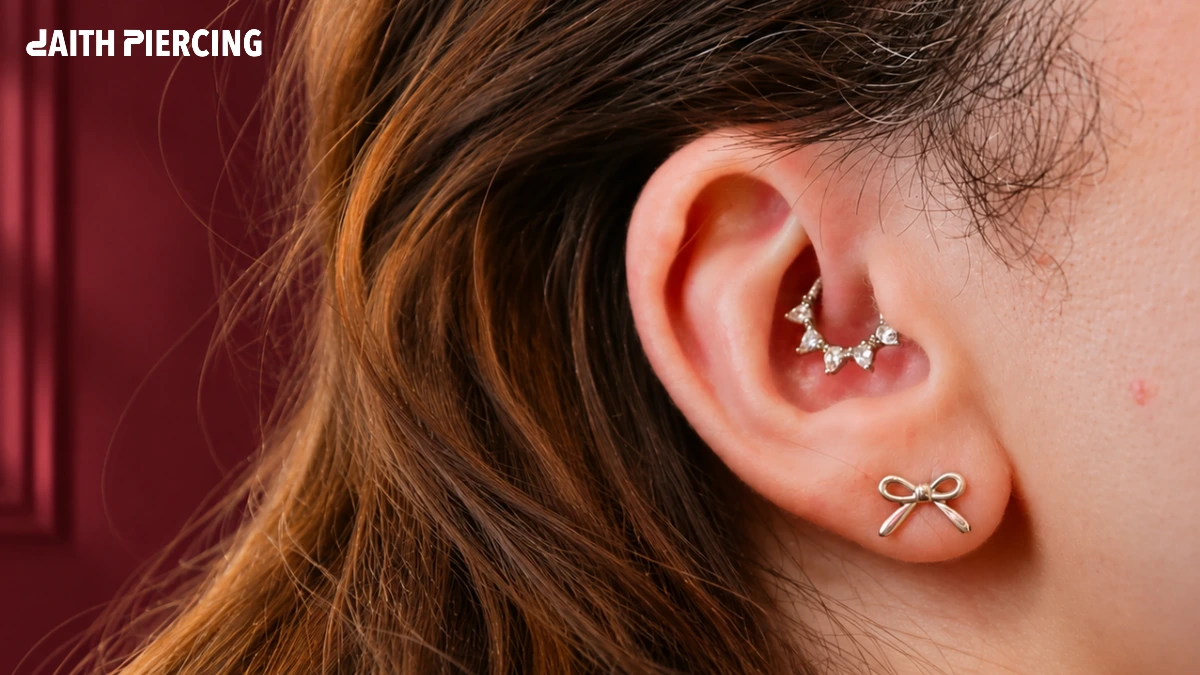
If you have recently got a daith piercing, you may already be thinking about changing the jewelry. Maybe you want a different hoop, a new color, or simply a style that feels more like you. But with a daith piercing, changing jewelry too early can turn a simple style change into a long healing problem.
So, how soon can you change daith piercing jewelry? In most cases, you should wait at least 6–9 months, and some daith piercings can take 9–12 months or longer to fully heal. The Association of Professional Piercers lists daith healing at 6–9 months or longer, while Cleveland Clinic gives cartilage piercings such as daith a broader 6–12-month healing range.
The important part is that a piercing can look healed before it is actually healed inside. That is why the calendar alone should not decide when you change your jewelry.
Key Takeaways
- How soon can you change daith piercing jewelry? Usually after about 6–9 months, and sometimes 9–12 months or longer.
- Do not change it simply because the outside looks healed.
- Three months is generally too early for a routine jewelry change.
- At six months, have the piercing assessed rather than assuming it is fully healed.
- Pain, swelling, redness, crusting, or discharge means you should wait and get advice.
- Have a professional piercer handle an early or complicated jewelry change.
- Use quality, body-safe jewelry when your piercing is ready.
- Never force new jewelry through a resistant or painful piercing.
- If you suspect infection, seek medical advice instead of removing the jewelry yourself.
How Soon Can You Change Daith Piercing?
For most people, changing a daith piercing yourself before 6 months is not a good idea. A safer target is around 6–9 months, provided the piercing is completely calm and showing no signs of irritation. If it is still tender, swollen, crusty, painful, or producing unusual discharge, give it more time.
The exact healing period is different for everyone. Your body, jewelry material, aftercare, irritation, sleeping habits, and accidental bumps can all affect how quickly the piercing settles.
If you need the jewelry changed earlier because of a sizing or material problem, let a professional piercer do it. The Association of Professional Piercers recommends leaving the initial jewelry in throughout healing unless there is a problem and having a qualified piercer handle necessary changes.
Why Does a Daith Piercing Take So Long to Heal?
A daith piercing goes through cartilage rather than soft earlobe tissue. Cartilage has a lower blood supply, so it generally takes longer to repair itself. Cleveland Clinic estimates that daith and other ear cartilage piercings can take around 6–12 months to heal.
This is where many people get caught out. Your daith might stop hurting after a few weeks, and the outside may look perfectly normal. That does not necessarily mean the piercing channel has finished healing.
Think of it like a small tunnel. The skin on the outside can settle first while the tissue deeper inside is still fragile. The Association of Professional Piercers specifically warns that a piercing can appear healed before the internal healing process is complete.
That is why changing jewelry just because the piercing “looks fine” can be risky.
Signs Your Daith Piercing May Be Ready for a Jewelry Change
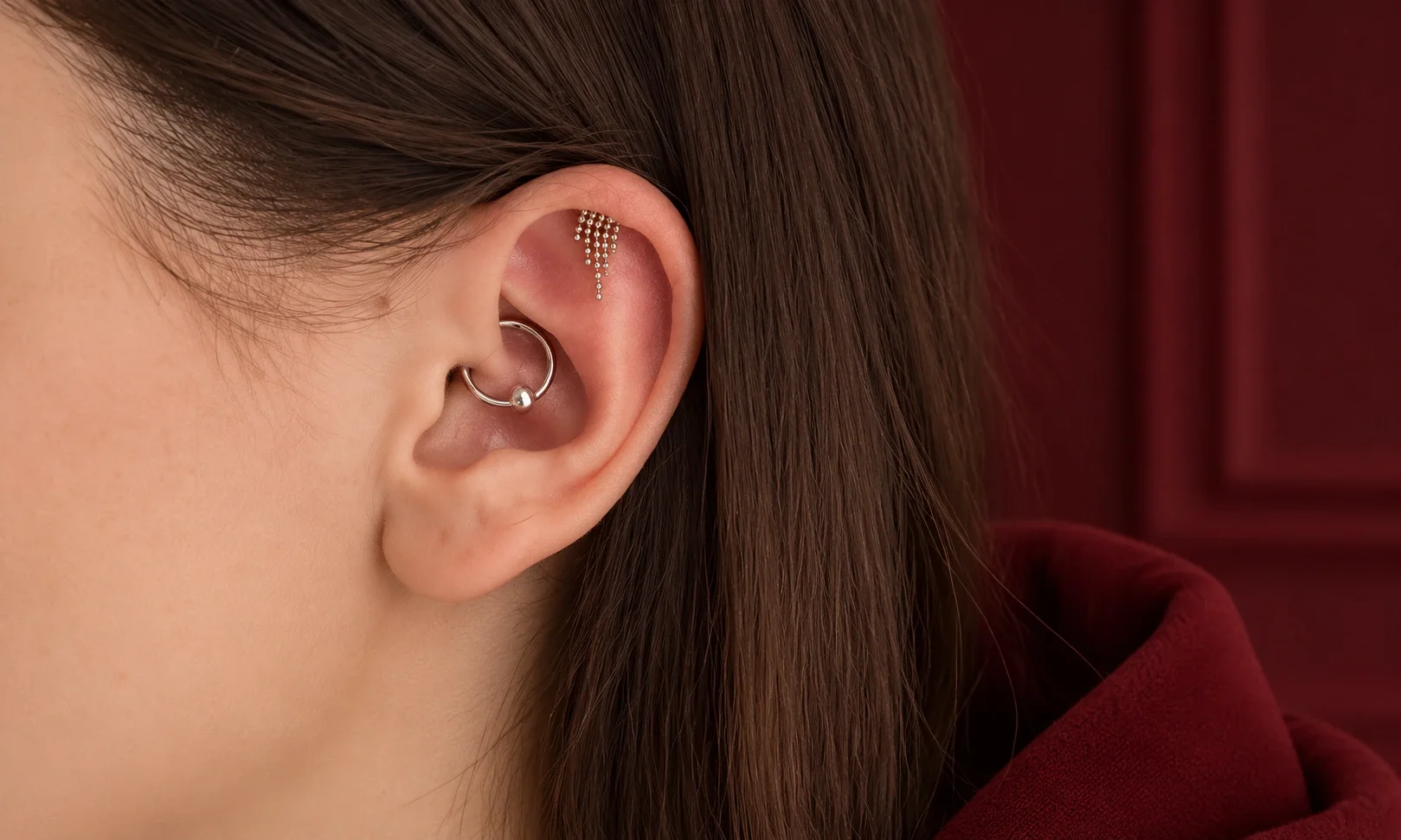
There is no single test that can guarantee your daith is fully healed, but several signs can help.
No Pain or Tenderness
Your daith should feel normal when you gently touch the surrounding area. Occasional sensitivity after pressure or an accidental bump means it may still need more time.
No Swelling or Persistent Redness
A healed piercing should not remain swollen or noticeably irritated. Ongoing redness can be a sign that the tissue is still recovering or being irritated.
No Crusting or Discharge
Some crusting is normal during healing. However, if your piercing is still regularly producing fluid or developing heavy crusts, it is better not to change the jewelry yet.
The Piercing Has Had Enough Time
Even if everything looks perfect, give the piercing enough time to mature. For a daith, 6–9 months is a useful minimum healing range, while some people need closer to 12 months or longer.
Can You Change a Daith Piercing After 3 Months?
Usually, no—not for a normal jewelry change that you want to do yourself. Three months can feel like a long time, especially when the piercing looks healthy. But a daith is cartilage, and the internal tissue may still be healing. Changing the jewelry at this stage can cause irritation, swelling, bleeding, or trauma to the piercing channel.
If there is a genuine reason the jewelry needs to be changed at three months, speak with an experienced professional piercer first. They can check the piercing and decide whether a change is appropriate.
What About Changing It After 6 Months?
Six months is a much more reasonable point to have your daith assessed. However, six months does not automatically mean it is ready.
If your piercing has been completely calm for some time, has no tenderness or swelling, and has no ongoing crusting or discharge, a professional piercer may consider it ready for a jewelry change.
If it still feels sensitive or becomes irritated easily, waiting longer is the smarter choice. The APP lists daith healing as 6–9 months or longer, so there is no need to rush the process.
What Happens If You Change It Too Early?
Changing a daith before it has healed can restart irritation and slow the healing process.
You may notice:
- Increased swelling
- Redness
- Tenderness
- Bleeding
- Irritation bumps
- More crusting
- Difficulty putting the new jewelry in
- Further damage to the healing tissue
The bigger problem is that the piercing may become irritated even when the new jewelry itself looks harmless. You should also avoid repeatedly removing and inserting jewelry just to see whether the piercing is ready. Every unnecessary movement can irritate the healing channel.
How to Change Your Daith Jewelry Safely

Once your daith is fully healed, your first jewelry change is best handled by a professional piercer, especially if you are unfamiliar with the jewelry mechanism.
Choose high-quality jewelry made from a body-safe material. Avoid cheap jewelry that may contain irritating metals such as nickel. If you’re still learning about daith piercing numbness or comparing daith piercing vs helix and daith piercing vs cartilage then understanding the right jewelry and placement can help you make better choices. Cleveland Clinic recommends hypoallergenic jewelry without nickel-containing alloys when changing healed ear piercings.
Wash your hands before touching the area and keep the new jewelry clean. Do not force jewelry through the piercing. If it does not slide in easily stop rather than pushing it through. A professional piercer can also help you choose the right size and style for your anatomy.
What Should You Do During the Healing Period?

Good aftercare can make the healing process much easier. The Association of Professional Piercers recommends using sterile saline wound wash and keeping your hands clean before touching the piercing. It also advises against harsh products such as alcohol and hydrogen peroxide because they can irritate healing tissue.
Try not to twist, spin, or play with your daith jewelry. You should also avoid unnecessary pressure and friction. Sleeping directly on a healing cartilage piercing can irritate and even affect its angle.
Keep the area simple. You do not need a complicated collection of oils, creams, or cleaning products. Over-cleaning can also irritate the piercing and delay healing.
When Should You Not Change the Jewelry?
Do not change your daith jewelry if it is:
- Painful
- Hot or increasingly swollen
- Very red or darkened
- Bleeding without a clear reason
- Producing pus
- Developing worsening symptoms
These can be signs of infection or another complication. NHS guidance notes that increasing swelling, warmth, pain, significant redness or darkening, pus, and feeling generally unwell can indicate an infected piercing.
If you suspect an infection, do not simply remove the jewelry yourself. Seek medical advice. Removing jewelry can sometimes allow the surface to close and potentially trap an infection inside the piercing channel.
Can You Change Daith Jewelry for an MRI or Surgery?
This is different from changing jewelry for fashion.
If a medical procedure requires your jewelry to be removed, speak with your healthcare provider and professional piercer beforehand. The APP recommends discussing a suitable non-metallic alternative with a qualified piercer when jewelry must temporarily be removed for a medical procedure.
Do not assume that a healing daith can simply be left empty for a few hours. Fresh or even established piercings can shrink quickly when jewelry is removed.
What Should You Trust About Daith Piercing Advice?
Good daith piercing advice should be based on established aftercare guidance rather than social media trends or a fixed “change it after X weeks” rule.
For this guide, the healing timeline and aftercare recommendations are supported by sources including the Association of Professional Piercers, which provides professional piercing and aftercare guidance, and Cleveland Clinic, which provides medical information about ear cartilage healing and piercing complications.
Remember that healing times are estimates. Your own piercer can assess the jewelry, placement, tissue condition, and progress of your specific piercing.
Conclusion
The answer to how soon you can change a daith piercing is not simply “after a few weeks.” A daith is a cartilage piercing, and cartilage takes patience. Waiting around 6–9 months or longer is a safer general guideline, with some piercings taking up to a year to fully heal.
If your daith feels completely normal, looks healthy, and has had enough time to heal, you can start thinking about a jewelry change. When in doubt, let an experienced piercer take a look first. A little patience now can save you from months of unnecessary irritation later.
For more practical daith piercing information and aftercare guidance, DaithPiercing focuses on helping readers make informed decisions about their piercing journey.
FAQs
1. How soon can you change daith piercing jewelry?
Most daith piercings need around 6–9 months or longer to heal. Some take up to 12 months, so the condition of the piercing matters just as much as the number of months that have passed.
2. Can I change my daith piercing after 3 months?
It is generally better not to change it yourself after only three months. The piercing may look healed on the outside while the inside is still fragile.
3. Can I change my daith piercing after 6 months?
Possibly, but six months is not an automatic green light. If the piercing is completely calm and has no pain, swelling, redness, crusting, or discharge, ask a professional piercer to assess it before changing the jewelry.
4. How do I know when my daith piercing is fully healed?
A healed daith should feel comfortable, without ongoing pain, swelling, significant redness, or persistent discharge and crusting. Even when it looks healed, internal tissue can still be developing, so waiting for the full healing period is important.
5. Can changing a daith piercing too early cause problems?
Yes. Early jewelry changes can irritate the healing tissue and lead to swelling, bleeding, bumps, soreness, or delayed healing. If the new jewelry does not go in easily, never force it.
6. Should a professional change my daith jewelry?
For the first change, especially before the piercing has been fully healed for some time, having a professional piercer do it is the safer option. They can check the piercing and make sure the new jewelry is suitable.