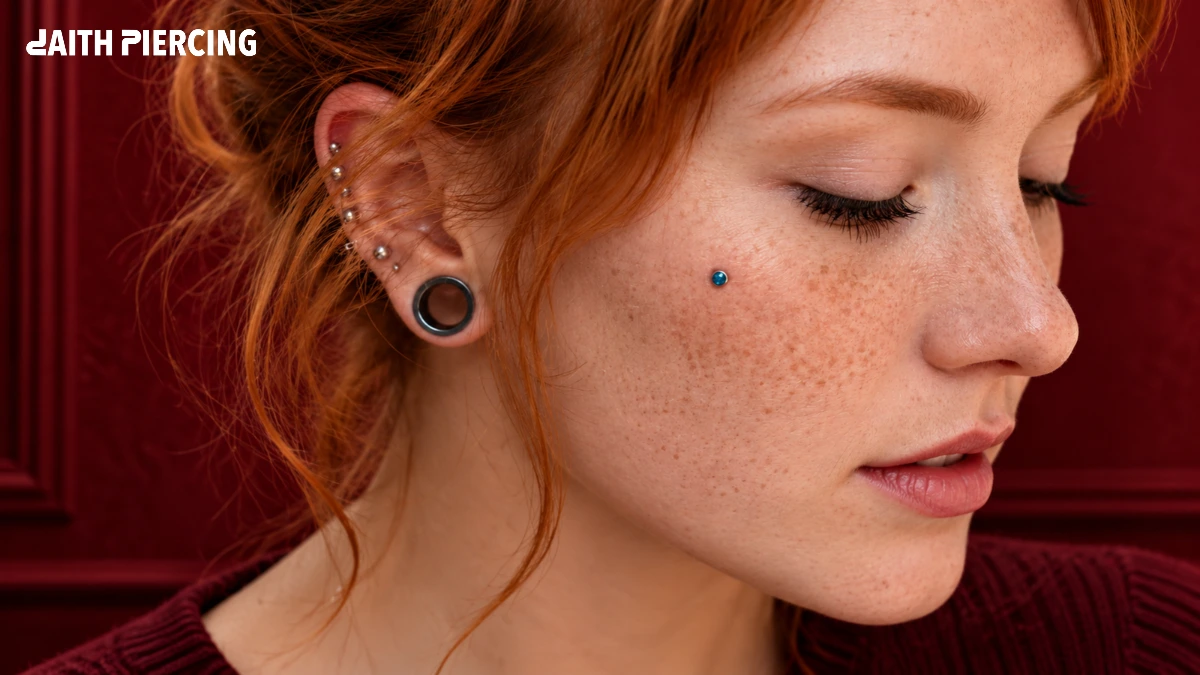
A dermal piercing can turn a small area of skin into a striking piece of body jewelry. Whether placed on the cheekbone, collarbone, chest, or lower back, this type of piercing creates a distinctive look without needing a traditional entry and exit hole.
Unlike ordinary ear or nose piercings, a dermal piercing sits on a single point of the skin. A small anchor is placed beneath the surface, allowing a decorative top to remain visible. The result can look subtle and elegant or bold and eye-catching, depending on the placement and jewelry.
However, dermal piercings require careful consideration. They can experience irritation, rejection, scarring, and infection, and they generally cannot be treated like ordinary removable jewelry.
This guide explains how dermal piercing works, where people commonly get it, what it feels like, how healing progresses, and how to care for it properly.
What Is a Dermal Piercing?
A dermal piercing, also called a microdermal piercing or single-point piercing, is a type of body modification in which a small anchor sits beneath the skin. A decorative jewelry top attaches to the anchor and remains visible above the surface.
Traditional piercings pass through tissue and usually have an entry and exit opening. A dermal piercing has only one visible opening because the anchor is held beneath the skin.
A typical dermal piercing has two main components:
- Dermal anchor: The small base positioned beneath the skin that holds the jewelry in place.
- Decorative top: The visible part, which may feature a gemstone, flat disc, or other design.
The anchor is designed to remain in place as the surrounding tissue heals. However, the body can sometimes push it toward the surface, a process known as rejection.
Where Can You Get a Dermal Piercing?
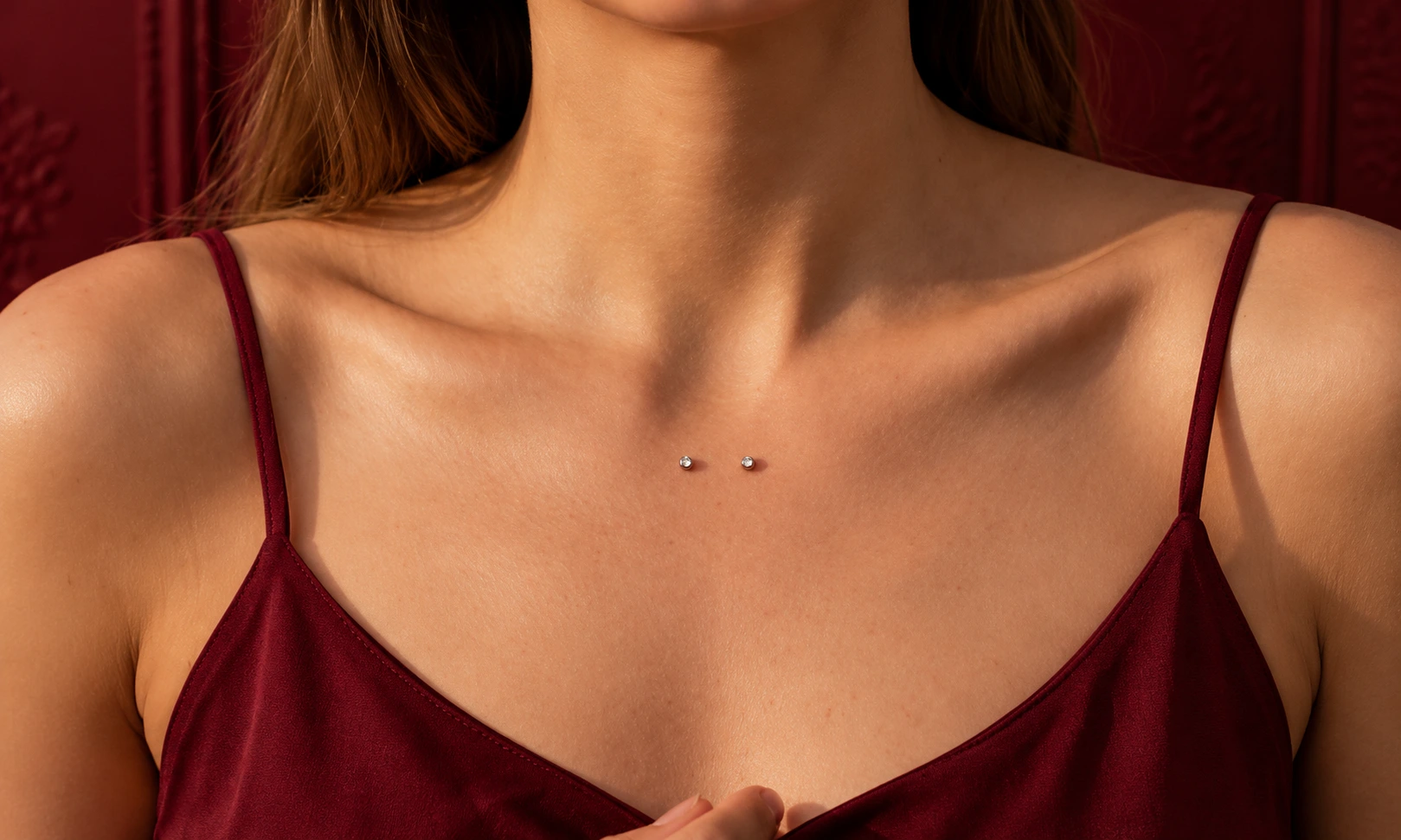
Dermal piercings can be placed in different areas of the body, depending on anatomy, skin movement, clothing friction, and the piercer’s assessment.
Cheekbone Dermal Piercing
A cheekbone dermal piercing sits on the upper cheek, often below the outer corner of the eye. It can create a subtle, jewel-like accent and is sometimes chosen as an alternative to a traditional cheek piercing.
Because facial skin is exposed and the area moves during facial expressions, careful placement and professional aftercare are important.
Collarbone Dermal Piercing
A collarbone dermal piercing is placed near the collarbone and can create a delicate decorative effect. It is often chosen to complement necklaces, open-neck clothing, or formal outfits.
Clothing straps, bags, seat belts, and sleeping positions can irritate this area, so placement should account for everyday friction.
Chest Dermal Piercing
A chest dermal piercing may be positioned on the upper chest or between the breasts. The exact location depends on the individual’s anatomy and the intended design.
Areas that experience pressure from bras, tight clothing, or frequent movement may be more prone to irritation.
Lower Back Dermal Piercing
Lower-back dermal piercings are sometimes arranged symmetrically or used as decorative accents. However, waistbands, prolonged sitting, and sleeping pressure can make healing more challenging.
Neck Dermal Piercing
A dermal piercing on the side or back of the neck can create a distinctive appearance. The neck moves frequently, and collars, hair, and accessories may catch on the jewelry.
Hand or Finger Dermal Piercing
Dermal jewelry on the hands or fingers is exposed to frequent movement, washing, impacts, and contact with objects. These areas can be particularly difficult to protect during healing and may have a higher risk of irritation or displacement.
Not every location is suitable for every person. A reputable professional should assess the skin, likely friction, and placement before proceeding.
How Is a Dermal Piercing Done?
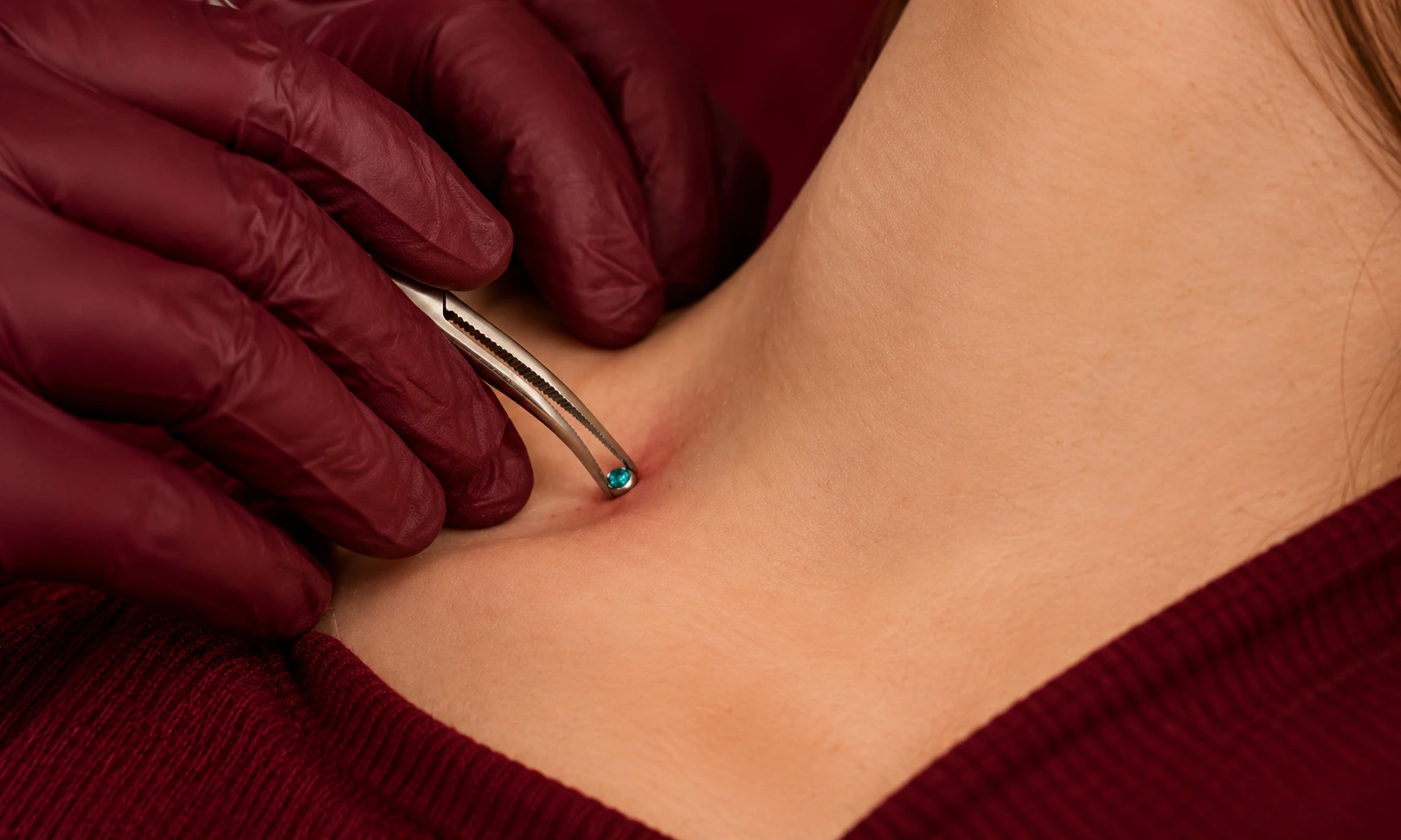
A dermal piercing should be performed by a trained, experienced professional working in a hygienic studio.
The process generally involves:
- Placement consultation: The piercer examines the intended area and discusses anatomy, jewelry, and possible risks.
- Skin preparation: The area is cleaned with an appropriate skin antiseptic.
- Creating the opening: The professional uses an appropriate sterile instrument and technique to create a small pocket beneath the skin.
- Inserting the anchor: The dermal anchor is positioned beneath the skin, and its decorative top is fitted.
- Aftercare instructions: The piercer explains how to clean and protect the new piercing while it heals.
The exact technique varies by practitioner and placement. Never attempt to create or insert a dermal anchor yourself.
Does Dermal Piercing Hurt?
Yes, a dermal piercing can hurt, although the level of discomfort varies from person to person.
You may feel a sharp pinch or pressure when the opening is created and the anchor is inserted. Some tenderness, swelling, or bruising afterward is also possible.
Pain can depend on the location, the individual’s sensitivity, the technique used, and the amount of tissue involved. There is no reliable universal pain score for dermal piercings.
If you are concerned about pain, discuss it with your piercer before the procedure. Do not apply numbing products unless a qualified healthcare professional has advised that the product is appropriate.
How Long Does a Dermal Piercing Take to Heal?
Dermal piercings can take several months to heal, and the timeline varies considerably depending on the placement, jewelry, friction, and individual healing response. Surface-anchor piercings may remain vulnerable to irritation even after they appear healed.
Healing generally progresses through several stages:
- Early healing: Mild tenderness, redness, swelling, or a small amount of bleeding may occur.
- Ongoing healing: The surrounding tissue gradually settles, although crusting and occasional irritation may continue.
- Later healing: The area becomes more stable, but friction or pressure can still cause problems.
Do not assume that a piercing is fully healed just because it looks normal on the outside. Ask your piercer to assess its progress before changing the jewelry top or altering your care routine.
Dermal Piercing Aftercare
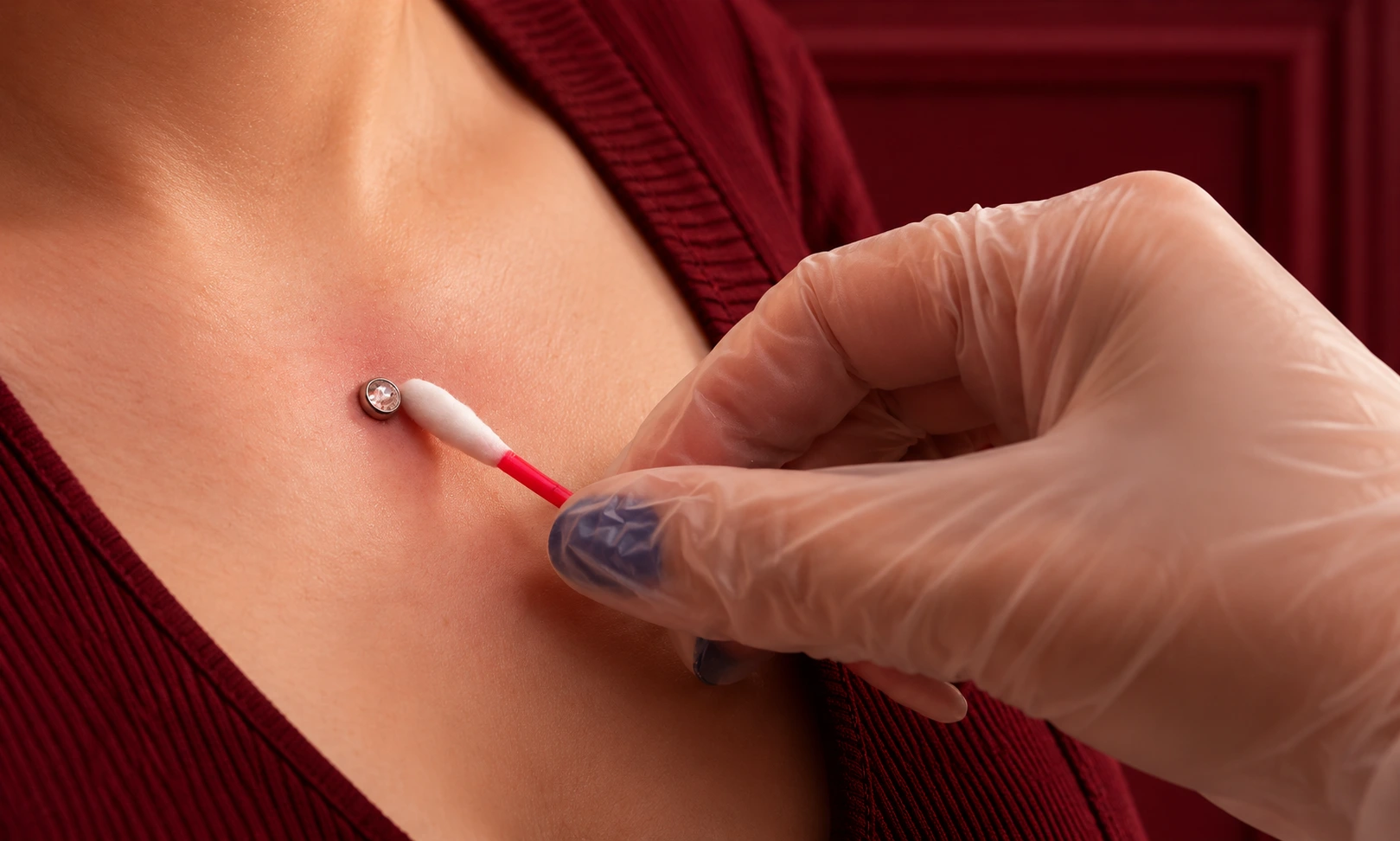
Good aftercare helps reduce irritation and infection risk, although it cannot eliminate every complication.
The Association of Professional Piercers recommends gentle cleaning with sterile saline wound wash and avoiding unnecessary handling of healing jewelry.
Clean the Area Gently
- Wash your hands before touching the area.
- Use sterile saline wound wash containing 0.9% sodium chloride, without unnecessary additives.
- Gently rinse away surface debris without scraping or picking at crusts.
- Pat the area dry with clean disposable gauze.
Follow the specific instructions provided by your piercer, especially if they recommend a protective dressing for the initial period.
Avoid Twisting or Moving the Jewelry
Do not rotate, pull, or repeatedly press the decorative top. Unnecessary movement can irritate the surrounding tissue and interfere with healing.
Reduce Friction and Pressure
Keep clothing, bags, seat belts, towels, and accessories from catching on the piercing. Try not to sleep directly on the area.
Avoid activities that repeatedly knock, rub, or put pressure on the jewelry.
Avoid Harsh Cleaning Products
Do not use rubbing alcohol, hydrogen peroxide, strong antiseptics, or harsh exfoliating products on the healing piercing unless a healthcare professional specifically directs you to do so. These products may irritate tissue and delay healing.
Be Careful With Cosmetics and Swimming
Keep makeup, lotions, perfume, and hair products away from the healing site. Avoid swimming pools, hot tubs, and natural bodies of water while the piercing is healing, unless a healthcare professional or qualified piercer gives you appropriate guidance.
What Are the Risks of Dermal Piercing?
Dermal piercings are a form of skin penetration and carry risks beyond ordinary temporary soreness.
Infection
An infection can develop if bacteria enter the wound or equipment is not properly sterilized. Warning signs include worsening redness, increasing pain, warmth, swelling, or thick yellow or green discharge. Fever or spreading redness also warrants urgent medical assessment.
Rejection
Rejection occurs when the body gradually pushes the anchor toward the surface. The jewelry may become increasingly visible, the skin covering it may thin, or the area may remain irritated.
Migration
Migration means the jewelry gradually changes position. It may happen because of tissue tension, repeated friction, unsuitable placement, or other factors.
Scarring
A dermal piercing can leave a small scar even after removal. Some people develop raised scars or keloids, particularly if they are prone to them.
Allergic Reactions
Some jewelry materials can trigger skin irritation or metal allergies. Discuss suitable body-jewelry materials with a qualified piercer, especially if you have a history of metal sensitivity.
Embedding or Tearing
If tissue grows over the jewelry or the anchor catches on clothing, professional treatment may be needed. Do not force embedded jewelry out yourself.
What Should You Do if Your Dermal Piercing Is Rejecting?
If the jewelry appears to be moving toward the skin’s surface, the skin over the anchor is becoming thinner, or the piercing repeatedly catches and tears, contact an experienced piercer promptly.
A healthcare professional should assess signs of infection, significant pain, or tissue damage. Do not try to push the anchor back under the skin, cut it out, or remove it yourself. If infection is suspected, seek medical advice before changing or removing the jewelry.
How Much Does a Dermal Piercing Cost?
The cost varies by country, studio, placement, jewelry material, and the experience of the practitioner. The total price may include the procedure, the initial jewelry, and follow-up care.
Rather than choosing the cheapest option, ask whether the price includes suitable jewelry, sterile single-use instruments where appropriate, aftercare instructions, and a follow-up visit.
A professional studio should be willing to explain its hygiene procedures and answer questions about the risks before you commit.
Can You Remove a Dermal Piercing?
Yes. However, removing a dermal anchor can be more complicated than removing jewelry from a conventional piercing because the anchor sits beneath the skin.
Have a trained professional assess and remove it when appropriate. If the anchor is embedded, infected, or surrounded by damaged tissue, a healthcare professional may need to perform the removal.
After removal, the opening usually closes gradually, but a small scar or mark may remain. Do not attempt home removal using needles, blades, or other improvised tools.
Final Thoughts
A dermal piercing can be a distinctive way to express personal style, particularly for people who prefer a small, decorative piece of jewelry rather than a conventional piercing. However, its appearance is only one part of the decision.
Placement, professional technique, aftercare, and the possibility of rejection or scarring deserve equal consideration. If you are exploring other body jewelry styles, learn more about helix piercing and the differences in placement with a daith piercing vs conch. For beauty inspiration, you can also explore almond French tip nails.
Before getting one, research the practitioner, ask about sterile equipment and jewelry materials, and understand the commitment involved in healing and maintenance. If you already have a dermal piercing, protect it from friction and seek professional advice when something does not look or feel right.
Would you consider getting a dermal piercing, and which placement do you find most attractive?
Frequently Asked Questions About Dermal Piercing
Is a dermal piercing permanent?
No. A dermal piercing can be removed, but it may leave a scar. Some anchors remain stable for a long time, while others migrate or are rejected by the body.
Can you change a dermal piercing top?
The decorative top may be replaceable, but changing it too early can irritate the healing site or disturb the anchor. Ask an experienced piercer when it is appropriate and have them perform the change if necessary.
Can a dermal piercing fall out?
Yes. An anchor can loosen or be pushed toward the surface because of rejection, trauma, friction, or other factors. Avoid pulling at a loose anchor and arrange a professional assessment.
Can you sleep with a dermal piercing?
Yes, but avoid putting direct pressure on it, particularly during healing. Pressure and friction may cause irritation or contribute to migration.
Does a dermal piercing leave a scar?
It can. The final appearance depends on the placement, healing process, complications, and individual skin response. A small mark may remain even after an uncomplicated removal.
Is a dermal piercing safe?
It has risks, including infection, rejection, migration, scarring, and tearing. Choosing a skilled professional, ensuring proper sterilization, selecting suitable jewelry, and following appropriate aftercare can reduce some risks but cannot remove them entirely.
Disclaimer:
This content is for informational and entertainment purposes only and reflects our personal opinions and experiences. We just love to write and share what we observe along the way.