Key Takeaways
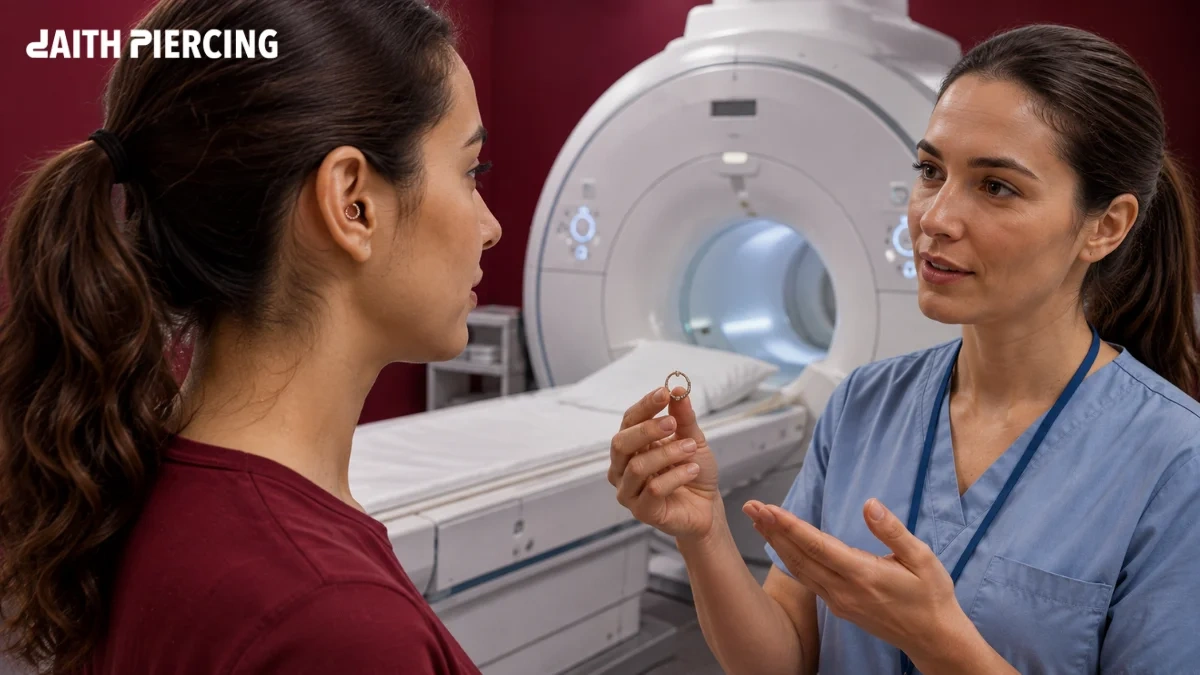
- Daith Piercing and MRI Scan should always be discussed with the MRI team.
- Many facilities ask patients to remove body piercings before scanning.
- Metal jewelry can potentially move, heat up, or create image artifacts.
- A fresh daith piercing may need special consideration before removal.
- Do not assume titanium or another named material is automatically MRI-safe.
- Tell the technologist if the jewelry cannot be removed.
- Follow the specific instructions provided by your MRI facility.
- For medical decisions, the radiology team should make the final safety assessment.
Quick Answer
Daith Piercing and MRI Scan are usually compatible only after the MRI team has assessed the jewelry and decided how to proceed.
MRI facilities commonly require patients to remove body piercings and other metallic jewelry before entering the scanner room. This is because metal can potentially move, heat up, or create image artifacts.
If your daith piercing is fresh and removing the jewelry could cause the channel to close or become irritated, do not remove it yourself without discussing the situation with the MRI department and your piercer.
Can You Have an MRI With a Daith Piercing?
The answer depends on the piercing jewelry and the MRI facility’s safety policy.
An MRI scanner uses a powerful magnetic field together with radio waves to create detailed images. Certain metallic objects can interact with this environment, which is why patients are screened carefully before entering the scanner room.
With Daith Piercing and MRI Scan, the main concern is not simply that the jewelry is located in your ear. Instead, the material and construction of the jewelry matter.
Some body-piercing jewelry can contain ferromagnetic or electrically conductive materials. Depending on the situation, these materials may create movement, heating, or image interference.
Therefore, always tell the MRI technologist that you have a daith piercing.
Why Is Daith Jewelry a Concern During MRI?
There are three main reasons Daith Piercing and MRI Scan safety needs attention.
Magnetic Movement
Some metals can be attracted by the MRI’s magnetic field. Ferromagnetic materials are particularly important because they can potentially move or be displaced.
This is one reason MRI facilities have strict screening procedures for metal objects and implants.
Heating
Conductive metal can interact with radiofrequency energy used during MRI. In certain circumstances, this can cause heating.
The MRI safety information from MRIsafety.com notes that heating is possible with conductive body-piercing jewelry, although the risk of excessive heating is generally low for many small piercing items.
Image Artifacts
Even when jewelry does not create a serious safety problem, it can interfere with the images.
Metallic jewelry near the area being examined can create artifacts or signal loss, potentially making the images harder to interpret.
Do You Need to Remove a Daith Piercing for an MRI?
In many cases, yes.
Radiology Info recommends removing metallic jewelry before an MRI and specifically lists body piercings among items that should be removed before the examination.
However, there is an important difference between an old, fully healed daith piercing and a newly performed piercing.
If your daith is fully healed, removing the jewelry temporarily may be relatively straightforward.
If your daith is still healing, taking the jewelry out can allow the piercing channel to narrow or close. It can also make reinsertion difficult and potentially cause irritation.
What Should You Do Before Your Appointment?
Contact the MRI department before your appointment and explain that you have a daith piercing.
Give them information about:
- Whether the piercing is new or healed
- What material the jewelry is made from
- Whether the jewelry can be removed
- Whether the MRI is of your head, brain, neck, or another body area
- Whether you have any other metal or medical implants
The MRI technologist can then follow the facility’s safety procedure.
What If Your Daith Piercing Is New?
A new daith piercing needs extra consideration.
Fresh cartilage piercings should not be treated like completely healed piercings. Removing the jewelry for an extended period can cause the channel to shrink or close, while forcing jewelry back through can cause trauma.
Therefore, if your piercing is still healing, do not simply remove it immediately before the MRI without asking for professional advice.
Instead, contact the imaging center ahead of time. Depending on the jewelry and the MRI, the facility may have a specific procedure or may ask you to discuss a suitable temporary replacement with a qualified piercer.
Do not replace your jewelry with a random plastic or silicone piece and assume that it is automatically MRI-safe. The MRI team should know exactly what is present.
What Jewelry Materials Are Used in Daith Piercings?
Daith jewelry can be manufactured from different materials. Common piercing materials include titanium, certain types of steel, gold, and other specialty materials.
However, simply knowing the name of the material is not always enough to determine MRI safety.
For example, the exact alloy, manufacturing standard, jewelry design, and MRI system can all matter. The MRI facility should make the final safety decision.
Daith Jewelry and MRI Comparison
| Jewelry situation | What to do before MRI |
|---|---|
| Fully healed daith with removable jewelry | Ask the MRI team if it must be removed |
| Fresh daith piercing | Contact MRI department before removing it |
| Unknown jewelry material | Tell the MRI technologist |
| Jewelry that cannot be removed | Contact the MRI facility before the appointment |
| Head or brain MRI | Pay particular attention to possible image artifacts |
| Other body MRI | Still disclose the piercing because facility policies vary |
What If You Cannot Remove Your Daith Jewelry?
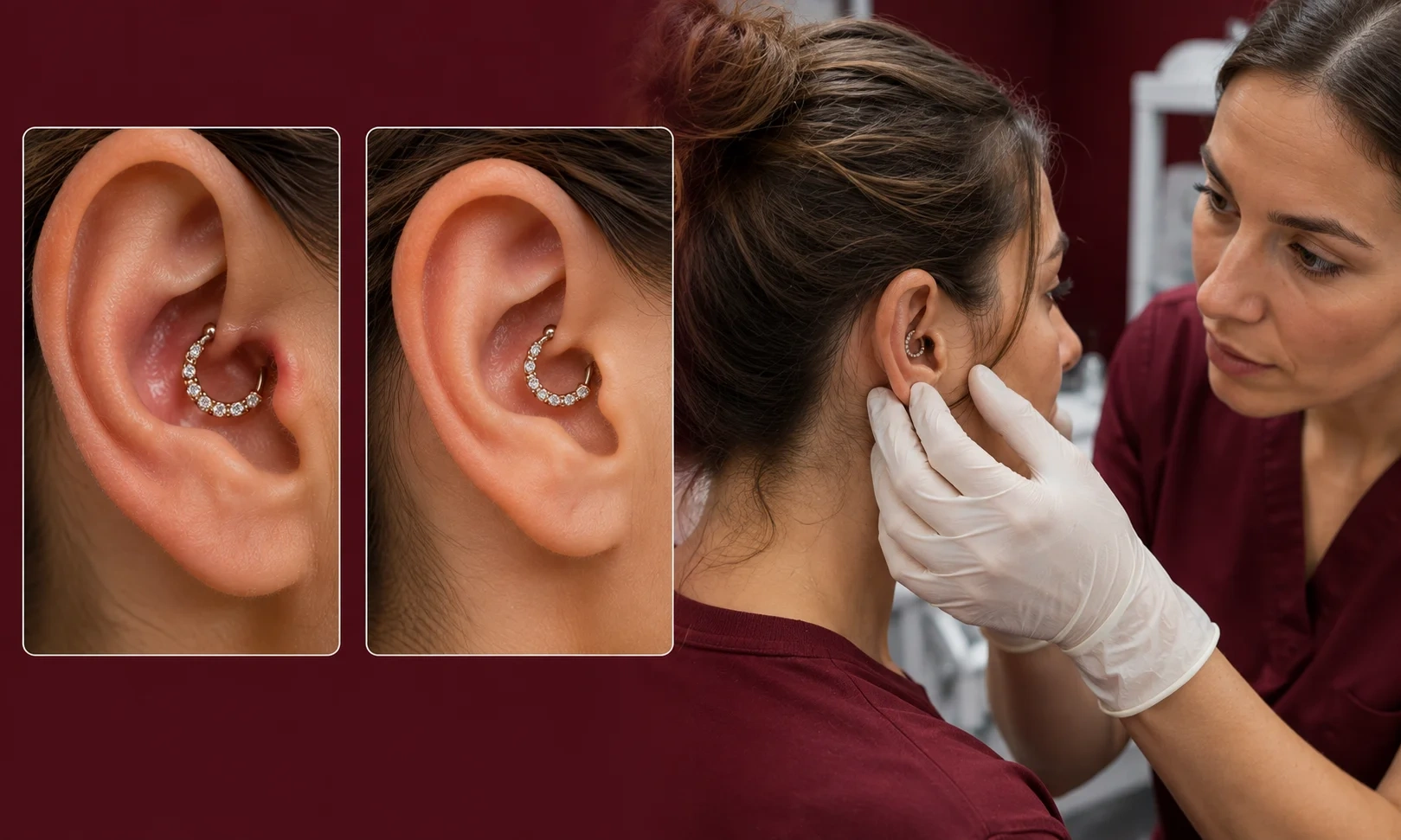
Do not hide the piercing from the MRI staff.
Tell the technologist that the jewelry cannot be removed and explain why. Some hospitals specifically ask patients to contact the MRI department if they have body piercings that cannot be removed.
The MRI team may assess the jewelry, its material, and the planned examination.
In some circumstances, the scan may need additional precautions or another arrangement. The decision should be made by qualified MRI personnel rather than by guessing at home.
If the MRI is urgent, do not delay medically necessary imaging simply because you have a daith piercing. Instead, inform the healthcare team immediately so they can manage the situation safely.
Can a Daith Piercing Affect MRI Images?
Yes, potentially.
Metallic jewelry can create artifacts, especially when it is close to the area being scanned. RadiologyInfo notes that metallic jewelry used for body piercing or body modification may interfere with image quality.
This is especially relevant when the examination involves the head, face, brain, or nearby structures.
For example, a Daith Piercing and MRI Scan involving the brain may be more affected by nearby ear jewelry than an MRI of the lower leg.
This does not automatically mean that the MRI cannot be performed. Rather, the radiology team needs to know about the jewelry before deciding how to proceed.
Daith Piercing and MRI Scan Safety Checklist
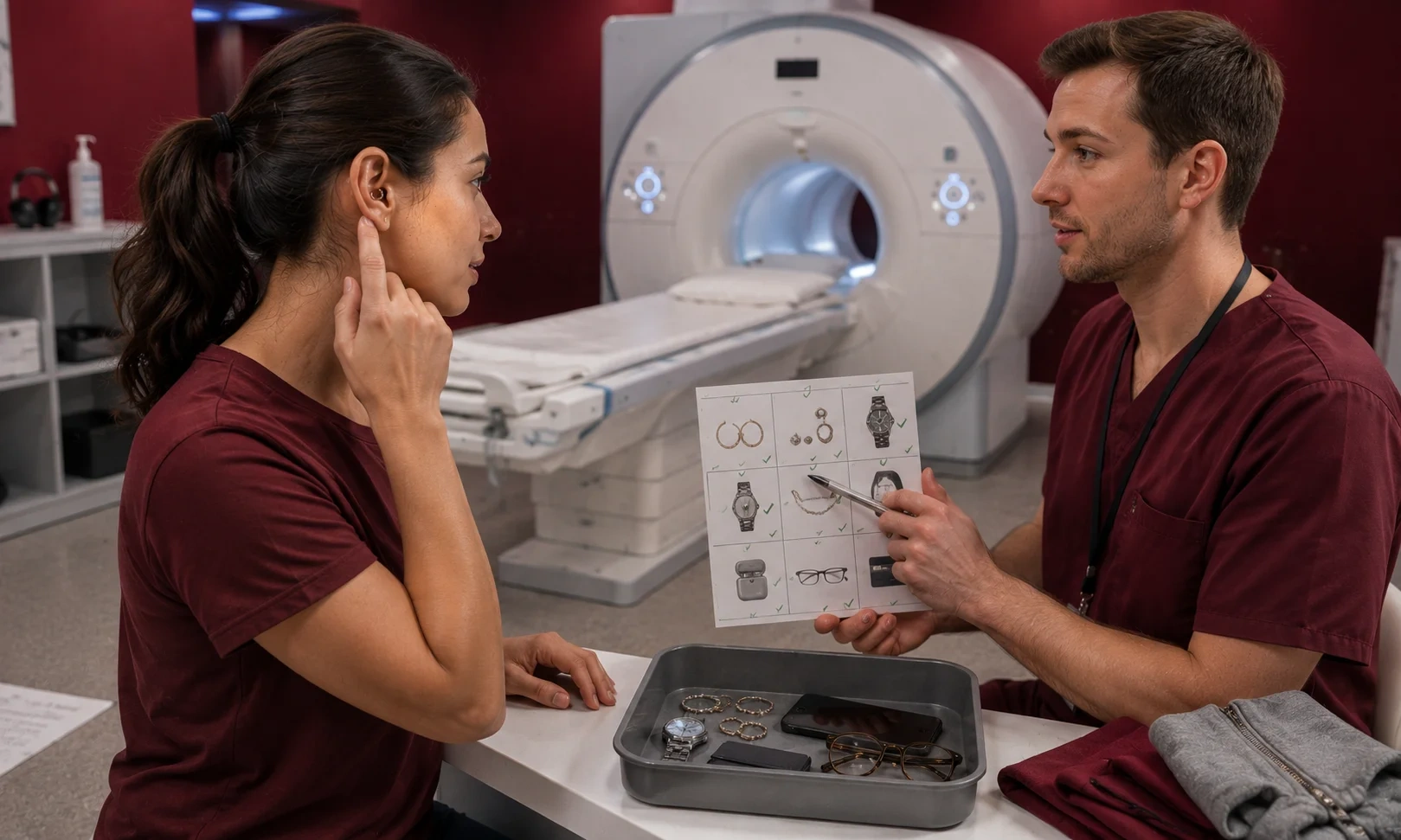
Before your MRI, use this simple checklist:
-
Tell the MRI department about your daith piercing.
-
Find out whether the jewelry must be removed.
-
Check the jewelry material if you know it.
-
Tell staff if the piercing is still healing.
-
Do not force jewelry out or back into a fresh piercing.
-
Tell the technologist about every other piercing or metal object.
-
Follow the facility’s instructions about jewelry.
-
Ask what to do if the jewelry cannot be removed.
-
Tell staff immediately if you feel unusual heating or discomfort during the scan.
RadiologyInfo also recommends removing jewelry and other metallic objects before entering the MRI room.
Common Mistakes to Avoid
Assuming Titanium Always Means You Can Keep It In
Titanium is commonly used for body jewelry, but you should not make your own MRI safety decision based only on the word “titanium.”
Always disclose the piercing and follow the MRI facility’s instructions.
Removing a Fresh Piercing Without Advice
A healing daith piercing can be difficult to reinsert after removal.
If your piercing is new, speak with the MRI department and, where appropriate, a qualified professional piercer before making changes.
Forgetting to Mention the Piercing
Some people remember to remove watches, phones, and necklaces but forget about ear jewelry.
Body piercings are specifically included in MRI preparation guidance, so mention your daith piercing during screening.
Assuming a Previous MRI Proves It Is Safe
MRI equipment, examination areas, jewelry, and facility policies can differ.
A previous scan without a problem does not mean you should skip screening during your next appointment.
Expert Tips for Daith Piercing and MRI Scan
The safest approach is simple: disclose first, remove only when instructed, and never guess about jewelry safety.
If you know the brand, material, or specifications of your daith jewelry, take that information with you. It can help the MRI team assess the situation.
Also, tell staff about every other piercing, implant, or metal fragment you may have. MRI screening is designed to identify potential risks before you enter the scanner room.
If you are unsure whether your piercing can be removed, call the imaging center before the appointment rather than waiting until you arrive.
Trusted Sources for MRI Safety
For medical information about Daith Piercing and MRI Scan, rely on established radiology and healthcare sources rather than social media claims.
- RadiologyInfo MRI Safety
- RadiologyInfo MRI Preparation Guide
- NHS MRI Scan Guidance
- MRIsafety.com Body Piercing Jewelry and MRI Safety
These sources explain why MRI facilities screen for metal, jewelry, implants, and body piercings.
Conclusion
Daith Piercing and MRI Scan can be safely managed when you communicate with the MRI team before the examination.
The most important point is that you should not decide whether your daith jewelry is safe based only on its appearance or claimed material. MRI scanners use powerful magnetic fields and radiofrequency energy, so certain jewelry can potentially move, heat up, or affect image quality.
If your daith is healed and the jewelry can be removed, the MRI facility may simply ask you to take it out. However, if the piercing is fresh or the jewelry cannot be removed, contact the MRI department beforehand.
Ultimately, the safest rule is straightforward: tell the MRI technologist about your daith piercing, follow the facility’s instructions, and never force a healing piercing to close or remove jewelry without appropriate advice.
Frequently Asked Questions
Can I get an MRI with a daith piercing?
Possibly, but you should tell the MRI technologist about it first. Many MRI facilities require body piercings to be removed because metal can create safety concerns or interfere with images.
Do I have to remove my daith piercing before an MRI?
Often, yes. However, the final decision depends on the jewelry and the MRI facility’s safety procedures.
What if my daith piercing is still healing?
Contact the MRI department before removing it. A fresh cartilage piercing may become irritated or begin closing if jewelry is removed.
Can titanium daith jewelry go into an MRI?
Do not assume that any particular jewelry is automatically acceptable. Tell the MRI team the exact material and let the facility determine whether it can remain in place.
Can a daith piercing heat up during an MRI?
Conductive jewelry can potentially experience MRI-related heating. The risk varies with the jewelry and scanning conditions, which is why disclosure and screening are important.
Can daith jewelry ruin an MRI?
It can create image artifacts, particularly when the jewelry is close to the area being examined. Metallic body jewelry may interfere with image quality.
What if I cannot remove my daith jewelry?
Tell the MRI facility before your appointment. Do not conceal it or force it out. The radiology team can determine the safest approach.
Is MRI itself dangerous?
MRI does not use ionizing radiation and is generally considered a safe imaging method when appropriate safety procedures are followed. However, the powerful magnetic field means certain metal objects and medical devices require careful screening.