Key Takeaways
- Daith piercing and surgery commonly involve temporary jewelry removal.
- Hospitals may require body piercings to be removed before an operation.
- General anesthesia often comes with specific jewelry-removal instructions.
- Local anesthesia does not automatically mean jewelry can remain.
- New piercings need special planning because the channel may narrow or close.
- Never force difficult or embedded jewelry out.
- Do not use homemade retainers without medical approval.
- MRI rules can differ from surgery rules.
- Always follow the instructions of your surgeon, anesthetist, or imaging team.
- A professional piercer can help with jewelry problems, but medical decisions belong to your healthcare team.
Quick Answer
Daith Piercing and Surgery usually means removing your daith jewelry before an operation if your surgical or anesthesia team instructs you to do so.
Many hospitals recommend removing body piercings before surgery. Jewelry can interfere with equipment, create pressure or injury risks, and may be unsuitable around certain procedures.
However, there is no universal rule for every procedure. Your surgeon, anesthetist, or hospital should have the final say.
If the piercing is new and you are worried that it may close, tell the medical team before removing it. Do not secretly leave jewelry in when you have specifically been instructed to take it out.
Why Surgery May Require Jewelry Removal
The main reason Daith Piercing and Surgery can involve jewelry removal is safety.
During an operation, medical staff may use different equipment, positioning techniques, monitoring devices, or electrical surgical equipment. Some hospitals therefore have a general policy requiring patients to remove jewelry and body piercings.
Another issue is access. Even when your ear is nowhere near the surgical site, staff may prefer all removable jewelry to be taken off before you enter the operating area.
There is also a practical reason. Jewelry can become caught, pressed against the skin, or damaged while you are being moved or positioned.
Therefore, Daith Piercing and Surgery should be discussed during your preoperative assessment rather than on the morning of the operation.
Daith Piercing and Surgery With General Anesthesia
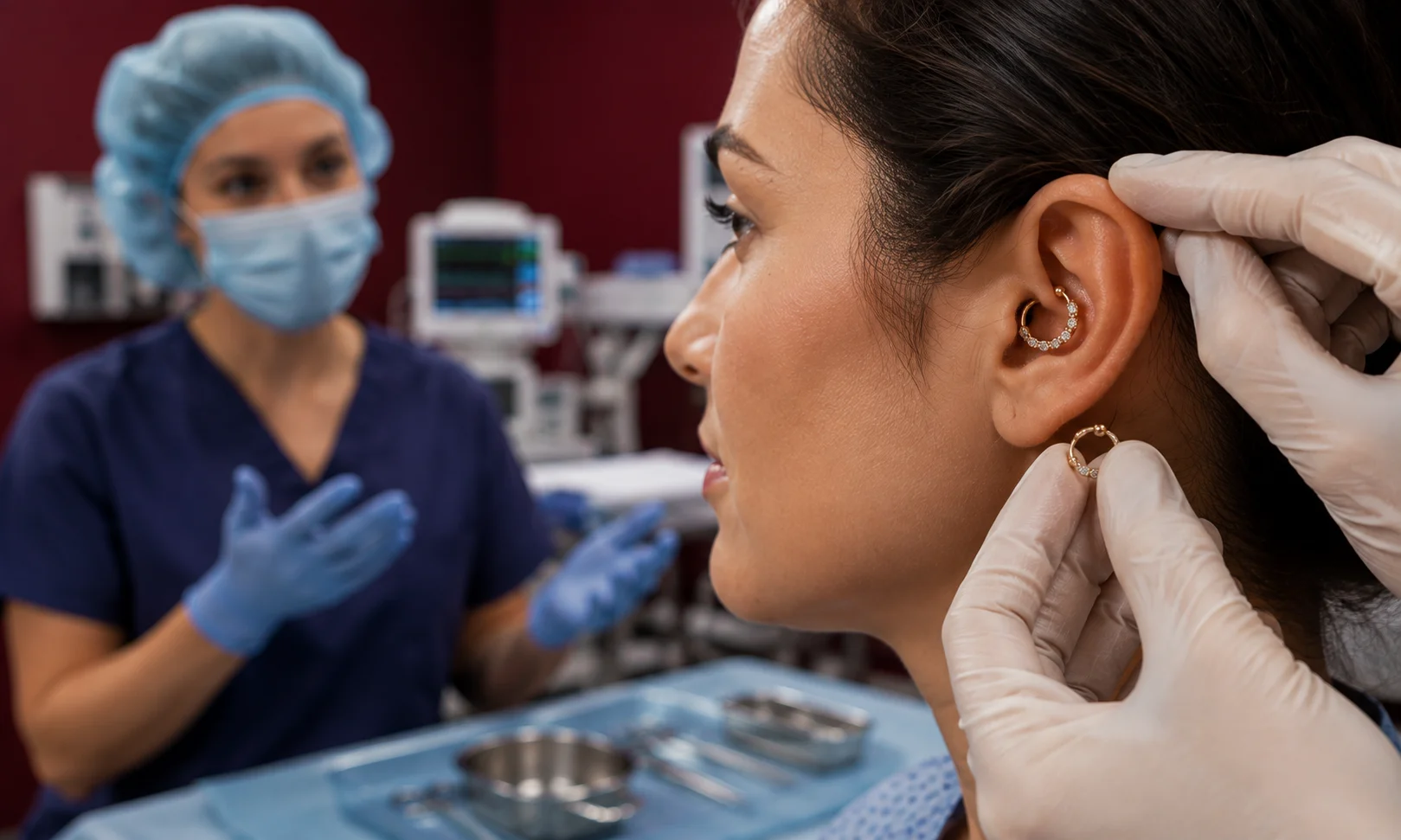
When Daith Piercing and Surgery involves general anesthesia, jewelry removal is commonly part of the preparation process.
General anesthesia makes you unconscious while the anesthesia team continuously monitors you. Before anesthesia, patients are normally given specific instructions about food, drinks, medicines, and jewelry. The NHS specifically advises patients to follow instructions about removing jewelry and piercings before general anesthesia.
For this reason, Daith Piercing and Surgery should not be treated like an ordinary jewelry question.
Ask the hospital whether your daith jewelry must be completely removed. If they say yes, follow that instruction even if the piercing appears fully healed.
Why Tell the Anesthesia Team?
Always mention your daith piercing during your preoperative assessment.
This is particularly important if the jewelry cannot be removed easily. Some hospitals state that jewelry that cannot be removed may sometimes be covered with tape, but this depends on the procedure and the clinical team’s judgment.
So, with Daith Piercing and Surgery, never assume that taping jewelry is automatically acceptable.
Daith Piercing and Surgery With Local Anesthesia
Daith Piercing and Surgery under local anesthesia can be different because you may remain awake and the procedure may be smaller.
Nevertheless, jewelry may still need to be removed. Some hospitals advise that decorative piercings should ideally be removed even when local or regional anesthesia is being used.
The important point is that anesthesia type alone does not determine whether your jewelry can stay in.
Therefore, Daith Piercing and Surgery should be assessed according to the actual procedure, not simply whether you will be awake.
| Situation | Is removal commonly requested? | What to do |
|---|---|---|
| General anesthesia | Often | Follow hospital instructions |
| Local anesthesia | Sometimes | Ask the clinical team |
| Regional anesthesia | Often depends on procedure | Confirm beforehand |
| Emergency surgery | May be necessary | Tell staff about the piercing |
| MRI | Often requested | Follow imaging center instructions |
| New daith piercing | Special consideration | Discuss closure risk early |
What If Your Daith Piercing Is New?
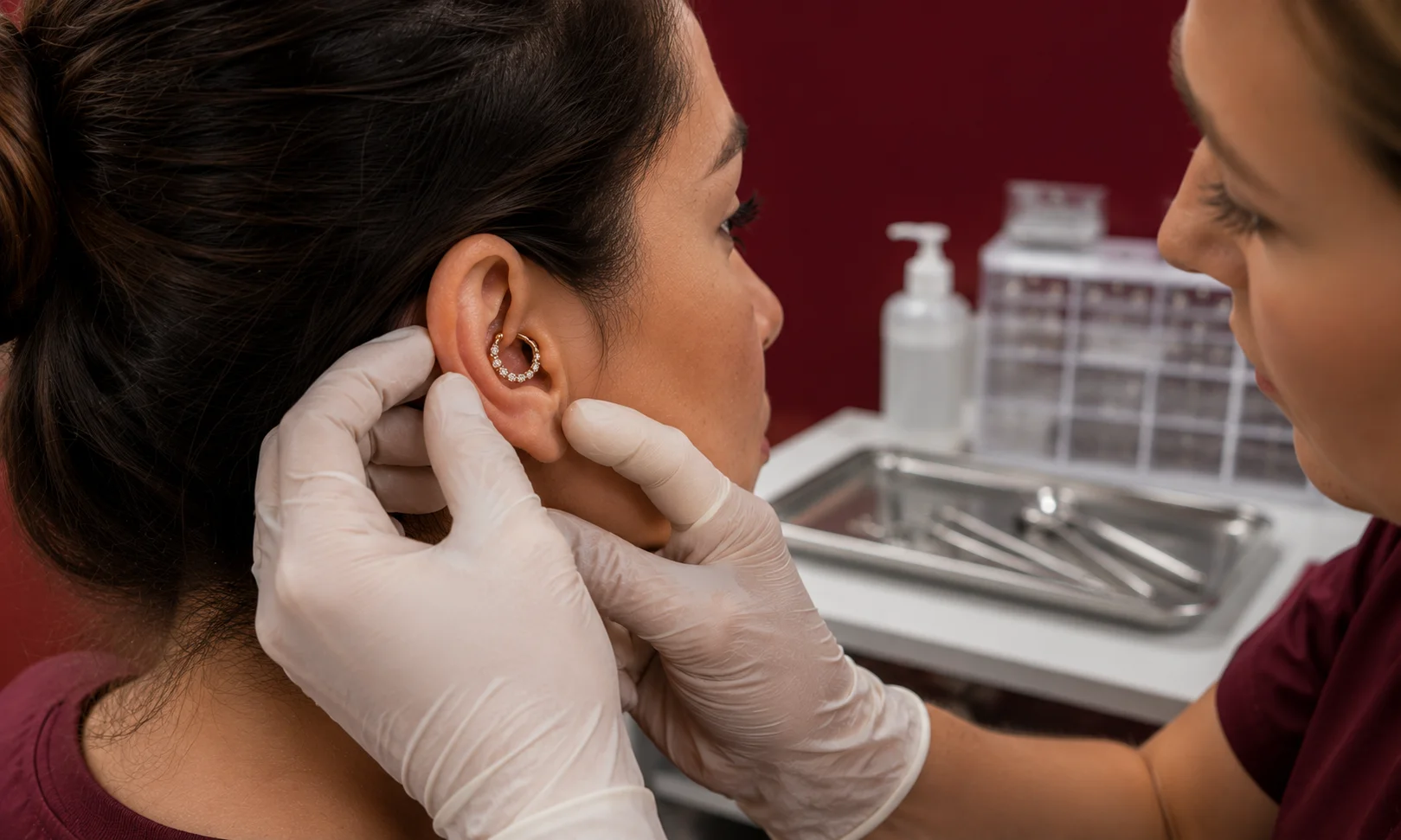
A newer piercing deserves extra attention during Daith Piercing and Surgery planning.
A fresh piercing is more vulnerable to irritation, swelling, and premature closure than a mature piercing. Removing jewelry can make reinsertion difficult, especially if the channel has not fully healed.
If you have a relatively new daith piercing, tell your surgeon or anesthesia team as soon as possible.
Do not wait until you are already in the operating room.
During Daith Piercing and Surgery, your medical team may decide that removal is necessary despite the possibility of closure. In some circumstances, a suitable nonmetallic alternative may be considered, but this must be approved by the medical team.
Research has also described temporary nonmetallic spacers for maintaining certain piercing channels during medical procedures. However, that does not mean you should insert a random plastic item yourself.
What If the Jewelry Will Not Come Out?
This is one of the most important parts of Daith Piercing and Surgery preparation.
If your jewelry is stuck, swollen, painful, embedded, or difficult to unscrew, do not force it.
Trying to remove tight jewelry immediately before surgery can cause unnecessary trauma to the ear.
Instead, tell the hospital exactly what is happening. You can also contact a qualified professional piercer before the procedure if your medical team allows enough time.
With Daith Piercing and Surgery, professional assistance is much safer than aggressively twisting jewelry at home.
If the jewelry has become embedded in the skin or the area shows significant swelling, discharge, increasing redness, or severe pain, seek medical advice rather than treating it as a simple jewelry problem.
Daith Piercing and Surgery: Metal and Electrical Equipment
Another reason Daith Piercing and Surgery matters is the interaction between metal jewelry and certain medical equipment.
Medical facilities may use electrosurgical equipment during operations. Because of potential safety concerns, hospitals commonly request that body jewelry be removed before surgery.
The exact risk depends on the equipment, jewelry, procedure, and hospital protocol.
Therefore, switching from one metal jewelry type to another does not automatically mean it is safe to leave the jewelry in.
When preparing for Daith Piercing and Surgery, follow the instructions from the team performing your procedure rather than relying on assumptions about titanium, gold, steel, or another material.
MRI and Daith Jewelry
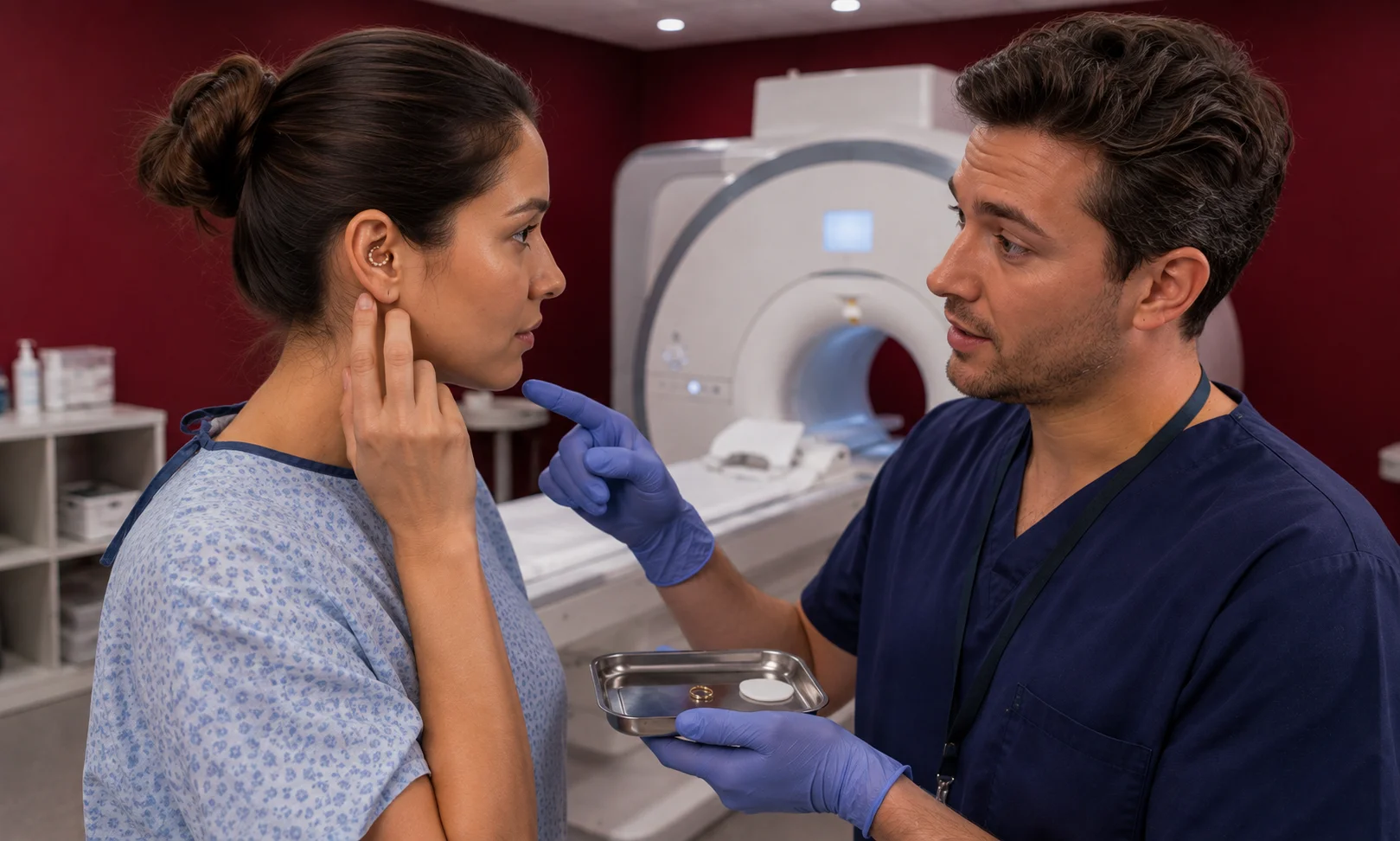
MRI is slightly different from Daith Piercing and Surgery, but the two topics are often confused.
An MRI uses a powerful magnetic field and radio waves to create detailed images. Many imaging centers ask patients to remove body jewelry before entering the MRI environment.
Metal jewelry can also interfere with image quality, particularly when it is close to the area being examined.
Interestingly, the Association of Professional Piercers notes that removal is not necessarily required for every MRI or imaging procedure when the piercing is outside the examination area.
That means Daith Piercing and Surgery and MRI preparation should not be treated as identical situations.
Always follow the instructions from the specific imaging facility.
When Can You Put the Jewelry Back?
After Daith Piercing and Surgery, do not automatically put your jewelry back in as soon as you wake up.
Ask your surgeon or nurse when it is safe to replace it. The answer may depend on the procedure, dressings, swelling, medications, and whether the ear could be disturbed.
If you removed jewelry from a mature piercing, reinsertion may be relatively straightforward. A newer piercing can be much less forgiving.
For Daith Piercing and Surgery, keeping the original jewelry clean and safely stored can also prevent unnecessary contamination.
If it no longer fits comfortably afterward, speak with a professional piercer instead of forcing it through the channel.
A Simple Daith Piercing and Surgery Checklist
Before your procedure:
- Tell your surgeon about your daith piercing
- Ask whether the jewelry must be removed
- Mention whether the piercing is new or fully healed
- Ask what to do if the jewelry cannot be removed
- Do not force tight jewelry
- Do not insert an unapproved object into the piercing
- Follow the hospital’s instructions about anesthesia
- Keep removed jewelry somewhere clean and secure
- Ask when jewelry can safely be replaced
This simple preparation can make Daith Piercing and Surgery much less stressful.
Common Mistakes to Avoid
Removing Jewelry at the Last Minute
Waiting until you arrive at the hospital can create unnecessary pressure.
For Daith Piercing and Surgery, ask about jewelry during your preoperative appointment whenever possible.
Assuming Titanium Means It Can Stay
High-quality jewelry material does not automatically override hospital rules.
Even if your daith jewelry is made from titanium, the medical team may still require removal.
Forcing Jewelry Out
Painful twisting can damage the piercing.
If it does not move normally, get professional guidance.
Using Random Plastic Jewelry
A homemade spacer is not a medically approved solution.
If maintaining the piercing is important, ask your surgeon and a qualified piercer about appropriate options.
Assuming Every Hospital Has the Same Policy
Policies differ between hospitals, countries, procedures, and clinical teams.
That is why Daith Piercing and Surgery should always be confirmed with your own medical provider.
Conclusion
Daith Piercing and Surgery does not have one universal rule because every operation is different.
The safest approach is simple: tell your medical team about the piercing early, ask whether the jewelry needs to come out, and follow the specific instructions provided for your procedure.
If your daith piercing is new, difficult to remove, or especially important to you, mention that before the day of surgery. Planning gives your healthcare team more options and reduces the chance of unnecessary irritation.
Most importantly, never let concern about your piercing delay necessary medical treatment. With proper communication, Daith Piercing and Surgery can usually be managed safely and with much less stress.
FAQs
Can I keep my daith piercing during surgery?
Daith Piercing and Surgery often requires jewelry removal, particularly when the hospital has a policy requiring all body piercings to be removed. Follow the instructions from your surgical and anesthesia team.
Do I need to remove a daith piercing for general anesthesia?
Usually, you should expect to be asked to remove body jewelry for general anesthesia, although the exact instructions come from your hospital.
What if my daith piercing is too new to remove?
Tell your medical team before the procedure. A new piercing may close or become difficult to reinsert, so advance planning is especially important.
Can I cover my daith jewelry with tape?
Some hospitals may tape jewelry that cannot be removed, but this is not a universal solution.
Can surgery cause my daith piercing to close?
Temporary removal can allow a piercing channel to narrow or close, particularly when it is new. The possibility depends on the maturity of the piercing and the individual. Discuss this before surgery.
Can I use a plastic retainer?
Possibly, but only if your medical team approves it. Do not assume every nonmetallic retainer is suitable for an operation.
Can I put my daith jewelry back after surgery?
Ask your healthcare team first. If the piercing is healed and the procedure does not create a reason to avoid jewelry, replacement may be possible, but timing should be individualized.