If your skin feels dry but breaks out easily, choosing a moisturizer can be confusing. Many people with oily or acne-prone skin avoid emollients because they worry that anything rich or creamy will clog their pores. The good news is that you do not have to leave your skin dry to prevent breakouts.
Non-comedogenic emollients are moisturizing ingredients designed to soften the skin while being less likely to contribute to clogged pores. They can be especially useful when acne treatments such as salicylic acid, benzoyl peroxide, adapalene, or retinoids leave the skin dry and irritated. The American Academy of Dermatology recommends looking for products labeled “non-comedogenic,” “oil-free,” or “won’t clog pores” when choosing skincare for acne-prone skin.
However, “non-comedogenic” does not mean that a product will work perfectly for everyone. Skin type, formula, concentration, and the complete combination of ingredients all matter.
Key Takeaways
- Non-comedogenic emollients help soften and condition the skin without being as likely to clog pores.
- Useful ingredients can include squalane, dimethicone, ceramides, and selected lightweight emollients.
- A product being labeled non-comedogenic is helpful, but it is not a guarantee that you will never break out.
- The finished formula matters more than judging one ingredient from an old comedogenicity list.
- Moisturizing can actually support acne care by reducing dryness and irritation caused by acne treatments.
- Always introduce a new skincare product gradually if your skin is sensitive or acne-prone.
What Are Non-Comedogenic Emollients?
Emollients are moisturizing substances that help smooth and soften the outer layer of the skin. They work by filling spaces between skin cells, improving the skin’s texture and helping reduce roughness.
A non-comedogenic emollient is an emollient used in a formulation intended to have a low tendency to block pores and contribute to comedones, which are clogged pores such as blackheads and whiteheads.
This distinction is important because not every emollient behaves the same way on every person. Some rich ingredients may feel heavy on oily skin, while others can provide comfortable hydration without leaving a greasy finish.
The term “non-comedogenic” should also be understood carefully. Research has shown that an ingredient that appears comedogenic in one testing situation does not necessarily make a finished cosmetic product comedogenic. The complete formulation, concentration, and how the product is used can change the result.
Why Does Acne-Prone Skin Need Emollients?
It is easy to assume that oily or acne-prone skin does not need moisturizer. In reality, excessive dryness can make skincare harder to tolerate.
Common acne treatments, including benzoyl peroxide, salicylic acid, adapalene, tretinoin, and other retinoids, can cause dryness or irritation. A suitable moisturizer can help the skin tolerate these treatments more comfortably.
When the skin becomes excessively dry, it can feel tight, flaky, rough, or irritated. Using an appropriate moisturizer helps support the skin barrier and keeps the surface more comfortable.
For this reason, avoiding all emollients simply because you have acne is usually unnecessary. The better approach is to select a lightweight, non-comedogenic formula that suits your skin.
Best Non-Comedogenic Emollients to Look For
There is no single perfect emollient for every person. However, several ingredients are commonly used in lightweight moisturizers designed for oily or acne-prone skin.
Squalane
Squalane is a lightweight emollient that helps soften the skin without the heavy feeling associated with some facial oils. It can be useful for people who want additional moisture but dislike thick creams.
Cleveland Clinic notes that squalane can be suitable for oily or acne-prone skin and describes it as non-comedogenic. It can be particularly useful when skin feels dry from active skincare products but still becomes oily during the day.
Dimethicone
Dimethicone is a silicone-based ingredient commonly used in moisturizers and skincare products. It helps create a smooth, silky skin feel and can reduce moisture loss from the skin.
Because it is lightweight and gives products a smooth finish, dimethicone is often found in moisturizers designed for normal, oily, combination, and sensitive skin.
The important point is to judge the complete product rather than assuming that one ingredient alone determines whether the formula will clog pores.
Ceramides
Ceramides are naturally occurring lipids found in the skin barrier. They are widely used in moisturizers because they help support the skin barrier and improve the feel of dry or compromised skin.
For acne-prone skin, a moisturizer containing ceramides can be useful when treatments cause dryness. Look for a lightweight, non-comedogenic product if your main concern is clogged pores.
Lightweight Cosmetic Emollients
Some modern moisturizers use specially selected synthetic or plant-derived emollients that provide softness without a heavy, greasy finish. These ingredients can improve spreadability and make a moisturizer feel comfortable on oily or combination skin.
The exact ingredient list matters less than choosing a finished product that is appropriate for your skin type and specifically tested or labeled as non-comedogenic.
Non-Comedogenic Does Not Mean “Zero Risk”
One of the biggest skincare misunderstandings is that a non-comedogenic product can never cause a breakout. That is not quite how the term works.
“Non-comedogenic” generally indicates that a product is less likely to clog pores. It does not mean every person will have the same reaction.
Comedogenicity testing itself has limitations. Researchers have pointed out that older testing methods may not accurately predict how a finished cosmetic product behaves on human facial skin. One study concluded that finished products containing ingredients previously considered comedogenic were not necessarily comedogenic themselves.
Your individual skin can also react differently to a formula. If a moisturizer consistently causes new clogged pores after you start using it, stop using it and reassess the product.
How to Choose a Non-Comedogenic Emollient
Check the Product Label
For acne-prone skin, look for terms such as non-comedogenic, oil-free, or won’t clog pores. These are the types of descriptions recommended by dermatologists when choosing skincare products for acne-prone skin.
A lightweight lotion, gel-cream, or fluid moisturizer may feel more comfortable than a very thick cream if your skin becomes oily easily.
Consider Your Skin Type
Dry acne-prone skin may need a richer moisturizer than oily acne-prone skin. Combination skin may work better with a lightweight formula applied mainly to dry areas.
If your skin is sensitive, consider a simple formula without unnecessary fragrance or other ingredients that commonly cause irritation. Cleveland Clinic also recommends considering sensitive-skin or hypoallergenic formulas when irritation is a concern.
Look at the Whole Formula
Do not judge a moisturizer only because it contains one particular oil, butter, or emollient. The concentration and combination of ingredients can change how the finished product behaves.
Research into cosmetic comedogenicity has repeatedly shown why ingredient-by-ingredient lists should not be treated as absolute rules.
How to Use Non-Comedogenic Emollients
Apply your moisturizer after cleansing while the skin is still slightly damp. This can help trap water in the skin and improve the moisturizing effect.
If you use acne treatments, apply the moisturizer according to your treatment routine and product instructions. The American Academy of Dermatology recommends moisturizing after cleansing, particularly when acne treatments are causing dryness.
Start with a small amount rather than covering your face with a thick layer. More product does not automatically mean more hydration.
If you are trying a new moisturizer, introduce it when your routine is otherwise stable. This makes it easier to identify the cause if irritation or breakouts appear.
Common Mistakes to Avoid
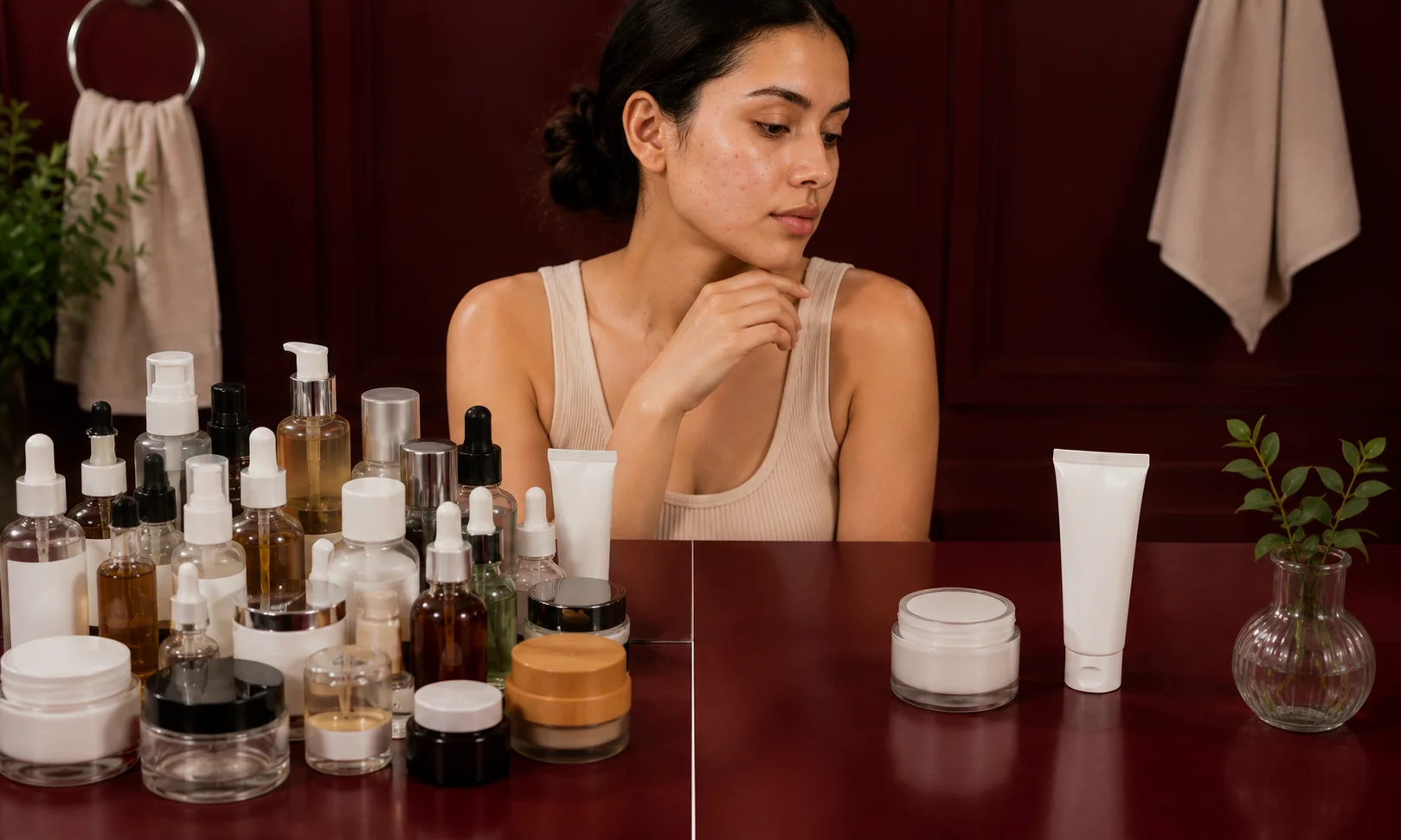
Avoiding Moisturizer Completely
Skipping moisturizer because you have oily skin can leave your skin unnecessarily dry, especially when using acne treatments. A suitable non-comedogenic moisturizer can help reduce dryness without automatically causing breakouts.
Following Old Comedogenic Ingredient Lists
Internet lists often label individual ingredients as simply “comedogenic” or “non-comedogenic.” These lists can be misleading because testing conditions do not always represent real-world facial skincare.
The finished formulation is more useful than relying on a single ingredient rating.
Using Too Many Products
Adding several new products at once can make acne-prone skin more difficult to manage. If your skin becomes irritated, you may not know which product caused the problem.
Keep your routine simple and introduce products one at a time.
What the Evidence Says
For skincare advice, it is important to separate established dermatology guidance from marketing claims. The American Academy of Dermatology recommends non-comedogenic or oil-free moisturizers for acne-prone skin and explains that moisturizers can help reduce dryness caused by acne treatments.
Research also shows that comedogenicity is more complicated than assigning a permanent rating to individual ingredients. Studies have evaluated comedone formation using human testing methods, while reviews have questioned whether older ingredient-based comedogenicity assumptions accurately predict finished cosmetic products.
For readers of DaithPiercing, the same principle applies when choosing skincare around sensitive or easily irritated areas: prioritize a simple, appropriate formula and pay attention to how your own skin responds rather than relying only on marketing claims.
Conclusion
Non-comedogenic emollients can make moisturizing much easier for people with oily or acne-prone skin. Ingredients such as squalane, dimethicone, ceramides, and other lightweight emollients can provide softness and comfort without requiring a heavy-feeling product.
The most important thing is not to fear all emollients. Instead, choose a product labeled non-comedogenic, consider your skin type, keep the formula simple, and watch how your skin responds. Since comedogenicity depends on the complete formulation and individual skin, no ingredient list can guarantee that a product will never cause breakouts.
For persistent, painful, or worsening acne, professional dermatology advice is more reliable than continually changing skincare products.
FAQs
Are non-comedogenic emollients good for acne-prone skin?
Yes. They can help soften and moisturize acne-prone skin while being less likely to contribute to clogged pores. Look for products labeled non-comedogenic, oil-free, or “won’t clog pores.”
Is squalane a non-comedogenic emollient?
Squalane is generally considered a lightweight, non-comedogenic emollient and can be suitable for oily or acne-prone skin. However, individual skin reactions can still vary.
Can emollients cause clogged pores?
Some formulas may contribute to clogged pores in certain people, but an ingredient’s reputation alone does not determine how the finished product will behave. Formulation, concentration, and individual skin response all matter.
Should oily skin use an emollient moisturizer?
Yes. Oily skin can still become dehydrated or irritated, especially when using acne treatments. A lightweight, non-comedogenic moisturizer can provide hydration without necessarily making the skin feel greasy.
Are ceramides suitable for acne-prone skin?
Ceramides are commonly used in moisturizers to support the skin barrier. If you have acne-prone skin, choose a lightweight formula that is labeled non-comedogenic and suits your skin type.
How often should I use a non-comedogenic moisturizer?
Most people can use an appropriate moisturizer daily. Applying it after cleansing while the skin is slightly damp can help retain moisture. If your dermatologist has given you a specific acne-treatment routine, follow that plan.