Key Takeaways
Quick Answer
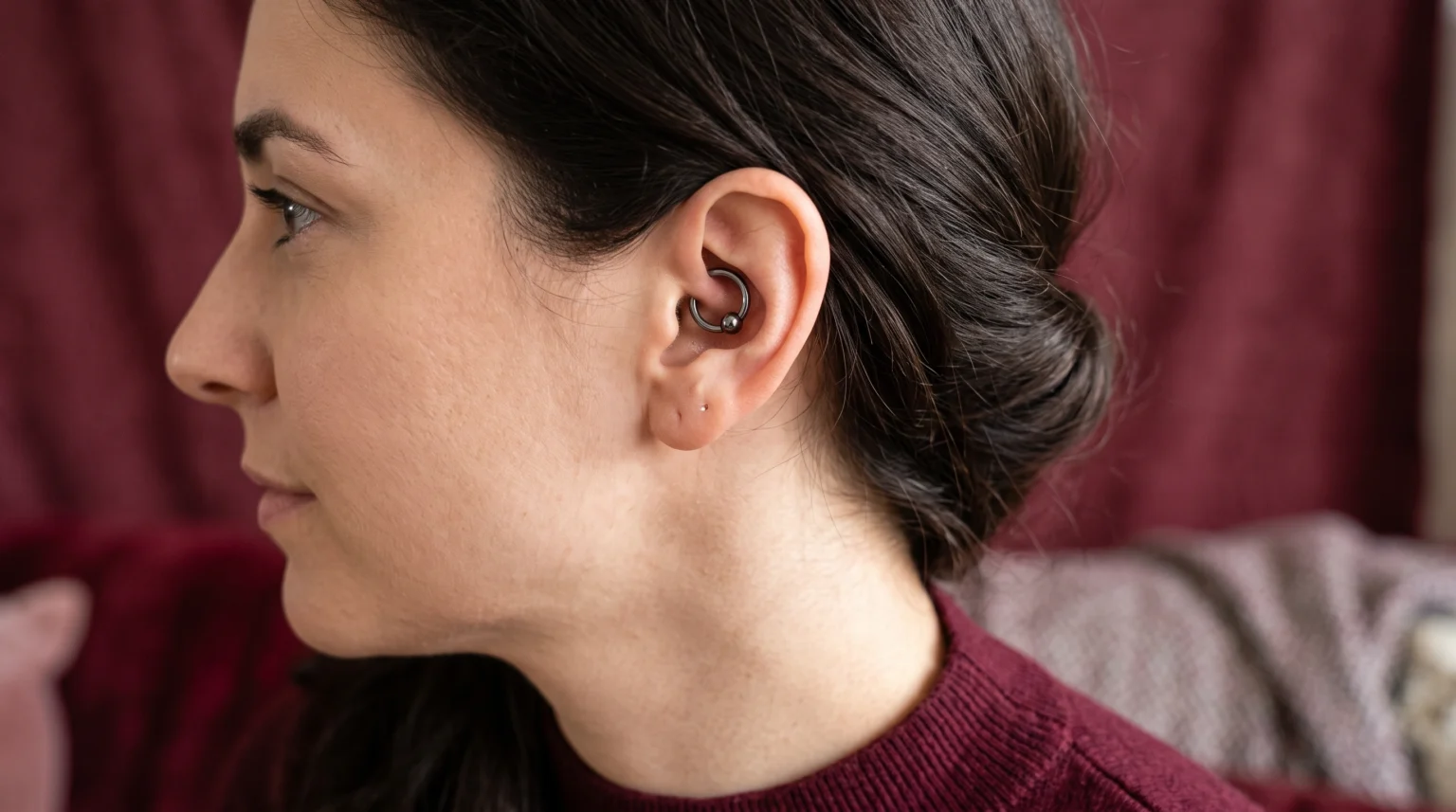
Most daith piercings are done with 16G (1.2 mm) jewelry and an 8 mm or 10 mm inner diameter hoop. However, the ideal size depends on your ear’s shape, the amount of swelling, and whether the piercing is new or fully healed. Your piercer may recommend a slightly larger hoop during the healing period to leave room for swelling.
Getting the right hoop size for a daith piercing is more important than many people realize. A hoop that is too small can press against your ear and become uncomfortable, while one that is too large may move around too much or catch on clothing and hair.
Whether you’re planning your first daith piercing or replacing old jewelry, understanding hoop sizes helps you choose a piece that fits comfortably and looks great. Knowing the difference between gauge and diameter can also save you from ordering the wrong jewelry online.
This guide explains everything in simple language. You’ll learn the standard hoop sizes, how to measure your piercing, and what factors affect the best fit. By the end, you’ll feel confident choosing the right hoop for your ear.
What Is a Daith Piercing?
A daith piercing goes through the thick fold of cartilage just above the ear canal. Because this area is deeper than many other ear piercings, choosing the correct hoop size is especially important.
Many people choose a daith piercing because it has a unique appearance and works well with different jewelry styles. Popular options include:
- Clicker rings
- Captive bead rings
- Seam rings
- Decorative hoops with gemstones
- Hinged rings
Although style matters, comfort should always come first. The correct size allows the jewelry to sit naturally without putting unnecessary pressure on the cartilage.
Understanding Daith Hoop Measurements
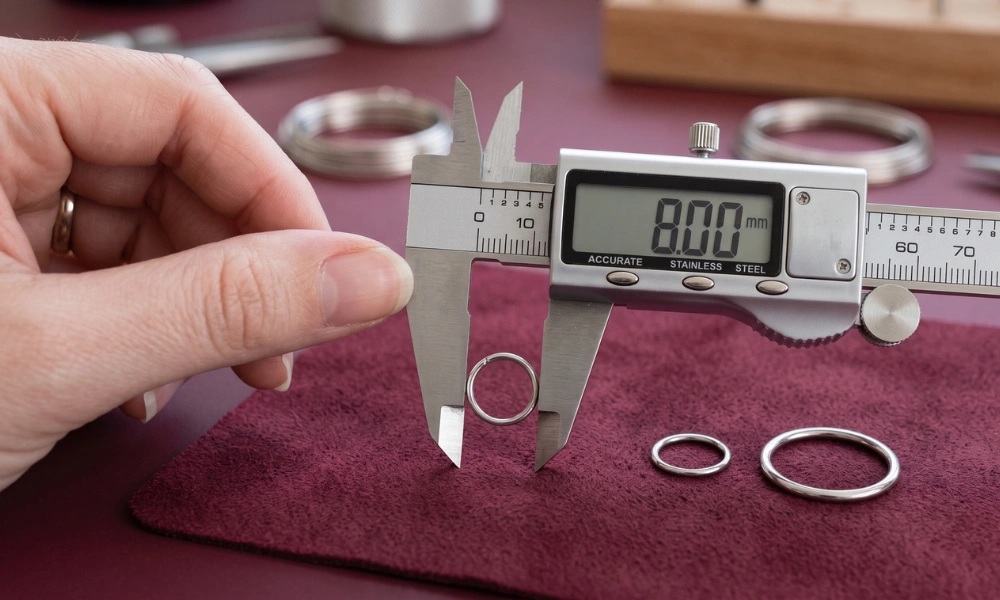
When shopping for daith jewelry, you’ll notice two measurements listed most often: gauge and inner diameter. These numbers tell you whether the jewelry will fit your piercing correctly.
What Is Gauge?
Gauge refers to the thickness of the jewelry.
The smaller the gauge number, the thicker the jewelry.
Here are the most common sizes:
| Gauge | Thickness |
|---|---|
| 18G | 1.0 mm |
| 16G | 1.2 mm (Most Common) |
| 14G | 1.6 mm |
A 16G hoop is the standard size used by many professional piercers because it offers a good balance between comfort and durability.
What Is Inner Diameter?
The inner diameter measures the distance across the inside of the hoop.
This measurement determines how the ring fits around your ear cartilage.
Common inner diameters include:
| Inner Diameter | Best For |
|---|---|
| 6 mm | Very small ears or snug fit |
| 8 mm | Most common choice |
| 10 mm | Larger anatomy or healing piercings |
| 12 mm | Loose decorative look |
A larger diameter doesn’t mean thicker jewelry. It simply means the hoop forms a bigger circle.
Standard Daith Piercing Hoop Sizes
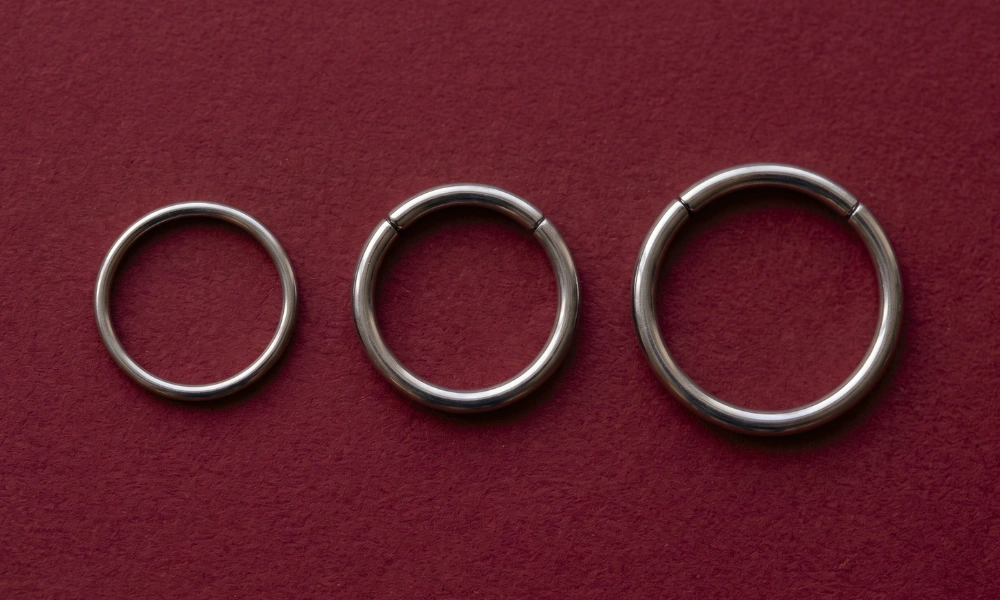
Although every ear is different, professional piercers commonly use a few standard sizes.
| Feature | Standard Size |
|---|---|
| Gauge | 16G (1.2 mm) |
| Small Diameter | 6 mm |
| Standard Diameter | 8 mm |
| Larger Diameter | 10 mm |
| Oversized Style | 12 mm |
An 8 mm hoop works well for many people because it sits close to the ear while still leaving enough room for comfort.
However, someone with thicker cartilage may need a 10 mm hoop to prevent pressure on the piercing.
Daith Hoop Size Chart
Use this table as a general reference before purchasing jewelry.
| Ear Anatomy | Suggested Diameter | Common Gauge |
|---|---|---|
| Small ear | 6–8 mm | 16G |
| Average ear | 8 mm | 16G |
| Larger ear | 10 mm | 16G |
| Healing piercing | 10 mm (if recommended) | 16G |
| Decorative loose fit | 10–12 mm | 16G |
Remember that these sizes are only general guidelines. A professional piercer can recommend the best option based on your ear’s shape.
How to Measure Your Daith Piercing
Measuring your daith piercing before buying new jewelry helps reduce the risk of ordering the wrong size.
Measure Your Current Jewelry
If your current hoop fits comfortably, measuring it is often the easiest method.
You’ll need:
- A ruler with millimeter markings
- Or digital calipers for greater accuracy
Measure only the inside of the hoop from one edge to the opposite edge. This is the inner diameter, which determines how the jewelry fits.
Measure Your Ear
If you don’t already have jewelry to measure, visit a professional piercer. They can check the space inside your ear and recommend the correct diameter based on your anatomy.
Trying to estimate the size by eye often leads to buying jewelry that is either too tight or too loose.
Check the Gauge
If you’re replacing existing jewelry, verify the gauge before ordering.
Many online stores clearly list both the gauge and the inner diameter. Double-check both measurements because changing only one can affect how the jewelry fits.
Factors That Affect the Right Hoop Size
No two ears are exactly alike, which is why one standard size doesn’t fit everyone.
Several factors influence which hoop will feel most comfortable.
Ear Anatomy
The shape and thickness of your cartilage play a major role.
Someone with a smaller ear may find an 8 mm hoop fits perfectly, while another person may need a 10 mm hoop for the same piercing location.
Swelling During Healing
Fresh piercings usually swell during the first few weeks.
For this reason, professional piercers often use a slightly larger hoop at the beginning. The extra space helps reduce pressure and allows the piercing to heal more comfortably.
After healing is complete, many people switch to a smaller hoop if they prefer a closer fit.
Jewelry Style
Different ring styles can change how the jewelry feels.
For example:
| Jewelry Style | Fit |
|---|---|
| Clicker Ring | Easy to wear and secure |
| Captive Bead Ring | Traditional style with a balanced fit |
| Seam Ring | Smooth appearance |
| Decorative Hoop | Stylish but may require a slightly larger diameter depending on the design |
Choosing the right style is just as important as selecting the correct size.
Is 8 mm or 10 mm Better for a Daith Piercing?
Choosing between an 8 mm and a 10 mm hoop depends on your ear anatomy, healing stage, and the look you want. Neither size is better for everyone, so it’s important to think about comfort before appearance.
Choose an 8 mm Hoop If
An 8 mm hoop is the most common choice because it sits close to the ear without looking bulky.
It may be the right option if:
- Your daith piercing is fully healed.
- You have average or smaller ear anatomy.
- You prefer a snug, neat appearance.
- Your current 8 mm hoop feels comfortable.
Choose a 10 mm Hoop If
A 10 mm hoop offers a little more room around the cartilage. Many piercers use this size for fresh piercings because it leaves space for swelling.
A 10 mm hoop may be better if:
- Your piercing is still healing.
- You have thicker cartilage.
- You want a looser, more noticeable look.
- An 8 mm hoop feels tight or presses against your ear.
8 mm vs 10 mm Daith Hoop
| Feature | 8 mm Hoop | 10 mm Hoop |
|---|---|---|
| Fit | Snug | More relaxed |
| Best For | Healed piercings | Fresh piercings or larger ears |
| Appearance | Close to the ear | More visible |
| Comfort | Great when properly fitted | Better if extra space is needed |
| Popularity | Very common | Also common |
Can You Wear a Larger or Smaller Hoop?
You can, but the fit should never put pressure on your piercing or leave excessive space.
Wearing a Smaller Hoop
A hoop that is too small can:
- Press against the cartilage.
- Cause soreness or irritation.
- Slow down healing.
- Make cleaning more difficult.
If your hoop feels tight or leaves marks on your skin, it may be too small.
Wearing a Larger Hoop
A larger hoop usually feels more comfortable during healing, but an oversized ring can move around more than necessary.
A hoop that is too large may:
- Catch on clothing or hair.
- Rotate frequently.
- Feel heavier.
- Change the overall appearance of the piercing.
The best hoop is one that sits comfortably without pulling or pressing on the ear.
Best Materials for Daith Hoops
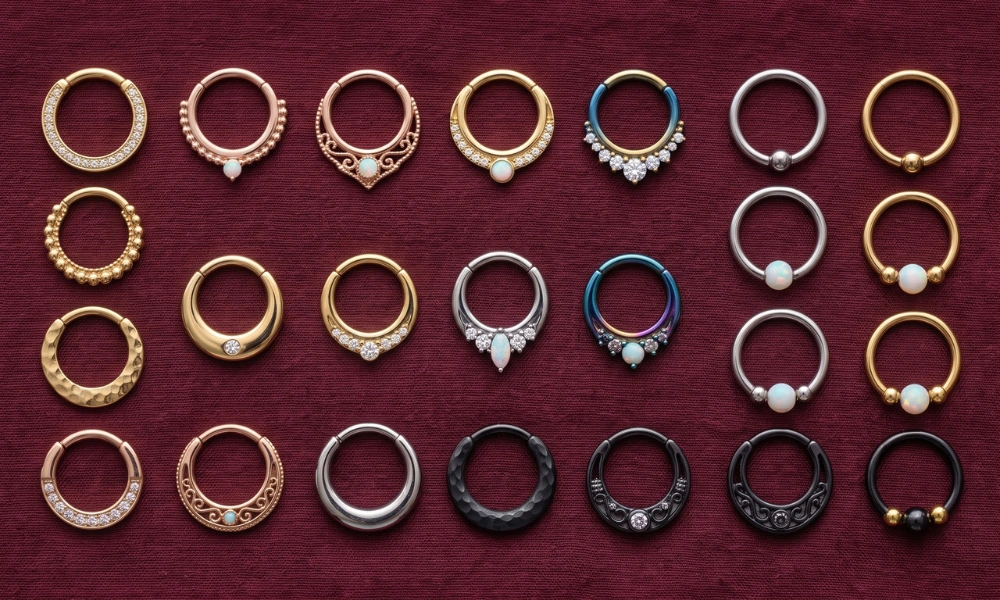
The material matters just as much as the size. High-quality jewelry is less likely to irritate your piercing and is often more comfortable for long-term wear.
| Material | Pros | Considerations |
|---|---|---|
| Implant-grade titanium | Lightweight, durable, suitable for sensitive skin | Often recommended for new piercings |
| Solid 14K or 18K gold | Attractive and resistant to corrosion | Choose solid gold rather than gold-plated jewelry |
| Surgical steel | Durable and widely available | Some people may react to the nickel content |
| Niobium | Good for sensitive skin and available in different colors | Less common than titanium |
If you’re unsure which material to choose, ask your piercer for a recommendation based on your skin sensitivity and healing progress.
Common Sizing Mistakes
Even experienced jewelry buyers sometimes choose the wrong size. Avoiding these mistakes can save time, money, and discomfort.
Mixing Up Gauge and Diameter
Gauge measures the thickness of the jewelry, while diameter measures the size of the hoop. They are different measurements and should never be confused.
Buying Based Only on Appearance
A hoop that looks good in a photo may not fit your ear. Always check the measurements before ordering.
Ignoring Ear Anatomy
Every ear has a different shape. A size that fits one person perfectly may not fit someone else.
Changing Jewelry Too Soon
Most daith piercings take several months to heal. Replacing jewelry before your piercer recommends it can lead to irritation or delayed healing.
Choosing Low-Quality Jewelry
Cheap materials may look similar, but they can wear out more quickly and may increase the risk of irritation in some people.
Expert Tips for Choosing the Right Hoop
Keep these simple tips in mind before buying new daith jewelry.
- Ask your piercer to confirm your gauge and inner diameter.
- Measure your current jewelry if it already fits comfortably.
- Buy from trusted jewelry brands that clearly list sizing.
- Start with high-quality materials, especially for new piercings.
- If you’re between sizes, ask a professional before sizing up or down.
- Clean your jewelry regularly according to your piercer’s aftercare advice.
- Don’t force jewelry into your piercing if it doesn’t fit easily.
Daith Hoop Size Comparison
| Size | Typical Use | Look | Comfort |
|---|---|---|---|
| 6 mm | Small ear anatomy | Very snug | Fits only certain ears |
| 8 mm | Most healed daith piercings | Close-fitting | Comfortable for many people |
| 10 mm | Healing piercings or larger ears | Balanced | Extra room for swelling |
| 12 mm | Decorative style | Loose | Best for those who prefer a larger hoop |
Daith Hoop Buying Checklist
Before placing your order, make sure you can answer “yes” to these questions.
- I know my jewelry gauge.
- I know the correct inner diameter.
- The material is suitable for body jewelry.
- The jewelry style matches my preference.
- My piercing is healed if I plan to change the jewelry.
- I have checked the product measurements.
- I am buying from a reputable seller.
Frequently Asked Questions
What size hoop is most common for a daith piercing?
Most daith piercings use a 16G (1.2 mm) hoop with an 8 mm inner diameter. Some people need a 10 mm hoop depending on their ear anatomy or healing stage.
Is 8 mm too small for a daith piercing?
Not usually. An 8 mm hoop fits many people well after healing. However, it may feel too tight if your ear has thicker cartilage or if the piercing is still swollen.
Can I switch from a 10 mm hoop to an 8 mm hoop?
Yes, many people downsize after the piercing has fully healed. It’s best to ask your piercer before changing sizes.
How do I know my daith hoop size?
Measure the inner diameter of your current hoop or ask a professional piercer to measure your piercing. This is the most accurate way to choose replacement jewelry.
What gauge is used for most daith piercings?
A 16G (1.2 mm) gauge is the standard for most daith piercings, although some people may wear different gauges based on their jewelry or personal preference.
Can I change my daith jewelry myself?
If your piercing is fully healed, many people can change their jewelry at home. If you’re unsure or the jewelry is difficult to remove, visit a professional piercer for assistance.
Conclusion
Choosing the right hoop size for a daith piercing is about more than appearance. A properly fitted hoop helps your piercing stay comfortable, supports healthy healing, and reduces the chances of irritation.
For most people, a 16G hoop with an 8 mm or 10 mm inner diameter is the best starting point. The right choice depends on your ear’s anatomy, the stage of healing, and the style you prefer. Taking a few minutes to measure your jewelry or speaking with a professional piercer can help you avoid common sizing mistakes and choose a hoop that fits well for everyday wear.