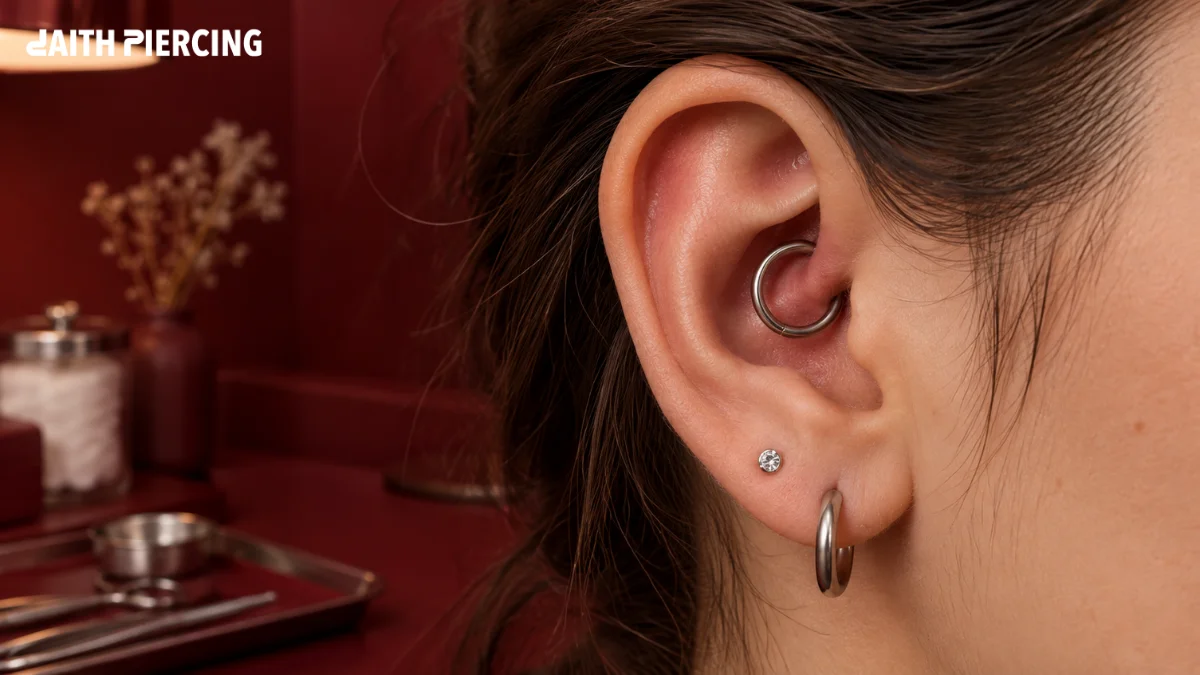
A daith piercing can look perfectly fine one day and become difficult to reopen after the jewelry is removed. This is why Daith Piercing Closing Up is a common concern, especially when someone accidentally loses their jewelry or takes it out before the piercing is fully healed.
The tricky part is that there is no exact timeline that works for everyone. Some piercings can start shrinking very quickly, while others may remain open for longer. The Association of Professional Piercers (APP) notes that even healed piercings can shrink or close in minutes, and reinserting jewelry may become difficult or impossible.
If you are wondering whether your daith can be saved, whether you should force the jewelry back in, or when re-piercing may be possible, here is what you need to know.
Key Takeaways
- Daith Piercing Closing Up can happen surprisingly quickly.
- There is no exact number of hours that is safe for everyone.
- Even old, healed piercings can shrink after jewelry removal.
- A healing daith is more vulnerable because cartilage can take around six to 12 months to fully heal.
- Never force jewelry through a closing piercing.
- A professional piercer may be able to save a partially closed piercing with an insertion taper.
- A completely closed piercing may need to be re-pierced after the tissue has recovered.
- Do not re-pierce irritated or infected tissue.
- Keep appropriate jewelry in place if you want to maintain the piercing.
What Happens When a Daith Piercing Starts Closing?
A piercing is not simply an empty hole in the skin. Once it heals, the body forms a tissue channel around the jewelry. When the jewelry is removed, the body can start narrowing that channel.
With a daith, this process can be especially frustrating because the piercing goes through cartilage in the inner ear. Cartilage piercings generally take much longer to heal than earlobe piercings. Cleveland Clinic lists daith piercings among cartilage piercings that can take around six to 12 months to fully heal.
If the jewelry is removed during this healing period, the channel may shrink before it has fully matured. This does not always mean the piercing is permanently gone. Sometimes the opening has only become smaller and a professional piercer may be able to help restore access to the existing channel.
How Fast Can a Daith Piercing Close Up?
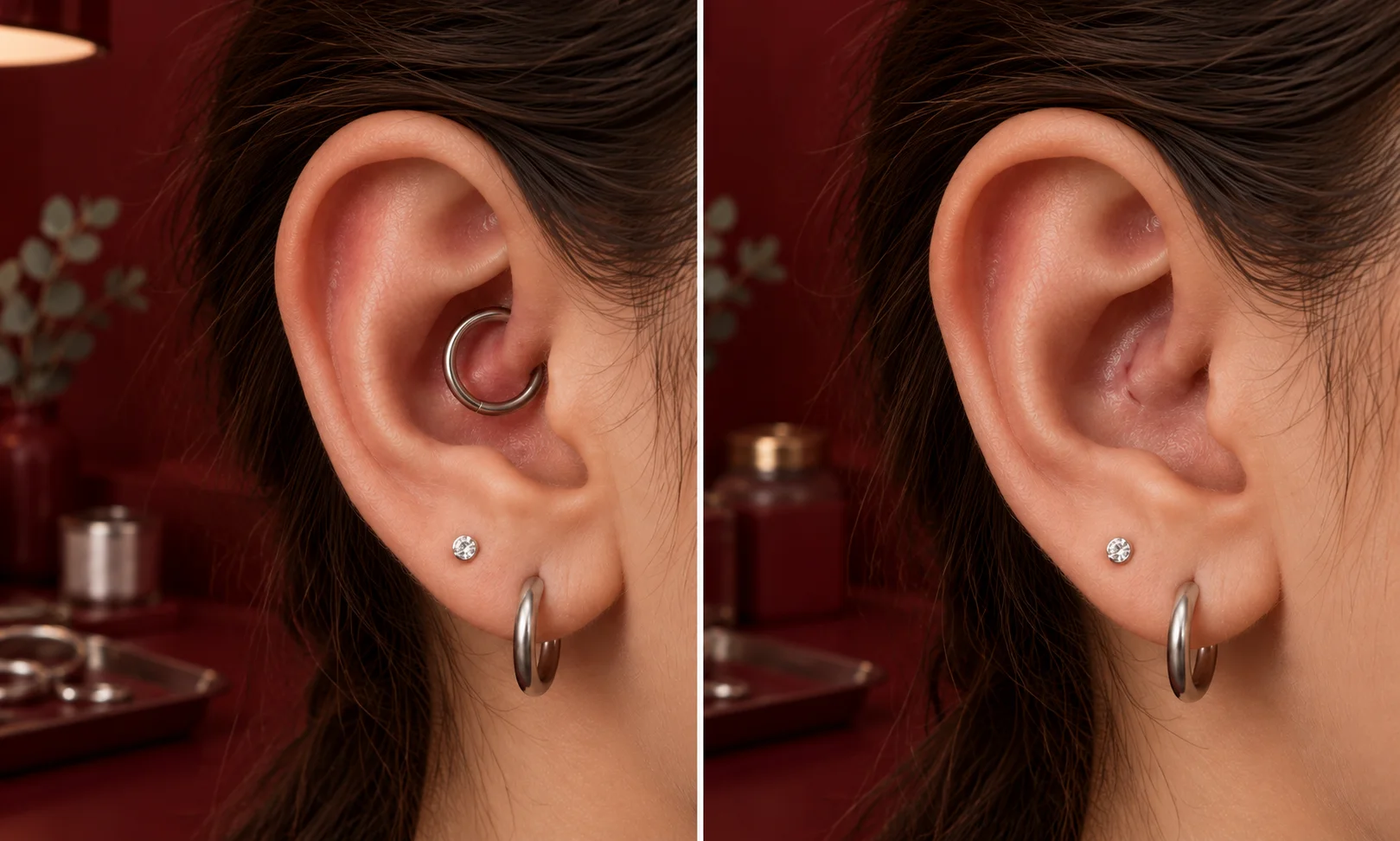
There is no universal countdown such as “24 hours” or “three days.” The APP explains that even well-healed piercings can shrink or close surprisingly quickly, sometimes even after having been present for years. How quickly this happens depends on the individual and the piercing itself.
Several things can affect the process:
- How long you have had the piercing
- Whether it is fully healed
- Your individual tissue
- The jewelry size and thickness
- How much the piercing has already shrunk
- Your body’s natural healing response
A newer daith piercing is generally more vulnerable because its internal tissue is still developing. A piercing can look healed on the outside while the inside is still fragile. That is why removing the jewelry simply because the outside looks normal can sometimes cause an unexpected problem.
Can a Daith Piercing Close in One Day?
Yes, it can begin shrinking very quickly. However, saying that every daith piercing will completely close within one day would be inaccurate. Bodies respond differently, and the APP specifically warns that there is no guaranteed amount of time a piercing can safely remain empty.
You might remove your jewelry for several hours and find that it still goes back in easily. Someone else may have trouble reinserting theirs after a much shorter period.
The important point is simple: do not assume that a healed daith will stay open just because you have had it for years. If you want to keep the piercing, keeping appropriate jewelry in place is the safest way to maintain the channel.
Why Does a Daith Piercing Close So Quickly?
Your body sees a piercing as a controlled wound that has created a permanent-looking channel around the jewelry. When the jewelry disappears, the body can start repairing the opening.
Cartilage also heals more slowly than soft tissue because it has a poorer blood supply. Cleveland Clinic explains that cartilage piercings can take up to six months or even a year to fully heal, with daith included in that group.
This is why a daith should not be treated like a simple earlobe piercing. The piercing may feel comfortable, stop hurting and look completely normal while the deeper tissue is still maturing.
What Should You Do If Your Daith Jewelry Falls Out?
First, do not panic. If the piercing is still open and the jewelry goes back in easily without force, you may be able to replace it with clean, appropriate jewelry. Your hands and jewelry should be clean before you touch the area.
But there is an important rule: do not force jewelry through a piercing that has started closing.
Forcing it can cause unnecessary trauma and irritation. Instead, contact a qualified professional piercer as soon as possible.
The APP explains that if a piercing has only shrunk and the channel is still present, a professional piercer may sometimes use an insertion taper to help place jewelry without completely re-piercing the area.
That can be a much better option than immediately assuming you need a new piercing.
Can a Closed Daith Piercing Be Re-Pierced?
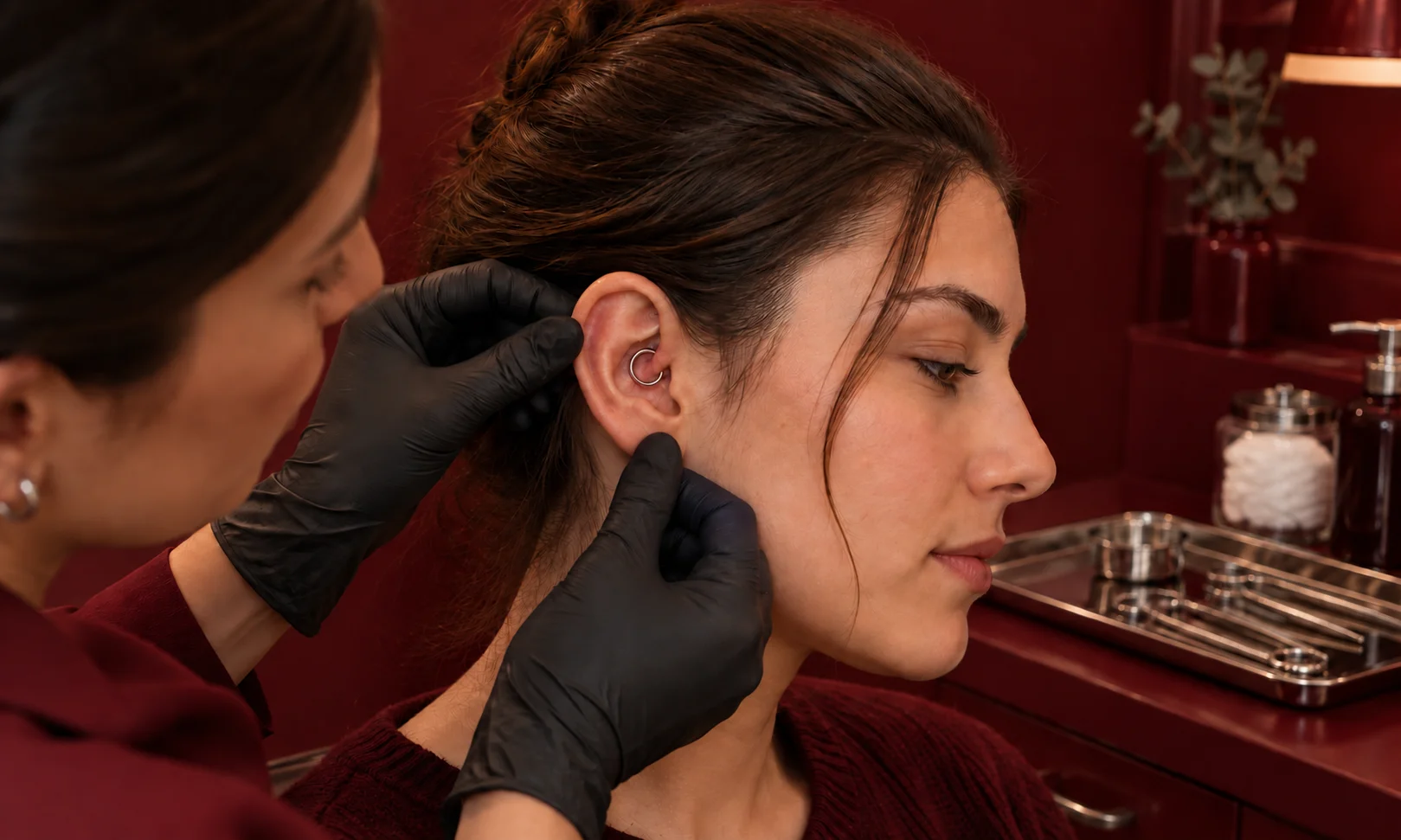
Yes, a daith can sometimes be re-pierced, but the timing and placement matter. If the original channel has completely closed, a professional piercer needs to examine the area before deciding what to do next. Re-piercing directly through irritated or unsuitable tissue may not be the best choice.
The piercer may need to assess:
- Whether the original channel is actually closed
- Whether there is scar tissue
- Whether the original placement was suitable
- How healthy the surrounding tissue looks
- Whether a slightly different placement is necessary
The APP warns that unnecessarily abandoning a piercing and later trying to reinsert or re-pierce it can contribute to scar tissue, delayed healing, and other problems. So, if your jewelry has fallen out, getting professional advice early may save the original piercing.
How Long Should You Wait Before Re-Piercing a Daith?
There is no single waiting period that is correct for everyone. If the area is irritated, swollen, injured or showing signs of infection, re-piercing should not be treated as a quick fix. The tissue needs time to recover, and a professional piercer should assess it before another procedure.
This is especially important with cartilage because infections involving upper-ear cartilage can sometimes become serious. Cleveland Clinic recommends seeking medical care when an ear cartilage piercing shows signs of infection.
A professional piercer can tell you whether the tissue looks ready for another piercing or whether more healing time is needed.
Should You Try to Push Jewelry Through a Closing Daith?
No. This is one of the biggest mistakes to avoid with Daith Piercing Closing Up. If the jewelry does not slide through easily, stop. Do not use another earring, needle or sharp object to reopen the channel yourself.
Trying to push jewelry through can create a fresh wound instead of safely restoring the existing piercing. It can also increase irritation and make healing more difficult.
If you think the hole is still there but too tight for your jewelry, see a professional piercer. The APP notes that an insertion taper may sometimes allow jewelry to be reinserted when the channel is still open but has become too small.
How to Prevent Your Daith From Closing
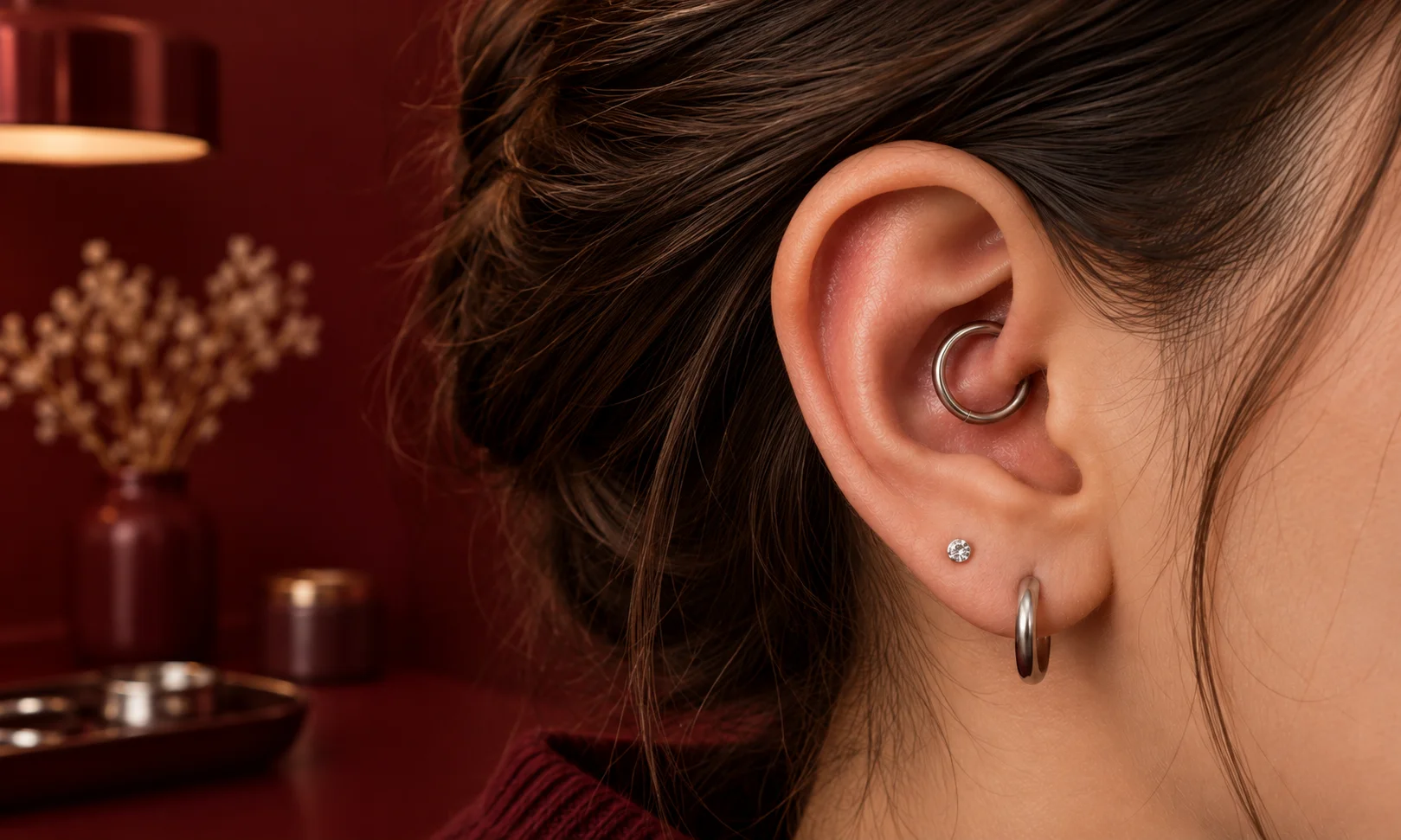
The simplest way to prevent Daith Piercing Closing Up is to avoid leaving it empty. If your daith is still healing, leave the initial jewelry in place unless a qualified professional recommends a change. The APP advises keeping jewelry in throughout the healing period and having a qualified piercer handle necessary jewelry changes.
Good aftercare also matters.
During healing:
- Wash your hands before touching the piercing.
- Use sterile saline wound wash as recommended.
- Do not twist or rotate the jewelry.
- Avoid unnecessary pressure and friction.
- Do not over-clean the piercing.
- Avoid harsh products such as alcohol and hydrogen peroxide.
- Keep the jewelry in place unless professional advice says otherwise.
The APP specifically recommends sterile saline and warns against harsh cleaning products and unnecessary manipulation because these can irritate healing tissue.
What If You Need to Remove Your Daith Temporarily?
Sometimes jewelry has to be removed for a medical procedure, scan or another unavoidable reason. In that situation, do not simply remove it and hope the hole stays open.
The APP recommends discussing the situation with your healthcare provider and piercer. A suitable non-metallic retainer may sometimes be an option when metal jewelry has to be removed.
This is much safer than discovering after the procedure that the jewelry no longer fits through the piercing.
When Should You See a Doctor?
Closing is one issue, but infection is another. A daith that is becoming smaller is not automatically infected. However, increasing redness, significant swelling, worsening pain, heat, thick or foul-smelling discharge, red streaks or fever can be warning signs that need medical attention.
The APP advises seeking medical care for severe redness, swelling or pain, significant abnormal discharge, red streaks or systemic symptoms such as fever and chills.
Cleveland Clinic also notes that cartilage piercing infections can be more serious than infections involving the earlobe.
Do not remove jewelry from a suspected infected piercing without getting appropriate medical advice first. Removing jewelry can sometimes allow the surface to close and trap an infection inside.
What Professional Guidance Says
Reliable piercing information should separate personal experiences from professional guidance. For this topic, the Association of Professional Piercers provides detailed aftercare and jewelry guidance based on professional piercing practice, while Cleveland Clinic provides medical information about cartilage healing and ear-piercing complications. Both sources support the same basic message: piercing channels can shrink quickly, healing takes time, and forcing jewelry through a narrowing channel is not a good idea.
At daithpiercing, we recommend treating your piercing as healing tissue rather than assuming that a calm-looking surface means everything underneath is fully healed.
FAQs
How quickly can a daith piercing close?
It can start shrinking very quickly, even within a short period after jewelry removal. However, complete closure varies from person to person, so there is no reliable universal timeline.
Can I leave my healed daith out overnight?
It is not recommended if you want to keep the piercing. Even healed piercings can shrink quickly when left empty, and the APP notes that reinsertion can become difficult or impossible.
Can I put my daith jewelry back in if the hole has started closing?
If it slides in easily, it may be possible. If there is resistance or pain, do not force it. A professional piercer can check whether the existing channel can be safely reopened or whether another option is needed.
Do I need to re-pierce a daith that has closed?
Not always. If the original channel has only shrunk, a professional piercer may sometimes be able to reinsert jewelry without a new piercing. If the channel has completely closed, re-piercing may be necessary.
How long does a daith take to heal before I can safely remove the jewelry?
Daith piercings are cartilage piercings and can take around six to 12 months to fully heal. The exact time varies, so jewelry should not be removed simply because the piercing looks healed on the outside.
Is re-piercing a closed daith painful?
It can cause discomfort, but the experience varies. More importantly, a professional should first check the tissue, placement, and any scar tissue before deciding whether re-piercing is appropriate.