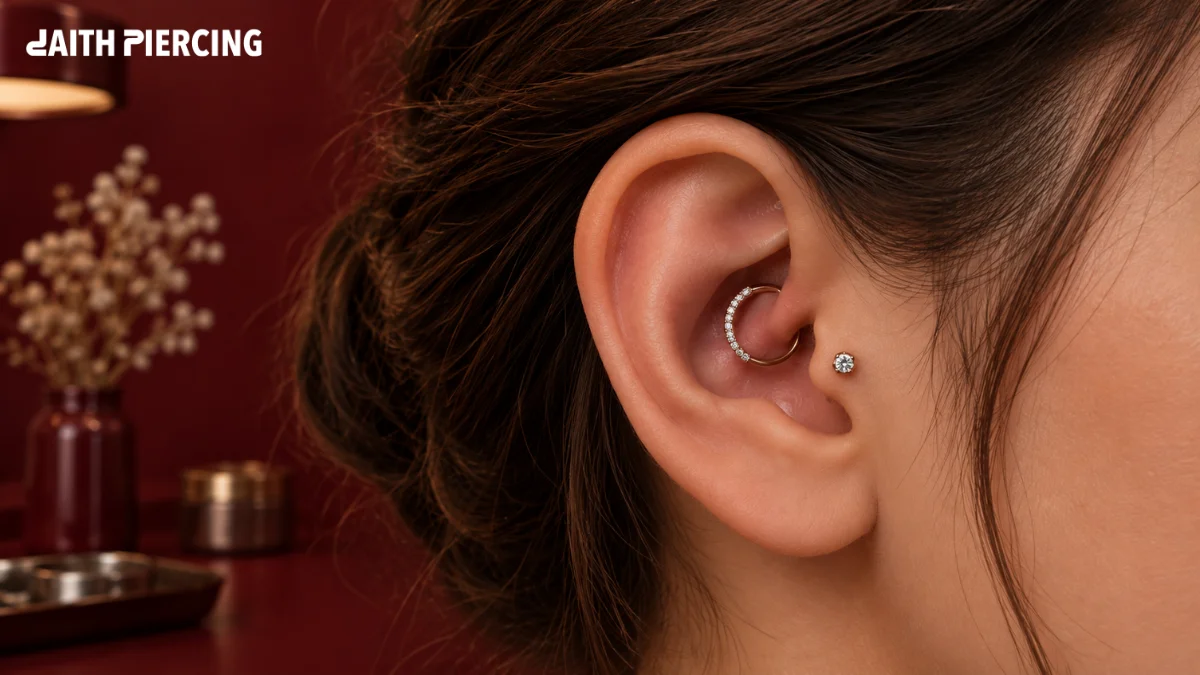
Choosing between a daith and tragus piercing can be surprisingly difficult. Both are cartilage piercings, both create a stylish look, and both can make a curated ear feel more personal. The real difference comes down to where they sit, how they feel during healing, and how well they fit your everyday routine.
If you are comparing Daith Piercing vs. Tragus, there is no single winner for everyone. Your ear anatomy, pain tolerance, sleeping habits, headphone use, and preferred jewelry style can all affect which one feels like the better choice.
This guide breaks down the main differences so you can make a more informed decision before booking your piercing.
Key Takeaways
- Daith and tragus piercings both pass through cartilage.
- Pain varies from person to person, so neither is guaranteed to hurt less.
- Both require patience because cartilage generally heals more slowly than the earlobe.
- Daith jewelry gives a more hidden and subtle appearance.
- Tragus jewelry is usually easier to see and can create a stronger visual detail.
- Earbuds and headphones can be an important consideration for both placements.
- Sterile saline and gentle aftercare are preferred over harsh cleaning products.
- Your ear anatomy should be checked by a professional piercer before choosing the placement.
Daith Piercing vs. Tragus: What Is the Difference?
A daith piercing sits through the small inner cartilage fold just above the ear canal. Because of its tucked-away position, it has a subtle appearance when viewed from the side.
A tragus piercing goes through the small piece of cartilage located in front of the ear canal. It is easier to see from the front and usually has a more noticeable look.
Both placements use cartilage rather than the soft earlobe, so neither should be treated like a simple lobe piercing. Cartilage has less blood flow than the earlobe and can take longer to heal.
The biggest visual difference is simple: the daith feels more hidden and understated, while the tragus tends to stand out more.
Daith vs. Tragus Pain: Which One Hurts More?
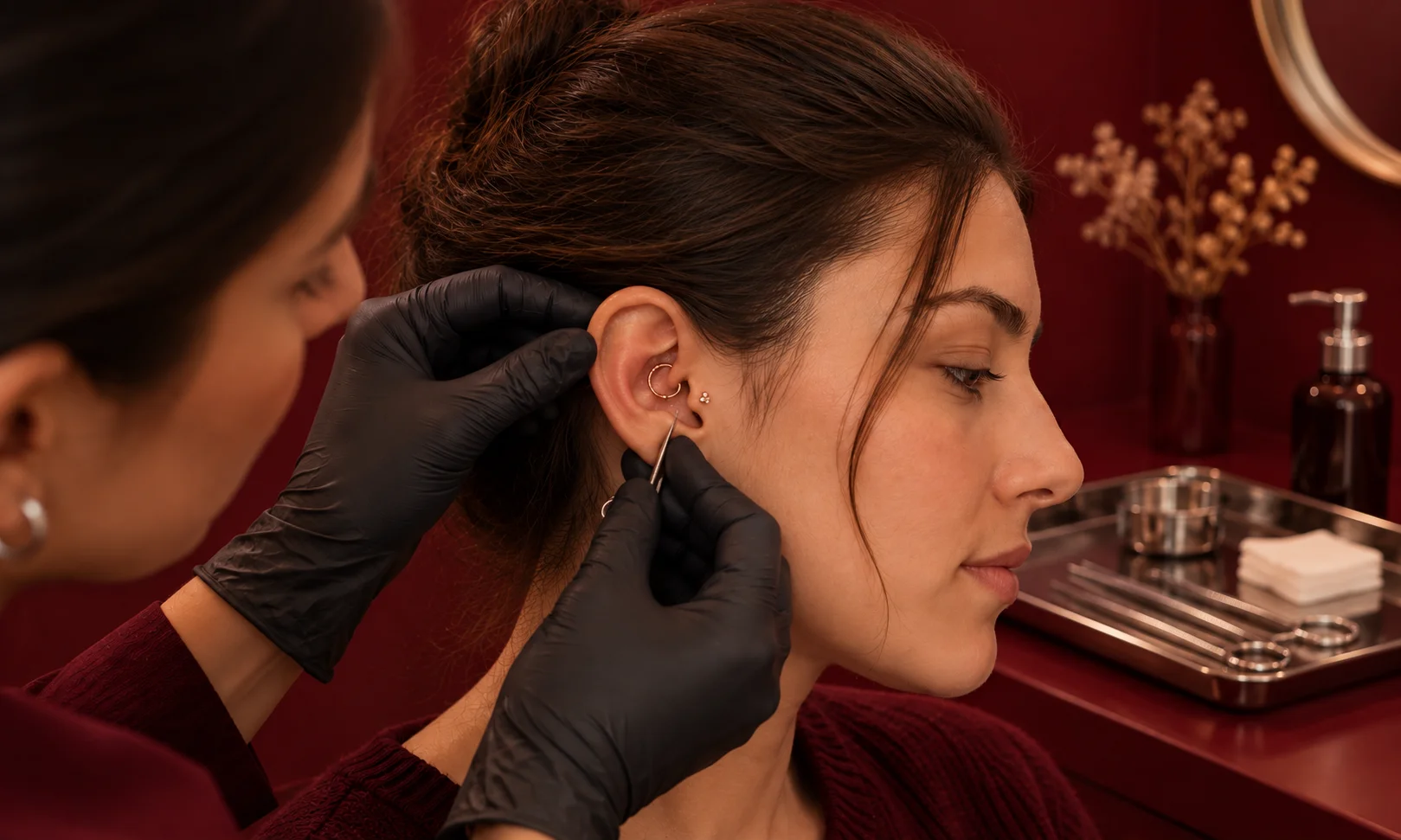
Pain is one of the first things people think about when choosing a cartilage piercing. However, pain is highly individual. The same piercing can feel mild to one person and much sharper to another.
Both daith and tragus piercings are commonly described as moderate cartilage piercings. Published piercing guides often place both in a similar pain range, although personal experiences vary widely.
Daith Piercing Pain
A daith piercing can feel like a quick, strong pinch followed by pressure or soreness. Its location can make the experience feel unusual because the cartilage is inside the ear.
The actual piercing is usually very quick. The more noticeable part for some people comes afterward, when the area feels tender or slightly swollen.
Tragus Piercing Pain
A tragus piercing also produces a quick pinch and pressure sensation. Some people find the sound and feeling of the needle passing through the thicker cartilage more noticeable than the pain itself.
Because the tragus is close to the ear canal, you may hear some unusual sounds during the procedure. This does not necessarily mean anything is wrong.
Which Is Less Painful?
There is no reliable rule that says one is always less painful. Your anatomy and pain tolerance matter more than the name of the piercing.
If pain is your main concern, choose an experienced professional piercer who can assess your anatomy and explain what to expect before starting.
Healing Time: Daith vs. Tragus
Healing is where patience becomes important.
Both piercings pass through cartilage, and cartilage piercings generally take longer to settle than lobe piercings. A piercing can also look fine on the outside while the inside is still healing. The Association of Professional Piercers notes that piercings heal from the outside inward, so feeling comfortable does not always mean the tissue is completely healed.
Daith Healing
Daith piercings can be difficult to clean because of their tucked-away location. Hair, earbuds, and accidental contact can also irritate the area.
The jewelry should be left alone during healing unless a professional piercer needs to adjust or change it. Twisting or rotating the jewelry is not recommended because unnecessary movement can irritate.
Tragus Healing
A tragus can also take considerable time to heal. One thing that makes it different is its position directly beside the ear canal.
Earbuds and headphones can press against the jewelry or introduce friction. If your daily routine involves wearing in-ear headphones for long periods, this is worth considering before choosing a tragus piercing.
Which One Heals Faster?
Neither should be chosen simply because you expect a quick healing period. Individual healing varies, and irritation can extend the process.
The better approach is to choose the placement you can realistically protect from pressure, friction, and unnecessary touching.
Aftercare for Both Piercings
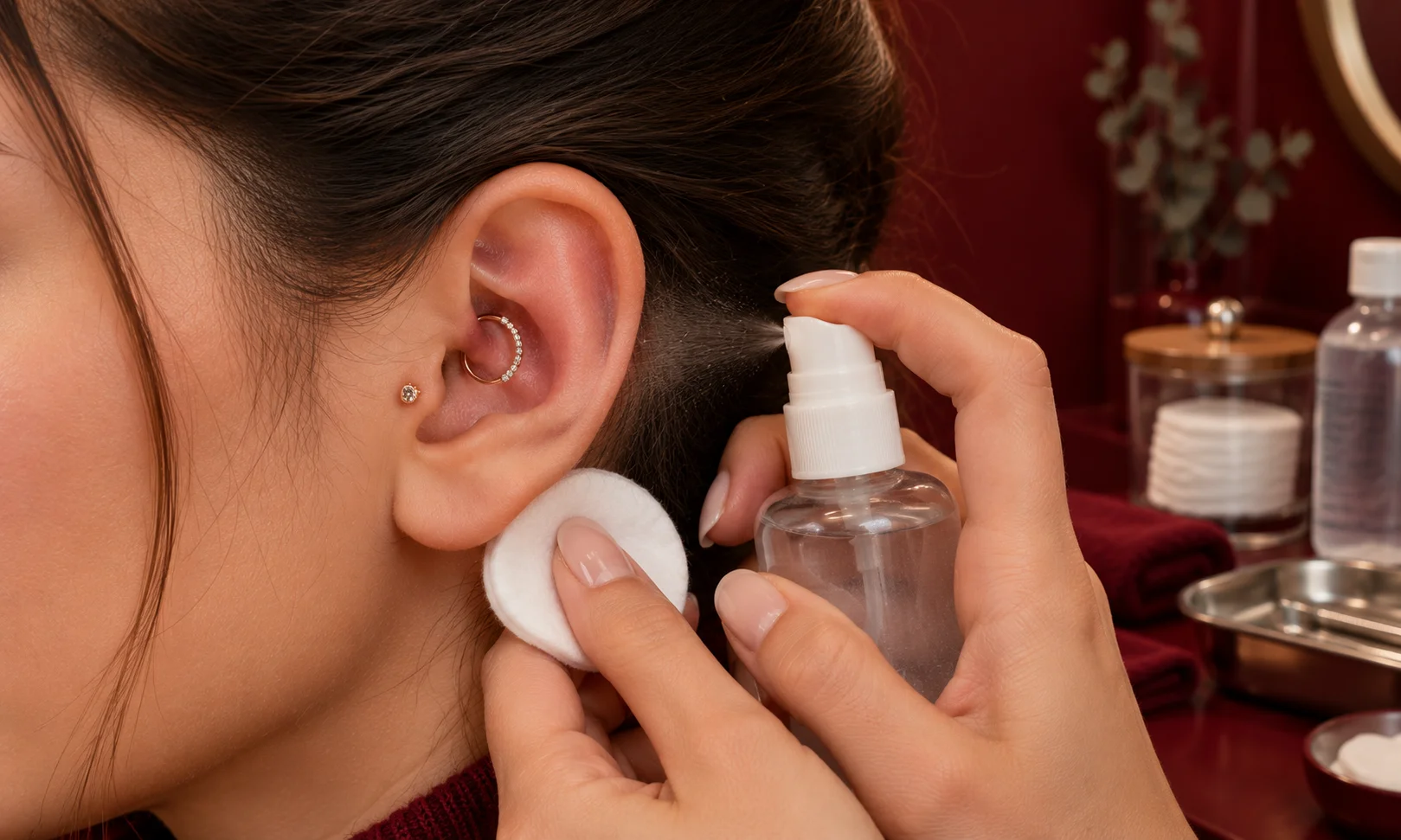
Good aftercare matters more than trying to find shortcuts.
The Association of Professional Piercers recommends sterile saline wound wash for body-piercing aftercare and advises against harsh products such as alcohol and hydrogen peroxide. It also recommends avoiding unnecessary rotation or movement of the jewelry.
A simple routine includes:
- Wash your hands before touching the area.
- Clean the piercing with appropriate sterile saline.
- Do not twist, spin, or play with the jewelry.
- Avoid sleeping directly on the healing piercing.
- Keep hair and personal-care products away from the area.
- Avoid unnecessary pressure and friction.
- Follow your piercer’s specific aftercare instructions.
Keeping pillowcases and bedding clean can also help reduce unwanted contact with a healing cartilage piercing.
Over-cleaning is not better. Strong products and excessive cleaning can irritate the tissue and potentially slow healing.
Jewelry and Style: Which Looks Better?
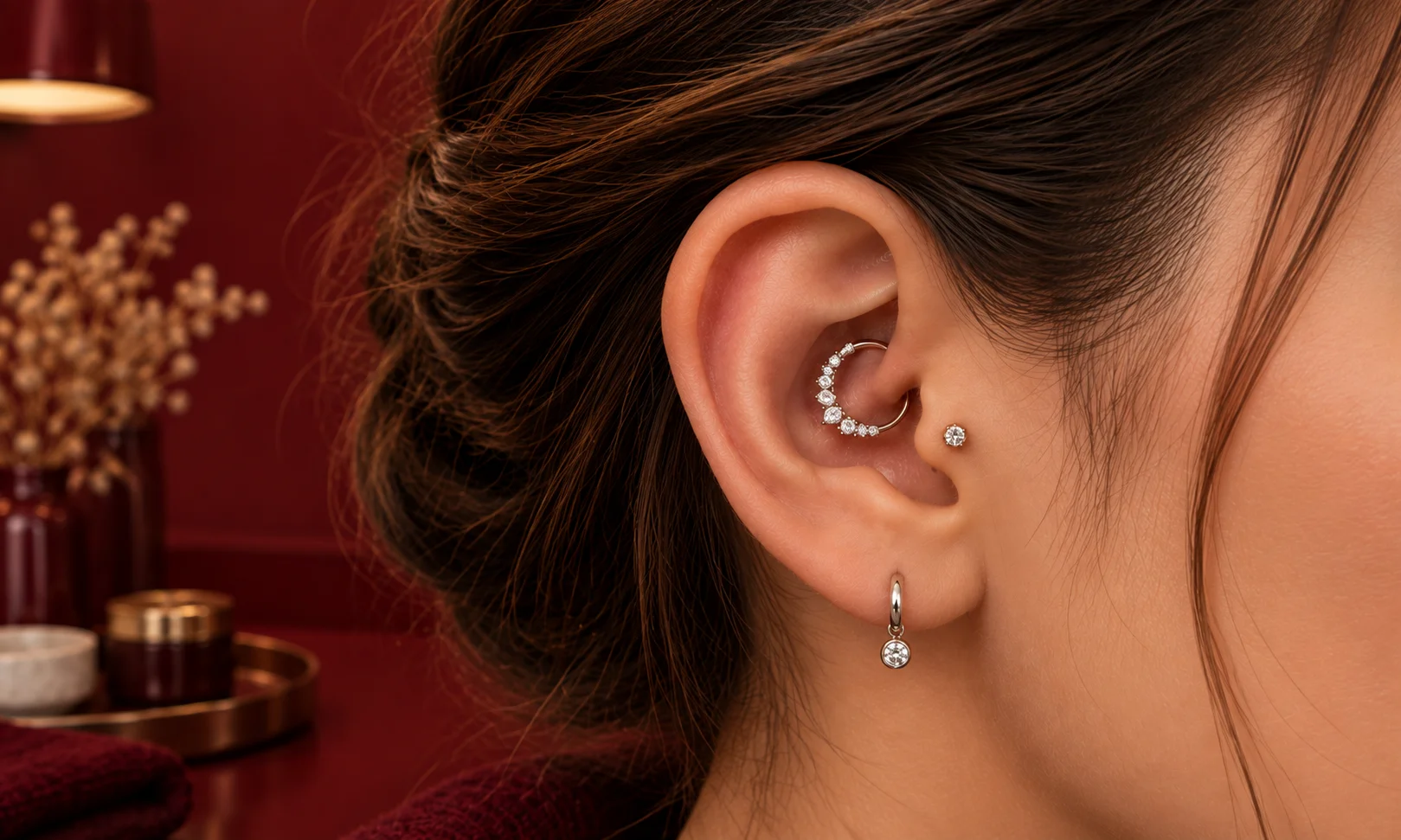
This part comes down almost completely to personal taste.
Daith Jewelry Style
Daith piercings are especially known for curved jewelry and rings. Circular barbells and captive-style rings can create a clean, distinctive appearance.
Because the daith sits inside the ear, the jewelry can feel like a small detail rather than the main attraction. This makes it a good choice if you prefer a subtle curated-ear style.
Tragus Jewelry Style
The tragus offers a more visible look. Small studs, flat-back jewelry, and delicate decorative ends are popular choices.
A tiny gemstone can make the piercing look elegant without becoming too bold. A simple metal stud can also create a minimal everyday style.
If you want the jewelry to be noticed more easily, the tragus may have the advantage.
Which Is Better for Headphones and Earbuds?
This is an important lifestyle difference.
A tragus piercing can be inconvenient if you regularly use in-ear earbuds because the jewelry sits close to the ear canal. Pressure and repeated contact can irritate a healing piercing.
A daith can also interfere with some earbuds because it sits inside the ear, although the effect depends heavily on your ear shape and the type of earbud you use.
If headphones are part of your daily routine, discuss this with your piercer before choosing either placement.
Daith Piercing vs. Tragus: Infection and Irritation
Any fresh piercing can become irritated or infected. Cartilage piercings deserve particular care because infections involving upper-ear cartilage can sometimes become more serious.
Some redness, tenderness, swelling, or light crusting can happen during normal healing. However, increasing warmth, severe swelling, worsening pain, significant redness, pus-like discharge, or fever can be warning signs that need medical attention.
Do not automatically assume every piercing bump is an infection. Irritation and other healing reactions can look similar. If something seems unusual or continues getting worse, contacting a healthcare professional is the safer choice.
Which Piercing Should You Choose?
Choose a daith if you prefer:
- A subtle inner-ear look
- Jewelry that is less visible from the front
- A distinctive but understated style
- A piercing that works well with a curated ear
Choose a tragus if you prefer:
- A more visible piercing
- Small studs or decorative jewelry
- A clean and modern appearance
- A piercing that stands out near the face
Your anatomy should also influence the decision. Not every ear has enough suitable tissue for every cartilage placement, so a professional assessment is important.
What Should You Consider Before Getting One?
A responsible piercing decision is about more than choosing the prettier placement. A qualified piercer should inspect your ear anatomy, explain the procedure, use appropriate sterile equipment, and recommend suitable initial jewelry.
Professional aftercare guidance also emphasizes that jewelry size, style, and material can affect how a piercing behaves during healing. Jewelry changes during healing should be handled by a qualified piercer rather than done casually at home.
Medical guidance is equally important if you develop signs of infection. A new piercing is an open wound, and cartilage infections can require professional treatment.
At daithpiercing, the goal is to help readers understand the differences clearly so they can make a safer, more informed piercing choice rather than choosing based only on appearance.
Final Verdict
When comparing Daith Piercing vs. Tragus, the better choice depends on what you want from your piercing. The daith is a great option if you like subtle inner-ear jewelry and a less obvious placement. The tragus is better suited to people who want a small but noticeable detail near the front of the ear.
Neither is automatically easier, less painful, or faster to heal. The smartest choice is the one that suits your anatomy, lifestyle, jewelry preference, and ability to protect the piercing while it heals.
FAQs
Is a daith or tragus piercing more painful?
There is no universal answer. Both can cause a sharp pinch and pressure because they pass through cartilage. Your anatomy and personal pain tolerance can make one feel easier than the other.
Which piercing heals faster, daith or tragus?
Neither should be assumed to heal quickly. Both are cartilage piercings, and healing time varies between individuals. Irritation, pressure, and poor aftercare can make healing take longer.
Can I wear earbuds with a tragus piercing?
During healing, earbuds can create pressure and friction around a tragus piercing. It is better to discuss your usual earbud use with your piercer and avoid anything that repeatedly irritates the area.
Is a daith piercing easier to hide than a tragus?
Usually, yes. A daith sits deeper inside the ear, while a tragus is positioned at the front of the ear and is generally more visible.
Which is better for a minimalist look?
Both can work, but a daith often creates a more understated appearance because the jewelry is tucked inside the ear. A small tragus stud can also give you a very clean minimalist look.
Can a daith or tragus piercing help migraines?
There is currently no good scientific evidence that daith or tragus piercings prevent or treat migraines. A piercing should therefore be chosen for its appearance and personal style rather than as a migraine treatment.