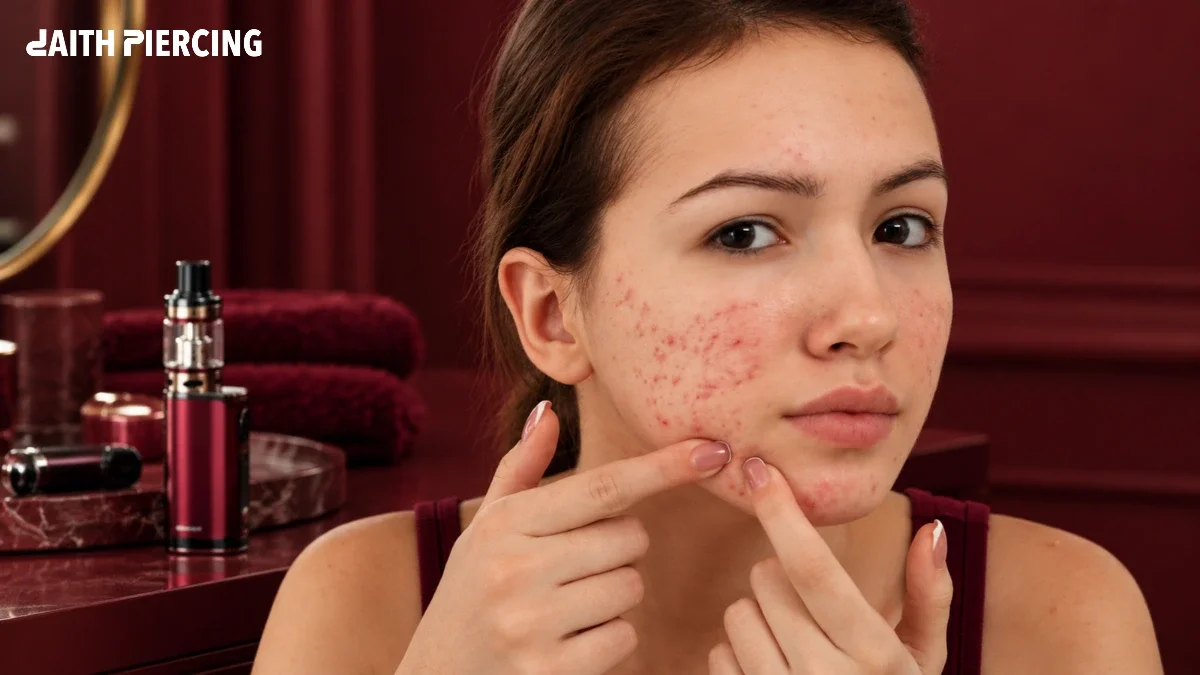
Does vaping cause acne? There is currently not enough evidence to say that vaping directly causes acne.
Acne develops when hair follicles become clogged with oil and dead skin cells, followed by inflammation and other changes within the follicle. Hormones, genetics, stress, skin-care products, and other factors can contribute to breakouts.
At the same time, a 2024 systematic review of electronic cigarettes and dermatology found evidence connecting vaping with several skin problems. They reported effects such as impaired wound healing and thermal injuries. The researchers also emphasized that dermatological data on e-cigarettes remain limited.
Therefore, the most accurate answer is: vaping may affect skin health, but scientists have not proven that it directly causes acne.
Does Vaping Cause Acne? Key Takeaways
- Does vaping cause acne? Current evidence does not prove that vaping directly causes acne.
- E-cigarettes can expose users to nicotine and other substances that may affect health and skin biology.
- Research has reported inflammatory, oxidative, and wound-healing effects associated with e-cigarette exposure.
- Acne itself has many established contributing factors, including hormones, genetics, stress, and pore blockage.
- Research specifically examining vaping and acne remains limited.
- Cigarette-smoking studies should not automatically be treated as evidence about vaping.
- If breakouts appear after you begin vaping, consider vaping as one possible factor while also examining other common acne triggers.
- A dermatologist should assess persistent, painful, or scarring acne.
Why Is There Confusion About Vaping and Acne?
The question does vaping. After all, acne is difficult to answer because it has many possible triggers.
For example, hormonal changes can increase oil production. Genetics can also make someone more likely to develop acne. Stress may contribute to flare-ups, while certain skin and hair products can clog pores.
Consequently, someone may begin vaping around the same time they develop acne without vaping necessarily being the cause.
Age can also complicate the picture. Acne commonly begins during puberty, but it can continue into adulthood or appear for the first time later in life.
That means timing alone cannot prove that vaping caused a breakout.
How Vaping Could Affect Skin
Although the direct connection between vaping and acne remains uncertain, researchers have identified several effects of e-cigarette exposure that are relevant to skin health.
Inflammation and Oxidative Stress
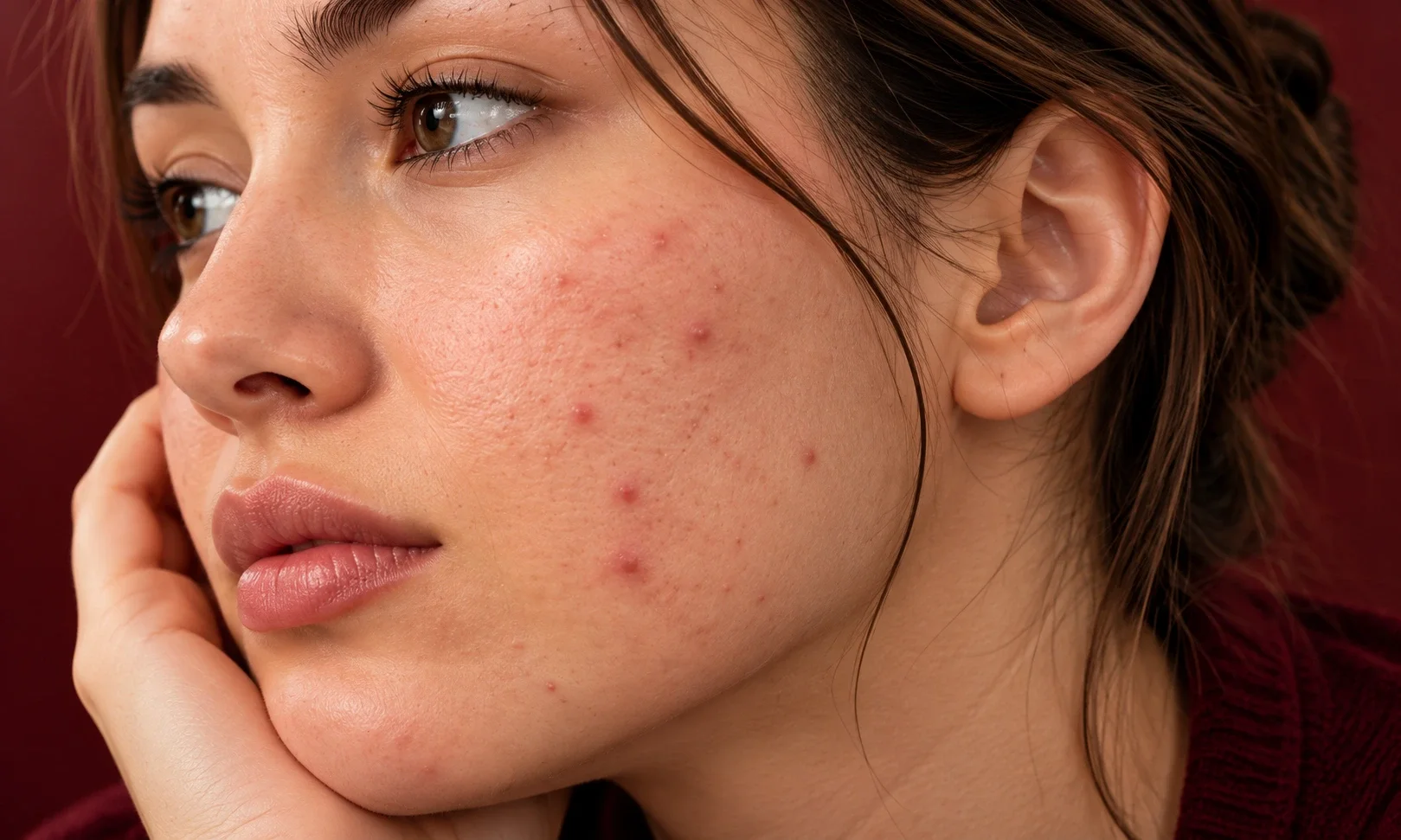
E-cigarette aerosols can contain nicotine and other substances. Research reviewed in dermatology literature has reported effects involving inflammatory signaling and oxidative stress.
Inflammation is also an important part of acne. However, this does not mean that vaping automatically produces acne. It simply provides a possible biological pathway that researchers may investigate further.
In other words, a plausible mechanism is not the same as proof of causation.
Skin Repair May Be Affected
One area where evidence is stronger concerns wound healing.
A systematic review published in the Journal of the American Academy of Dermatology examined electronic cigarettes and cutaneous wound healing. More recently, a 2024 systematic review of electronic cigarettes in dermatology also reported impaired wound healing among the documented dermatological effects.
This matters because damaged or inflamed skin needs effective repair. However, impaired wound healing should not be confused with causing acne.
Nicotine Is Only One Part of the Picture
Many e-cigarettes contain nicotine, although products vary considerably.
The World Health Organization notes that e-cigarettes can contain nicotine and other potentially harmful substances, while their long-term health effects are still being studied. WHO’s 2026 briefing also emphasizes that e-cigarette liquids can contain additives, flavors, and chemicals that may be harmful.
Therefore, it would be too simplistic to say that any skin effect from vaping is caused by nicotine alone.
Does Nicotine Cause Acne?
Does vaping cause acne because of nicotine? There is no strong evidence that allows us to make that direct claim.
Research into smoking and acne has produced conflicting findings. Some studies have reported associations between cigarette smoking and particular forms of acne, while other studies have found no association or even an inverse relationship.
Importantly, cigarette smoking and vaping are not the same exposure. Cigarette smoke contains thousands of combustion products, whereas e-cigarettes heat a liquid to produce an aerosol. Therefore, findings about cigarette smoking cannot simply be transferred to vaping.
This distinction is important when answering does vaping cause acne because evidence from traditional cigarettes cannot establish what vaping does to acne.
Can Vaping Make Existing Acne Worse?
There is also no reliable evidence showing that vaping definitely makes existing acne worse.
However, the question remains scientifically interesting because e-cigarette exposure has been associated with inflammatory and oxidative effects and impaired wound healing in the available literature.
For someone who already has acne, these findings are a reason to take skin health seriously, but they are not enough to label vaping as an established acne trigger.
If you notice a clear change after starting or increasing vaping, consider the timing alongside other changes such as stress, sleep, hormones, skin-care products, diet, or medications.
What Usually Causes Acne?
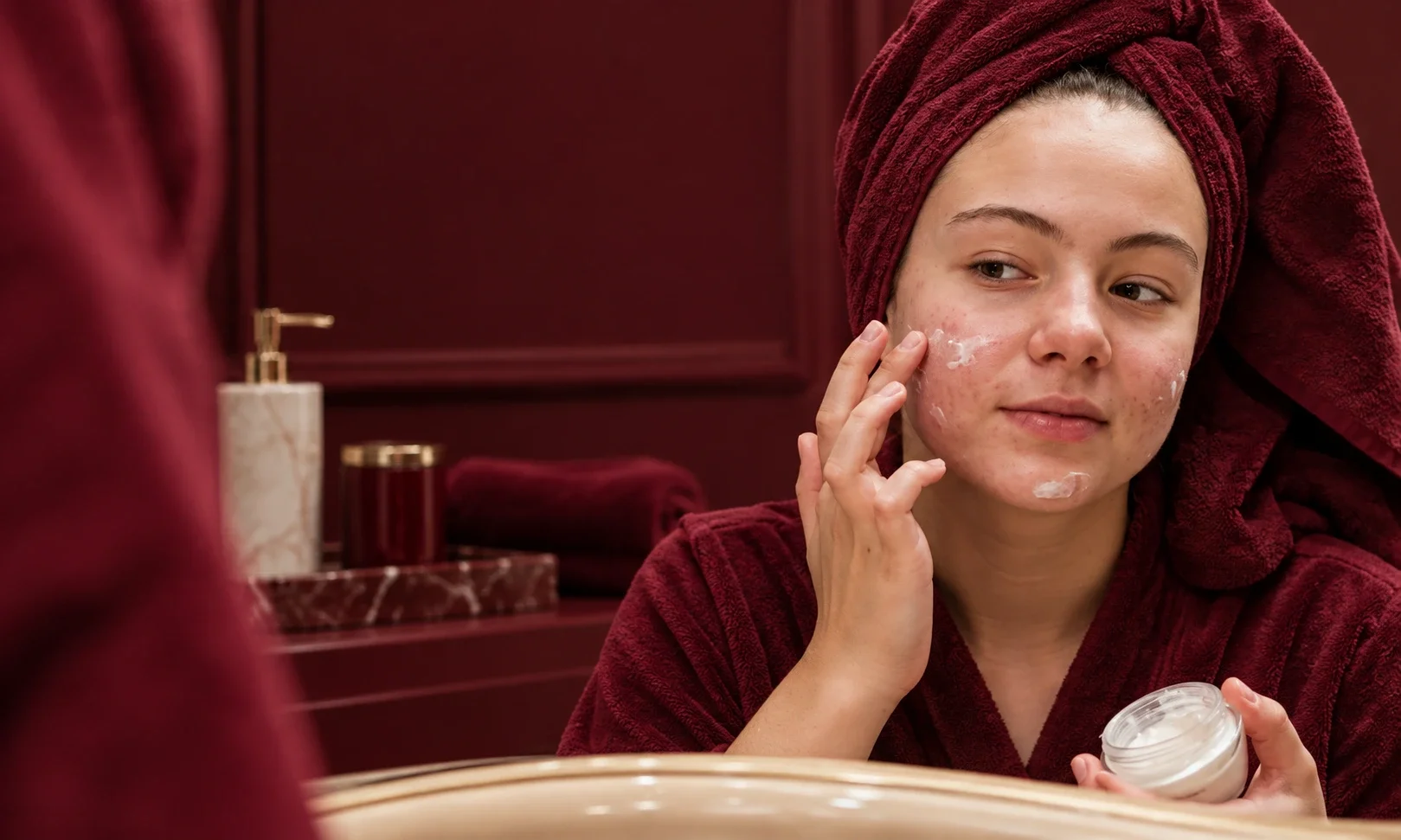
To understand whether vaping causes acne, it helps to understand what actually produces acne in the first place.
Acne develops when pores become blocked. Excess oil and dead skin cells can build up inside follicles, and inflammation can then produce pimples, blackheads, whiteheads, nodules, or cysts.
Several factors can influence this process:
| Factor | How it can relate to acne |
|---|---|
| Hormones | Can stimulate oil glands and increase sebum production |
| Genetics | Can increase susceptibility to acne |
| Stress | May contribute to acne flare-ups |
| Skin and hair products | Some oily products can clog pores |
| Certain medications | Some medicines can trigger or worsen acne |
| Diet | Some evidence links high-glycemic diets with acne, although research is not completely consistent |
| Vaping | Direct acne causation has not been established |
For example, the American Academy of Dermatology notes that hormonal changes, stress, family history, and certain skin or hair products can contribute to adult acne.
Does Vaping Cause Acne on the Face Specifically?
Does vaping cause acne on the face? There is no established evidence showing that vaping specifically causes facial acne.
Facial acne can result from the same underlying acne processes that affect other areas of the body. The forehead, cheeks, chin, jawline, chest, and back can all develop acne.
Furthermore, the location of a breakout can sometimes provide clues about other possible factors. For instance, oily hair products can cause breakouts around the hairline and forehead.
Therefore, if facial acne appears after vaping begins, it is worth looking at the complete picture rather than assuming vaping is responsible.
What Should You Do If You Vape and Develop Acne?
If you are asking Does vaping cause acne because you have recently developed breakouts, start by looking for patterns.
Keep your skin-care routine simple. Use products labeled non-comedogenic or oil-free when appropriate, and avoid repeatedly picking or squeezing pimples.
Also, pay attention to changes in stress, sleep, hormones, skin products, medications, and diet. This can help you identify potential triggers without automatically blaming one factor.
If you use vaping products, reducing or stopping exposure can also remove vaping as one possible variable. More importantly, avoiding e-cigarettes eliminates exposure to nicotine and other potentially harmful substances. WHO states that e-cigarettes are not harmless and that their long-term effects are still being investigated.
How Is Acne Treated?

If acne continues, evidence-based treatment is available.
The American Academy of Dermatology’s updated acne guidelines recommend several treatments, including topical benzoyl peroxide and topical retinoids. Other options include salicylic acid, azelaic acid, topical antibiotics, and certain prescription medicines depending on the severity and type of acne.
For mild breakouts, an over-the-counter product containing adapalene, benzoyl peroxide, or another appropriate acne ingredient may be useful. However, treatment should match the type and severity of the acne.
Deep, painful nodules or cysts deserve professional attention because they can increase the risk of permanent scarring.
When Should You See a Dermatologist?
Consider seeing a dermatologist if:
- Acne is painful or deep.
- Breakouts are leaving scars or persistent dark marks.
- Acne suddenly becomes much worse.
- Over-the-counter treatment is not helping.
- Acne is affecting your confidence or daily life.
- You are unsure whether the bumps are actually acne.
A dermatologist can determine whether you have acne or another skin condition and recommend treatment based on the diagnosis.
Common Mistakes to Avoid
One common mistake is assuming that every breakout has a single cause.
Another is treating vaping as a scientifically proven cause of acne when current research does not support that conclusion.
It is also unhelpful to use cigarette-smoking research as direct proof about vaping. The two exposures differ, and the available evidence on vaping and dermatological disease is still developing.
Finally, avoid aggressive scrubbing or constantly changing acne products. Irritating the skin can make a skincare routine harder to tolerate.
Conclusion
So, does vaping cause acne? Based on the evidence available today, there is not enough research to say that vaping directly causes acne.
What we can say with greater confidence is that vaping is not harmless. Research has identified effects involving inflammation, oxidative stress, skin cells, and wound healing, while dermatologists and researchers continue to investigate its broader effects on the skin.
At the same time, acne has many well-established contributing factors, including hormones, genetics, stress, clogged pores, and certain products.
For that reason, if you develop acne while vaping, it is better to look at the whole picture rather than assume one cause. And if your acne is persistent, painful, or leaving scars, professional treatment can make a significant difference.
FAQs
Does vaping cause acne or pimples?
There is currently no strong evidence proving that vaping directly causes acne or pimples. However, e-cigarette exposure can affect skin-related processes, so researchers continue to investigate possible dermatological effects.
Can quitting vaping clear acne?
It cannot be guaranteed. If vaping contributes to an individual’s skin problems, stopping may remove that exposure, but acne has many other possible causes. Therefore, clearing acne after quitting cannot be promised.
Does nicotine cause acne?
Current evidence does not establish nicotine as a direct cause of acne. Research into smoking and acne has produced inconsistent results, and smoking evidence cannot simply be applied to vaping.
Does vaping make your skin worse?
Research suggests that e-cigarette exposure can have harmful effects on skin biology and wound healing. However, the specific effect on acne is not yet clearly established.
Can vaping cause skin inflammation?
Research has reported inflammatory and oxidative effects associated with e-cigarette exposure. Nevertheless, the presence of these biological effects does not prove that vaping causes a particular skin condition such as acne.
Should I stop vaping if I have acne?
If you do not need nicotine, avoiding vaping is the safer choice because e-cigarettes are not risk-free. However, stopping vaping should not be presented as a guaranteed acne treatment. WHO continues to emphasize the health risks and uncertainties surrounding e-cigarette use.
What is the best treatment for acne?
Treatment depends on the type and severity of acne. Current AAD guidance supports options including benzoyl peroxide, topical retinoids, salicylic acid, azelaic acid, and other prescription treatments when appropriate.
Disclaimer:
This article is for informational and educational purposes only and should not replace professional medical advice, diagnosis, or treatment. Research on vaping and acne is still limited, and vaping has not been proven to directly cause acne. If you experience persistent, painful, or severe breakouts, consult a qualified dermatologist for proper evaluation and treatment.